
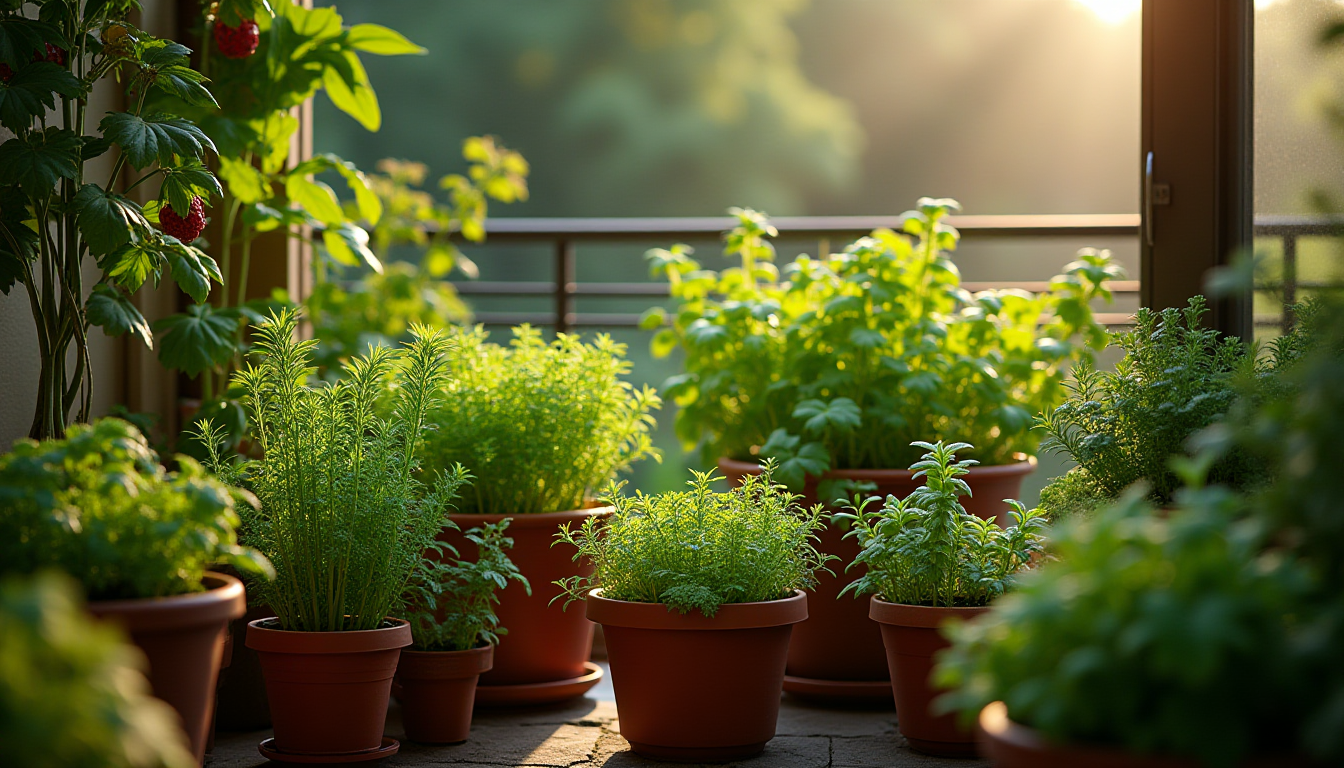
Introduction to Best Small Vegetables to Grow on Your Balcony
Gardening on a balcony can feel daunting at first, especially if you think you need acres of land to grow anything worthwhile. The truth is, with the right planning, even a small urban balcony can yield fresh, homegrown vegetables year-round.
For beginners, this is more than just a hobby—it’s a way to bring nature into your living space, save on grocery bills, and enjoy the satisfaction of eating something you nurtured yourself. By choosing the right vegetables, containers, and growing strategies, you can create a thriving balcony vegetable garden, no matter the size of your outdoor space.
Want to see exactly how to grow vegetables in small pots and make the most of your balcony space? Check out our step-by-step guide here.
Table of Contents
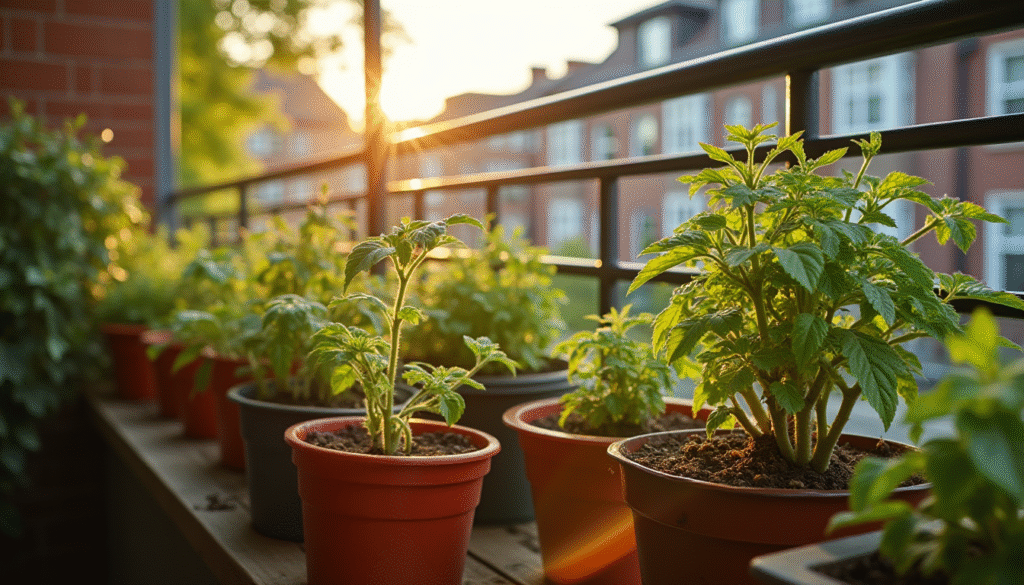
If you’re completely new to balcony gardening, start with our Complete Beginner’s Guide to Growing Vegetables in Small Pots to learn everything from choosing containers to harvesting your first crops.
Which vegetables grow well in small balconies?
When space is limited, focus on vegetables that are naturally compact, grow vertically, or thrive in containers. Leafy greens, herbs, and dwarf fruiting plants are excellent choices because they don’t require deep soil or sprawling plots. Vegetables that can be harvested multiple times also maximize your yield from minimal space.
Some of the best categories include:
- Leafy greens: Lettuce, spinach, arugula, and kale grow quickly and can be harvested as “cut-and-come-again,” meaning you pick leaves over several weeks without uprooting the plant.
- Compact fruiting vegetables: Cherry tomatoes, mini bell peppers, and patio cucumbers are bred to stay small while producing full-sized fruit.
- Root vegetables: Radishes, baby carrots, and small beet varieties thrive in deep, narrow containers.
- Climbers and vines: Peas, bush beans, and small cucumbers can be trained on trellises, taking advantage of vertical space.
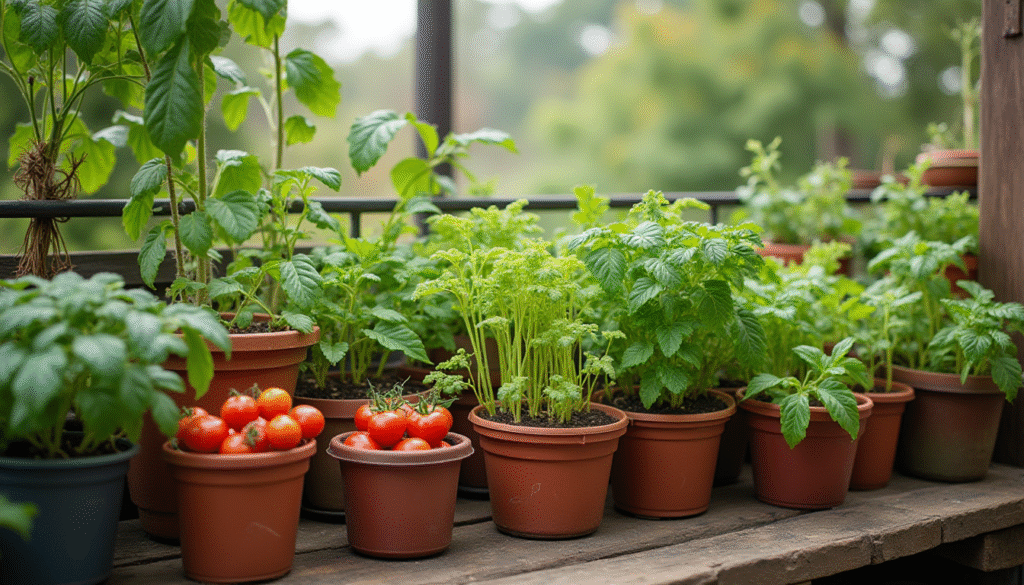
Dwarf and compact varieties for balconies
Choosing the right variety is crucial. Many vegetables have “patio,” “bush,” or “dwarf” cultivars designed for small spaces. They need less soil depth, grow upright, and are easier to manage in pots.
| Vegetable | Compact Variety Examples | Notes |
|---|---|---|
| Tomato | ‘Tiny Tim,’ ‘Patio Princess’ | 12–18 inches tall, produces small, sweet fruits |
| Pepper | ‘Mini Bell,’ ‘Jalapeño M’ | Stays under 18 inches, ideal for container fruiting |
| Cucumber | ‘Bush Slicer,’ ‘Spacemaster’ | Upright or short vines, manageable trellis growth |
| Lettuce | ‘Baby Leaf Mix,’ ‘Salad Bowl’ | Continuous harvest, shallow soil needed |
| Carrot | ‘Thumbelina,’ ‘Little Finger’ | Short roots, perfect for 6–8 inch deep pots |
How do I grow vegetables in containers year-round?
Container gardening gives you control over soil, water, and sunlight, making it possible to grow vegetables all year. Success depends on three key factors: selecting the right container, using quality soil, and managing seasonal light and temperature.
Container selection tips:
- Choose pots with proper drainage holes to prevent waterlogging.
- Consider self-watering containers for herbs and leafy greens—they reduce watering frequency and help during hot months.
- Use lightweight materials like plastic or fabric pots if your balcony railing can’t support heavy ceramic containers.
Soil and fertilization:
- A high-quality, well-draining potting mix is better than garden soil. Mix in slow-release fertilizer to support ongoing growth.
- Liquid feeding with a balanced fertilizer every 2–3 weeks ensures continuous nutrient availability, especially for fruiting vegetables.
Seasonal care:
- Winter: Use cold-tolerant crops like kale, spinach, and radishes.
- Summer: Sun-loving vegetables like tomatoes, peppers, and cucumbers thrive in longer days.
- Spring & Fall: Transitional crops like lettuce, peas, and herbs perform well, giving you continuous harvests.
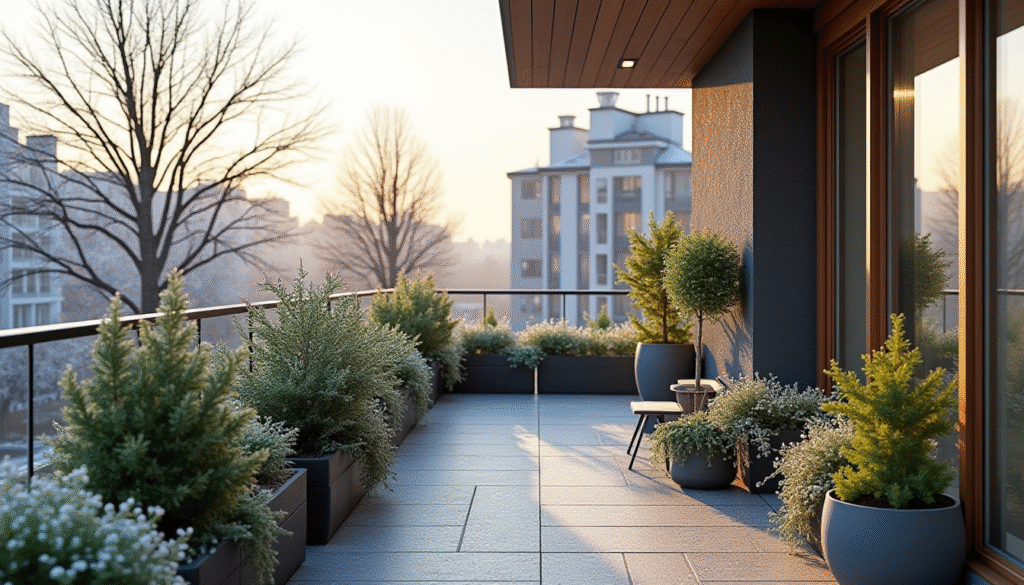
Vegetables by season
Understanding which vegetables do best in each season allows you to plan rotations and avoid empty containers. The table below lists common balcony-friendly vegetables with ideal planting seasons in temperate urban areas.
Adjust for your local climate if you live in tropical or subtropical zones.
| Season | Vegetables for Small Balconies |
|---|---|
| Spring | Lettuce, spinach, radishes, peas, mini tomatoes |
| Summer | Cherry tomatoes, peppers, cucumbers, bush beans, basil |
| Fall | Kale, arugula, carrots, Swiss chard, peas |
| Winter | Spinach, kale, radishes, garlic sprouts, parsley |
Practical tip: Even in colder months, you can use frost blankets or bring containers indoors to extend the growing season for tender plants.
Recommended container sizes
Not all vegetables need the same soil depth or width. Here’s a guide for selecting containers that support healthy growth without taking up unnecessary space.
| Vegetable | Minimum Container Depth | Minimum Container Width | Notes |
|---|---|---|---|
| Leafy greens | 6–8 inches | 6–12 inches | Harvest frequently for best growth |
| Tomatoes (dwarf) | 12–16 inches | 12 inches | Larger containers yield bigger fruits |
| Peppers | 10–12 inches | 10–12 inches | Supports fruit weight, prevents tipping |
| Radishes | 6–8 inches | 4–6 inches | Quick-growing, small roots |
| Carrots (baby) | 8–10 inches | 4–6 inches | Shallow varieties work well |
Practical tip: If your balcony is very narrow, vertical stacking planters or railing-mounted boxes allow you to grow multiple crops without cluttering the floor space.
Practical tips for small-space and sunlight challenges
Balcony gardeners often face limited sunlight and space. Here’s how to manage common urban challenges:
- Sunlight: Most vegetables need 4–6 hours of direct sunlight. If your balcony is shaded, focus on leafy greens, herbs, and dwarf root vegetables—they tolerate partial shade.
- Watering: Containers dry out faster than garden beds. Water early in the morning and ensure excess drains freely to prevent root rot.
- Spacing: Even dwarf varieties need room for airflow. Crowded pots can lead to mildew or pests. Thin seedlings early and prune excess leaves on fruiting plants.
- Rotation: Rotate crops each season to prevent soil nutrient depletion and reduce disease risk.
- Vertical growth: Trellises, wall-mounted planters, and hanging baskets expand your usable space and make harvesting easier.
Month-by-Month Planting Calendar
Planning your balcony vegetable garden by month ensures continuous harvests and makes the most of your small space.
Below is a general guide for temperate urban climates. Adjust timing slightly for tropical or subtropical zones.
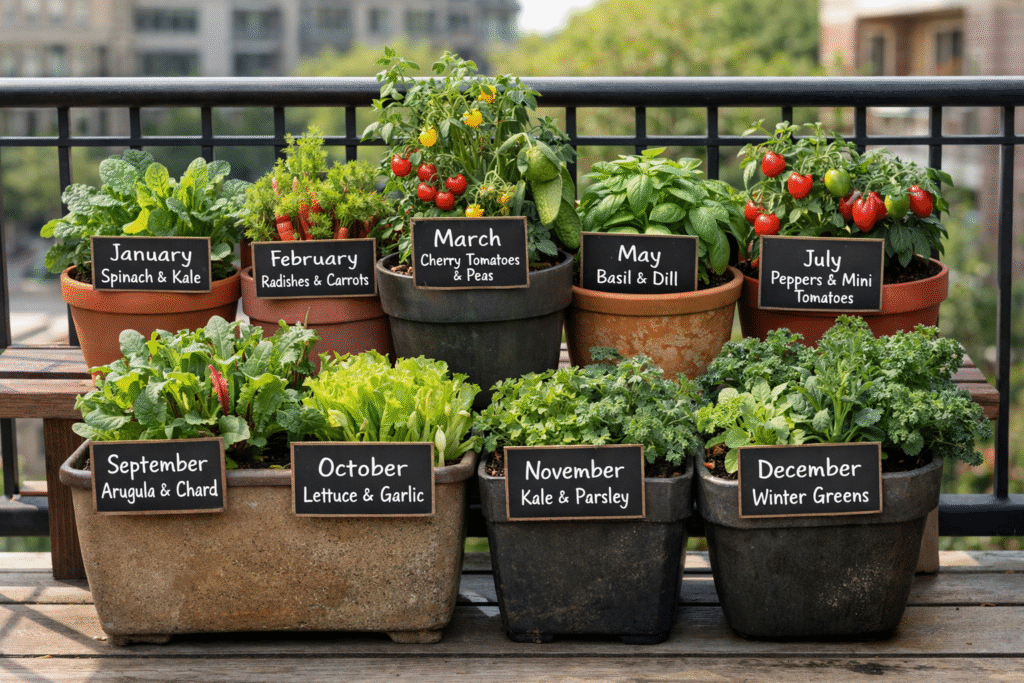
| Month | Vegetables to Plant | Notes |
|---|---|---|
| January | Spinach, kale, parsley | Start indoors or in sheltered containers; use frost protection if needed |
| February | Lettuce, radishes, baby carrots | Sow in shallow pots; partial sunlight is sufficient |
| March | Cherry tomatoes, dwarf peppers, peas | Gradually move sun-loving crops outdoors as temperatures rise |
| April | Cucumbers (bush), bush beans, basil | Ideal time for most fruiting vegetables; ensure 6+ hours sunlight |
| May | Summer greens, herbs (cilantro, dill) | Frequent watering needed as pots dry faster in heat |
| June | Continuous sowing of lettuce, radishes | Succession planting ensures a steady harvest |
| July | Peppers, mini tomatoes, cucumbers | Monitor for heat stress; provide shade if midday sun is intense |
| August | Bush beans, carrots, kale | Late summer sowings can extend production into fall |
| September | Spinach, arugula, Swiss chard | Cooler temperatures favor leafy crops |
| October | Radishes, lettuce, garlic sprouts | Protect containers from frost; indoors or balcony coverings work well |
| November | Kale, parsley, spinach | Grow hardy greens; reduce watering slightly |
| December | Winter salad greens | Consider indoor windowsills or covered balcony spaces |
Watering and Fertilizing Guidance
Container vegetables dry out faster than garden beds, especially on sunny balconies. Follow these practical tips:
- Watering: Check soil moisture daily. Stick your finger 1–2 inches into the soil; if it feels dry, water until excess drains from the bottom. Early morning watering reduces evaporation and fungal risk.
- Fertilizing: Use a balanced liquid fertilizer every 2–3 weeks for leafy greens. Fruiting vegetables like tomatoes and peppers benefit from a higher phosphorus and potassium feed once flowers appear.
- Organic options: Compost tea or diluted fish emulsion supports soil life and improves flavor.
- Self-watering containers: Perfect for busy urban gardeners, they maintain consistent moisture without overwatering.
Pest Prevention and Simple Solutions
Even small balcony gardens attract pests. Simple, beginner-friendly strategies help you maintain healthy plants:
- Visual checks: Inspect leaves weekly for aphids, whiteflies, or spider mites.
- Barrier methods: Use fine mesh or netting to protect young plants.
- Natural deterrents: Spray a mild solution of water and dish soap for soft-bodied pests; neem oil is effective for larger infestations.
- Companion planting: Basil near tomatoes can deter whiteflies; marigolds help repel aphids.
- Cleanliness: Remove fallen leaves and spent fruits promptly to prevent fungal growth.
Harvest Timing and Yield Tips
Knowing when to harvest maximizes flavor and encourages continued growth:
- Leafy greens: Pick outer leaves regularly; this “cut-and-come-again” approach keeps plants productive for weeks.
- Tomatoes & peppers: Harvest when the fruit is fully colored but still firm. Dwarf varieties often produce smaller fruits more frequently.
- Root vegetables: Check carrot and radish size with gentle digging; harvesting too early or late affects flavor.
- Successive sowing: Plant small batches every 2–3 weeks to maintain a steady supply.
Beginner Mistakes to Avoid
Starting a balcony vegetable garden can be intimidating, but awareness prevents frustration:
- Overcrowding pots, which reduces airflow and increases disease risk.
- Using garden soil instead of a light, well-draining potting mix.
- Ignoring sunlight requirements—most fruiting vegetables need at least 6 hours of sun.
- Forgetting to check drainage holes; stagnant water leads to root rot.
- Neglecting succession planting, which can leave your balcony empty for weeks between harvests.
Friendly Conclusion
Balcony gardening is as much about creativity as it is about growing vegetables. Every space is unique, and experimenting with container sizes, plant combinations, and vertical layouts is part of the fun. Start small, track your successes and failures, and gradually expand.
Even a few pots of leafy greens or dwarf tomatoes can transform your balcony into a lush, productive retreat.
Remember: patience and observation are your best tools, and every harvest—no matter the size—is a reward.
FAQ
1. Can I grow vegetables on a balcony with only 3–4 hours of sunlight?
Yes. Focus on partial-shade-tolerant crops like leafy greens (lettuce, spinach, arugula), herbs (parsley, cilantro), and dwarf root vegetables. Place containers where they receive morning or late afternoon sun and rotate them periodically to balance growth.
2. How often should I water container vegetables?
Generally, check soil daily. Water when the top 1–2 inches are dry. Containers dry faster than garden beds, especially in summer. Self-watering pots or adding mulch can reduce the frequency and prevent stress from over- or under-watering.
3. What are the easiest vegetables for beginners?
Leafy greens (lettuce, spinach), cherry tomatoes, mini peppers, and radishes are beginner-friendly. They require shallow containers, grow quickly, and tolerate minor mistakes while still providing satisfying harvests.
4. How do I prevent pests without chemicals?
Inspect plants weekly, remove affected leaves, and use barriers like fine mesh. Natural sprays like diluted soap water or neem oil deter soft-bodied insects. Companion plants such as basil or marigolds can also reduce pest problems naturally.
5. Can I grow vegetables year-round in colder climates?
Yes. Choose cold-tolerant crops like kale, spinach, radishes, and parsley. Use frost blankets, insulated containers, or indoor windowsills to protect sensitive plants. Rotating crops ensures continuous harvests even in winter.
6. How do I maximize yield in a small space?
Use dwarf or bush varieties, vertical planters, and succession planting. Regular harvesting encourages new growth. Avoid overcrowding, and rotate crops seasonally to maintain healthy soil and plants.
7. Is container gardening expensive?
It can be as budget-friendly or premium as you choose. Basic plastic pots, potting soil, and seeds are inexpensive. Investing in self-watering containers or raised planters increases convenience but isn’t mandatory for a productive balcony garden.
Helpful Resources
- University of California Agriculture and Natural Resources – Urban Gardening
- Royal Horticultural Society – Growing Vegetables in Containers
- National Gardening Association – Container Vegetable Guide
- Cornell Cooperative Extension – Home Vegetable Gardening
- Missouri Botanical Garden – Vegetable Gardening Tips