
Air-Purifying Balcony Plants: Boost Clean Air and Create a Lush Urban Oasis
Urban living often comes with a hidden cost: poor air quality. Dust, vehicle emissions, and indoor pollutants can accumulate in small apartments, leaving residents exposed to irritants that affect mood, focus, and overall well-being. For those with limited outdoor space, such as balconies, introducing greenery isn’t just about aesthetics—it can meaningfully improve the air you breathe. Clean air plants, strategically chosen and arranged, can reduce airborne toxins, enhance oxygen levels, and even boost mental clarity.
Balconies, whether shaded or sunlit, offer a unique micro-environment. By selecting container-friendly air-purifying plants and positioning them thoughtfully, we can create a miniature oasis of freshness.
This guide will explore the most effective plants, practical care tips, and small-space arrangements that make air purification achievable for urban dwellers.
Table of Contents
Top Container-Friendly Air-Purifying Balcony Plants
When selecting plants for balconies, we need to consider two key factors: effectiveness in removing common indoor pollutants and adaptability to container life. Certain species excel at filtering volatile organic compounds (VOCs), formaldehyde, benzene, and nitrogen oxides while thriving in pots.
Below are some of the most reliable options for both indoor/outdoor balcony greenery.
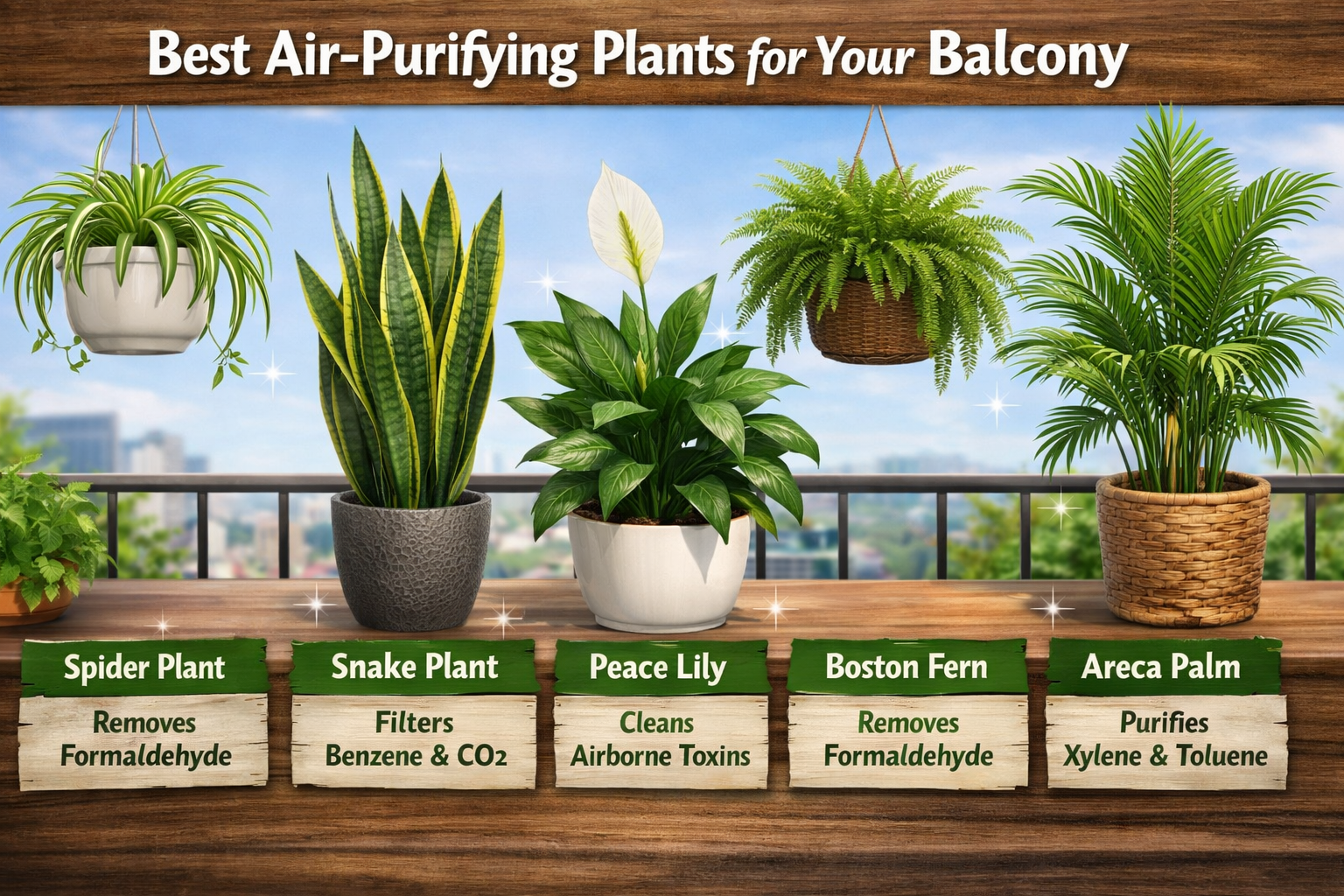
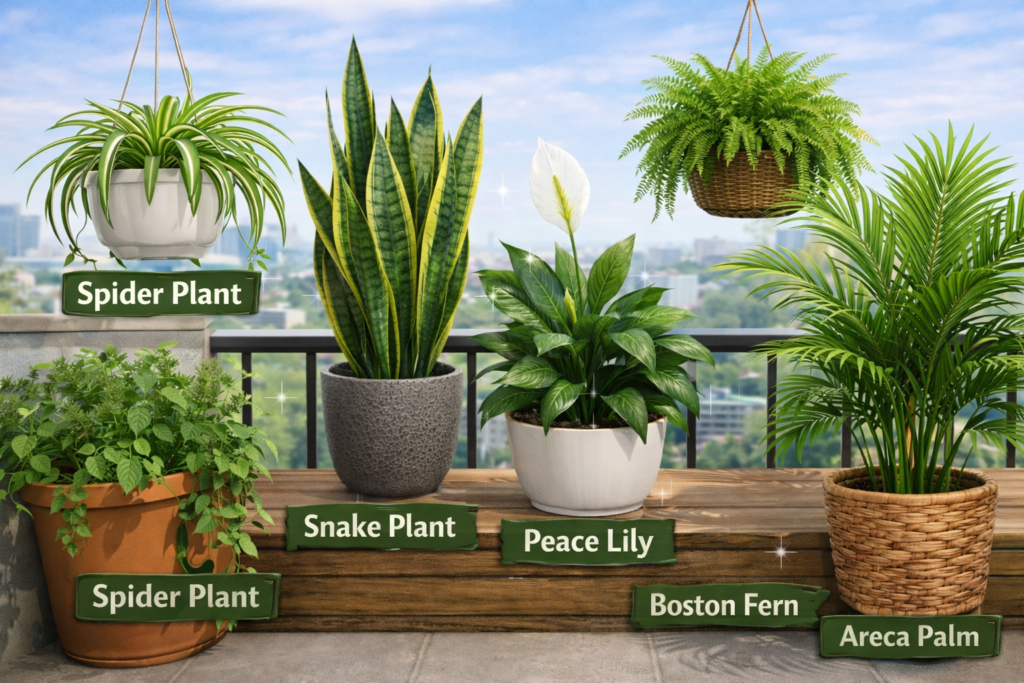
1. Spider Plant (Chlorophytum comosum)
Spider plants are resilient and forgiving, making them ideal for beginners. They thrive in bright, indirect sunlight but can tolerate partial shade, perfect for balcony corners with fluctuating light conditions. Spider plants excel at removing formaldehyde and xylene from the air, helping reduce indoor chemical buildup. They also reproduce easily via plantlets, allowing for natural multiplication and sharing with neighbors or friends.
2. Snake Plant (Sansevieria trifasciata)
Snake plants are particularly effective at absorbing carbon dioxide and converting it into oxygen even at night, which makes them a standout for balconies near bedrooms or workspaces. They require minimal watering and tolerate low light, though they thrive in moderate sunlight. Their upright leaves fit well into narrow containers, maximizing floor space while contributing to cleaner air.
3. Peace Lily (Spathiphyllum spp.)
Peace lilies offer both air-purifying benefits and ornamental value. They efficiently filter ammonia, benzene, and formaldehyde, common pollutants in urban environments. While they prefer shaded areas and indirect light, they require consistent moisture to maintain glossy leaves and blooms. Their relatively compact growth habit suits medium-sized balcony pots, and their white flowers add a calm visual accent.
4. Boston Fern (Nephrolepis exaltata)
Boston ferns are natural humidifiers that remove pollutants like formaldehyde and xylene while adding moisture to dry air. They thrive in indirect sunlight and require consistently moist soil, making them well-suited for balconies with morning or dappled light. Hanging baskets or elevated containers work best, allowing fronds to cascade without occupying precious floor space.
5. Areca Palm (Dypsis lutescens)
Areca palms are among the most versatile tropical air-purifying plants. They remove pollutants such as xylene and toluene while maintaining a high transpiration rate, which slightly increases local humidity. Areca palms prefer bright, filtered sunlight and require moderate watering. Their tall, feathery fronds work well in balcony corners or narrow planters, providing a lush, natural screen while cleaning the air.
Key Takeaways for Choosing Plants
While all the plants above improve air quality, combining different types maximizes pollutant absorption and visual variety. Mixing leafy, tall, and cascading species ensures that air moves through various canopy levels, enhancing filtration efficiency.
Additionally, selecting low-maintenance varieties reduces the risk of plant stress, which can limit their air-purifying capabilities.
Plant Placement and Care Tips for Maximum Air Purification
Even the most effective air-purifying plants require thoughtful placement and care to optimize their benefits. Small balconies, often with limited sunlight and airflow, need strategic arrangements that consider light availability, wind exposure, and ease of maintenance.
Understanding Light and Microclimates
Balconies can vary significantly in light exposure. South-facing balconies usually receive the most sunlight, which benefits sun-loving species like snake plants and areca palms. North-facing or shaded balconies are better suited for peace lilies, spider plants, and Boston ferns.
Observing sunlight patterns for at least a week can help determine the best positions for each plant.
Maximizing Airflow
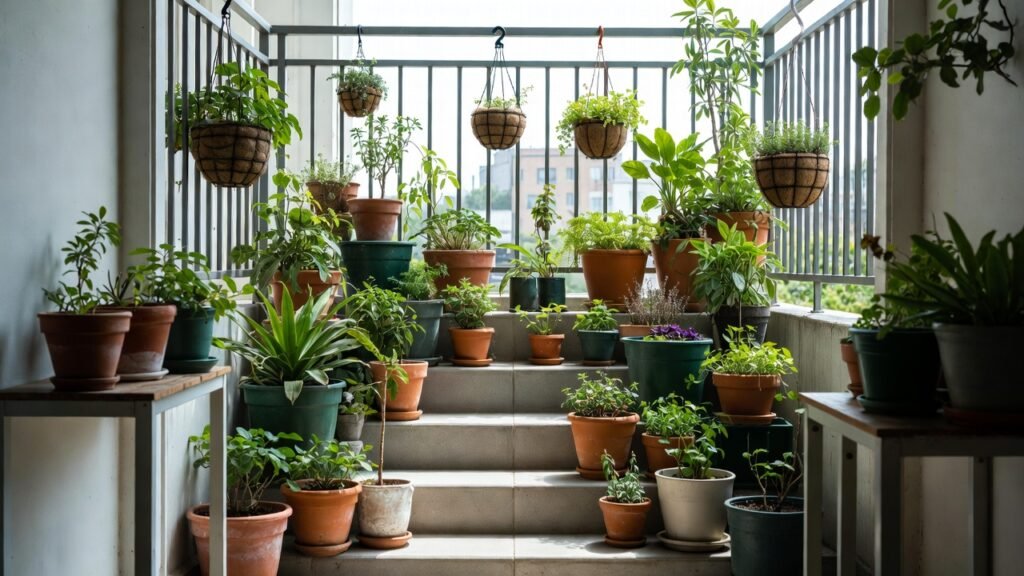
Plants purify air more efficiently when air circulates around their leaves. Avoid clustering pots too tightly in corners. Instead, stagger heights using plant stands, shelves, or hanging containers. This arrangement allows wind and breezes to move through foliage, facilitating gas exchange and pollutant absorption.
Watering and Soil Management
Consistent moisture is crucial, but overwatering can lead to root rot and fungal growth. For small balconies, use containers with drainage holes and high-quality potting mix. Incorporating self-watering planters or shallow water trays can maintain moisture levels for plants like Boston ferns and peace lilies without frequent intervention.
Additionally, periodic top-dressing with compost or slow-release fertilizers supports healthy growth and enhances air-purifying capacity.
Seasonal Adjustments
Air-purifying efficiency can fluctuate with seasonal changes. During hot months, frequent misting or repositioning to prevent leaf scorch helps plants maintain transpiration and gas exchange. In colder periods, protect sensitive species like areca palms from wind chill by using balcony screens or moving pots closer to walls. Observing each plant’s stress signals, such as yellowing leaves or drooping fronds, allows for timely adjustments.
Arranging Plants in Small Balconies
Even compact balconies can host a variety of air-purifying greenery with careful planning. Start by assessing the space and available surfaces:
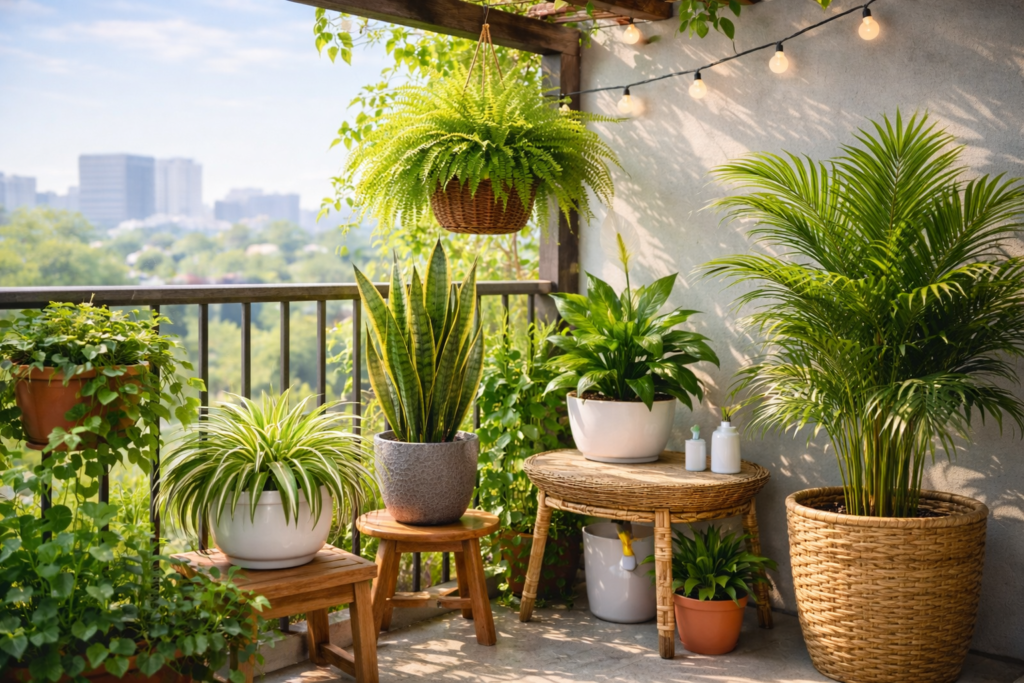
- Floor Space: Place taller species like areca palms or snake plants in corners to create a green backdrop and allow airflow along edges.
- Shelves and Plant Stands: Use multi-tiered shelves to house spider plants and smaller ferns. This elevates plants without sacrificing floor space.
- Hanging Baskets: Boston ferns and trailing spider plants benefit from hanging containers, adding vertical greenery and optimizing light exposure.
- Window Sills or Railings: Peace lilies or small potted palms can thrive in sunlight filtered through balcony railings, enhancing filtration along open air channels.
- Groupings by Microclimate: Combine sun-tolerant and shade-tolerant plants in zones according to light exposure, creating micro-ecosystems that maximize air purification while simplifying care routines.
Step-by-step, even a balcony under 10 square meters can host a thriving mix of air-purifying plants that filter multiple pollutants, improve oxygen levels, and create a visually calming environment. Step-by-step, even a balcony under 10 square meters can host a thriving mix of air-purifying plants. For more inspiration, check out small balcony garden ideas for full sun and shady spaces.
Rotating plants seasonally, observing light and moisture patterns, and mixing species strategically ensures that air purification is both effective and sustainable.
Combining Plants for Continuous Air Cleaning
Creating a balcony air-purifying system is more effective when different plants work together. Each species targets different pollutants, so combining them ensures a broader range of toxins is filtered. For example, pairing a spider plant (excellent for formaldehyde) with a peace lily (effective against ammonia) covers multiple pollutants simultaneously. Mixing tall, trailing, and bushy plants also improves airflow between leaves, enhancing the absorption of airborne chemicals throughout the day.
Rotating plants seasonally or exchanging sun-loving and shade-tolerant species allows continuous air cleaning. Early morning or late afternoon sun exposure ensures maximum photosynthesis without stressing sensitive leaves. Grouping plants with similar water needs simplifies maintenance and prevents over- or under-watering, keeping all species healthy and effective.
Maintaining Plant Health for Best Air Quality
Healthy plants filter air most efficiently. Regular monitoring of leaves, soil, and overall growth is essential. Yellowing leaves or drooping fronds often indicate water or light imbalance. Removing dust from leaves improves gas exchange, while occasional pruning encourages new growth. Fertilizing every 6–8 weeks with slow-release or liquid fertilizers keeps plants vigorous without overwhelming them with nutrients.
Balcony microclimates can change rapidly, so adjusting plant placement according to temperature, wind, and sunlight ensures consistent performance. Checking for pests like spider mites or aphids is also crucial; infestations can reduce a plant’s filtering ability. Using natural pest deterrents or gentle insecticidal sprays keeps plants clean and toxin-free.
Common Mistakes to Avoid
Even experienced urban gardeners can make errors that reduce the air-purifying effectiveness of their balcony plants:
- Overcrowding plants: Tightly packed pots restrict airflow and reduce gas exchange.
- Ignoring light requirements: Placing shade-loving plants in direct sun can scorch leaves, while sun-loving plants in shade grow weak and filter less air.
- Overwatering or underwatering: Both extremes stress plants, limiting their ability to detoxify air.
- Neglecting seasonal adjustments: Failing to move sensitive species during heatwaves or cold snaps reduces plant health and longevity.
- Using low-quality soil: Poor drainage or nutrient-deficient soil compromises growth, limiting air purification potential.
By avoiding these mistakes and observing each plant’s specific needs, urban gardeners can maintain an effective and vibrant air-purifying balcony. Learn more about avoiding common container gardening mistakes that can kill balcony plants.
Conclusion
Balcony greenery is more than decoration—it is a practical, accessible solution for urban air quality challenges. Selecting container-friendly air-purifying plants, arranging them thoughtfully, and maintaining proper care routines creates a clean, calming environment that benefits both physical health and mental clarity. Even small balconies can host diverse plant combinations that continuously filter air, adding oxygen, reducing toxins, and improving overall well-being.
By integrating these practices into everyday urban living, residents transform their balcony into a sustainable oasis of fresh air, proving that effective air purification doesn’t require large gardens or specialized equipment—just the right plants, placement, and care.
Frequently Asked Questions
1. Which balcony plants purify the most air?
Spider plants, snake plants, peace lilies, Boston ferns, and areca palms are among the most effective. Each targets specific pollutants, such as formaldehyde, ammonia, xylene, and benzene. Combining multiple species ensures a broader range of toxins is filtered for continuous air purification.
2. Can small balconies really improve air quality?
Yes. Even limited spaces can host container-friendly plants arranged strategically. Using vertical shelves, hanging baskets, and corner placements optimizes airflow, light exposure, and plant density, allowing effective air purification in apartments and urban settings.
3. How often should balcony plants be watered?
Watering depends on species, container type, and sunlight exposure. Generally, most air-purifying plants benefit from soil that remains moist but not waterlogged. Checking the top 1–2 cm of soil and adjusting based on weather ensures plants stay healthy without overwatering.
4. Do air-purifying plants need fertilizer?
Yes, periodic fertilization supports healthy growth and maximizes air filtration. Slow-release fertilizers or diluted liquid fertilizers every 6–8 weeks provide essential nutrients. Avoid over-fertilization, which can stress plants and reduce their air-cleaning efficiency.
5. Can air-purifying plants survive winter on balconies?
Many species are sensitive to cold and wind. Protecting plants by moving them closer to walls, using screens, or temporarily relocating sensitive species indoors preserves their health. Adjusting watering and monitoring for stress ensures continued air purification.
6. Are hanging plants as effective as floor plants?
Hanging plants like spider plants and Boston ferns are effective when placed at heights where air circulates freely. Vertical arrangements improve airflow between foliage and maximize air filtration while saving floor space.
7. How do I prevent pests on balcony plants?
Regularly inspect leaves for spider mites, aphids, or fungal growth. Gentle insecticidal sprays, neem oil, or natural predators can control infestations without harming the plants. Healthy, well-maintained plants are less prone to pest damage and filter air more efficiently.
Helpful Resources
- Royal Horticultural Society – Indoor Plants and Air Quality: https://www.rhs.org.uk
- United States Environmental Protection Agency (EPA) – Indoor Air Quality: https://www.epa.gov/indoor-air-quality-iaq
- American Society for Horticultural Science – Research on Air-Purifying Plants: https://www.ashs.org