
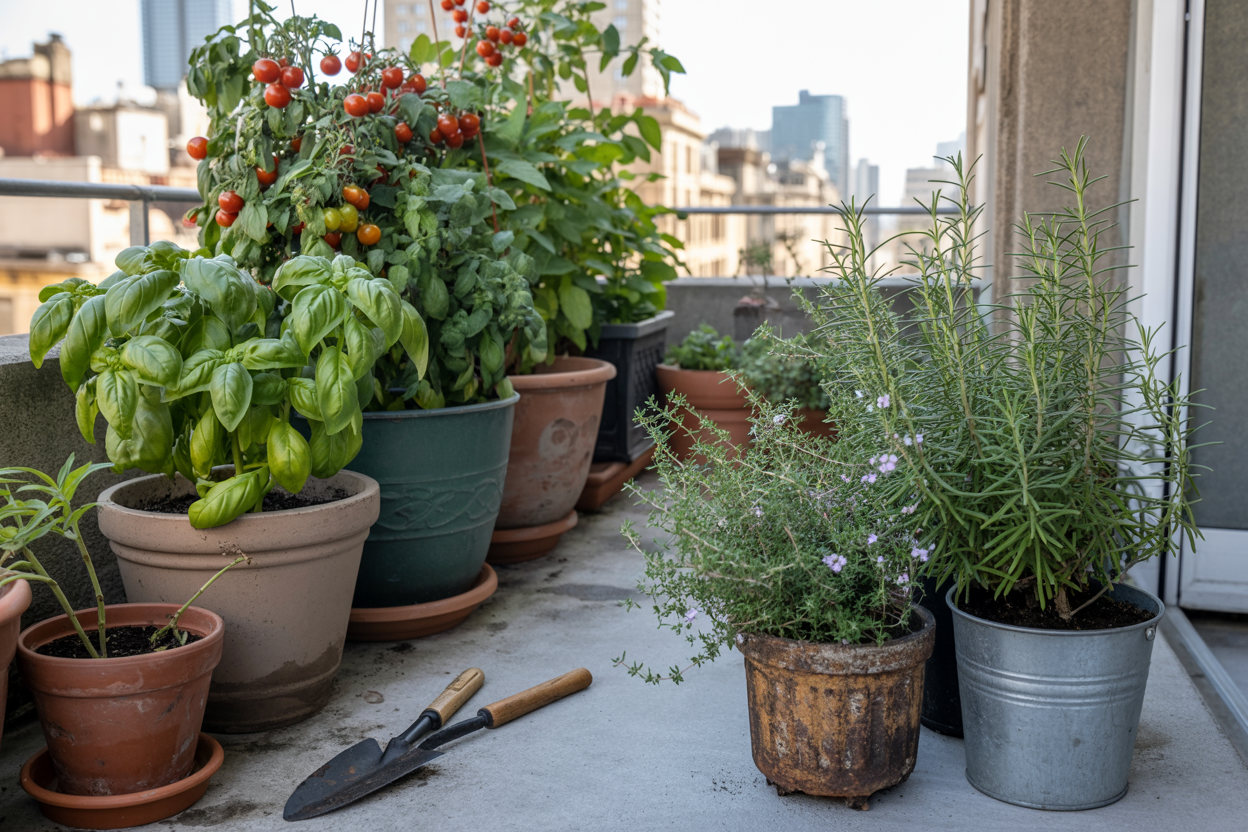
Introduction to How to Keep Your Balcony Plants Healthy When You’re Busy or Traveling
Every balcony gardener faces the same worry: what happens to my plants when life gets too busy, or when I leave for a few days? Unlike in-ground gardens, balcony plants are fully dependent on you. Rain rarely reaches them, pots dry out fast, and temperature swings can stress them quickly.
But here’s the good news: you don’t need to sacrifice your garden when life gets hectic. With the right planning and some clever tools, your balcony can stay green and productive even if you’re away for a weekend, a week, or longer.
This guide shares practical methods to keep balcony plants healthy during busy times or travel. We’ll cover watering systems, light management, plant selection, and preparation checklists for different trip lengths. By the end, you’ll know exactly how to protect your plants — and come home to a thriving balcony instead of wilted pots.
New to balcony gardening? Start with our Beginner’s Guide to Balcony Gardening for setup basics before tackling travel care.
Step 1: Understand Your Plants’ Survival Thresholds
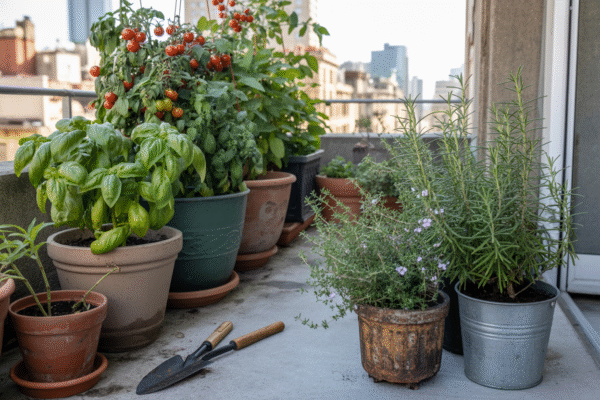
Not all plants react the same to neglect. Some wilt within hours, while others shrug off a missed watering. Knowing your plants’ tolerance levels helps you plan.
- Thirsty plants (high maintenance): Basil, parsley, tomatoes, cucumbers. These need daily watering in summer.
- Moderate drinkers: Peppers, spinach, lettuce. Can tolerate 1–2 missed waterings.
- Survivors (low maintenance): Rosemary, thyme, kale, succulents. Can last 5–7 days without care.
Pro Tip:
Arrange plants by need. Group thirsty crops together near easy-access watering setups. Place hardy plants separately so you don’t overwater them.
See also: 10 Easy Vegetables to Grow in Balcony Containers for beginner-friendly plant ideas.
Step 2: Short-Term Solutions (Busy Weeks, 1–3 Days Away)
Even a busy workweek can leave plants stressed. Here’s how to safeguard them for short gaps.
Self-Watering Planters
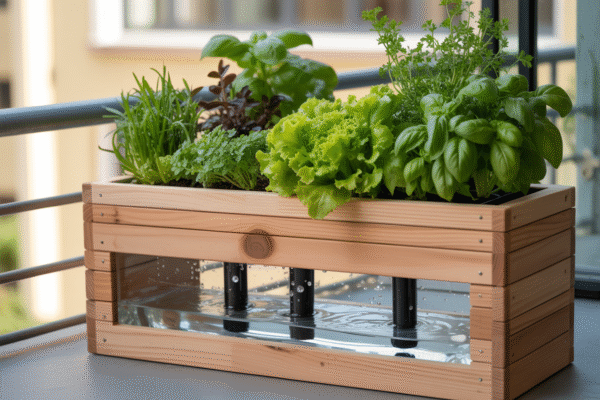
These pots hold a water reservoir at the base. Roots draw moisture gradually, reducing the need for daily watering. Perfect for herbs, greens, and flowers.
Watering Spikes and Globes
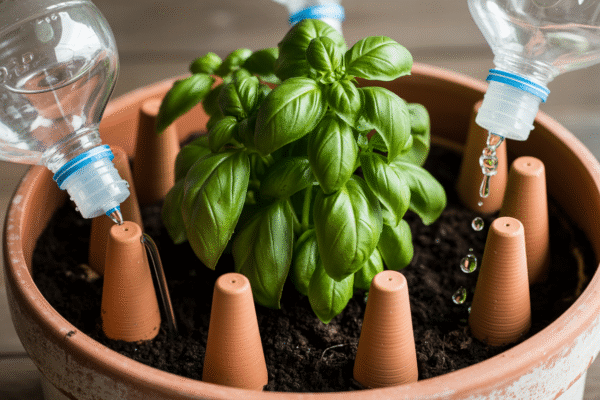
Affordable and easy to use. Fill them with water, insert in soil, and they release moisture slowly. Suitable for weekends or 2–3 days away.
Mulching the Soil
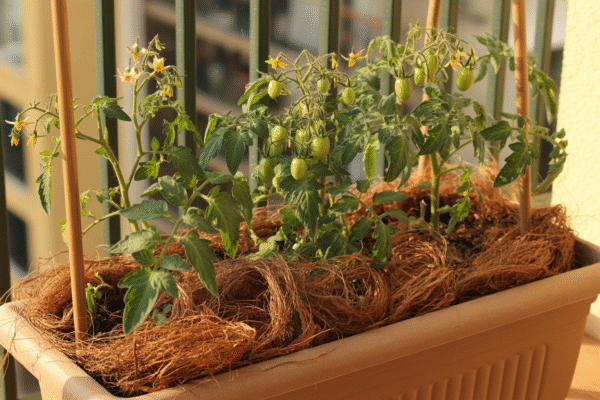
Covering the top of your containers with mulch reduces evaporation. Coconut husks, bark chips, or even pebbles help keep moisture in.
Step 3: Medium-Term Solutions (4–10 Days Away)
If you’re planning to be away for a long weekend, business trip, or up to 10 days, your balcony plants need more than a quick fix. Short-term methods like watering spikes may not last the full week. Instead, you’ll want systems that keep soil evenly moist and prevent stress. Here are three reliable strategies.
Drip Irrigation Kits
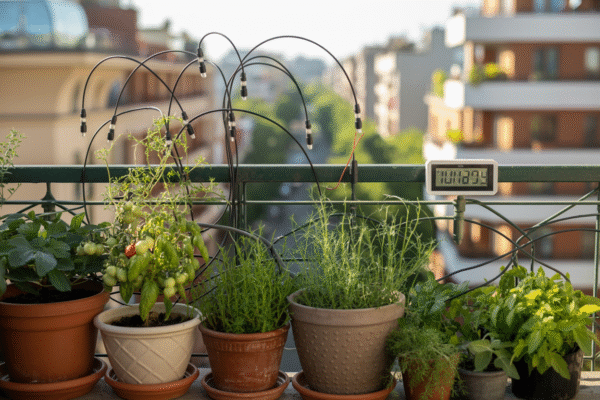
A compact drip kit with a timer provides precise water delivery. Works for balconies with many pots.
A drip irrigation kit for balconies is one of the most effective solutions for medium-length trips. These kits connect thin tubes to each pot, delivering small, steady drops of water right at the root zone. The slow-release method prevents both overwatering and drying out, which makes them especially useful for thirsty plants like tomatoes, basil, or cucumbers.
Most modern drip systems include a timer (battery-powered or Wi-Fi enabled) that lets you schedule watering even while you’re away. This ensures your plants get water consistently — early in the morning or late in the evening when evaporation is lowest.
Why it works for balconies: Drip kits are compact, easy to install, and use less water than hand-watering. They’re perfect for gardeners who want a “set it and forget it” solution.
Capillary Matting
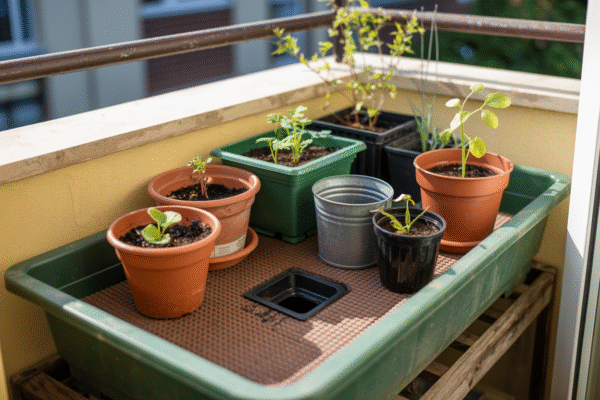
Lay absorbent mats in trays, place pots on top, and plants “wick” water from below. Keeps soil damp for up to 10 days.
Capillary matting is a simple yet highly effective method of keeping balcony plants alive while away. The mats are made from absorbent fabric placed on a tray or waterproof surface. Pots sit directly on top, and the plants “wick” water upwards through the soil as needed.
This system keeps containers evenly moist for up to 7–10 days, making it an excellent low-tech option. Unlike drip systems, there’s no need for electricity or timers — just ensure the mat stays saturated with water.
Why it works for balconies: It’s inexpensive, requires little setup, and is ideal for smaller pots or herb gardens. If you’re renting and can’t install permanent systems, capillary matting is a flexible solution.
Grouping Plants Together
Another overlooked strategy for balcony gardening travel care is microclimate grouping. By clustering your pots together, preferably in a shaded corner, you reduce wind exposure and evaporation. Plants collectively hold moisture better than isolated pots, and leafy plants help shade one another.
For example, place large leafy vegetables like peppers or kale on the outside edges, creating natural windbreaks, while placing delicate herbs or lettuces toward the middle where they’re shielded. This mimics how plants grow in nature — benefiting from shared humidity and shade.
Why it works for balconies: It costs nothing, it’s easy to do last minute before a trip, and it can extend the survival of your plants by several extra days. For maximum effect, combine grouping with mulching or capillary matting.
Step 4: Long-Term Solutions (2+ Weeks Away)
Extended trips require robust setups.
When your travel plans extend beyond a week — say two weeks or more — balcony plants need a truly reliable system to survive. Weekend fixes like watering spikes won’t last this long. Extended absence requires robust, automated solutions or trusted human help. Without proper preparation, you’ll likely come home to parched soil, stressed roots, or even dead plants. Here are three long-term strategies that experienced balcony gardeners use to keep their gardens thriving while away.
Automatic Irrigation with Timer
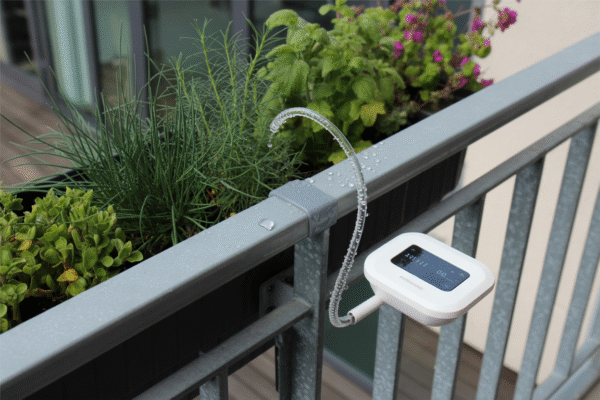
A Wi-Fi or battery-powered timer connects to drip lines, ensuring consistent watering. Test before you leave to avoid surprises.
For serious balcony gardeners, an automatic irrigation system with a timer is the gold standard. These setups connect to drip irrigation lines or soaker hoses and release water at set intervals, ensuring your plants are hydrated exactly when they need it.
Modern timers come in both Wi-Fi enabled and battery-powered options. Wi-Fi timers, such as the Orbit B-Hyve Smart Hose Timer, allow you to control watering schedules remotely from your smartphone — even if you’re across the world. Battery-operated versions are simpler but just as effective if you don’t have reliable Wi-Fi on your balcony.
Why it works for balconies: Timers ensure consistency, which is key to plant survival. Unlike manual watering before you leave, a timer avoids the boom-and-bust cycle of flooding the soil once and hoping it lasts. Automated systems provide small, frequent doses of water that mimic natural rainfall, keeping plants stress-free.
Pro Tip:
Always test your system for at least 3–5 days before leaving. This helps you catch clogs, leaks, or scheduling errors in advance.
Neighbor or Plant Sitter

The most reliable method: ask a friend or neighbor to check plants once a week. Offer them fresh herbs or veggies as thanks.
Even the most advanced systems can fail — timers lose batteries, hoses clog, Wi-Fi drops. That’s why many balcony gardeners still rely on a trusted neighbor or plant sitter as a backup. A human touch adds flexibility that automation can’t provide.
Ask a neighbor, family member, or friend to stop by once or twice a week. Give them clear instructions: how much water each type of plant needs, which pots dry out fastest, and where your fertilizer or tools are stored. Offering them fresh herbs, vegetables, or even a small thank-you gift makes it a win-win arrangement.
Why it works for balconies: A neighbor can spot issues you’d never see remotely — like pests, fungal spots, or toppled pots from sudden wind gusts. A quick 5-minute check-in can save an entire garden.
Pro Tip:
Leave a labeled watering can or hose connected for convenience. The easier you make it, the more likely your helper will stick to the routine.
Smart Plant Sensors
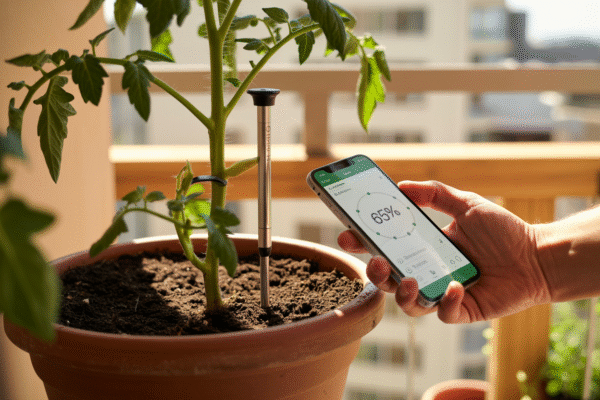
Tech-savvy gardeners can install soil moisture sensors that send alerts to your phone. Some pair with auto-watering systems.
For the tech-savvy gardener, smart plant sensors offer peace of mind. These small devices insert into your soil and monitor real-time data: moisture levels, temperature, sunlight exposure, and even fertilizer needs. The readings sync with your smartphone, alerting you when a plant is thirsty or stressed.
Some advanced sensors can also integrate with smart irrigation systems, triggering watering automatically when soil moisture dips too low. For example, the Xiaomi Mi Flora Smart Plant Sensor is affordable, easy to use, and widely trusted by indoor and balcony gardeners.
Why it works for balconies: Unlike traditional “set it and forget it” methods, smart sensors give you feedback. You don’t have to wonder if your self-watering setup is working — you’ll know instantly if soil is too dry or too wet. For gardeners who travel often, this adds both convenience and confidence.
Pro Tip: Place one sensor per container group rather than every single pot. This saves money and still gives you accurate insights into your balcony’s microclimate.
Step 5: Managing Sunlight and Temperature
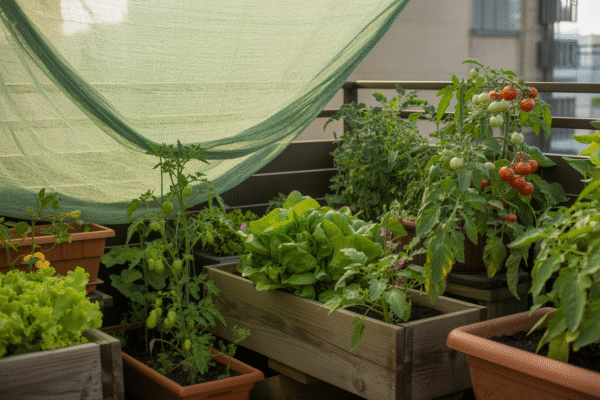
Sun and heat are just as risky as dry soil.
- For hot balconies: Add shade cloths to prevent scorching.
- For cold climates: Move pots against the wall for warmth.
- For shady balconies: Use LED grow lights on a timer.
Related: Balcony Garden Layout Ideas for Small Apartments for light placement tips.
Step 6: Pre-Trip Checklist (Practical Steps)
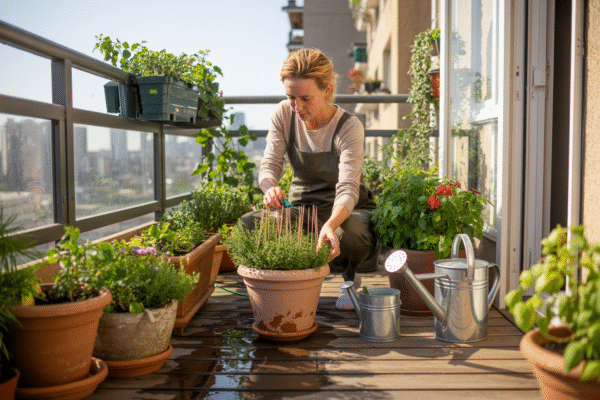
For weekend trips (2–3 days):
- Water plants deeply before leaving.
- Use watering spikes or self-watering pots.
- Move plants out of direct midday sun.
For 1-week trips:
- Install drip irrigation or capillary mats.
- Mulch all containers.
- Ask a neighbor for one mid-week check.
For 2-week+ trips:
- Combine drip irrigation with smart timers.
- Fertilize with slow-release spikes before leaving.
- Arrange for weekly neighbor check-ins.
Step 7: Plants That Suit Busy Gardeners
If your lifestyle is hectic, choose crops that forgive neglect. Not everyone has the luxury of spending hours each day tending to their balcony garden. If your lifestyle is demanding — whether you’re balancing work, travel, or family — it’s better to choose plants that thrive on minimal attention. The right selection ensures your balcony stays green and productive without the stress of constant care.
Here are some of the best low-maintenance balcony plants for busy gardeners.
Herbs That Practically Take Care of Themselves
- Rosemary – This woody herb is drought-tolerant and thrives even in poor soils. Once established, it requires very little watering and grows happily in containers.
- Thyme – Compact, fragrant, and hardy, thyme is perfect for small balcony planters. It tolerates full sun and doesn’t mind if you forget a watering or two.
- Oregano – Known for spreading easily, oregano is forgiving of neglect. It actually prefers slightly dry soil, making it ideal for people who travel often.
Why they work for balconies: Mediterranean herbs naturally evolved to withstand hot, dry conditions. They do well in containers, need minimal feeding, and provide the bonus of fresh flavor for your kitchen.
Vegetables That Forgive Neglect
- Kale – One of the toughest leafy greens, kale can handle partial shade and bounces back even if leaves wilt slightly. Harvest regularly to keep plants productive.
- Swiss Chard – Similar to kale, chard is resilient and doesn’t bolt quickly in summer heat. It’s a cut-and-come-again vegetable, meaning you can harvest over many weeks.
- Peppers – Compact varieties of peppers (bell peppers or chili peppers) are surprisingly easy. They need less frequent watering than tomatoes and are less prone to disease in containers.
Why they work for balconies: These vegetables don’t require constant monitoring. They handle fluctuations in temperature and water better than sensitive crops like cucumbers or tomatoes.
Ornamentals That Survive on Minimal Care
- Snake Plant (Sansevieria) – Famous as a “set it and forget it” plant, snake plants tolerate drought, low light, and even neglect. Perfect for decorative balcony corners.
- Aloe Vera – A succulent with both aesthetic and medicinal value. Aloe stores water in its leaves, making it extremely drought-resistant.
- Succulent Mix – Small succulents (echeveria, haworthia, jade plant) thrive in balcony containers with little more than occasional watering.
Why they work for balconies: Ornamentals like succulents and snake plants not only beautify your space but also require watering only once every 1–2 weeks in most climates. They’re virtually stress-free.
Pro Tip: Combine Function and Beauty
If you’re short on time, create a mixed balcony garden that balances hardy herbs, low-maintenance vegetables, and decorative ornamentals. For example:
- A rosemary bush for cooking and fragrance.
- A pot of kale for fresh greens.
- A snake plant or aloe vera for easy decoration.
This way, even if you skip a few days of care, your garden still looks alive and useful.
Helpful Resources
University of Illinois Extension – Watering Container Gardens
The Spruce – How to Keep Plants Alive While on Vacation
RHS – Caring for Plants While Away
Frequently Asked Questions (FAQ)
How long can balcony plants survive without water?
Most container plants last 2–3 days, but herbs and vegetables dry faster than ornamentals.
What’s the best setup for 1 week away?
Capillary matting or a drip irrigation kit with timer works best.
Should I fertilize before a trip?
Yes, but use slow-release spikes, not liquid feed.
Can LED grow lights be left on timers safely?
Yes, smart plugs allow safe scheduling of grow lights.
Which plants are best if I travel often?
Stick with hardy herbs and leafy greens like rosemary, thyme, and kale.
Is asking a neighbor still necessary with automation?
Yes — even with tech, a quick human check prevents disasters.
What’s the cheapest DIY watering trick?
Plastic bottles with small holes act as free slow-drip irrigators.
I have a book that features balcony plants, this is good. Make sense. I guess this can help me too in research.