
Tea & Medicinal Plants on a Balcony: Simple Small-Space Growing Guide
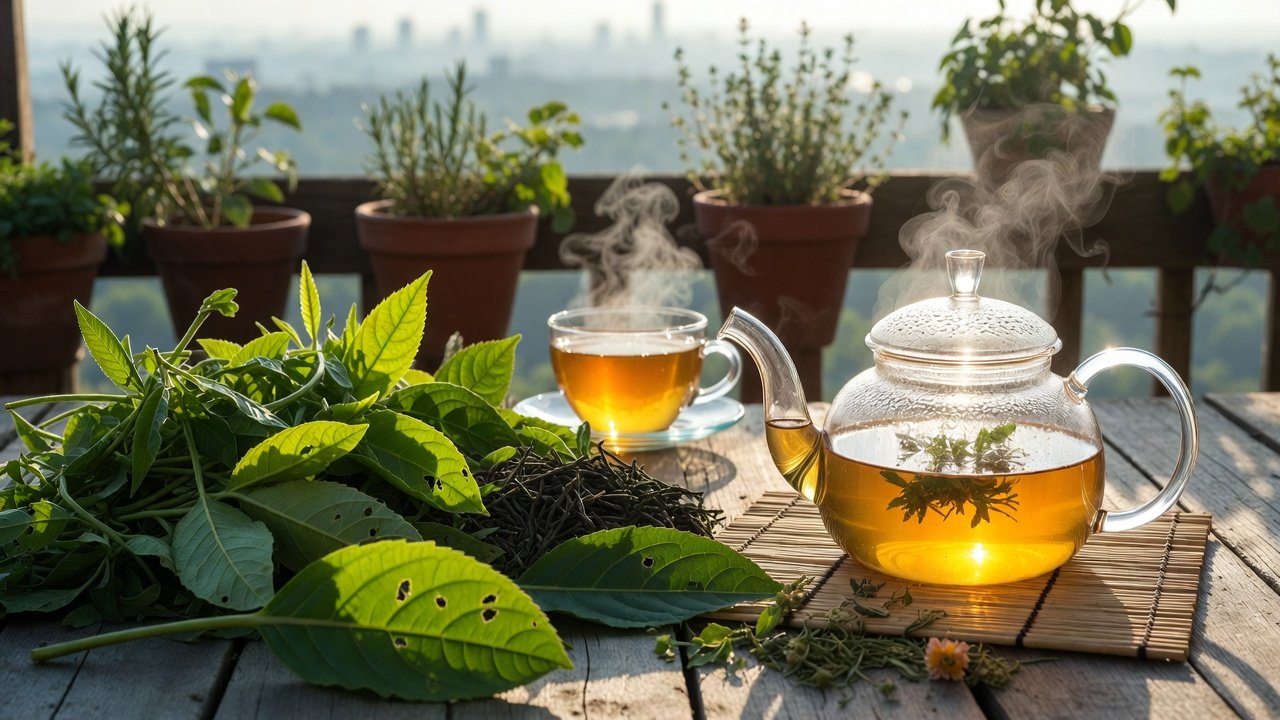
Balcony gardening has quietly become one of the most practical wellness habits in modern home life. Between video calls, school runs, and constant smartphone notifications, many families are looking for simple ways to slow down and reconnect with something tangible. Growing a medicinal plants balcony setup or starting a tea garden balcony does more than beautify a small space. It changes daily rhythms.
In many remote-working households, mornings now begin at a kitchen counter or balcony table. Instead of reaching immediately for processed tea bags or sugary drinks, fresh mint leaves, lemon balm, or rosemary clipped from a pot can transform an ordinary cup of hot water into a calming ritual. A DIY herbal garden small space arrangement offers both health support and culinary flexibility. Herbs can ease mild digestive discomfort, support relaxation, and elevate everyday cooking.
Balcony-grown herbs also offer transparency. There is clarity in knowing exactly how plants were grown, what soil was used, and when leaves were harvested. For families, it becomes a shared learning experience. Children can observe growth cycles. Adults can rediscover seasonal rhythms often lost in urban living.
This guide focuses on selecting the best medicinal and tea herbs for containers and mastering potting, care, and harvesting techniques for a thriving balcony garden.
If you’re just getting started, following a simple balcony herb garden blueprint can help you choose the right kitchen herbs that thrive in small spaces.
Table of Contents
Best Medicinal and Tea Herbs for Containers
When working with a tea garden balcony, plant selection must match space limitations, sunlight exposure, and container size. Not every medicinal herb adapts well to pots, but several resilient varieties thrive in balcony conditions.
Balcony containers create microclimates. Sunlight reflects off walls. Wind exposure may vary by floor height. Choosing adaptable herbs reduces frustration and increases harvest success.
Mint: A Reliable Foundation Herb
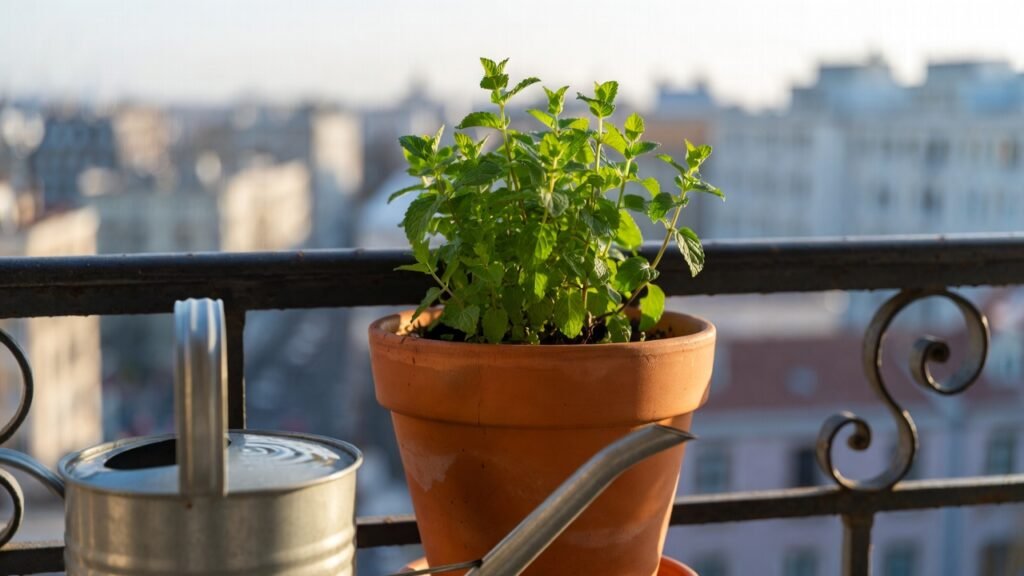
Mint is often the first plant recommended for a medicinal plants balcony setup because it is vigorous and forgiving. It thrives in containers, making it ideal for small spaces where spreading roots are otherwise hard to manage.
Mint supports digestion and creates refreshing teas that can be enjoyed hot or cold. In modern households where caffeine intake can run high due to long work hours, mint tea offers a naturally caffeine-free alternative.
Mint prefers partial to full sun and moist soil. Because it spreads aggressively, containers are actually beneficial. A medium pot (at least 8–10 inches deep) is sufficient.
Lemon Balm: Gentle Calm in a Pot
Lemon balm has gained popularity among wellness enthusiasts seeking mild stress support. In work-from-home routines filled with back-to-back online meetings, a calming herbal infusion can create a small transition ritual between tasks.
Lemon balm grows well in containers and produces soft, lemon-scented leaves perfect for tea. It prefers full sun but tolerates partial shade. The leaves are most aromatic before flowering.
For a tea garden balcony, lemon balm pairs beautifully with mint. Together, they create balanced herbal blends that are soothing without being overpowering.
Chamomile: Delicate but Worth the Effort
Chamomile requires slightly more attention than mint or lemon balm, but it rewards gardeners with delicate flowers used for classic calming tea.
German chamomile, the annual variety, adapts well to pots if provided good drainage and full sunlight. Its daisy-like blooms signal harvest readiness. In busy family routines, chamomile tea in the evening can become a gentle wind-down ritual before bedtime.
Because chamomile prefers lighter soil and consistent sunlight, positioning the container on the brightest part of the balcony improves success.
Rosemary: Culinary and Medicinal Power
Rosemary bridges the gap between culinary and medicinal use. It enhances roasted vegetables and supports herbal infusions traditionally associated with circulation and mental clarity.
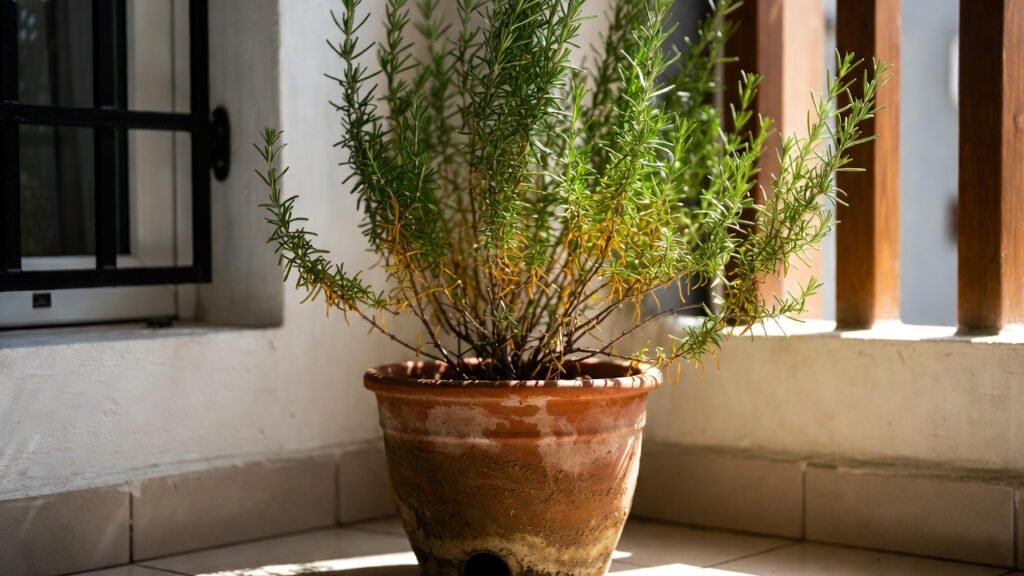
For remote workers managing screen fatigue, rosemary tea or simply brushing fingers across its fragrant leaves can be invigorating. Rosemary prefers well-draining soil and plenty of sunlight. Overwatering is a common mistake.
It thrives in slightly larger pots and benefits from occasional pruning to maintain shape and encourage new growth.
Additional Container-Friendly Herbs
If space allows, consider expanding a DIY herbal garden small space setup with:
• Thyme
• Sage
• Calendula
• Holy basil (Tulsi)
Each of these herbs adapts to container life and offers culinary or wellness benefits.
The key is not overcrowding. A few healthy, well-maintained plants provide more value than many struggling ones.
Potting, Care, and Harvesting Tips
Successful balcony gardening depends less on complex techniques and more on consistent observation. In the same way digital habits improve when monitored, plants thrive when regularly checked.
Balcony herbs need the right container size, proper drainage, balanced soil, and a steady care routine. Understanding these fundamentals prevents common beginner frustrations.
Choosing the Right Containers
Containers should always have drainage holes. Waterlogged soil leads to root rot, especially in herbs like rosemary and chamomile.
For most medicinal herbs:
• Small herbs (chamomile, thyme): 6–8 inch pots
• Medium herbs (mint, lemon balm): 8–10 inch pots
• Larger woody herbs (rosemary, sage): 10–12 inch pots
Terracotta allows airflow but dries quickly. Plastic retains moisture longer. Balcony gardeners often test both depending on climate and daily schedule.
Soil and Drainage Basics
Herbs prefer light, well-draining potting mix. Avoid heavy garden soil, which compacts easily in containers.
A practical blend includes:
• Quality potting mix
• A small amount of compost
• Perlite or sand for drainage
In humid climates, extra drainage support is essential. In drier climates, slightly moisture-retentive soil helps maintain balance.
Step-by-Step Guide to Planting Tea & Medicinal Plants on a Balcony
This process applies to mint, lemon balm, chamomile, and rosemary.
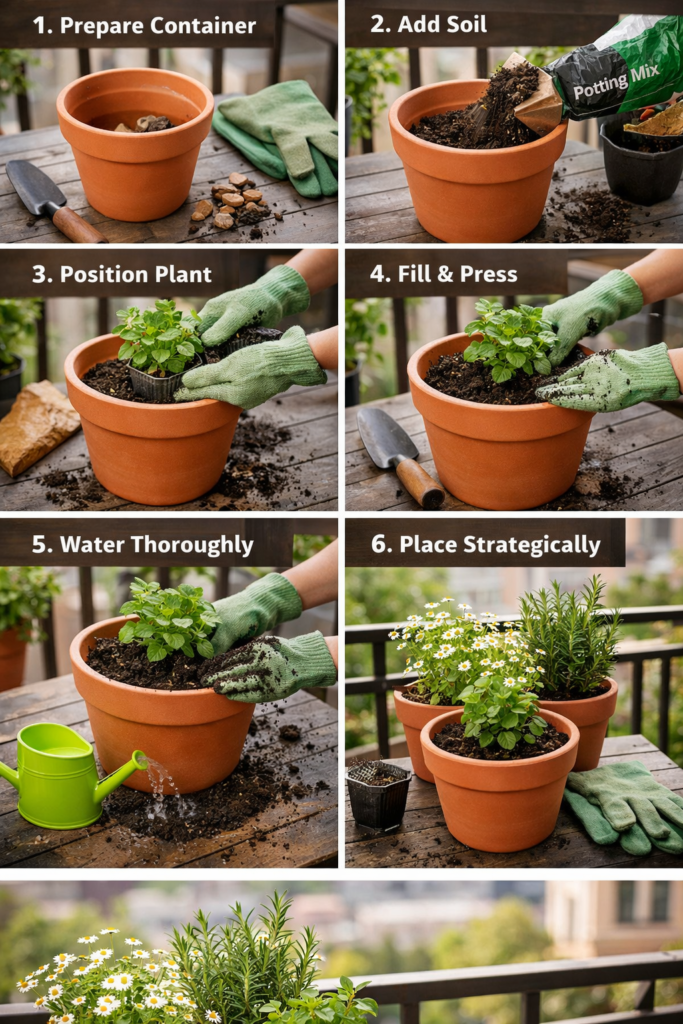
Step 1: Prepare the Container
Ensure drainage holes are open. Add a thin layer of small stones or broken pottery at the base to improve drainage.
Step 2: Add Soil
Fill the pot about two-thirds with prepared potting mix.
Step 3: Position the Plant
Remove the herb from its nursery container. Gently loosen the roots if tightly bound. Place the plant at soil level matching its original height.
Step 4: Fill and Press
Add remaining soil around the roots. Press gently to remove air pockets without compacting too firmly.
Step 5: Water Thoroughly
Water until moisture drains from the bottom. This helps settle the soil around the roots.
Step 6: Place Strategically
Position sun-loving herbs like rosemary and chamomile in the brightest area. Mint and lemon balm tolerate partial shade.
Seasonal changes can impact container herbs quickly, so reviewing these balcony garden climate tips will help you prepare for heat waves and sudden cold snaps.
Watering Rhythms for Balcony Life
In modern routines where schedules shift daily, overwatering is more common than underwatering. Many gardeners water out of habit rather than need.
Before watering:
• Insert a finger one inch into the soil
• If dry, water thoroughly
• If moist, wait another day
Mint and lemon balm prefer consistently moist soil. Rosemary prefers soil that dries slightly between watering.
Wind exposure can increase evaporation. Balcony plants often dry faster than indoor plants.
Pruning and Encouraging Growth
Regular harvesting actually improves plant health. Pinching off mint and lemon balm tips encourages bushier growth.
For rosemary, light trimming prevents woody overgrowth. Chamomile flowers should be harvested once fully open, ideally mid-morning after dew evaporates.
Using clean scissors reduces the risk of disease transmission between plants.
Harvesting for Tea Preparation
Fresh herbs can be used immediately. For drying:
• Harvest mid-morning
• Rinse gently
• Pat dry
• Hang small bundles upside down in a shaded, well-ventilated area
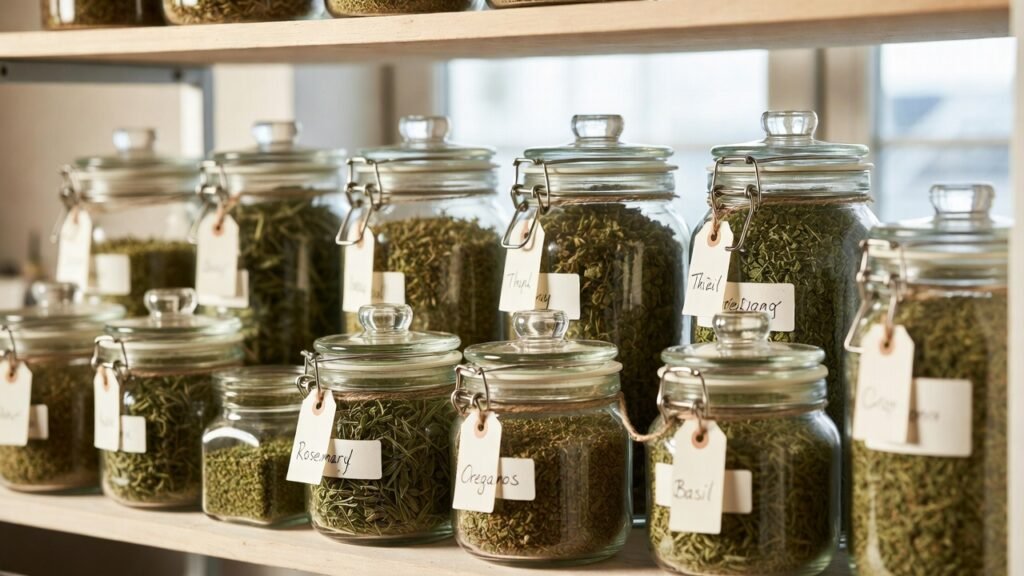
Once dried, store in airtight glass containers away from sunlight.
Video demonstrations of tea preparation can help families see the full cycle—from pot to cup. Watching children observe the transformation from fresh leaves to steaming herbal tea often strengthens interest in maintaining the garden.
A tea garden balcony becomes more than a decorative project. It becomes a daily reminder that wellness can begin in small, manageable spaces.
How to Prepare Herbal Teas at Home
Once a medicinal plants balcony begins producing healthy leaves and flowers, the natural next step is learning how to transform those harvests into daily tea rituals. Preparing herbal tea at home is simple, but small details influence flavor, potency, and overall experience.
In many remote-work households, tea preparation becomes a mindful transition between tasks. After long stretches of screen time, stepping onto the balcony to clip fresh herbs signals a reset. The process itself slows breathing and shifts attention away from digital demands.
Basic Herbal Infusion Method (Fresh Herbs)
Fresh herbs contain more water, so slightly larger quantities are needed.
- Rinse freshly harvested leaves gently under cool water.
- Lightly bruise mint, lemon balm, or rosemary leaves by pressing them between fingers. This releases aromatic oils.
- Add 1–2 tablespoons of fresh herbs per cup of hot (not boiling) water.
- Cover and steep for 5–10 minutes.
- Strain and enjoy.
Chamomile flowers can be steeped whole. For families sensitive to strong flavors, blending chamomile with mint softens the taste.
Dried Herbal Tea Preparation
Dried herbs are more concentrated.
- Use 1–2 teaspoons of dried herbs per cup of hot water.
- Cover while steeping to preserve volatile oils.
- Steep 5–15 minutes depending on desired strength.
Rosemary and sage benefit from slightly longer steeping times. Lemon balm and mint are typically ready within 5–7 minutes.
Simple Balcony Tea Blends
A tea garden balcony allows creative combinations based on mood or time of day.
Morning Focus Blend
• Rosemary
• Mint
Evening Calm Blend
• Chamomile
• Lemon balm
Digestive Support Blend
• Mint
• Chamomile
These blends can be adjusted seasonally. In warmer months, herbal infusions can be cooled and served over ice. During colder months, a warm cup becomes part of a calming evening routine.
Storage Tips for Dried or Fresh Herbs
Proper storage preserves flavor and therapeutic value. Many balcony gardeners invest time in growing herbs but lose quality through poor storage practices.
Consistency matters. Just as digital files are organized for efficiency, herbs should be stored in a clean, stable environment.
Storing Fresh Herbs
Fresh herbs can be:
• Wrapped in slightly damp paper towels and placed in a sealed container in the refrigerator
• Stored upright in a small glass of water (like flowers), loosely covered
Mint and lemon balm typically last up to one week when refrigerated properly.
Avoid washing herbs before storage unless they will be used immediately. Excess moisture encourages mold growth.
Drying and Long-Term Storage
After air-drying herbs:
• Remove leaves from stems
• Store in airtight glass jars
• Keep away from direct sunlight and heat
• Label with harvest date
Most dried herbs retain good quality for 6–12 months. Aroma is the best indicator of freshness. If scent fades significantly, potency may have declined.
In small apartments, dedicating one cabinet shelf exclusively to herbal storage helps maintain organization and prevents cross-contamination with spices.
Combining Medicinal and Culinary Herbs in Small Spaces
A DIY herbal garden small space setup does not require separating medicinal and culinary plants. In fact, combining both enhances functionality and maximizes limited balcony square footage.
In modern households, space is often multifunctional. Balconies serve as work corners, relaxation zones, and mini gardens simultaneously. Designing a layered herb system keeps the area practical and visually appealing.
Layering Strategy for Balcony Gardens
Use vertical space thoughtfully:
• Place taller herbs like rosemary at the back
• Medium-height plants like lemon balm in the middle
• Low-growing herbs like thyme at the front
Hanging planters can hold trailing herbs. Railing planters are excellent for sun-loving varieties.
If space is limited, consider adding vertical elements — these DIY trellis ideas for tiny spaces make it easy to grow climbing plants without sacrificing floor space.
Companion Planting in Containers
While traditional companion planting is more common in ground gardens, container proximity still matters.
Mint should be kept in its own pot due to aggressive root growth. Rosemary prefers drier soil than lemon balm, so avoid planting them in the same container.
However, grouping pots with similar watering needs together simplifies care routines. This method is especially helpful for families balancing work, school schedules, and daily responsibilities.
Aesthetic Considerations
A tea garden balcony should feel inviting. Simple design principles improve sustainability:
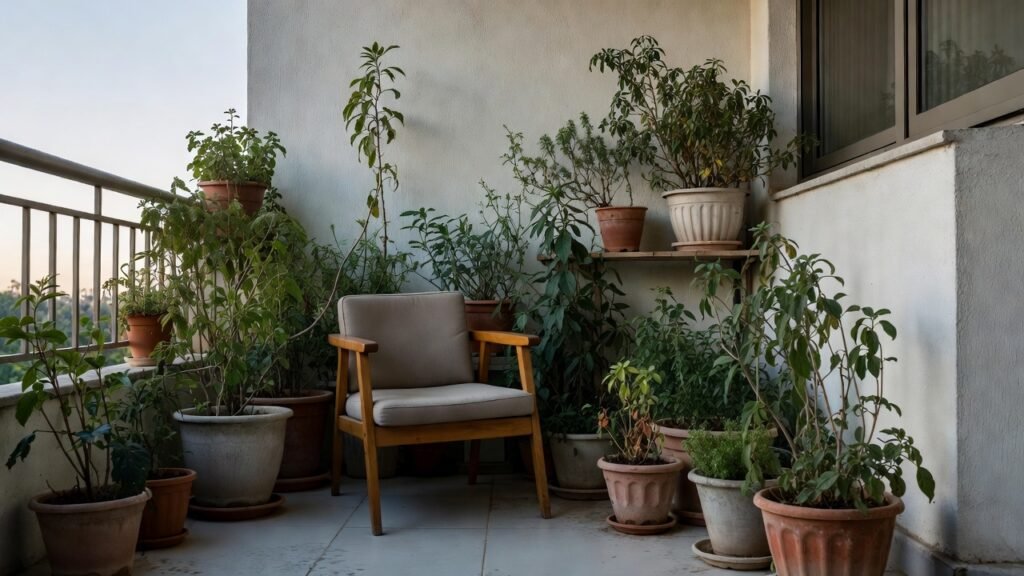
• Use matching pots for visual cohesion
• Add small labels for easy identification
• Include a small stool or chair for harvesting comfort
Even five well-maintained containers can transform a plain balcony into a green wellness corner.
Seasonal Adjustments for Balcony Herbal Gardens
Herbs respond to changing daylight and temperature. Observing seasonal shifts strengthens gardening confidence.
In hotter months:
• Water early morning
• Provide partial shade during intense afternoon sun
• Increase airflow between pots
In cooler months:
• Reduce watering frequency
• Protect sensitive herbs from heavy wind
• Bring smaller containers indoors if frost is expected
Mint and lemon balm are resilient. Rosemary prefers milder winters. Chamomile may need reseeding each season if grown as an annual.
Keeping a simple garden journal—digital or handwritten—helps track watering patterns and seasonal performance.
Conclusion
Growing a medicinal plants balcony or creating a tea garden balcony is more than a hobby. It is a practical lifestyle shift. In an era shaped by remote work, constant notifications, and indoor routines, balcony herbs restore small moments of balance.
A DIY herbal garden small space setup demonstrates that wellness does not require large land areas or complex systems. With thoughtful plant selection, consistent care, and mindful harvesting, even a modest balcony can produce mint for digestion, chamomile for relaxation, rosemary for clarity, and lemon balm for gentle calm.
The act of stepping outside to harvest herbs reconnects families to seasonal cycles. Preparing tea from freshly grown leaves transforms daily hydration into ritual. Over time, the balcony becomes a quiet anchor within a busy home.
Small spaces can cultivate meaningful change. A handful of well-tended pots is enough to begin.
FAQ Section
1. Can medicinal herbs really grow well on a small balcony?
Yes, many medicinal herbs adapt very well to containers. Mint, lemon balm, chamomile, and rosemary thrive in pots when given proper sunlight, drainage, and consistent watering. Even balconies with limited square footage can support a productive tea garden balcony using vertical shelves or railing planters.
2. How much sunlight do balcony herbs need daily?
Most tea herbs prefer 4–6 hours of sunlight per day. Rosemary and chamomile benefit from full sun, while mint and lemon balm tolerate partial shade. Observing how sunlight moves across the balcony throughout the day helps determine the best placement for each plant.
3. Is it safe to make tea from freshly harvested balcony herbs?
In most cases, yes, as long as the herbs are properly identified and grown without harmful chemicals. Always rinse leaves before use. Avoid harvesting from plants exposed to heavy pollution or untreated pests. If uncertain about plant identification, consult reliable horticultural resources before brewing.
4. How often should balcony herbs be watered?
Watering depends on climate, pot size, and wind exposure. A practical rule is to check soil moisture one inch below the surface. If dry, water thoroughly. Mint and lemon balm prefer consistent moisture, while rosemary prefers slightly drier soil between watering sessions.
5. Can medicinal and culinary herbs grow together?
Yes, many medicinal herbs are also culinary herbs. Rosemary, thyme, sage, and mint serve both purposes. However, herbs with different watering needs should remain in separate containers. Grouping pots by care requirements simplifies maintenance in a small-space garden.
6. How long do dried herbs remain effective?
When stored in airtight glass containers away from light and heat, most dried herbs maintain good quality for 6–12 months. Aroma is the best freshness indicator. If scent and flavor fade significantly, it may be time to replace the supply.
Extension Resources for Herb Gardening
- Growing Herbs in Containers – University of Georgia Extension – Comprehensive online article on choosing containers and techniques for growing many common herbs, including mint and rosemary. Growing Herbs in Containers (UGA Extension)
- Herb Gardening Basics – UC Master Gardeners, University of California – Authoritative guidance for successful herb gardening, including container tips and plant care. Herb Gardening Basics (UC Master Gardeners)