
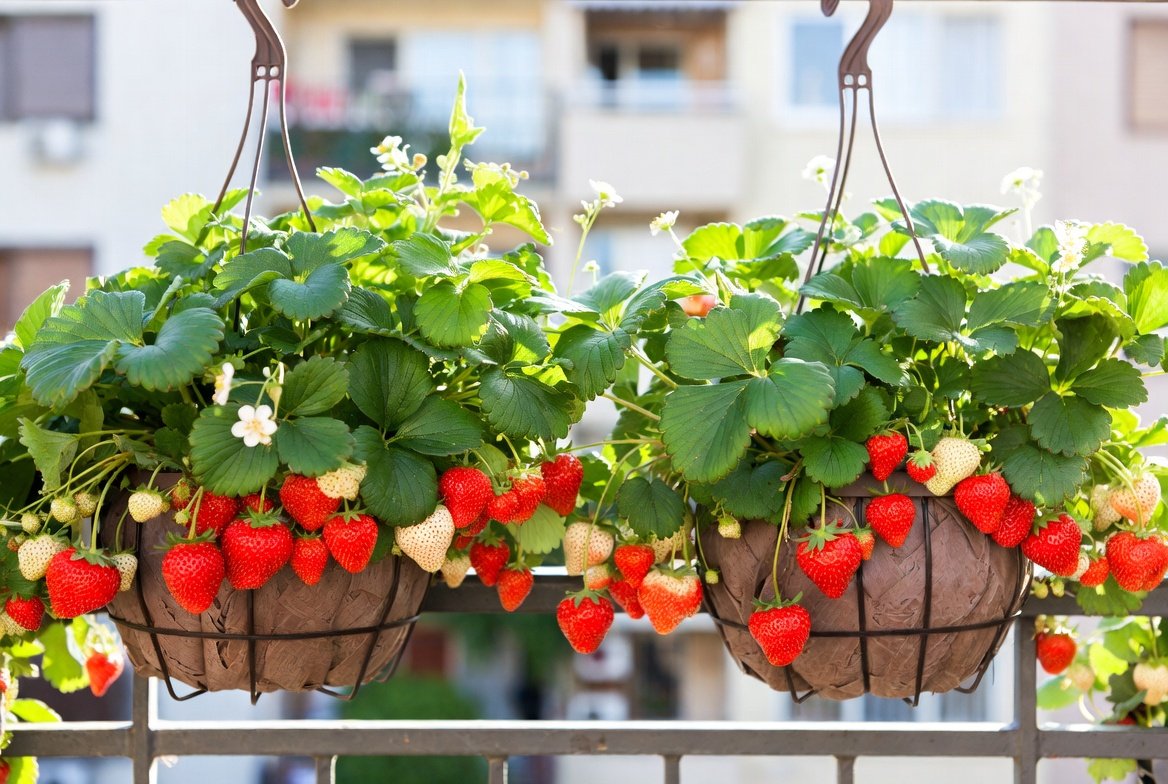
Introduction: Grow Strawberries in Hanging Balcony Baskets
If you’ve ever walked past a garden bursting with bright red strawberries and thought, “I wish I could grow these on my balcony,” you’re not alone. From my experience, strawberries are surprisingly happy in containers—even small hanging baskets—if you give them the right care.
Balcony strawberry plants are not only beautiful and fragrant, but they also give you fresh, sweet fruit right at arm’s reach.
Strawberries hanging baskets are perfect for urban gardeners who want to maximize space while enjoying homegrown produce. Growing strawberries in containers is simpler than many people think, but it does require attention to sunlight, soil, watering, and fertilization.
I’ve spent years experimenting with hanging baskets on my balcony, and I’ve learned a few tricks that make strawberries thrive in small spaces.
Table of Contents
How to Grow Strawberries in Hanging Balcony Baskets
Choosing the Right Hanging Basket for Balcony Strawberry Plants
The first step in successful container strawberries is picking the right basket. From my experience, baskets that are 10–12 inches deep with good drainage holes work best. Strawberries don’t like “wet feet,” so drainage is critical. I often line my baskets with coconut coir or sphagnum moss to help retain moisture while preventing waterlogging.
Consider the weight, too. Filled with soil and fruit, a hanging basket can get heavy, so make sure your hooks or railing can support it safely. I’ve seen baskets fall because people underestimated the combined weight—better to be safe than sorry!
Soil and Fertilization Tips to Grow Strawberries in Containers
Strawberries are hungry little plants. I use a high-quality potting mix blended with compost to provide essential nutrients. Balcony strawberry plants need soil that’s light, airy, and nutrient-rich. I’ve noticed that regular potting soil alone often dries too quickly in hanging baskets, so adding a bit of compost or well-rotted organic matter keeps my strawberries happy.
Feeding is key. From my experience, a balanced liquid fertilizer every 2–3 weeks encourages strong leaves, flowers, and fruit. When flowers appear, switching to a fertilizer higher in potassium promotes bigger, sweeter berries.
Strawberries hanging baskets respond quickly to feeding, and you’ll see visible improvement in leaf color and fruit size within a couple of weeks.
Sunlight and Placement for Balcony Strawberry Plants
Strawberries are sun lovers. I’ve found that placing hanging baskets where they get at least 6–8 hours of direct sunlight each day produces the sweetest fruit. Morning sun with afternoon shade works well in very hot climates to prevent leaves from scorching.
Wind is another factor. Hanging baskets are exposed, so gentle winds are fine, but strong gusts can damage leaves or knock off flowers. Placing baskets near a balcony wall or using a simple windbreak keeps your strawberries protected and stress-free.
Watering and Maintenance Tips for Strawberries Hanging Baskets
Watering is where many beginner gardeners struggle. Hanging baskets dry out faster than ground pots, so check the soil daily. I water when the top inch feels dry, usually every other day in warm months. Mulching with straw or coconut coir on the soil surface helps retain moisture and keeps the fruit clean.
Pruning is also important. Remove runners unless you want to propagate new plants, and trim old or yellowing leaves to keep your balcony strawberry plants productive. From my experience, consistent care prevents diseases like powdery mildew and encourages continuous fruiting.
Common Mistakes When Growing Strawberries in Containers
One mistake I see often is overcrowding. I’ve learned that planting too many strawberries in a small basket reduces airflow and increases disease risk. Another mistake is neglecting feeding; container strawberries rely on you for nutrients.
Finally, overwatering is just as harmful as underwatering. Monitor your soil and adjust as needed for optimal growth.
Conclusion
Growing strawberries in hanging baskets is one of the most rewarding balcony gardening projects. From my experience, a well-chosen basket, nutrient-rich soil, regular feeding, proper sunlight, and careful watering will give you lush leaves and sweet, juicy fruit all season. Balcony strawberry plants are perfect for small spaces, and the joy of picking your own berries right from your balcony is unmatched.
With a little patience and attention, your strawberries hanging baskets will thrive, producing fruit that’s fresher and tastier than anything from the store. Start small, observe your plants, and enjoy the journey of growing strawberries in containers—it’s worth every bite.
FAQs
1. Can I grow strawberries in hanging baskets on my balcony?
Yes! Strawberries hanging baskets are perfect for balconies. Choose a basket with good drainage, fill it with nutrient-rich soil, and place it in a sunny spot. With proper watering and fertilization, your balcony strawberry plants will produce sweet fruit.
2. How often should I water strawberries in containers?
Check the soil daily. Water when the top inch feels dry. Hanging baskets dry out faster than ground containers, especially in warm months. Mulching with straw or coconut coir helps retain moisture and protects the roots.
3. What soil is best for balcony strawberry plants?
Use a light, airy potting mix enriched with compost or well-rotted organic matter. Strawberries need nutrient-rich soil that drains well but retains moisture. Avoid heavy garden soil, which can compact and harm roots in containers.
4. Do strawberries in hanging baskets need fertilizer?
Yes. Feed your balcony strawberry plants every 2–3 weeks with a balanced liquid fertilizer. When flowers appear, switch to a fertilizer higher in potassium to promote bigger, sweeter fruit. Regular feeding keeps plants healthy and productive.
5. Can I grow multiple strawberries in one basket?
You can, but avoid overcrowding. Plant 2–3 strawberries per 10–12 inch basket to ensure proper airflow and reduce disease risk. Overcrowded baskets may produce smaller fruit and stressed plants.
Further Reading
- How to Grow Strawberries in Containers – Iowa State University Extension
A detailed guide on growing strawberries in containers, including planting, watering, sunlight needs, and care tips (also discusses hanging baskets and moisture management).
👉 How to Grow Strawberries in Containers (Iowa State University Extension) - Growing Berries on the Oregon Coast: Strawberries – Oregon State University Extension
Explains strawberry growing practices (including container plantings and hanging baskets) with tips for container size, runner removal, and cultivar selection.
👉 Growing Berries on the Oregon Coast: Strawberries (Oregon State University Extension) - Growing Strawberries for Beginners – West Virginia University Extension
A beginner-friendly guide from WVU Extension covering strawberry planting basics, which includes mentions of containers and hanging baskets as options for small‑scale growers.
👉 Growing Strawberries for Beginners (West Virginia University Extension)