

Balconies are more than just spaces for drying clothes—they serve as miniature gardens that respond quickly to weather extremes. Extreme heat waves or sudden cold snaps can stress container plants faster than anticipated. Unlike traditional garden beds, balcony pots heat up and cool down rapidly, exposing roots and leaves to sudden temperature swings. Applying balcony garden climate tips helps protect plants with practical strategies suitable for busy urban lifestyles.
Urban balconies create microclimates that differ from surrounding areas. High-rise walls reflect sunlight, concrete floors store heat, and wind tunnels between buildings can chill plants overnight. Even short periods of extreme heat or frost can damage plants.
Preparing the garden in advance is about stabilizing these conditions so container plants can thrive without constant intervention.
Table of Contents
Why Temperature Swings Are Critical for Container Plants
Container plants live in confined soil, which makes them highly sensitive to temperature changes. I’ve watched small pots overheat during a sunny afternoon, leaving roots dry and stressed even when soil looks moist. Likewise, cold nights can quickly damage shallow roots or cause leaves to wilt.
Because soil volume is limited, roots react almost immediately to weather swings. On my balcony, I’ve noticed how quickly small pots heat up in direct sun and how frost-sensitive herbs suffer overnight, even when neighboring ground-level gardens remain unharmed.
Urban balconies also create uneven exposure: south- or west-facing spaces trap heat during afternoons, while corners and edges can funnel cold winds. This is why following practical balcony garden climate tips is so essential—container plants cannot rely on the earth to buffer temperature extremes like larger garden beds.
Protecting Pots From Heat and Cold
Protecting your balcony containers doesn’t require expensive gear—it’s about mindful layering and observation. Take a few days to track which pots dry out fastest, which stay cool, and which corners of your balcony receive the harshest sun or wind. Observing microclimates is the first step toward effective urban gardening heat protection.
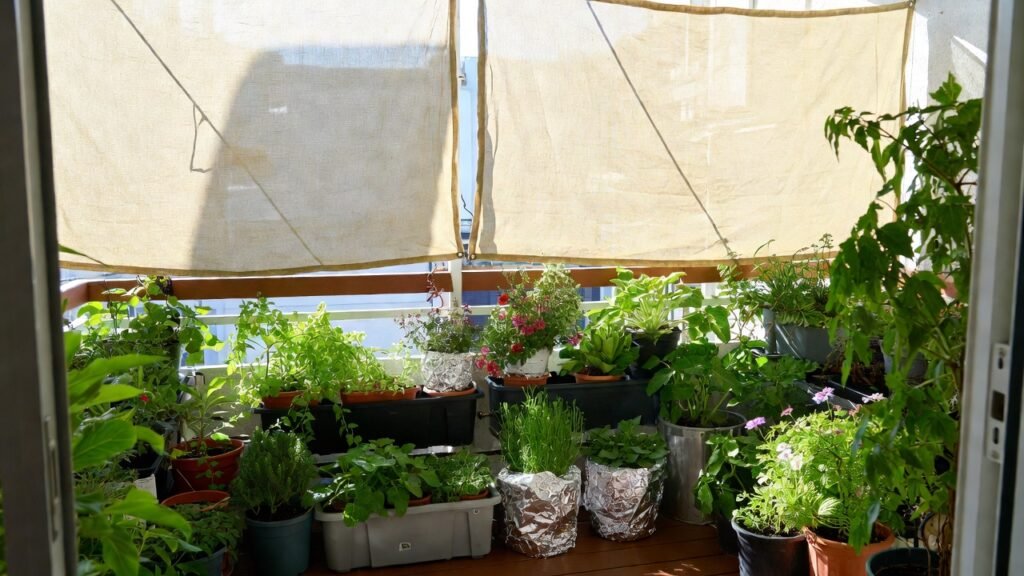
Adapting pots to microclimates is easier when reviewing small balcony garden ideas for full sun or shady spaces, offering practical ways to position plants according to light and temperature.
Insulating Containers to Stabilize Root Temperatures
Insulation slows temperature swings, keeping roots comfortable during heat waves or cold snaps. Double-potting is a simple yet effective solution: place a smaller pot inside a larger container, leaving an air gap that buffers extremes. Wrapping pots with burlap, towels, or cardboard also works—light-colored materials reflect heat in summer, while thicker layers retain warmth in winter.
Plastic, ceramic, and metal pots react differently to temperature. Plastic insulates better than metal, but dark pots still overheat. If you can’t switch containers, insulation layers or reflective wraps help balance extremes.
Using Reflective Covers and Surfaces for Heat Control
Excess sunlight can scorch your plants and dry soil rapidly. Reflective materials such as aluminum foil, white boards, or reflective pot sleeves redirect heat away from containers. Placing a reflective surface behind or beneath pots during peak sun hours can lower soil temperatures noticeably.
Light-colored covers reduce surface heat on dark pots, keeping leaves firm and roots active.
Creating Temporary Shade Without Blocking Airflow
Shade is key during heat waves, but airflow matters too. Shade cloths (30–50% opacity) reduce sunlight while letting air circulate. Ensure to often hang lightweight cloths or sheer curtains that can be adjusted hourly depending on sun position.
This reduces stress without hindering photosynthesis and keeps watering schedules manageable.
Managing Cold Snaps With Strategic Positioning
Cold protection starts with smart placement. Group pots together and position them near walls to use residual heat. Cover plants with breathable fabrics like fleece or cloth, making sure they don’t trap moisture. Avoid plastic touching leaves directly, as condensation can worsen frost damage.
Smaller pots are more vulnerable because they hold less heat. Grouping, repositioning, and using simple protective covers buys plants critical hours of survival during sudden cold snaps.
Choosing Resilient Plant Varieties
Plant choice is as important as protection methods. I favor heat-tolerant herbs like rosemary, oregano, and thyme during hot months, and cold-hardy greens like kale, spinach, and lettuce during cooler periods.
Locally adapted or dwarf varieties thrive in containers and tolerate temperature swings better. By planning for plant resilience, you reduce daily stress on your garden and can focus on seasonal rotation rather than emergency interventions.
For inspiration, explore the best small vegetables to grow on your balcony, which includes options that tolerate heat, cold, and container growth.
DIY Hacks for Extreme Temperature Events
Quick-response hacks save plants when weather alerts catch you off guard. During heat waves, frozen water bottles placed beside pots cool the soil temporarily. Sprinkling water on the balcony floor helps evaporative cooling.
For sudden frost, cardboard boxes, old towels, or newspaper wraps insulate overnight. Wind-prone areas benefit from furniture barriers or temporary walls that shield plants from harsh gusts. These low-cost solutions make a big difference without disrupting your workflow.
Seasonal Rotation Strategies for Small Balconies
Rotation maximizes survival and production. Heat-loving crops dominate in summer, while cool-season plants take over in winter. Succession planting ensures continuous growth without exposing young seedlings to extreme stress.
For tiny balconies, vertical rotation using shelves or stands allows sensitive plants to move to optimal microclimates. By aligning plant choices with seasonal temperature patterns, your balcony garden thrives with less intervention.
For detailed planning, a seasonal balcony garden checklist can help schedule plant rotations and ensure the right crops thrive in each month.
Conclusion
Protecting balcony plants from heat waves and cold snaps is about building resilience into your garden. Using insulation, reflective materials, shade, strategic positioning, and seasonal rotation keeps plants healthy without constant stress.
Choosing hardy, adaptable varieties and having quick DIY hacks on hand prepares you for sudden extremes. With these balcony garden climate tips, even small urban spaces can support thriving container gardens year-round.
FAQ Section
How often should I adjust protection measures during extreme weather?
Daily observation is usually enough. Check soil moisture, leaf condition, and pot temperature. Small adjustments—adding shade or insulation—often work better than constant repositioning.
Can overwatering help plants survive heat waves?
Overwatering can harm plants by reducing oxygen in the soil. Water deeply during cooler hours, and use shade or reflective methods to manage temperature instead.
Are plastic pots bad for temperature control?
Plastic pots insulate better than metal but dark-colored ones can overheat. Light-colored plastic or added reflective covers help balance extreme temperatures effectively.
What’s the safest way to protect plants from frost overnight?
Move pots near walls, group them, and cover with breathable fabric. Avoid plastic directly on leaves and remove covers in the morning to prevent moisture buildup.
Do all balcony plants need protection during extremes?
No. Hardy or established plants tolerate short extremes. Young seedlings, flowering crops, and shallow-rooted plants benefit most from protective measures.
How do I know if a plant is stressed by temperature, not pests?
Temperature stress shows as sudden wilting, leaf scorch, or discoloration without visible insects or disease signs. Recovery after a few days usually confirms temperature as the cause.
Helpful Resources
• Royal Horticultural Society (RHS) – Container Gardening Advice — Comprehensive guidance on planning and managing container gardens, including best practices for soil, plant selection, and seasonal care. RHS Container Gardening Tips and Techniques
• University of California Agriculture and Natural Resources (UC ANR) – Urban and Home Gardening Resources — Research‑based resources on sustainable gardening practices, climate considerations, and urban agriculture techniques from a major land‑grant university system. UC ANR Urban Gardening and Home Gardening Resources
• FAO (Food and Agriculture Organization of the United Nations) – Climate‑Smart Agriculture Overview — Authoritative overview of climate‑smart agricultural practices that build resilience to temperature swings and environmental stress, relevant for container gardeners adapting to climate impacts. FAO Climate‑Smart Agriculture Overview