

Why Succession Planting Works So Well on a Balcony
When you garden on a balcony, every pot, bucket, and railing planter has to earn its keep. Over the years, working remotely with my laptop by the window and a line of containers just outside, I learned quickly that planting everything at once leads to feast-or-famine harvests. Succession planting solves that problem by spreading planting dates so something is always growing, maturing, or ready to harvest.
In simple terms, succession planting means replacing crops as soon as they finish or staggering sowing times so plants mature at different stages. On a balcony, this approach turns limited square footage into a steady food system. Instead of one big harvest of lettuce that bolts in the heat, you get small, regular cuttings that fit neatly into everyday cooking routines.
This method is especially useful for year-round small-space gardening because balconies experience microclimates. Heat reflects off walls, wind dries soil faster, and light shifts with the seasons. Succession planting works with these realities, allowing you to adjust plant choices and timing without starting from scratch each season.
Table of Contents
Planning Rotations for Short-Term and Long-Term Crops
Balcony succession planting starts with understanding crop timelines. Some plants grow fast and finish quickly, while others take months and occupy containers for a long time. Planning rotations means pairing these wisely so no pot sits empty or overworked.
Short-term crops are your quick wins. These are plants that mature in 20–40 days and can be sown repeatedly without much disruption. Long-term crops, on the other hand, need commitment. Once they’re in, they dominate a container for weeks or months.
Before making any schedule, it helps to categorize your plants by growth duration and root depth.
Common short-term balcony crops include:
- Leafy greens like lettuce, arugula, and spinach
- Radishes and baby carrots
- Green onions and chives
- Microgreens and cut-and-come-again herbs
Common long-term balcony crops include:
- Tomatoes, peppers, and eggplants
- Bush beans and dwarf peas
- Kale, Swiss chard, and collards
- Strawberries and compact cucumbers
For choosing crops that consistently perform well in containers, the Best Small Vegetables to Grow on Your Balcony (Year-Round Guide) offers a practical shortlist that aligns well with succession planting.
The key rotation principle is simple: short-term crops go in before, between, or after long-term crops. For example, while waiting for a pepper seedling to establish, you can grow fast lettuce around it. Once the pepper shades the soil, the lettuce cycle ends, and the container shifts focus.
From experience, this approach mirrors good work-from-home habits. Just like batching tasks on a calendar, you avoid idle time. Every container has a job, and every planting date has a purpose.
Understanding Container “Lifecycles”
Each pot on your balcony should have a seasonal role. Thinking in lifecycles helps prevent soil exhaustion and planning fatigue.
A typical container lifecycle might look like this:
- Early season: quick greens or radishes
- Mid-season: fruiting or leafy main crop
- Late season: herbs or soil-rebuilding plants
This lifecycle approach also reduces burnout. Instead of rethinking everything monthly, you assign roles to containers and rotate within those roles. Over time, this becomes second nature, much like setting recurring reminders on your phone for meetings or hydration.
Companion Planting in Small Containers
Companion planting on a balcony isn’t about folklore or rigid rules. It’s about managing space, airflow, and nutrient use in confined containers. When done thoughtfully, companion planting supports succession planting by allowing multiple crops to share a pot without competing.
In small containers, companions should differ in at least one of these areas:
- Root depth
- Growth speed
- Canopy height
For instance, shallow-rooted greens can coexist with deeper-rooted fruiting plants. Fast growers can be harvested before slower crops need the space.
Effective balcony companion pairings include:
- Tomatoes with basil or green onions
- Peppers with lettuce or spinach
- Kale with dill or cilantro
- Strawberries with chives
These combinations aren’t just about plant health. They also support everyday cooking habits. Stepping outside to snip basil and lettuce from the same pot saves time, especially during busy workdays when meals need to be quick.
One mistake many beginners make is overcrowding. Companion planting is not an excuse to cram plants together. On a balcony, airflow matters more than abundance. A slightly underfilled container almost always outperforms an overcrowded one.
Managing Nutrients Between Successions
Succession planting increases soil use, so nutrient management becomes essential. Instead of replacing soil after every harvest, I’ve found it more practical to refresh it lightly.
Between successions:
- Remove old roots carefully to avoid disturbing soil structure
- Add a thin layer of compost or worm castings
- Water deeply once to help nutrients settle
This mirrors sustainable digital workflows. Just as you update software instead of reinstalling everything, refreshing soil keeps systems running efficiently without unnecessary waste.
Step-by-Step: Creating a Balcony Planting Schedule
A balcony planting schedule doesn’t need to be complicated. In fact, simple systems are more likely to be followed consistently. The goal is visibility and flexibility, not perfection.
Step 1: List your containers
Write down how many pots you have, their sizes, and where they sit. Light exposure changes across a balcony, and this affects planting order.
Step 2: Assign a main crop to each container
Choose one long-term or anchor crop per pot for the season. This gives structure to your rotation plan.
Step 3: Slot in short-term crops
Before and around the main crop, add quick-growing plants that fit the timeline. These fill gaps without stealing resources.
Step 4: Stagger planting dates
Instead of sowing all seeds at once, space them out by 1–2 weeks. This ensures harvests don’t overlap too heavily.
Step 5: Track harvest and replant dates
Use a simple notebook or notes app on your phone. I prefer digital notes because reminders and quick edits fit into daily routines better.
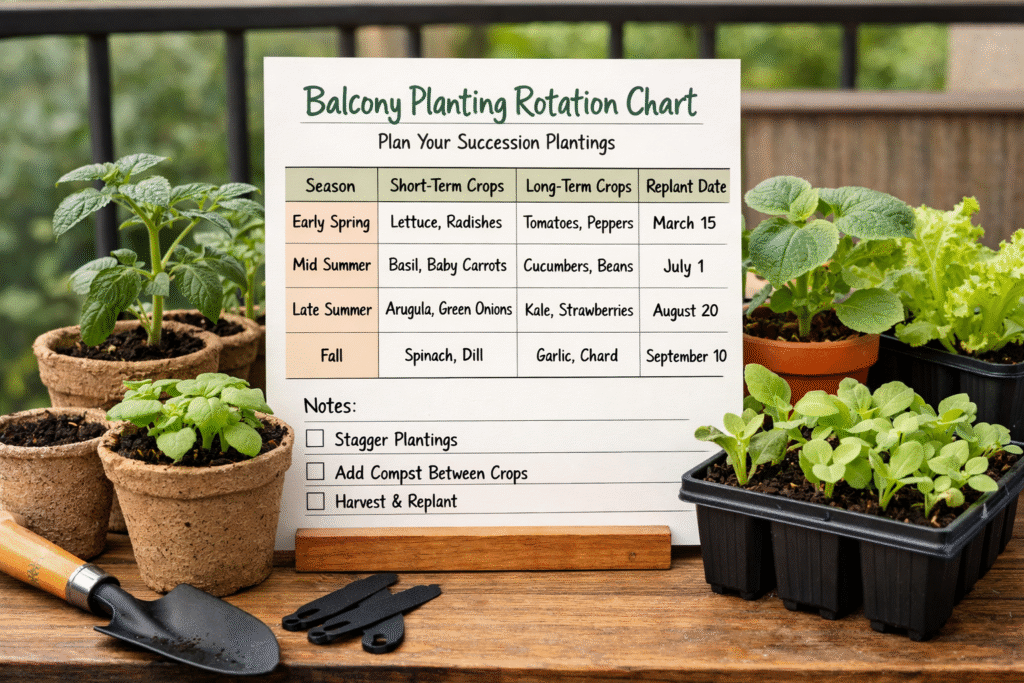
This visual tracking tool becomes invaluable over time. After a few cycles, you’ll start predicting gaps before they happen, which is the real power of balcony succession planting.
Timing Plantings Around Real Life
One overlooked aspect of year-round small-space gardening is lifestyle alignment. If you travel, work irregular hours, or know certain months are hectic, adjust your planting intensity accordingly.
During busier periods:
- Focus on slower-growing, low-maintenance crops
- Reduce the number of successions per container
- Lean into herbs and hardy greens
During calmer periods:
- Experiment with faster rotations
- Try new companion combinations
- Increase sowing frequency
Gardening should support your life, not compete with it. Succession planting works best when it respects human energy levels as much as plant growth cycles.
By treating your balcony like a living schedule rather than a static space, you build a system that adapts with the seasons and with you.
Tips for Maximizing Yield in Limited Balcony Space
Once succession planting is in motion, the next challenge is yield. On a balcony, productivity doesn’t come from bigger pots alone; it comes from timing, observation, and small habit tweaks that compound over time. Working from home has made me notice how micro-adjustments, like rotating a pot slightly every few days or watering earlier in the morning, can noticeably improve growth.
One of the most effective yield boosters is vertical thinking. Even without installing heavy structures, you can:
- Use trellises or strings for climbers like peas and cucumbers
- Place shallow trays of microgreens beneath taller plants
- Hang lightweight planters where reflected light is strongest
Another overlooked factor is harvest style. Many leafy crops respond better to frequent, light harvesting than full removal. Cutting outer leaves every few days keeps plants productive longer and smooths out harvest peaks.
Consistency matters more than intensity. A few minutes of daily attention often produces better results than long, infrequent gardening sessions. This aligns well with modern remote work rhythms, where short breaks are easier to maintain than long, scheduled tasks.
Managing Overlapping Harvests Without Waste
Succession planting naturally leads to overlapping harvests, which can be both a blessing and a logistical challenge. When lettuce, herbs, and fruiting plants all mature at once, planning becomes essential to avoid waste.
The first strategy is anticipatory harvesting. Instead of waiting for full maturity across all plants, begin harvesting slightly earlier and more often. Baby greens and young herbs are versatile in everyday meals and easier to use consistently.
The second strategy is preservation through simplicity. Balcony gardeners don’t need complex systems. Simple methods work well:
- Refrigerating washed greens in breathable containers
- Air-drying herbs for later use
- Sharing surplus with neighbors or family
We’ve found that overlapping harvests mirror digital workloads. When tasks stack up, prioritization and small wins keep things manageable. The same applies here. Harvest what you know you’ll use in the next few days, then adjust planting intervals going forward.
Seasonal Seed-Starting Guide for Balconies
Seed-starting for succession planting doesn’t follow rigid calendar dates, especially on balconies. Instead, it follows temperature, daylight, and your specific microclimate. However, grouping plants by seasonal preference helps create a reliable rhythm.
Spring-focused successions favor crops that tolerate cool nights and moderate sun. These include leafy greens, peas, radishes, and herbs like parsley and cilantro. Starting seeds every two weeks keeps harvests steady as temperatures rise.
Summer successions focus on heat-tolerant plants. Tomatoes, peppers, basil, and okra thrive here, but they benefit from staggered starts. Starting a second round of heat-loving herbs midway through summer often extends productivity into early autumn.
Autumn successions work best with fast-maturing and cold-tolerant crops. Spinach, arugula, mustard greens, and green onions perform well as daylight shortens. Starting seeds slightly earlier than expected helps compensate for slower growth rates.
Winter succession planting depends heavily on climate and exposure. In mild regions or sheltered balconies, hardy greens and herbs can continue growing slowly. In cooler settings, winter becomes a planning and soil-restoration phase rather than a high-yield season.
If you like having a clear monthly rhythm, this Seasonal Balcony Garden Checklist — Jan to Dec (Printable PDF) helps map out what to sow, transplant, and harvest as conditions shift throughout the year.
Adjusting Succession Plans Over Time
No balcony planting schedule stays perfect. Weather shifts, work demands change, and plants behave unpredictably. The strength of succession planting lies in its flexibility.
Review your notes monthly and ask simple questions:
- Which crops finished faster than expected?
- Which containers sat empty longer than planned?
- Which combinations felt easy to maintain?
These reflections help refine future rotations. Over time, your balcony becomes less of an experiment and more of a system that responds intuitively to your habits and environment.
Conclusion
Year-round balcony harvests aren’t about growing everything at once or chasing perfection. They’re about rhythm. Succession planting transforms small containers into a continuous cycle of growth, harvest, and renewal that fits naturally into modern life.
By planning rotations, pairing compatible plants, and aligning schedules with real-world routines, balcony gardeners can enjoy steady harvests without stress. With each season, the system becomes more efficient, more intuitive, and more rewarding. Over time, your balcony stops feeling small and starts feeling abundant.
Frequently Asked Questions
What is balcony succession planting, and how is it different from regular planting?
Balcony succession planting involves staggering planting times or rotating crops so containers remain productive throughout the year. Unlike regular planting, where everything is sown at once, succession planting spreads harvests over time. This approach reduces waste, improves yield, and works especially well in small spaces where every container must be used efficiently and thoughtfully.
How often should I replant crops on a balcony?
Replanting frequency depends on the crop. Fast-growing greens may be replanted every two to three weeks, while long-term crops occupy containers for months. The key is observation. Once a plant slows down or finishes producing, replace it promptly. Keeping simple notes helps establish a rhythm that matches your balcony’s conditions and your daily routine.
Can succession planting work on a shaded balcony?
Yes, succession planting can work on shaded balconies, but crop selection matters. Leafy greens, herbs, and green onions tolerate lower light better than fruiting plants. Succession planting helps maximize limited light by ensuring that suitable crops are always growing. Tracking light patterns throughout the year improves timing and plant choices significantly.
How do I prevent soil depletion with continuous planting?
Soil depletion is managed through gentle refreshment rather than full replacement. After each harvest, remove old roots, add compost or worm castings, and water thoroughly. Periodic liquid feeding also helps. This approach maintains soil health without disrupting beneficial microorganisms, making it ideal for continuous, small-space gardening.
What’s the easiest crop to start with for beginners?
Leafy greens like lettuce, spinach, and arugula are excellent starting points. They grow quickly, tolerate container life well, and respond positively to frequent harvesting. These traits make them forgiving for beginners and ideal for learning succession planting rhythms without high risk or complex maintenance.
Do I need special tools for balcony succession planting?
Special tools aren’t necessary. Most balcony gardeners succeed with basic containers, quality potting mix, seeds, and a simple tracking system like a notebook or phone app. Optional additions like small trays for seedlings or lightweight trellises can help, but success depends more on consistency and observation than equipment.
Helpful Resources
- U.S. Department of Agriculture (USDA) — Container Gardening Guidance
A concise, practical overview of container gardening basics (choosing pots, soil, light, watering), directly from a U.S. government agency supporting small-space edible growing. USDA Container Gardening Advice - Royal Horticultural Society (RHS) — Growing Plants in Containers
Trusted horticultural guidance on container plant selection, soil, aftercare, and seasonal considerations, suitable for balconies or patios. RHS Guide to Growing Plants in Containers - Royal Horticultural Society (RHS) — Container Gardening (Learning Resource)
A structured learning page on container gardening fundamentals, including vegetables and herbs that thrive in pots. RHS Container Gardening Learning Resources - USDA Climate Hubs — Urban Agriculture Overview
Insight into urban agriculture and growing food in small spaces as part of broader sustainable city food systems, from a reputable climate and agriculture network. USDA Climate Hubs on Urban Agriculture