
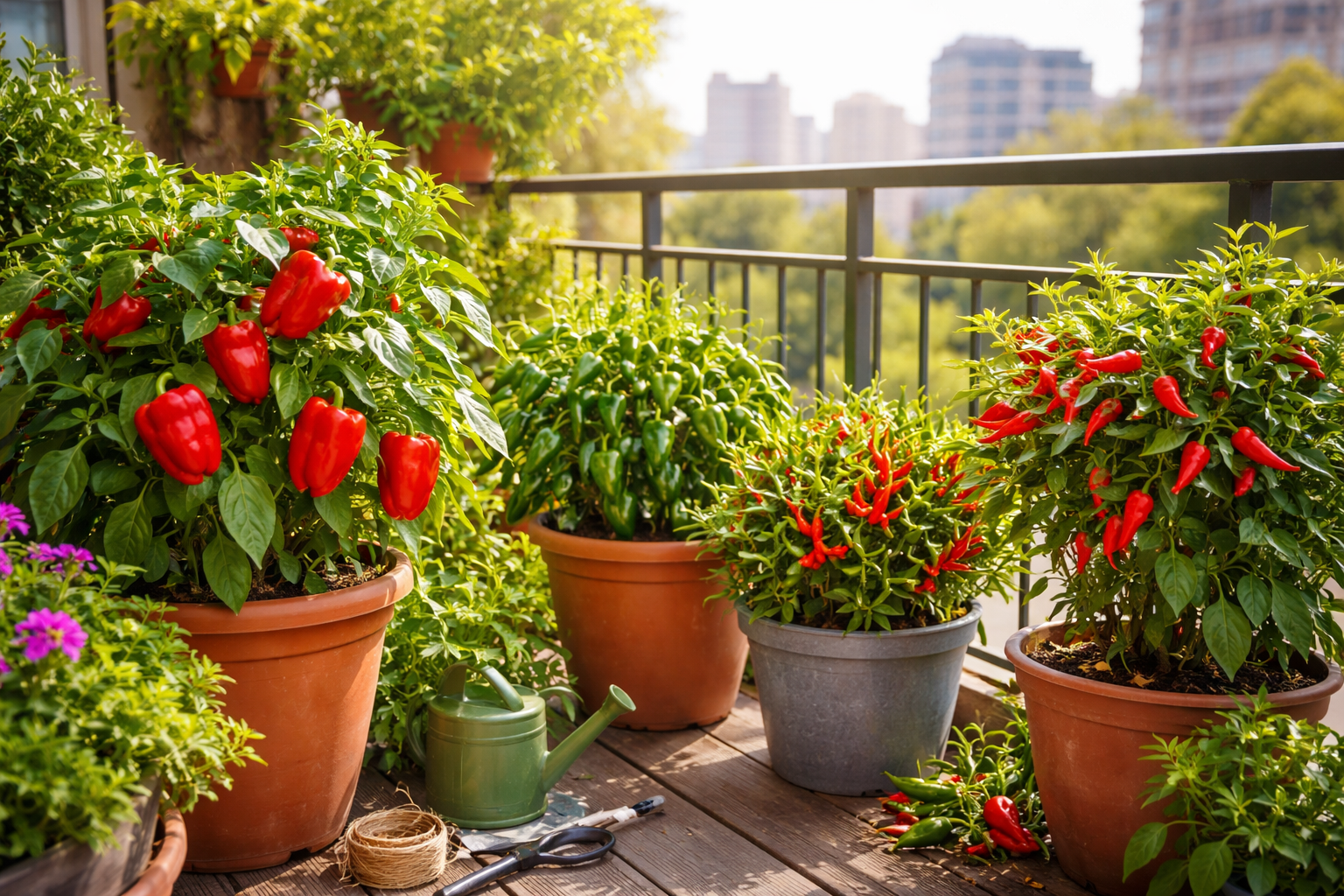
There’s something incredibly satisfying about growing peppers on a balcony. Maybe it’s the way they start off as small, quiet plants and then suddenly explode with color—greens, yellows, reds, even deep purples. Or maybe it’s the fact that, unlike some vegetables that struggle in containers, peppers actually love growing in pots when you get a few key things right.
I’ve grown peppers in everything from plastic buckets to fabric grow bags, and over time, I’ve noticed something interesting: not all peppers behave the same in containers. Some thrive and produce nonstop, while others grow tall, dramatic, and then give you just a handful of fruits.
If you want a productive balcony garden, choosing the right pepper varieties and understanding how they grow in containers makes all the difference.
Table of Contents
Why Peppers Grow So Well in Containers
Peppers are one of the most reliable crops for balcony gardening. Unlike crops like corn or pumpkins that demand space, peppers stay relatively compact and adapt well to confined root systems.
Another reason they do well in containers is control. When you grow peppers in pots, you control the soil quality, watering, and placement. That means fewer surprises and more consistent growth.
On my balcony, peppers have always been more predictable than tomatoes. Even during slightly stressful conditions, they tend to keep producing, especially if they’re getting enough warmth and sunlight.
What Makes a Pepper Variety Good for Containers?
Before choosing which peppers to grow, it helps to understand what makes a variety “container-friendly.”
First, compact growth is key. Smaller or bushier plants are easier to manage in pots and don’t require heavy support. Second, high yield matters. Some peppers produce dozens of fruits, while others focus on fewer, larger ones. For balconies, more yield per plant is usually better.
And finally, adaptability. The best balcony pepper plants can handle slightly restricted roots, fluctuating temperatures, and container conditions without slowing down too much.
Sweet Peppers That Thrive in Balcony Pots
If you prefer mild flavors, sweet peppers are a great place to start. They’re versatile in the kitchen and generally easy to grow.
Bell peppers are the most common, but they can be a bit demanding in containers. They need larger pots and consistent care. That said, compact varieties like “Mini Bell” or “Lunchbox Peppers” are much better suited for balcony growing.
Personally, I’ve had great success with smaller sweet pepper varieties. They don’t grow too tall, and they tend to produce multiple fruits at once. One season, I grew a compact sweet pepper plant in a medium-sized pot, and it produced enough peppers for weekly stir-fries.
Another underrated option is banana peppers. They’re fast-growing, productive, and more forgiving if your watering isn’t perfect.
Chili Peppers That Produce Like Crazy in Pots
If you want something more exciting, chili peppers are where balcony gardening really shines. Most chili varieties are naturally compact and incredibly productive in containers.
Some of the best performers include:
- Jalapeños
- Thai chilies
- Cayenne peppers
- Bird’s eye peppers
These plants tend to produce continuously, especially in warm conditions. I’ve had a single chili plant keep producing for months, long after other plants slowed down.
If your goal is to grow chili peppers in pots, focus on varieties that are known for heavy yields rather than just size. Smaller fruits often mean more harvest overall.
And if you enjoy experimenting, you might find inspiration in this guide to unusual vegetables for your balcony garden that aren’t sold everywhere, where you can discover unique pepper varieties that add both flavor and visual interest to your space.
Dwarf Pepper Varieties (Perfect for Small Balconies)
Not every balcony has room for large containers, and that’s where dwarf varieties come in. These peppers are bred specifically to stay compact while still producing a good harvest.
Some excellent dwarf options include:
- Patio Fire and Ice
- Numex Twilight
- Mini Bell peppers
These plants are perfect for rail planters or small pots. They stay neat, decorative, and surprisingly productive.
I once grew a dwarf chili plant in a small container right on my balcony railing. It didn’t take up much space, but it produced enough peppers to keep my kitchen stocked for weeks.
Dwarf varieties are ideal if you’re working with limited space or just want to add a few productive plants without overcrowding your balcony.
Heat Requirements: Why Peppers Love Warm Balconies
Peppers are heat-loving plants. In fact, they often perform better in containers than in-ground gardens because pots warm up faster.
For best results, peppers need at least 6 to 8 hours of sunlight daily. The more sunlight they get, the better they grow and produce.
Balconies can create a warm microclimate, especially if surrounded by walls that reflect heat. This is great for peppers, but it also means you need to watch your watering carefully.
On my balcony, peppers tend to grow fastest during the hottest part of the season. But I’ve also learned that extreme heat can stress them if the soil dries out too quickly. Keeping the soil consistently moist (but not soggy) is key.
Choosing the Right Container for Pepper Plants
Peppers don’t need extremely large containers, but they do need enough space to develop healthy roots.
A pot that is 10 to 14 inches wide is usually sufficient for most pepper plants. Larger varieties may benefit from slightly bigger containers.
Good drainage is essential. Always make sure your pots have drainage holes to prevent water from accumulating at the bottom.
I’ve found that fabric grow bags work particularly well for peppers because they allow excess water to drain easily while keeping the roots aerated.
Pruning Tricks for Healthier, More Productive Plants
Pruning peppers is one of those techniques that many beginners skip, but it can make a noticeable difference.
Early in the plant’s growth, pinching off the first few flowers can help the plant focus on developing strong roots and branches. This leads to better production later.
As the plant grows, removing excess leaves or weak stems improves airflow and reduces the risk of disease. It also allows more sunlight to reach the inner parts of the plant.
I used to let my pepper plants grow naturally without pruning. They did okay, but once I started lightly pruning them, the plants became bushier and produced more evenly.
The goal isn’t to cut aggressively but to guide the plant into a stronger, more productive shape.
How Many Peppers Can You Expect from One Plant?
One of the best things about growing peppers in containers is how productive they can be.
A single healthy chili plant can produce 20 to 50 peppers or more, depending on the variety and conditions. Some smaller chili varieties can produce even more.
Sweet peppers usually produce fewer fruits, but they are larger. With proper care, you can expect a steady harvest throughout the growing season.
If you’re planning your balcony garden, it’s worth combining peppers with other easy crops. You can explore more options in this guide on the best small vegetables to grow on your balcony year-round, which pairs perfectly with pepper planting.
Final Thoughts: Peppers Are a Balcony Gardener’s Secret Weapon
If you’re looking for a reliable, productive, and rewarding plant to grow in containers, peppers are hard to beat. They adapt well to small spaces, produce generously, and come in a wide range of flavors—from sweet and mild to intensely spicy.
Over time, you’ll start to notice which varieties perform best in your specific balcony conditions. That’s part of the fun. Every season teaches you something new.
Start with a few proven varieties, give them enough sunlight and consistent care, and before long, you’ll have a balcony full of thriving pepper plants—and more harvest than you expected.
FAQ Section
What are the best peppers to grow in balcony containers?
The best peppers to grow in balcony containers include cherry peppers, jalapeños, cayenne, Thai chilies, and compact sweet peppers like mini bell varieties. These plants stay manageable in pots and produce high yields.
Can you grow chili peppers in pots on a balcony?
Yes, chili peppers grow very well in pots. In fact, many varieties perform better in containers because the soil warms up faster, which peppers love. With enough sunlight and regular watering, they can produce continuously.
How big should a container be for pepper plants?
Most pepper plants grow well in containers that are 10 to 14 inches wide. Larger varieties may need slightly bigger pots, while dwarf peppers can grow in smaller containers.
How much sunlight do balcony pepper plants need?
Peppers need at least 6 to 8 hours of direct sunlight daily. More sunlight generally leads to better growth and higher yields.
Do pepper plants need pruning in containers?
Light pruning helps pepper plants become bushier and more productive. Removing early flowers and excess leaves improves airflow and encourages stronger growth.
How long do peppers take to grow in containers?
Most pepper plants start producing fruit within 60 to 90 days after planting, depending on the variety and growing conditions.
Further Reading
If you want deeper, research-backed insights on growing peppers and container gardening, these university and extension resources are highly recommended:
- University of Minnesota Extension – Growing Peppers in Home Gardens
Covers pepper varieties, planting, care, and harvesting techniques for healthy plants.
https://extension.umn.edu/vegetables/growing-peppers