
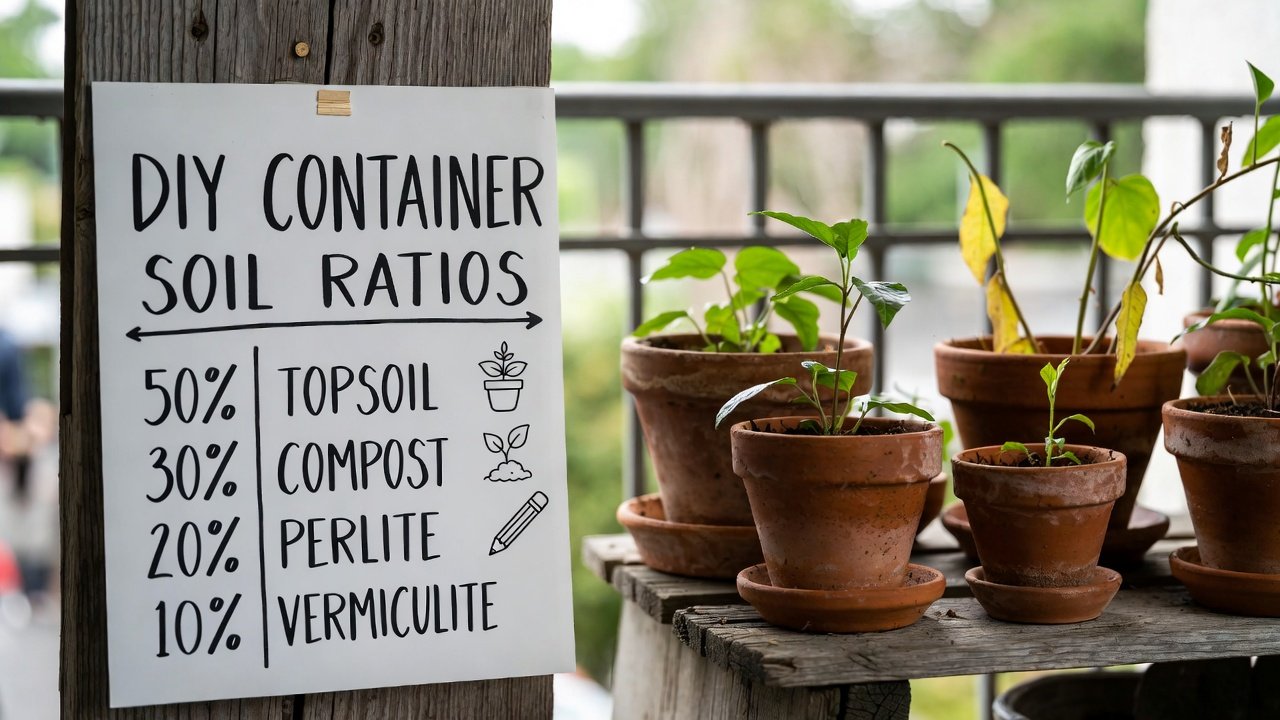
Container Soil Mixes: Beyond Potting Soil for Maximum Growth
Balcony gardeners often rely on standard potting soil for their plants, assuming it will meet all nutritional and structural needs. While convenient, pre-mixed potting soil can fall short in aeration, drainage, and nutrient retention, especially for heavier feeders like tomatoes, peppers, or dense herb collections. By customizing a DIY container soil mix, we create a growing medium that promotes healthier roots, improved water retention, and stronger plant growth—all within the constraints of limited balcony space.
Custom soil mixes also allow gardeners to tailor conditions for specific plant types, from moisture-loving herbs to sun-drenched flowering annuals. This ensures every container performs optimally, even when pots are smaller than traditional garden beds.
Table of Contents
Key Ingredients for Healthy Container Soil
Creating a thriving balcony garden starts with understanding the components that make up a robust soil mix. Each ingredient plays a unique role in supporting plant growth, moisture management, and nutrient availability.
Homemade compost reduces costs and improves soil structure. Home composting for container soil enrichment is an eco-friendly way to reuse kitchen waste.
1. Compost
Compost adds organic matter and nutrients that fuel plant development. It improves water retention while encouraging beneficial microbial activity. For balcony containers, well-aged compost ensures plants receive steady nutrition without the risk of burning roots, which can happen with fresh manure or raw organic matter.
2. Coconut Coir or Peat Moss
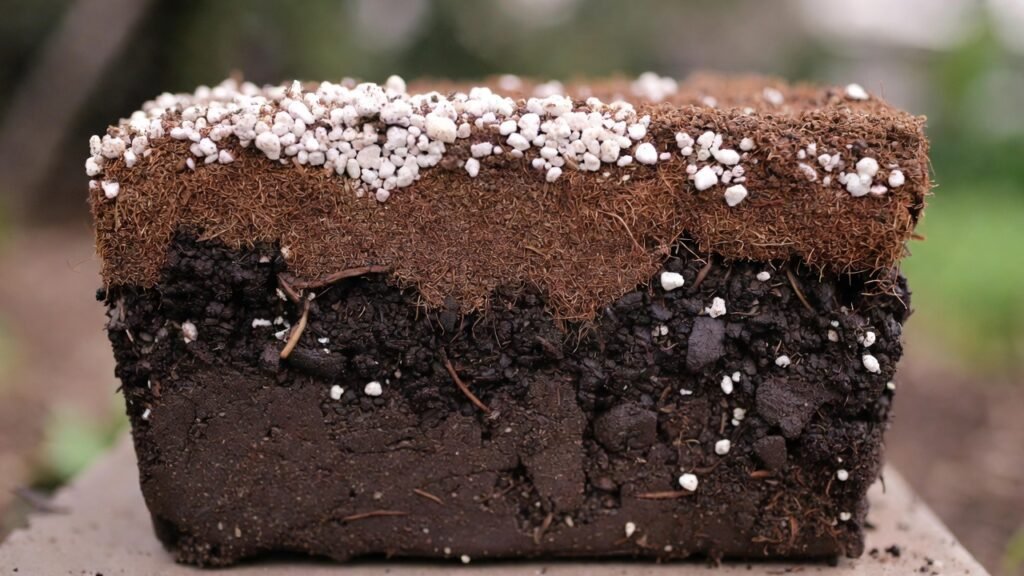
Coconut coir and peat moss act as water-retentive agents while maintaining aeration in the soil. Coir is sustainable, lightweight, and less acidic than peat moss, making it ideal for herbs and vegetables that thrive in neutral pH conditions. Both ingredients prevent soil from compacting in containers, which is crucial for healthy root expansion.
3. Perlite and Vermiculite
These lightweight mineral amendments enhance drainage and soil aeration. Perlite creates air pockets that prevent waterlogging, while vermiculite retains moisture and slowly releases nutrients. The combination ensures container plants receive consistent hydration without suffocating roots.
4. Sand or Fine Gravel
Adding sand or fine gravel can improve drainage for sun-loving plants like rosemary, thyme, and succulents. These coarse materials prevent dense mixes from holding excess water, which can lead to root rot in shallow containers or small balcony pots.
5. Fertilizer Additives
Incorporating slow-release fertilizers or natural amendments like worm castings provides ongoing nutrition. Balanced formulations tailored to vegetables, herbs, or flowers ensure that plants thrive throughout the growing season without frequent feedings.
Custom Soil Mixes for Vegetables, Herbs, and Flowers
Different plant types have distinct soil needs. By adjusting ingredient ratios, balcony gardeners can create optimized mixes that suit each category.
Vegetables
Vegetables often require nutrient-rich, well-draining soils that support rapid growth and fruit production. A balanced container mix may include:
- 40% compost
- 30% coconut coir
- 20% perlite
- 10% vermiculite
- Optional: 1–2 tablespoons slow-release fertilizer per 5-gallon pot
This combination ensures moisture retention while keeping roots aerated and prevents soil compaction as plants grow heavier.
Herbs
Herbs prefer lighter, well-draining soils. Overly rich or dense soils can stunt growth or reduce flavor intensity. A suitable herb container soil mix might consist of:
- 50% coconut coir or peat moss
- 30% compost
- 20% perlite or sand
- Optional: small pinch of granular fertilizer
This blend mimics the slightly sandy, aerated soils that many Mediterranean herbs thrive in, keeping roots healthy while maintaining a manageable moisture level.
Flowers
Flowering plants vary widely, but most benefit from a soil that retains moisture without becoming soggy. A general flowering container mix could include:
- 40% compost
- 25% coconut coir
- 20% perlite
- 15% vermiculite
- Optional: organic fertilizer for bloom enhancement
This mix promotes robust root systems, even flowering, and vibrant color while preventing water stress in pots exposed to wind or full sun on balconies.
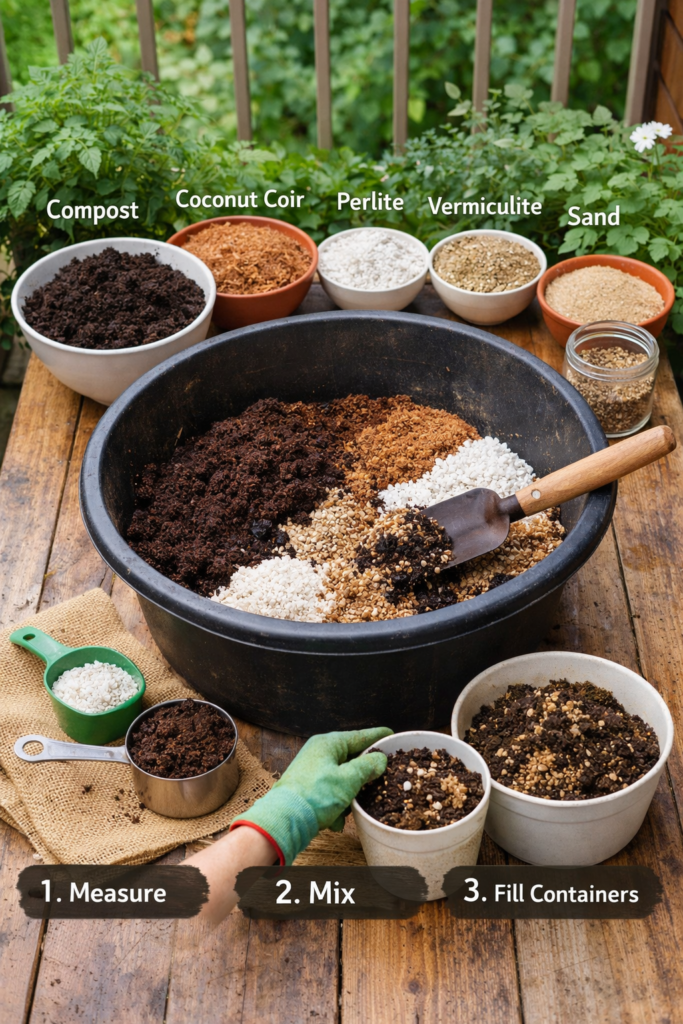
Step-by-Step Guide for Mixing DIY Container Soil
Creating a custom balcony plant soil mix is straightforward with the right materials and a structured approach. This method ensures even distribution of nutrients and proper consistency for container gardening.
Step 1: Gather Ingredients
Collect compost, coconut coir (or peat moss), perlite, vermiculite, sand (if needed), and optional fertilizer. Use clean containers and gloves to maintain hygiene and avoid contamination.
Step 2: Measure Ratios
Use a measuring cup or scoop to maintain consistent ratios. Accurate measurement ensures the final mix has the intended drainage, moisture retention, and nutrient profile for your plants.
Step 3: Combine Dry Ingredients
Start by blending coir, perlite, vermiculite, and sand (if used) in a large bucket or tub. Stir thoroughly to distribute textures evenly.
Step 4: Add Compost and Fertilizers
Gradually mix in compost and slow-release fertilizer or worm castings. Ensure uniform incorporation so that each portion of the soil provides balanced nutrition.
Step 5: Moisten Slightly
Lightly dampen the mix with water. The soil should feel like a wrung-out sponge—moist but not soggy. This helps prevent dust and makes filling containers easier.
Step 6: Fill Containers
Spoon or pour the prepared soil into pots, leaving about an inch from the top. Tap containers gently to settle the soil without compacting it.
Maintaining Nutrient Levels Over Time
Balcony containers have limited soil volume, so nutrients can deplete quickly. Regular monitoring and supplementation help maintain healthy growth. Slow-release fertilizers or organic amendments like worm castings can provide steady nutrition over several weeks.
For fast-growing herbs or vegetables, liquid feeding every two to three weeks ensures plants don’t become nutrient-starved. Mulching the surface with compost or shredded leaves also reduces nutrient loss and helps retain moisture in the soil.
Adding organic amendments like compost or boosting soil fertility with balcony worm farming can provide steady nutrients for fast-growing container plants.
Adjusting Mixes for Fast-Growing vs. Slow-Growing Plants
Fast-growing plants such as basil, lettuce, or cherry tomatoes need nutrient-rich, moisture-retentive soil with good drainage. Increasing the compost ratio slightly and adding vermiculite can meet these demands.
Slow-growing plants, like rosemary or thyme, benefit from lighter, aerated mixes with more coir or sand to prevent waterlogging. Tailoring mixes to growth rate optimizes root development, prevents overwatering, and keeps plants thriving in small containers.
Cost-Effective Sourcing of Ingredients
High-quality soil amendments don’t need to be expensive. Compost can often be sourced locally from municipal or community compost programs. Coconut coir blocks are widely available online and expand when soaked, reducing shipping costs.
Perlite and vermiculite come in bulk at garden centers, while sand can be sourced from hardware stores. Combining small amounts of store-bought fertilizer with homemade compost is an economical way to maintain nutrient levels without overspending.
Step-by-Step Guide Recap
- Gather compost, coconut coir, perlite, vermiculite, sand, and optional fertilizer.
- Measure ratios according to plant type (vegetables, herbs, or flowers).
- Combine dry ingredients thoroughly.
- Add compost and fertilizers, mixing evenly.
- Lightly moisten the mix.
- Fill containers and gently settle the soil.
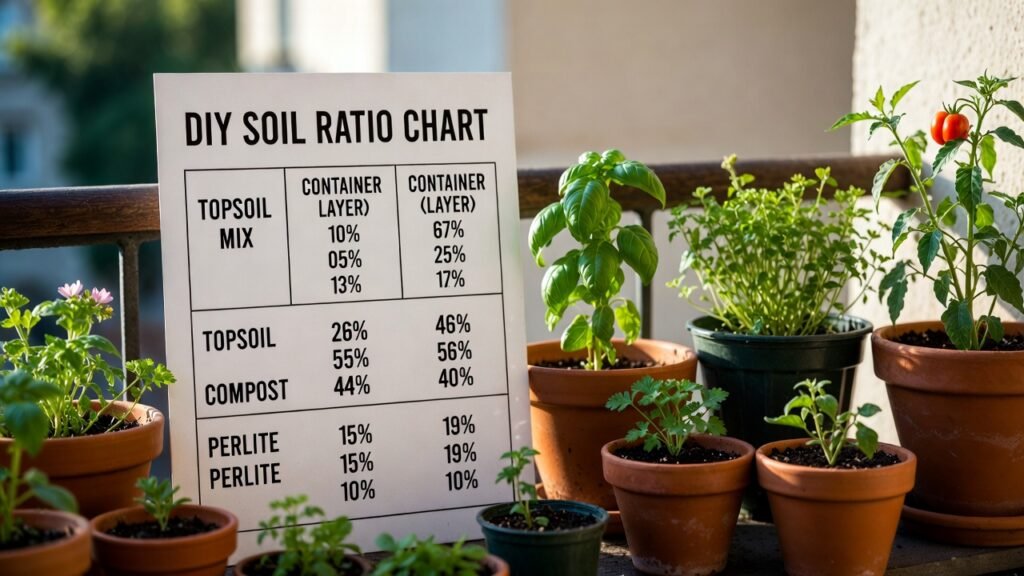
With this approach, balcony gardeners can optimize soil structure, moisture retention, and nutrient availability for all types of plants, maximizing yield in small spaces.
Conclusion
Custom container soil mixes are a game-changer for balcony gardening. By combining compost, coir, perlite, vermiculite, and optional fertilizers in balanced ratios, plants grow stronger, healthier, and more productive.
Adjusting mixes for plant type and growth rate, maintaining nutrients over time, and sourcing ingredients cost-effectively ensures a thriving small-space garden. With the right soil, even limited balcony space can support lush vegetables, flavorful herbs, and vibrant flowers.
FAQ
1. How often should I refresh container soil?
Container soil should be refreshed at least once a year, ideally in early spring. Fast-growing vegetables may benefit from partial top-up or repotting mid-season. Regular addition of compost or slow-release fertilizer maintains nutrient levels and soil structure.
2. Can I use standard garden soil in containers?
Standard garden soil is usually too dense for containers and may cause poor drainage and root compaction. Custom container soil with compost, coir, perlite, and vermiculite ensures better aeration, moisture retention, and nutrient availability for balcony plants.
3. How do I prevent nutrient depletion in small pots?
Use slow-release fertilizers, liquid feeding every 2–3 weeks, and top-dress with compost or worm castings. Mulching also reduces nutrient loss and helps retain moisture, ensuring container plants receive consistent nutrition over time.
4. What’s the best mix for herbs like basil and thyme?
Fast-growing herbs like basil thrive in nutrient-rich, moisture-retentive mixes (higher compost and vermiculite). Slow-growing Mediterranean herbs like thyme prefer lighter, well-draining soils with more coir or sand to prevent waterlogging.
5. Can I reuse container soil from last season?
Yes, but it should be refreshed. Remove old roots, mix in compost, and add perlite or vermiculite to restore aeration. Reusing soil reduces waste while maintaining plant health and nutrient levels.
6. Are there cost-effective alternatives for coir or vermiculite?
Coconut coir is often cheaper in block form that expands with water. Vermiculite can be bought in bulk or partially substituted with sand for drainage. Compost and homemade organic fertilizers can reduce costs significantly.
7. How do I adjust mixes for flowering vs. vegetable plants?
Flowering plants benefit from slightly higher vermiculite for moisture retention and slow-release bloom fertilizers. Vegetables need higher compost ratios for nutrients and water retention to support rapid growth and fruiting.
Helpful Resources
- University of Maryland Extension – Growing Media (Potting Soil) for Containers
Guide explaining the role of growing media in container gardens and how materials like perlite, vermiculite, compost, and coir support healthy roots in limited soil volume. - University of Illinois Extension – Soil for Container Gardens
Reliable overview of how container soil differs from garden soil and why well-aerated, well-drained mixes are essential for healthy potted plants. - UC Master Gardener Program – Container Soil Recipes for Small Spaces
Practical resource on creating custom container soil blends using compost, perlite, vermiculite, and coir for optimal moisture management.