

Growing Microgreens on Your Balcony: A Quick-Start Guide for Tiny Spaces
Balconies may be small, but they can be surprisingly productive. For city dwellers craving fresh greens, herbs, and quick-yield vegetables, microgreens and fast-growing plants are perfect. They don’t need deep soil, they grow quickly, and they bring a burst of greenery to even the tiniest urban balcony.
Whether you want peppery arugula shoots for salads or baby radishes for snacking, knowing what grows well in containers and how to manage light, water, and space is key to a thriving small-space garden.
Table of Contents
What Microgreens Grow Well on Balconies?
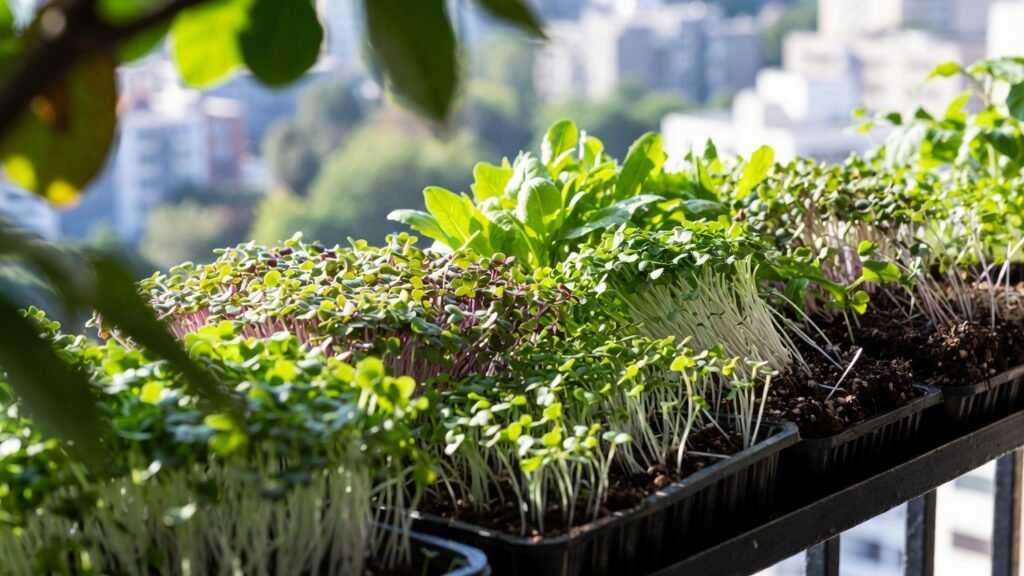
Microgreens are young seedlings harvested just after the first leaves appear, usually within 7–21 days. They are nutrient-dense, fast-growing, and perfect for small containers, making them ideal for balcony gardening.
Popular Balcony Microgreens
Certain microgreens are particularly well-suited for balcony conditions. They grow quickly, tolerate container life, and add flavor and color to meals.
- Radish Microgreens – Spicy, quick to sprout in 7–10 days, grow well in shallow trays.
- Arugula Microgreens – Adds peppery flavor to salads, ready in 10–14 days, tolerates partial sunlight.
- Sunflower Microgreens – Nutty taste, thick shoots, harvest in 12–14 days, needs bright light.
- Pea Shoots – Sweet and crunchy, take 10–16 days, require deeper trays (~2–3 inches).
- Broccoli Microgreens – Mild taste, packed with nutrients, ready in 10–14 days, prefers bright, indirect light.
| Microgreen | Harvest Time | Container Depth | Sunlight |
|---|---|---|---|
| Radish | 7–10 days | 1–2 inches | Partial to full sun |
| Arugula | 10–14 days | 1–2 inches | Partial sun |
| Sunflower | 12–14 days | 2–3 inches | Full sun |
| Pea Shoots | 10–16 days | 2–3 inches | Partial to full sun |
| Broccoli | 10–14 days | 1–2 inches | Bright indirect |
Step-by-Step Microgreen Growing Guide
Growing microgreens on a balcony is simple and rewarding, even for beginners:
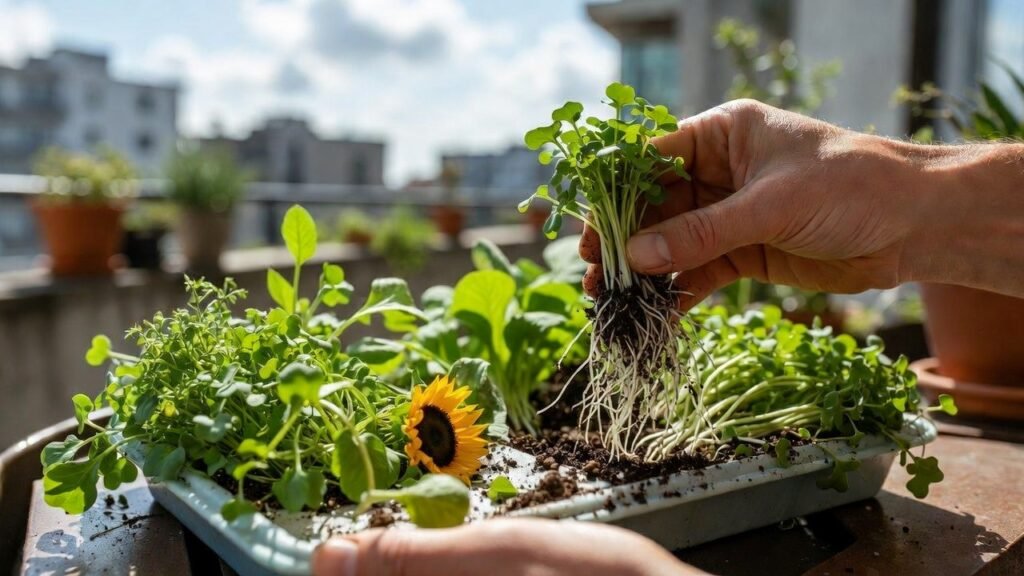
- Choose containers: Use shallow trays (1–3 inches deep) with drainage holes. Recycled plastic trays or seedling flats work well.
- Prepare soil: Use a light, well-draining potting mix or seed-starting mix. Spread it evenly, about 1–1.5 inches deep.
- Sow seeds: Sprinkle seeds evenly across the surface. Lightly press them into the soil but do not bury them.
- Water gently: Mist with a spray bottle to moisten soil without washing away seeds. Keep soil damp but not soggy.
- Provide light: Place trays in a bright spot. Most microgreens need 4–6 hours of indirect sunlight or supplemental LED grow lights.
- Harvest: Use scissors to snip stems just above the soil once the first true leaves appear. Rinse gently before using in salads or sandwiches.
How Can I Grow Fast Vegetables in Small Spaces?
Beyond microgreens, there are many fast-growing vegetables suited for tiny balconies. These quick-yield crops can provide fresh produce within weeks rather than months.
Fast-Harvest Balcony Vegetables
- Lettuce Varieties – Loose-leaf and baby lettuces can be harvested in 30–40 days. They tolerate shallow containers (6–8 inches) and partial sunlight.
- Spinach – Grows in 30–45 days, prefers 6–8 inches of soil depth, partial to full sun.
- Radishes – One of the fastest-growing root vegetables, harvest in 25–30 days, needs 6–8 inches of soil depth and full sun.
- Green Onions – Ready in 30 days, grow well in narrow pots or window boxes, need 4–6 hours of sunlight.
- Baby Carrots – Harvest in 50–60 days, require slightly deeper containers (8–10 inches) and full sun.
| Vegetable | Days to Harvest | Container Depth | Sunlight |
|---|---|---|---|
| Lettuce | 30–40 | 6–8 inches | Partial to full sun |
| Spinach | 30–45 | 6–8 inches | Partial to full sun |
| Radish | 25–30 | 6–8 inches | Full sun |
| Green Onion | 30 | 4–6 inches | 4–6 hours sun |
| Baby Carrots | 50–60 | 8–10 inches | Full sun |
Step-by-Step Guide for Fast-Harvest Vegetables
- Select the right containers: Use pots, troughs, or window boxes that meet the minimum soil depth for each vegetable. Ensure drainage holes are present.
- Use quality potting mix: A lightweight, nutrient-rich mix prevents compaction and promotes root growth. Add compost for extra nutrients.
- Sow seeds correctly: Follow spacing instructions on seed packets. Crowding delays growth and increases disease risk.
- Water consistently: Keep soil evenly moist. Early morning watering helps prevent fungal problems.
- Provide adequate sunlight: Position containers where plants receive their recommended sunlight. Rotate trays weekly for even growth.
- Harvest selectively: Pick outer leaves first for leafy greens or thin seedlings for carrots and radishes to encourage continued production.
DIY Microgreens Setup
Creating a DIY microgreens setup on your balcony is simple, inexpensive, and highly productive. With just a few basic materials, you can enjoy fresh greens in days.
Step-by-Step Setup:
- Select containers: Shallow trays or recycled plastic containers with drainage holes work perfectly. A depth of 1–3 inches is ideal for most microgreens.
- Prepare the soil: Use a light, well-draining potting or seed-starting mix. Spread evenly and lightly compress to create a level surface.
- Sow seeds: Sprinkle seeds evenly across the soil surface. Avoid overcrowding, which can slow growth and increase disease risk.
- Water gently: Use a spray bottle to mist soil until evenly damp. Avoid overwatering; soil should be moist but not soggy.
- Cover if needed: Lightly cover seeds with a thin layer of soil or another tray to keep moisture consistent during germination (2–4 days for most microgreens).
- Provide light: Place trays in bright, indirect sunlight or use an LED grow light for 4–6 hours per day.
- Harvest: Snip microgreens with scissors just above soil level once the first true leaves appear, usually within 7–21 days depending on variety.
For a complete overview of everything you need to know about starting a balcony garden, check out our Complete Balcony Gardening Guide for Beginners for tips on containers, soil, watering, sunlight, and plant selection.
Watering, Sunlight, and Maintenance Tips
Even small balcony gardens need consistent care. Paying attention to water, light, and general maintenance ensures healthy microgreens and fast-harvest vegetables.
- Watering: Keep soil evenly moist. Mist daily if trays dry quickly. Early morning watering reduces the risk of fungal growth.
- Sunlight: Microgreens thrive in 4–6 hours of indirect sunlight. Fast-harvest vegetables like radishes, lettuce, and spinach prefer full sun to partial sun. Rotate trays to ensure even light exposure.
- Air circulation: Avoid overcrowding trays to prevent mold and fungal issues. A small fan or gentle breeze helps maintain airflow.
- Cleaning: Remove dead or yellowing leaves promptly to prevent disease. Sterilize trays between plantings for consistent results.
Pro Tips for Maximizing Yield in Tiny Spaces
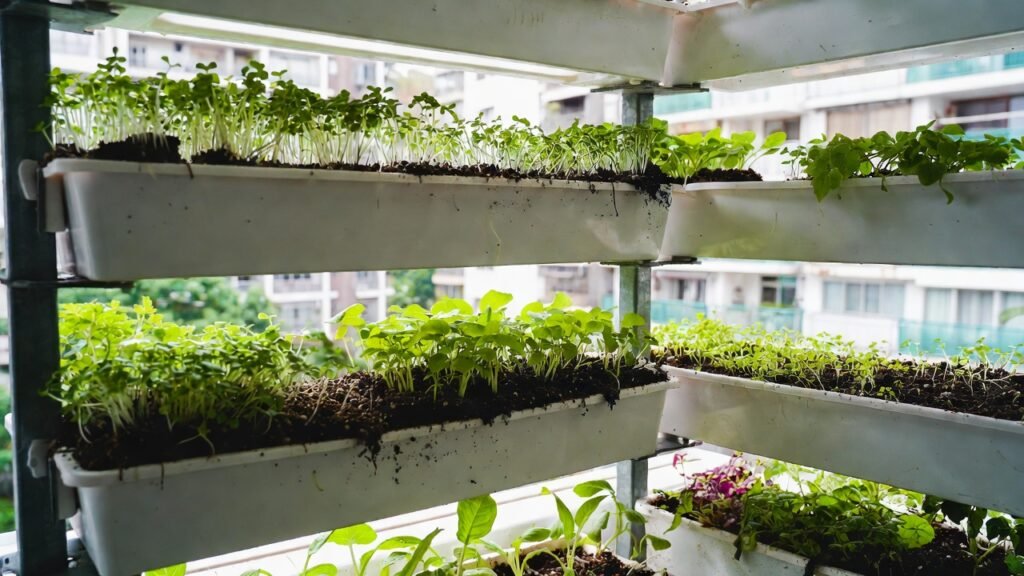
- Vertical stacking: Use tiered shelving or stackable trays to grow multiple crops in the same footprint.
- Succession planting: Sow new trays every week or two to maintain a continuous harvest.
- Companion planting: Pair herbs with leafy greens to save space and deter pests. Basil next to lettuce, for example, can improve flavor and growth.
- Use reflective surfaces: Place trays near light-colored walls or mirrors to maximize sunlight exposure.
- Regular harvesting: Picking microgreens and baby leaves encourages new growth and keeps plants productive.
Harvest Schedules and Quick Reference
| Plant | Container Depth | Sunlight | Days to Harvest |
|---|---|---|---|
| Radish Microgreens | 1–2 inches | Full sun | 7–10 |
| Arugula Microgreens | 1–2 inches | Partial sun | 10–14 |
| Sunflower Microgreens | 2–3 inches | Full sun | 12–14 |
| Lettuce | 6–8 inches | Partial to full sun | 30–40 |
| Spinach | 6–8 inches | Partial to full sun | 30–45 |
| Baby Carrots | 8–10 inches | Full sun | 50–60 |
Conclusion
Growing microgreens and fast-harvest vegetables on a tiny balcony is both practical and rewarding. With shallow trays, nutrient-rich soil, proper watering, and sufficient light, even small urban spaces can yield fresh, healthy greens in just days to weeks.
Using DIY setups, vertical stacking, and succession planting allows you to maximize output while enjoying a year-round supply of homegrown produce. Balcony gardening proves that limited space doesn’t mean limited possibilities.
FAQ
1. Can microgreens grow in partial sunlight?
Yes, many microgreens like arugula and broccoli tolerate partial sunlight. Place trays where they receive 4–6 hours of indirect or filtered sunlight daily. If natural light is insufficient, supplement with LED grow lights.
2. How often should I water balcony microgreens?
Microgreens require consistently moist soil. Mist lightly once or twice daily, ensuring soil is damp but not soggy. Early morning watering is ideal to reduce fungal growth and support healthy shoots.
3. What are the easiest fast-harvest vegetables for small balconies?
Radishes, lettuce, spinach, green onions, and baby carrots are excellent choices. They grow quickly in shallow containers and thrive in partial to full sunlight, making them ideal for tiny urban spaces.
4. Can I grow microgreens year-round on a balcony?
Yes. Indoor balconies with indirect sunlight or supplemental LED lighting can sustain microgreens throughout the year. Choose varieties suited to cooler or warmer months and rotate trays for continuous harvest.
5. How do I prevent mold or fungal growth on microgreens?
Ensure proper air circulation, avoid overwatering, and remove dead leaves promptly. Using shallow trays with drainage and spacing seeds properly also reduces the risk of fungal issues.
6. How do I maximize harvest in limited space?
Use vertical stacking, tiered trays, succession planting, and reflective surfaces to increase sunlight exposure. Regular harvesting encourages new growth, and companion planting can improve yield and flavor.
7. Can I reuse soil for microgreens?
It is possible but not recommended for long-term health. Soil may become compacted or depleted of nutrients. Sterilize or replace soil every 2–3 plantings to ensure optimal growth.
Helpful Resources
- UConn Extension | The Amazing Power of Microgreens: Easy to Grow and a Superfood — University‑based guide covering microgreens basics and how to grow them at home. UConn Extension microgreens guide
- Penn State Extension | Growing Microgreens — Detailed educational article on microgreens varieties, planting, and timing from a major land‑grant extension. Penn State Extension microgreens information
- Oregon State University Extension Service | Microgreens Grow Along — Step‑by‑step workshop style lessons from an extension service geared toward beginners. OSU Extension microgreens workshop
- Royal Horticultural Society – Grow Your Own — Trusted gardening advice on growing vegetables, herbs, and small‑space plants in containers.
- Missouri Botanical Garden – Plant Finder — Comprehensive plant database with care tips for vegetables, herbs, and greens suitable for balconies.