

Hydroponics Balcony Garden – Grow Fresh Greens in Small Spaces
Growing fresh greens on a balcony doesn’t have to be a dream. Hydroponics—growing plants without soil using nutrient-rich water—offers a practical and surprisingly simple way to cultivate vegetables and herbs even in tight urban spaces. With a little planning, you can turn a small balcony into a productive mini-garden, harvesting fresh lettuce, basil, or spinach year-round.
This guide walks you through why hydroponics works so well for balconies, the types of systems best suited for small spaces, and how to set up your own DIY indoor hydroponic system.
For those who are new to balcony gardening, check out our Complete Beginner’s Guide to Balcony Gardening for step-by-step tips, plant recommendations, and easy DIY setups.
Table of Contents
Why Hydroponics is Ideal for Balconies
Balconies in apartments come with unique limitations: limited floor space, irregular sunlight, and sometimes strict building rules on soil or weight. Hydroponics neatly sidesteps these challenges, making it perfect for urban gardeners.
- Space Efficiency: Hydroponic systems can be vertical, stacked, or compact, letting you grow dozens of plants in a fraction of the area required for traditional soil gardening. Vertical towers or tiered systems make use of every inch of balcony railing or corner space.
- Cleaner and Lighter: Without soil, there’s less mess, fewer insects, and the system is lighter on the balcony floor. This is crucial if your balcony has weight restrictions.
- Faster Growth: Plants in hydroponic systems often grow faster because their roots have direct access to nutrients, oxygen, and water. You may notice leafy greens ready to harvest in 3–4 weeks, compared to 6–8 weeks in soil.
- Water Efficiency: Small-space hydroponics recirculates water, which drastically reduces overall usage—a win for both urban sustainability and your water bill.
Hydroponics also gives you the flexibility to grow off-season crops. Even if your balcony faces north or gets patchy sunlight, a combination of compact LED grow lights and nutrient solutions can keep plants thriving.
Essential Hydroponic Systems for Apartments
Balcony-friendly hydroponics doesn’t require a massive greenhouse. There are several small-scale systems designed for beginners and urban dwellers:
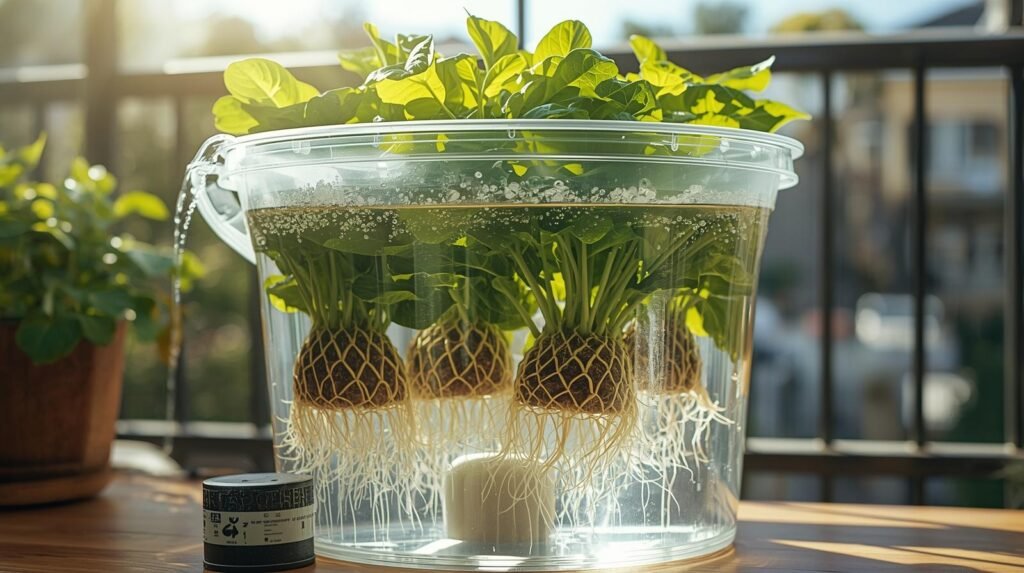
1. Deep Water Culture (DWC)
Deep Water Culture is simple and beginner-friendly. Plants are suspended above a reservoir of nutrient solution, and air pumps provide oxygen to the roots.
- Pros: Fast growth, minimal maintenance once set up.
- Ideal For: Leafy greens, herbs, small fruiting plants like cherry tomatoes.
- Space Needs: One small bucket per plant or multiple plants in a shared reservoir.
2. Nutrient Film Technique (NFT)
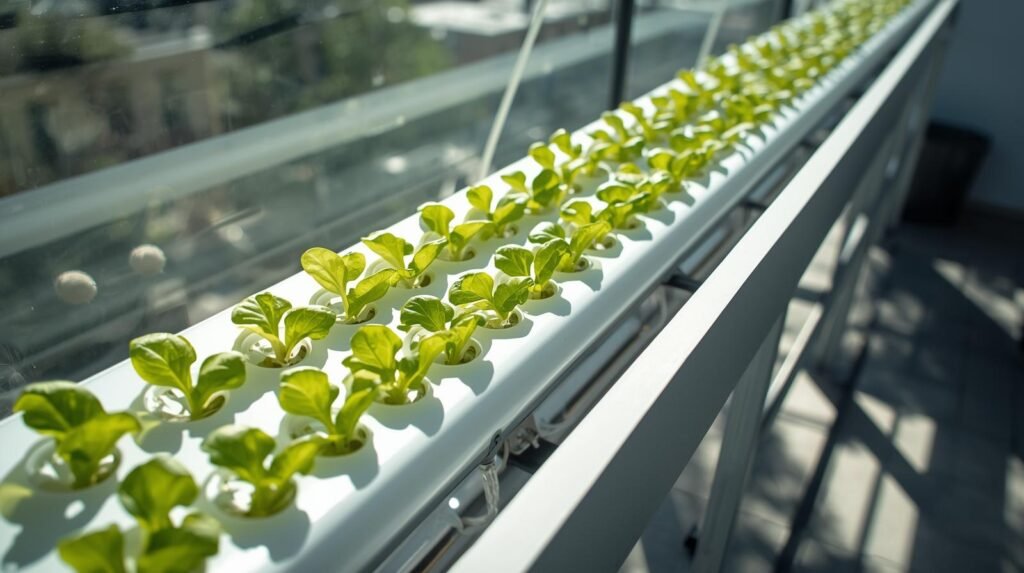
NFT uses a shallow channel where a thin stream of nutrient solution flows over plant roots. It’s compact and works well on narrow balcony ledges.
- Pros: Water-efficient, clean, continuous nutrient supply.
- Ideal For: Lettuce, spinach, arugula, and herbs.
- Space Needs: Small channels can be mounted vertically or horizontally along balcony walls.
3. Wick Systems
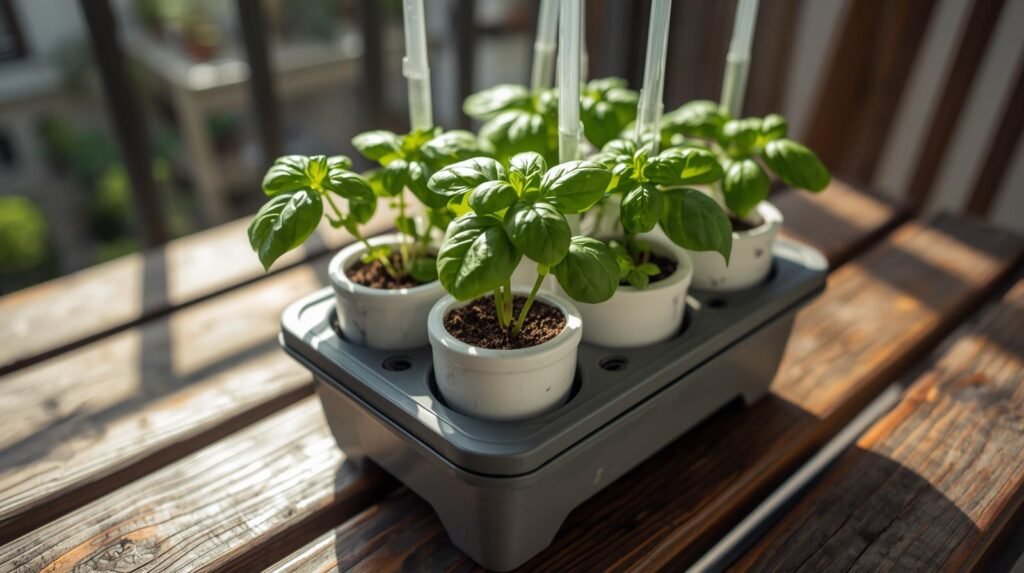
The wick system is a passive method that uses a cotton or nylon wick to draw nutrient solution from a reservoir to the plant. It’s low-tech and quiet.
- Pros: No pumps or electricity required, very beginner-friendly.
- Ideal For: Herbs, small leafy greens.
- Space Needs: Compact containers, easy to fit on a railing or tabletop.
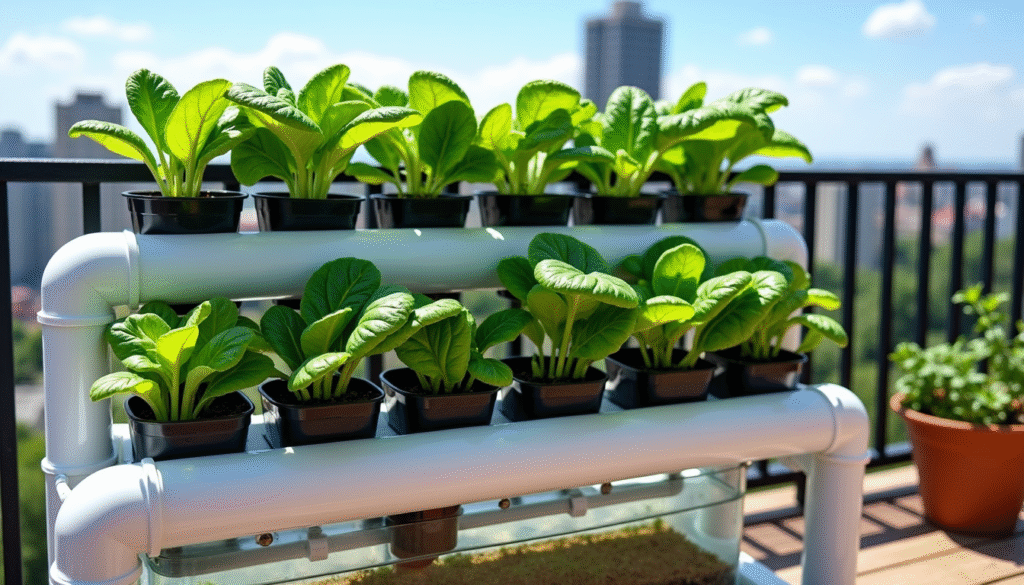
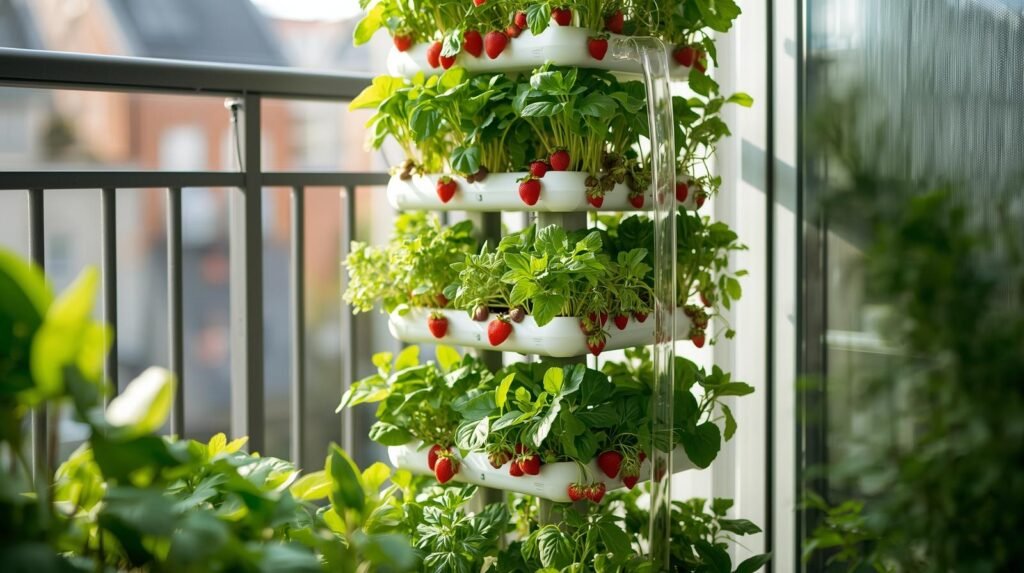
4. Vertical Towers
Vertical towers are the ultimate space-savers. Plants are stacked in multiple tiers, with water and nutrients recirculating from the top down.
- Pros: High yield for very small footprint, eye-catching.
- Ideal For: Microgreens, lettuce, herbs, and strawberries.
- Space Needs: Uses vertical height instead of horizontal floor space.
[IMAGE: Vertical hydroponic tower on a balcony corner with multiple plant types]
Step-by-Step Guide: Simple DIY Balcony Hydroponic Setup
A simple DIY Deep Water Culture system is perfect for beginners. It’s affordable, requires minimal tools, and produces quick results. Here’s how to set it up:
Materials Needed
- A 5-gallon bucket with lid (per plant or small group)
- Net pot (3–4 inch diameter)
- Hydroponic nutrient solution (pre-mixed for leafy greens)
- Air pump and air stone (from aquarium supply)
- Growing medium (clay pebbles or rockwool cubes)
- pH meter or test kit
Step 1: Prepare the Reservoir
Fill the 5-gallon bucket with water, leaving a few inches at the top. Mix the hydroponic nutrient solution according to the instructions for leafy greens. Check the pH—it should be around 5.5–6.5.
Step 2: Fit the Net Pot
Cut a hole in the lid of the bucket to snugly fit the net pot. Place the growing medium inside the net pot, then nestle the plant or seedling into it. The roots should just touch the water below.
Step 3: Add Oxygen
Place the air stone in the bottom of the reservoir, and connect it to the air pump. Continuous aeration prevents roots from drowning and promotes faster growth.
Step 4: Position Your Setup
Place the bucket in a spot with at least 4–6 hours of sunlight per day. If your balcony is shaded, consider adding a compact LED grow light above the plants.
Step 5: Monitor and Maintain
- Check water levels daily and top up with fresh nutrient solution as needed.
- Monitor pH every few days, adjusting with pH up or down solutions.
- Harvest leaves as they mature; snipping from the outer leaves encourages new growth.
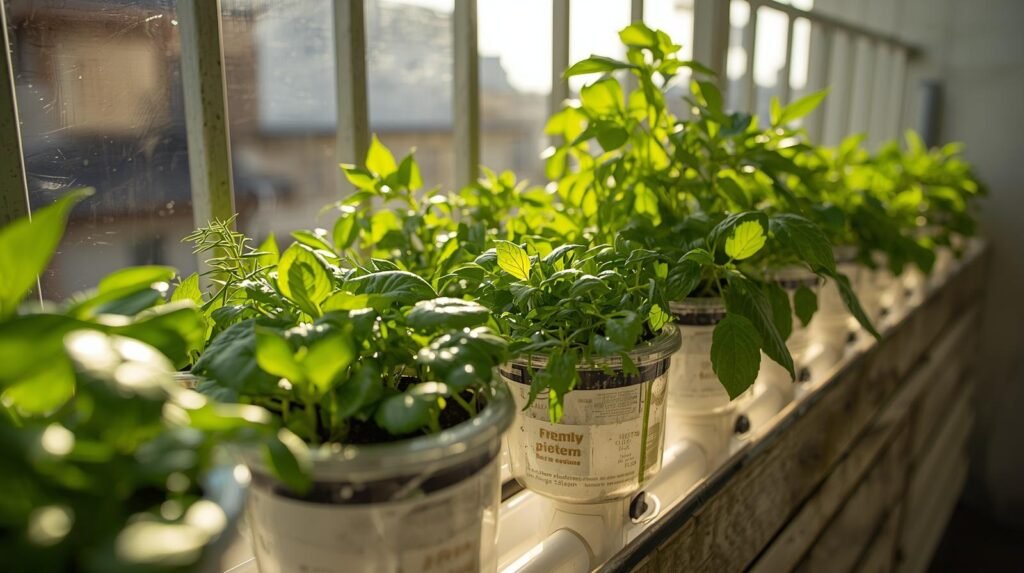
This DIY setup can be expanded to multiple buckets or stacked vertically for higher yields. With consistent care, you’ll have fresh salad greens in as little as three weeks.
Once your DIY hydroponic system is up and running, maintaining it properly is key to getting consistent, healthy harvests. Small-space hydroponics is forgiving, but beginners often make simple mistakes that can slow growth or damage plants. This section covers maintenance tips, best plants to grow, cost-effective system variations, and other practical strategies for balcony gardeners.
Maintenance Tips and Common Mistakes to Avoid
Hydroponic plants grow in water, but they still need attention. With the right habits, your system can flourish year-round.
- Monitor Water Levels and Nutrients: Check your reservoir every 2–3 days. Roots need constant access to nutrient-rich water, and levels can drop due to evaporation.
- Keep pH Balanced: The ideal pH for most leafy greens is 5.5–6.5. Use a pH meter to prevent nutrient lockout, which can stunt growth.
- Clean the System Regularly: Algae and bacteria can build up in stagnant water. Rinse containers and tubing every 2–4 weeks to maintain a healthy environment.
- Avoid Overcrowding: Give plants enough space to grow without competing for light or nutrients. Crowding slows growth and increases risk of disease.
- Light Management: Ensure 4–6 hours of sunlight daily. For shaded balconies, LED grow lights provide consistent energy for photosynthesis.
- Common Mistakes:
- Using regular soil—roots need aeration and nutrient water, not dense soil.
- Ignoring aeration—stagnant water suffocates roots.
- Overfeeding nutrients—more is not better; follow dosage instructions carefully.
Best Plants for Balcony Hydroponics
Certain plants thrive in compact hydroponic systems and are perfect for beginner urban gardeners:
- Leafy Greens: Lettuce, spinach, arugula, kale. Fast-growing and forgiving of small mistakes.
- Herbs: Basil, mint, parsley, chives. Compact and aromatic, ideal for containers.
- Microgreens: Radish, mustard, beet, sunflower. Extremely fast-growing; harvest in 10–20 days.
- Small Fruiting Plants: Cherry tomatoes, peppers, strawberries. Require more care and light but provide high yields in small space.
- Climbing Plants: Peas, cucumbers. Use trellises or vertical systems to maximize balcony height.
Cost-Effective and Beginner-Friendly Variations
Not all hydroponic setups require expensive equipment. Budget-friendly options can still deliver impressive results:
- Bottle Hydroponics: Use recycled plastic bottles as small DWC or wick systems. Ideal for single herbs or microgreens.
- PVC NFT Channels: Lightweight PVC pipes can channel water for multiple plants in a row. DIY-friendly and inexpensive.
- Tabletop Wick Systems: Simple trays and cotton wicks work well for herbs and small greens. No electricity needed.
- Mini Vertical Towers: Stackable cups or small containers can create a vertical micro-garden without specialized equipment.
- Pre-Mixed Nutrients: Ready-to-use nutrient solutions save time and reduce error for beginners.
Conclusion
Balcony hydroponics is an achievable and rewarding way to grow fresh vegetables, herbs, and microgreens even in small urban spaces. By choosing the right system, monitoring water and nutrients, and selecting plants suited to compact setups, you can enjoy faster growth, cleaner harvests, and year-round greenery.
Challenges include maintaining pH, avoiding overcrowding, and ensuring consistent light, but with a little attention, the benefits far outweigh these minor hurdles.
Frequently Asked Questions (FAQs)
1. Can hydroponic systems work on small, shaded balconies?
Yes, they can. While sunlight is ideal, small hydroponic systems can thrive with LED grow lights providing 4–6 hours of daily light. Vertical setups help maximize available space without relying solely on natural sun.
2. How often should I check nutrient solution levels?
Check water and nutrient solution every 2–3 days. Evaporation or plant uptake can lower levels quickly. Top up with fresh nutrient water and monitor pH to ensure consistent growth.
3. Are hydroponic systems suitable for beginners?
Absolutely. Systems like deep water culture or wick setups are beginner-friendly, require minimal tools, and provide visible results quickly. Starting small and simple reduces mistakes while teaching basic plant care.
4. What are the fastest-growing plants for a balcony hydroponic garden?
Leafy greens like lettuce, spinach, and microgreens such as radish or mustard grow rapidly. Most can be harvested in 2–4 weeks, making them ideal for beginners seeking quick results.
5. Can I grow fruiting plants on a small balcony hydroponic system?
Yes, small fruiting plants like cherry tomatoes, peppers, or strawberries can be grown if space, light, and nutrients are managed carefully. Vertical towers or trellises help maximize available height and yield.
6. How do I prevent algae in my hydroponic system?
Prevent algae by limiting light exposure to the nutrient solution, covering reservoirs, and cleaning containers every 2–4 weeks. Regular water changes and proper aeration also reduce algae growth.
7. Is hydroponic gardening more water-efficient than soil gardening?
Yes. Recirculating water in hydroponic systems uses 70–90% less water than traditional soil gardening. It’s especially beneficial for urban settings with limited water access or for sustainability-conscious gardeners.
Helpful Resources
- USDA – Urban Agriculture and Hydroponics: https://www.nal.usda.gov/urban-agriculture
- International Society for Horticultural Science – Hydroponics Research Papers: https://www.ishs.org