
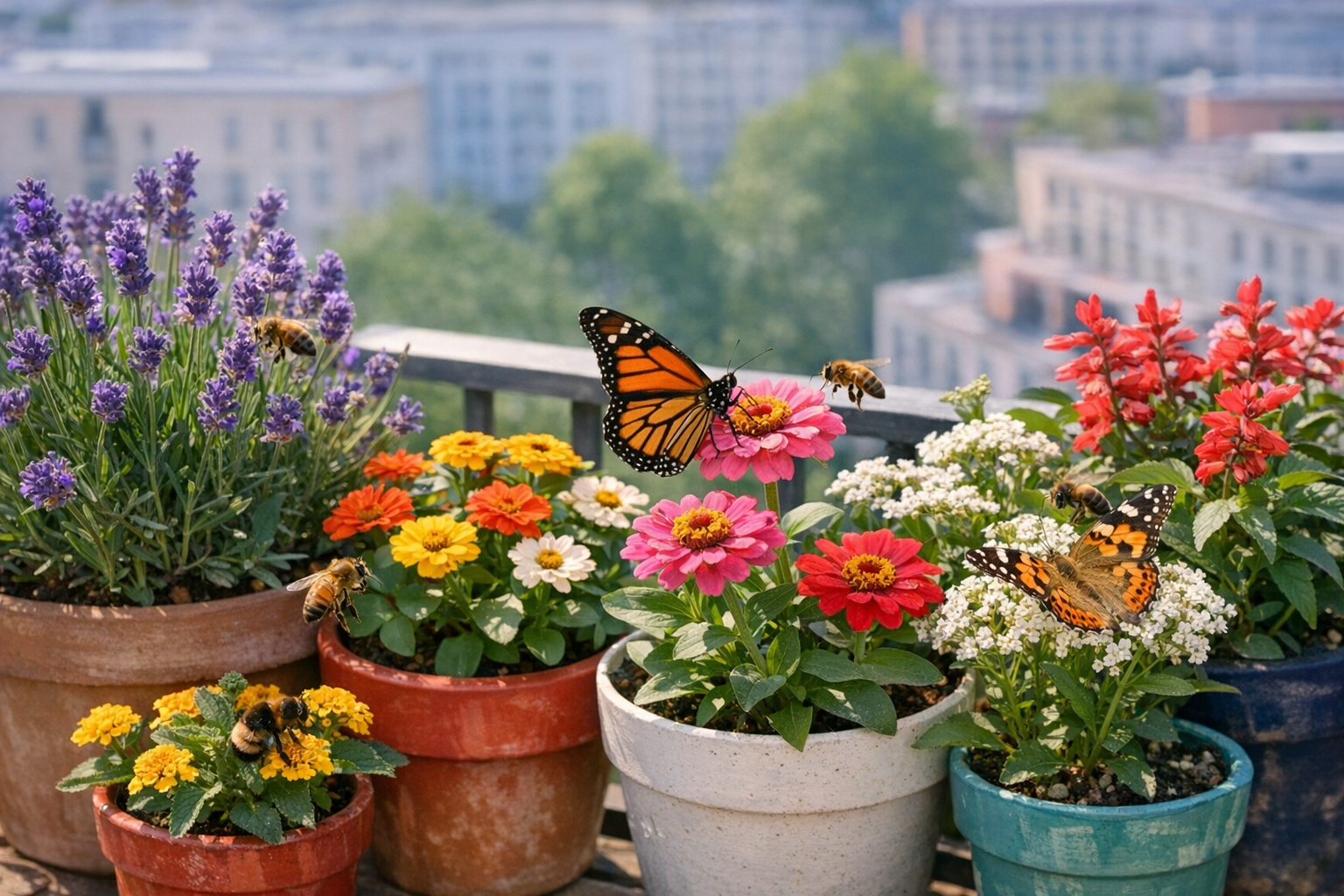
Pollinator-Friendly Balcony Gardens: Small Spaces That Support Bees and Butterflies
Urban balconies might look small, but they play an outsized role in supporting pollinators. From personal experience working remotely in cities where green space is fragmented, it’s clear that even a few pots can become a lifeline for bees and butterflies navigating concrete-heavy neighborhoods. Pollinators are responsible for fertilizing a large share of the food crops and flowering plants we rely on, and cities increasingly act as stopover habitats rather than dead zones.
A well-planned balcony pollinator garden does more than look beautiful. It helps stabilize local ecosystems, improves plant productivity nearby, and reconnects households with seasonal rhythms often lost in digital-first, indoor lifestyles. With thoughtful plant choices and a few simple structures, a tiny balcony can function like a miniature meadow.
Table of Contents
Why pollinators thrive on balconies more than we expect
Before choosing plants or containers, it helps to understand why balconies are surprisingly effective for pollinators. Urban areas often have fewer pesticides, warmer microclimates, and continuous blooms when managed intentionally. Bees and butterflies quickly learn which balconies offer reliable nectar, pollen, water, and shelter.
For people working from home, balconies are also observed daily. This makes it easier to notice bloom cycles, pollinator visits, and plant health, allowing quick adjustments that ground-level gardens may not receive. Over time, this attentiveness leads to more consistent resources for insects throughout the year.
Best container-friendly plants for pollinators
Choosing the right plants is the foundation of a successful balcony pollinator garden. Container-friendly species should be compact, long-blooming, and rich in nectar or pollen. Diversity matters more than quantity, especially in small spaces, because different pollinators prefer different flower shapes and bloom times.
When selecting plants, it helps to prioritize open or shallow blooms, native or well-adapted species, and varieties that flower at different points in the growing season. This ensures food availability from early mornings to late afternoons and across several months.
Including unusual vegetables for your balcony alongside flowers not only attracts pollinators but also adds variety to your urban harvest.
Commonly reliable container plants include:
- Lavender for bees that prefer aromatic, nectar-rich flowers and can forage repeatedly from the same plant.
- Marigolds which bloom generously and attract a wide range of beneficial insects.
- Nasturtiums that provide both nectar and broad leaves for resting butterflies.
- Salvia varieties that suit small pots and support long-tongued pollinators.
- Dwarf zinnias which bloom continuously when deadheaded and are especially attractive to butterflies.
Herbs deserve special mention because they serve dual purposes. When allowed to flower, basil, thyme, rosemary, and oregano become pollinator magnets. In small gardens, these plants make efficient use of space while supporting kitchen needs.
Many edible flowers for tiny balconies attract bees and butterflies while providing fresh additions to salads and teas.
Native plants and why they outperform exotics
Native plants often outperform ornamental exotics in urban bee-friendly gardens. Over generations, local pollinators have adapted to specific flower shapes, colors, and bloom timings. On balconies, native species also tend to tolerate local weather patterns better, reducing maintenance demands.
In practice, a mix works best. Native plants anchor the ecosystem, while carefully chosen non-invasive ornamentals extend bloom periods. This blended approach mirrors natural diversity without overwhelming limited balcony space.
Providing water and shelter for bees and butterflies
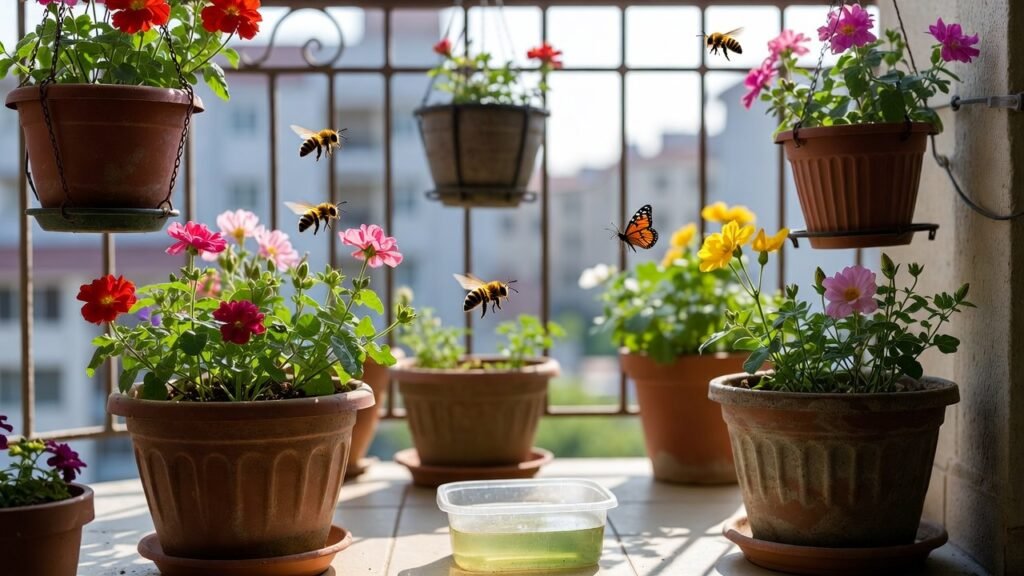
Flowers alone are not enough to sustain pollinators. Bees and butterflies also need safe access to water and sheltered resting spots, especially during hot afternoons common in urban environments.
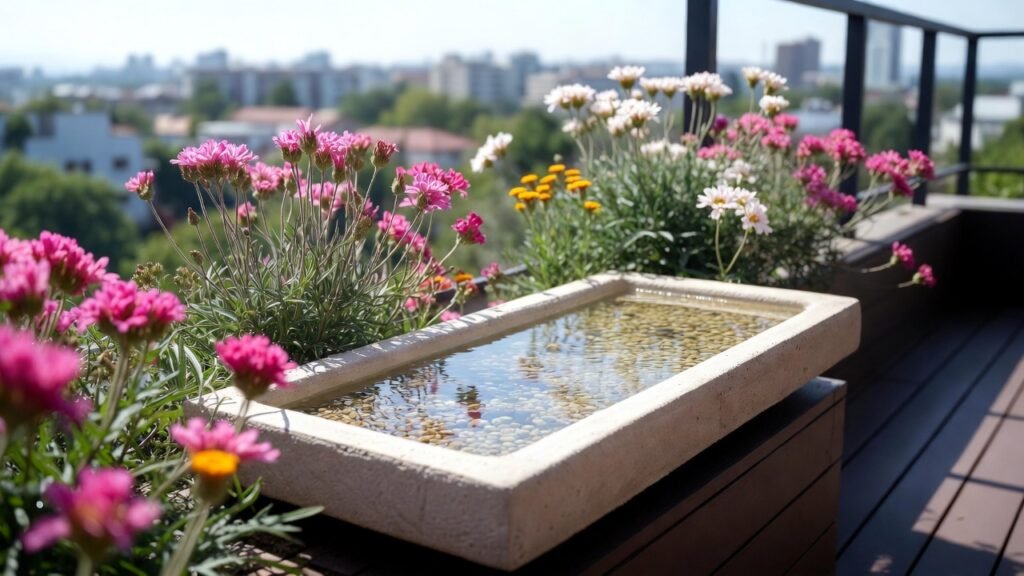
On balconies, water sources must be shallow, stable, and refreshed regularly. Deep bowls are dangerous for insects, while stagnant water quickly becomes unusable. Simple designs work best and integrate easily into existing layouts.
Effective balcony-friendly water options include:
- Shallow saucers filled with water and pebbles for safe landing.
- Reused jar lids tucked into planters and refilled daily.
- Small dishes placed in shaded corners to slow evaporation.
Shelter matters just as much as hydration. Butterflies need calm resting areas protected from wind, while bees benefit from places to pause between foraging trips. Even subtle structural choices can make a balcony feel hospitable.
Simple shelter strategies include:
- Grouping pots closely to reduce wind exposure.
- Leaving some dried plant stems intact at the end of bloom cycles.
- Adding small pieces of untreated wood or bamboo bundles in corners.
Seasonal considerations for water and shelter
Seasonality plays a major role in how pollinators use balcony gardens. During hotter months, water sources may need refilling once or twice daily. In cooler seasons, shelter becomes more important than nectar volume.
Observing insect behavior helps guide adjustments. If bees visit briefly and leave, more water or shade may be needed. If butterflies linger but don’t feed, adding nectar-rich blooms can rebalance the setup.
For more ideas on reducing water waste while keeping pollinators hydrated, explore our water-saving tips for balcony gardens.
Step-by-step setup for a pollinator-friendly balcony
Creating a balcony pollinator garden works best when approached gradually. A step-by-step process reduces overwhelm and allows learning through observation rather than trial-and-error overload.
This setup method reflects real-world constraints of rented apartments, busy work schedules, and limited storage.
Step 1: Assess light and wind
Start by noting how many hours of direct sunlight the balcony receives and when winds are strongest. Most pollinator plants need at least four to six hours of sun, but wind protection is equally important for insect comfort.
Step 2: Choose containers strategically
Use a mix of medium and small pots rather than many tiny ones. This stabilizes soil moisture and reduces daily watering demands. Lightweight containers are easier to reposition as seasons change.
Step 3: Select a diverse plant mix
Aim for at least three flowering species with overlapping bloom times. Include one herb allowed to flower and one plant with broader leaves for resting.
Step 4: Add water and shelter early
Install water dishes and shelter features at the same time as planting. Pollinators often investigate new spaces quickly, and early availability builds trust.
Step 5: Maintain with minimal intervention
Avoid chemical fertilizers and pesticides. Deadhead flowers regularly, refresh water daily, and observe insect behavior weekly. Adjust plant placement based on sun exposure and visitation patterns.
Over time, these small actions create a stable micro-habitat. Many balcony gardeners notice increased pollinator visits within two to three weeks, especially during peak flowering months.
Using self-watering planters can help maintain consistent moisture for your pollinator plants, especially during hot afternoons or busy workdays.
A balcony pollinator garden does not need to be perfect or permanent. Even temporary setups during warm seasons contribute meaningfully to urban ecosystems. When repeated across many households, these tiny gardens form invisible corridors that help bees and butterflies survive in modern cities.
Seasonal bloom planning for pollinators
A balcony pollinator garden works best when it offers something in bloom for as much of the year as possible. Seasonal planning ensures bees and butterflies don’t arrive to an empty food source, especially in cities where green options are already limited. From experience observing urban pollinators, gaps in bloom often lead to fewer return visits, even if the space is well designed.
Spring is when early-emerging bees need quick energy after cooler months. Summer supports the highest diversity of pollinators, while late-season blooms help insects store energy before migration or dormancy. Planning with this rhythm in mind turns a balcony into a reliable stopover, not just a decorative space.
For spring, container-friendly plants like calendula, alyssum, chives, and early-blooming lavender provide accessible nectar. These plants tolerate cooler nights and respond well to balcony microclimates warmed by walls and railings.
Summer is the peak season for a balcony pollinator garden. Zinnias, salvia, basil left to flower, cosmos, and dwarf sunflowers offer continuous blooms when deadheaded regularly. During this period, spacing pots slightly closer together helps reduce heat stress and encourages longer pollinator visits.
Autumn is often overlooked but critical. Late-blooming plants such as sedum, marigolds, oregano flowers, and asters support butterflies preparing for migration and bees building reserves. On balconies, these plants also tolerate fluctuating temperatures better than delicate ornamentals.
Staggered planting or rotating pots ensures that when one plant finishes blooming, another takes over. Even swapping a single pot mid-season can significantly extend nectar availability.
Safe pesticide alternatives for pollinator gardens
Protecting plants without harming pollinators requires a shift away from quick chemical fixes. In balcony gardens, pest pressure is usually lower than ground-level gardens, making natural methods especially effective. From long-term observation, most issues resolve with minor adjustments rather than aggressive treatments.
Healthy plants resist pests better than stressed ones. Adequate sunlight, proper watering, and good airflow reduce infestations naturally. When intervention is needed, non-toxic methods protect both insects and humans sharing small living spaces.
Safe, pollinator-conscious alternatives include:
- Manual removal, such as gently wiping aphids off leaves with water or a soft cloth.
- Neem oil used sparingly, applied in the evening when pollinators are inactive.
- Soapy water sprays made with mild, fragrance-free soap for targeted use only.
- Companion planting, like pairing marigolds or basil with vulnerable plants to deter pests.
Avoid spraying during daylight hours when bees and butterflies are active. Spot treatments work better than blanket applications and preserve beneficial insects that naturally control pests over time.
Tips to keep balcony pollinator gardens thriving
Consistency matters more than complexity in small-space gardens. Pollinator gardens thrive when they are observed regularly and adjusted gently, rather than over-managed. Balcony gardening fits naturally into remote work routines, where short breaks allow quick check-ins without disruption.
Daily habits such as refilling water dishes and scanning leaves for stress signals prevent larger problems later. Weekly maintenance keeps plants blooming longer and improves pollinator trust in the space.
Key long-term tips include:
- Rotate pots slightly every few weeks to balance sun exposure.
- Deadhead spent flowers to encourage continuous blooms.
- Avoid over-fertilizing, which can reduce nectar quality.
- Leave some plant material intact at the end of the season for shelter.
- Keep at least one shallow water source available year-round in warm climates.
Balcony pollinator gardens evolve with experience. Over time, patterns emerge showing which plants attract the most visitors and which placements work best. This learning process is part of the reward, reconnecting daily life with natural cycles often missed in digital-heavy routines.
Regularly enriching your pots with homemade compost via balcony composting boosts plant health without relying on chemical fertilizers.
Conclusion
Pollinator-friendly balcony gardens prove that meaningful environmental support doesn’t require large land or complex systems. With thoughtful plant choices, simple water sources, and seasonal planning, even tiny balconies can sustain bees and butterflies navigating urban landscapes.
These gardens offer more than ecological benefits. They create daily moments of connection, reduce stress, and remind households that small actions add up. As more balconies become living habitats, cities quietly transform into networks of support for pollinators essential to our shared future.
FAQ Section
Can a small balcony really support pollinators?
Yes, even a few well-chosen pots can make a difference. Urban pollinators rely on scattered food sources rather than large fields. A balcony pollinator garden offers nectar, pollen, and water exactly where insects need quick access. Consistency matters more than size, especially when blooms are reliable across seasons.
How much sunlight does a balcony pollinator garden need?
Most pollinator plants thrive with four to six hours of direct sunlight daily. South- or east-facing balconies work especially well, but partial shade can still support flowering herbs and native plants. Observing sun patterns helps match plants to available light rather than forcing unsuitable species.
Are pollinator gardens safe for children and pets?
Balcony pollinator gardens are generally safe when non-toxic plants and pest control methods are used. Avoid spiky or poisonous species, keep water dishes shallow, and skip chemical treatments. Bees and butterflies are usually non-aggressive and focus on flowers rather than people.
How long does it take to attract bees and butterflies?
Many gardeners notice visits within two to three weeks, especially during peak bloom seasons. Pollinators quickly learn which locations provide reliable food and water. Consistent care, visible blooms, and accessible water increase the chances of repeat visits over time.
Do pollinator gardens increase the risk of stings?
Pollinators are not attracted to people, only to flowers. Stings are rare and usually occur only when insects feel threatened. Maintaining calm, avoiding sudden movements near flowers, and giving insects space reduces risks significantly, even on small balconies.
Can pollinator gardens work year-round in warm climates?
In warmer regions, balcony pollinator gardens can support insects nearly year-round with proper plant selection. Late-blooming and evergreen herbs help bridge seasonal gaps. Water availability becomes especially important during dry months when natural sources are scarce.
Helpful Resources
- Food and Agriculture Organization of the United Nations (FAO) –
Pollinators and food security
https://www.fao.org/pollination/en/ - United States Department of Agriculture (USDA) –
Pollinator health resources
https://www.usda.gov/pollinators - Xerces Society for Invertebrate Conservation –
Pollinator conservation science
https://www.xerces.org/pollinator-conservation