
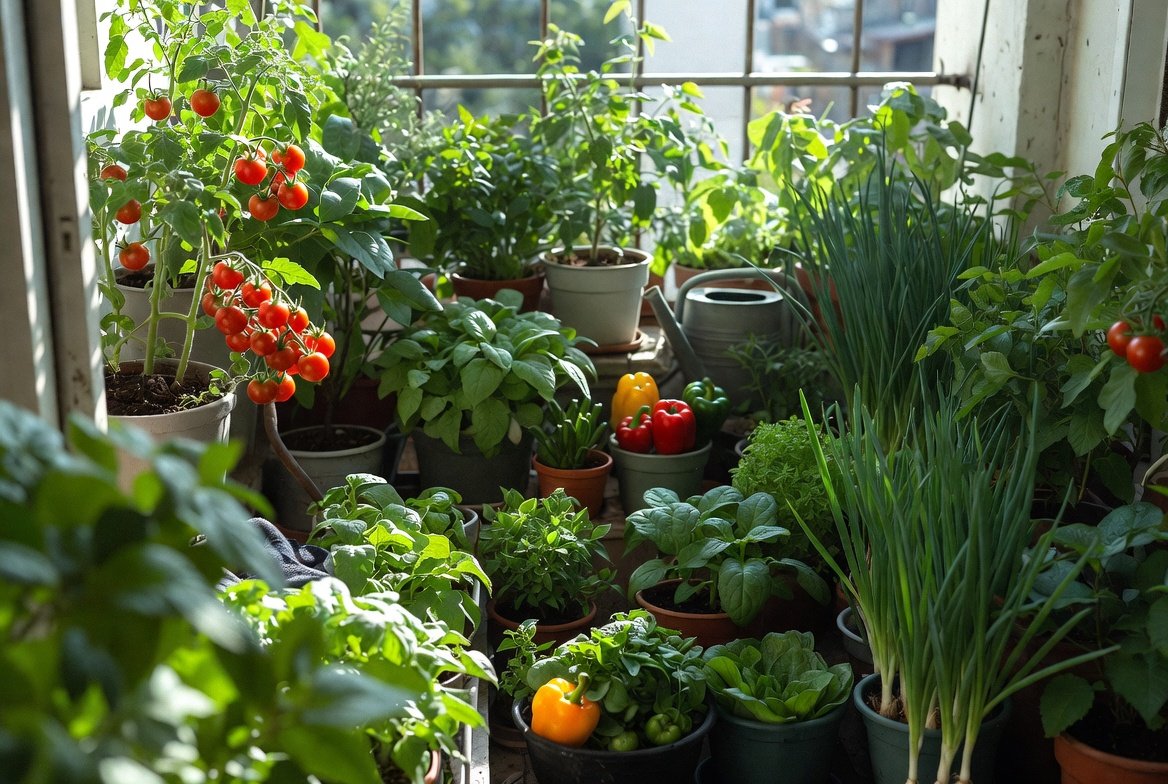
If you’ve ever stood on your balcony wondering how to grow real food in such a small space, I’ve been there. Early on, I made the mistake of planting whatever looked nice instead of what actually produced. My pots were full, but my harvest was disappointing.
Over time, I learned something that changed everything: in small space vegetable gardening, every pot has to earn its place. You don’t want plants that just sit there looking green, you want crops that keep giving you food week after week.
This is where high yield vegetables for containers come in. These are the plants that maximize output in limited soil, light, and space. If your goal is to grow more food with fewer pots, these five vegetables have consistently delivered for me.
Table of Contents
5 Vegetables That Produce the Most Food in the Balcony
In no particular order, here are five vegetables I’ve found to produce the most food in small balcony pots:
1. Cherry Tomatoes: The Balcony Workhorse
If you only grow one thing on your balcony, make it cherry tomatoes. I’ve grown them in buckets, grow bags, and even recycled containers, and they rarely disappoint.
Cherry tomatoes are incredibly productive balcony vegetables because they fruit continuously. Once they start producing, you’ll be harvesting every few days.
From my experience:
- One healthy plant can produce dozens of tomatoes weekly
- They adapt well to containers (10–20 liters is ideal)
- They thrive in full sunlight, which most balconies already get
The key is choosing indeterminate varieties. These keep growing and producing instead of stopping after one harvest cycle.
A simple routine that works:
- Water consistently (dry soil leads to cracking fruits)
- Feed weekly with a balanced fertilizer
- Support with stakes or a small trellis
Once they get going, you’ll understand why they’re a staple in small space vegetable gardening.
2. Spinach: Fast, Reliable, and Repeatable
Spinach is one of those crops that rewards consistency. It may not look dramatic, but it’s one of the most efficient ways to get edible greens from a small pot.
What I love about spinach is how quickly it grows. Within 3–4 weeks, you’re already harvesting leaves.
Here’s how I maximize yield:
- Use wide, shallow containers instead of deep pots
- Plant densely (closer spacing increases output per pot)
- Harvest outer leaves instead of cutting the whole plant
This “cut-and-come-again” method means one planting can give you multiple harvests.
In terms of high yield vegetables for containers, spinach stands out because it turns a small amount of soil into a steady supply of greens.
3. Peppers: Small Plant, Big Output
Peppers don’t take up much space, but they produce surprisingly well in containers. I’ve grown both sweet peppers and chili varieties, and they perform consistently on balconies.
What makes peppers great for productive balcony vegetables is their compact growth combined with continuous fruiting.
From experience:
- A single plant can produce 10–30 peppers over time
- They fit well in medium-sized pots (8–15 liters)
- They tolerate heat better than many leafy greens
To get the best results:
- Place them where they get maximum sunlight
- Avoid overwatering (they prefer slightly drier soil)
- Harvest regularly to encourage more fruiting
They’re also low maintenance compared to some other crops, which makes them perfect if you’re balancing gardening with a busy schedule.
4. Green Beans: Vertical Yield in Tight Spaces
When I first tried growing beans on my balcony, I didn’t expect much. But once I switched to climbing varieties, everything changed.
Green beans are one of the smartest choices for small space vegetable gardening because they grow vertically. Instead of spreading out, they climb up, giving you more yield per square meter.
Here’s what makes them efficient:
- They use vertical space instead of floor space
- They produce continuously once they start
- They grow quickly, often within 6–8 weeks
I usually grow them with a simple trellis or even string tied to a railing.
Tips that made a difference for me:
- Use deep pots (at least 20 liters)
- Harvest often to keep production going
- Provide strong support early
If your balcony has height but limited floor space, beans are one of the best high yield vegetables for containers you can grow.
5. Lettuce: The Ultimate Space Multiplier
Lettuce might seem basic, but it’s one of the most efficient crops for maximizing food output in small containers.
What makes lettuce special is how flexible it is. You can grow it in almost any container, even small trays or window boxes.
I treat lettuce as a “space filler” that boosts overall yield:
- It grows fast (2–4 weeks for baby leaves)
- It can be harvested multiple times
- It fits between larger plants like tomatoes or peppers
For better productivity:
- Grow loose-leaf varieties instead of head lettuce
- Harvest frequently to stimulate new growth
- Keep soil consistently moist
When done right, lettuce turns even the smallest gaps into food-producing zones.
Making the Most of Your Balcony Pots
Choosing the right plants is only part of the equation. To truly grow more food with fewer pots, your system has to be efficient.
From my own trial and error, here are the habits that made the biggest difference:
Focus on productivity, not variety. It’s tempting to grow many different crops, but fewer high-performing plants often give better results.
Use vertical space whenever possible. Trellises, railings, and stacked planters can double your growing area.
Rotate crops based on season. When one plant finishes, replace it quickly to keep your pots productive year-round.
Pay attention to soil quality. In containers, soil is everything. I always use a mix that drains well but holds enough nutrients.
Be intentional with your tech habits too. I’ve noticed that when I spend less time scrolling and more time observing my plants, I catch issues earlier and improve yields naturally. It’s a small mindset shift, but it connects well with a more mindful, focused lifestyle.
Conclusion
Balcony gardening doesn’t have to be limited by space. With the right choices, you can turn a few pots into a surprisingly productive food system.
Cherry tomatoes, spinach, peppers, green beans, and lettuce have consistently proven themselves as productive balcony vegetables that deliver real results. They are practical, efficient, and well-suited for container life.
The real goal is not to grow more plants, it is to grow more food. When you focus on high yield vegetables for containers, every pot becomes more valuable, and your small balcony starts working like a mini farm.
Once you experience harvesting fresh food regularly from just a few containers, you’ll realize that small space gardening is not a limitation, it’s an advantage when done right.
FAQ Section
Which vegetables produce the most food in containers?
Vegetables that produce continuously tend to yield the most in containers. From experience and research, tomatoes, peppers, beans, and leafy greens like spinach and lettuce are top performers. These crops keep producing over time instead of giving just one harvest, making them ideal for maximizing output in small balcony pots.
How many pots do I need to grow enough food on a balcony?
You don’t need many pots if you choose wisely. I’ve seen great results with just 4–6 containers using high yield vegetables. The key is selecting productive balcony vegetables and using vertical space. Crops like beans and tomatoes can produce a lot from a single container when properly managed.
What size container is best for high yield vegetables?
Most vegetables grow well in containers between 10–20 liters, depending on the plant. Larger containers hold more soil and moisture, which supports better growth and higher yields. Research shows that container size directly affects plant productivity and watering needs.
Can I grow vegetables on a balcony with limited sunlight?
Yes, but your crop choices matter. Leafy greens like lettuce and spinach tolerate partial shade, while fruiting plants like tomatoes and peppers need more sunlight to produce well. Ideally, aim for at least 5–8 hours of sunlight daily for the best results.
How do I increase yield in small space vegetable gardening?
Focus on efficiency rather than quantity. Choose vegetables that produce continuously, use vertical supports, and harvest regularly. Also, maintain consistent watering and nutrient-rich soil. Studies show that crops like tomatoes and peppers are especially productive in containers when given proper care
Further Reading
For readers who want deeper, research-backed insights into container gardening and maximizing yield:
- Container Vegetable Gardening Guide (Clemson University)
- Container Gardening with Vegetables (UMass Amherst)
- Growing Vegetables in Containers (University of Maryland Extension)
These resources provide university-backed guidance on crop selection, container sizes, and techniques for improving productivity in small spaces.