

Composting in urban environments doesn’t have to be messy or require a backyard. With a few smart strategies, even a small balcony can become a productive hub for turning everyday kitchen scraps into nutrient-rich soil. Balcony composting not only reduces household waste but also feeds your plants with organic material, giving your potted herbs, flowers, and vegetables a natural growth boost.
Urban gardeners often worry about odors, pests, and space limits, but with the right system and a little know-how, small-space composting can be surprisingly clean, convenient, and satisfying. Whether you want to grow a few herbs in containers or fully embrace sustainable urban gardening, a balcony compost system can be a game-changer.
If you’re just getting started, this complete beginner’s guide to balcony gardening breaks down containers, plant choices, and setup tips for small urban spaces.
Table of Contents
Types of Balcony Composting Systems
Choosing the right composting system is the first step in ensuring your balcony setup remains efficient and low-maintenance. Different systems suit different spaces, lifestyle habits, and types of waste.
For gardeners looking to maximize growth in limited spaces, our step-by-step guide to container soil mixes shows how to combine compost, coir, perlite, and vermiculite for healthier, more productive balcony plants.
1. Worm Composting (Vermicomposting)
Vermicomposting uses red wiggler worms to break down organic waste into high-quality compost, often called “worm castings.” It’s ideal for balconies because it’s compact, odor-free if maintained correctly, and produces liquid fertilizer known as worm tea. Worm bins can fit neatly in corners or under small tables, making them perfect for apartments.
Pros:
- Compact and contained, ideal for limited space.
- Produces nutrient-rich worm castings for plants.
- Minimal odor if properly managed.
Cons:
- Requires regular feeding and moisture monitoring.
- Sensitive to extreme temperatures; may need indoor shelter in winter.
2. Bokashi Composting
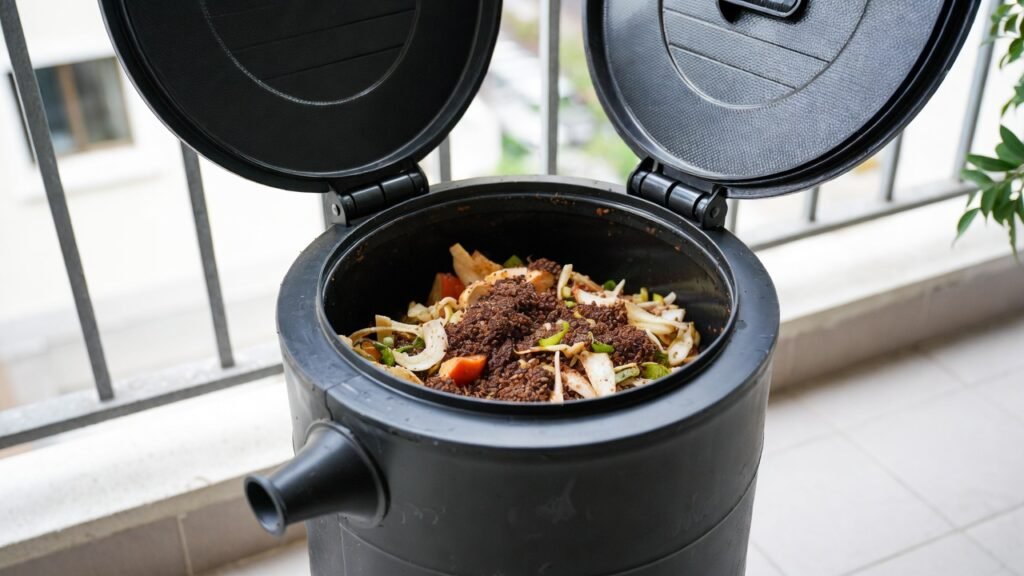
Bokashi composting is a fermentation-based system originating from Japan. It uses a special bran inoculated with beneficial microbes to break down food waste, including meat and dairy, which are usually tricky in traditional composting. Bokashi bins are airtight, compact, and fast, making them well-suited for small balconies.
Pros:
- Handles a wider range of food waste, including cooked leftovers.
- Fast fermentation process (2–4 weeks).
- Very low odor due to airtight design.
Cons:
- Produces fermented waste that still needs burying or soil integration.
- Requires purchase of Bokashi bran for ongoing use.
3. Traditional Balcony Compost Bin
For those with slightly more space, a small traditional compost bin can be placed on a balcony or terrace. These bins rely on aerobic decomposition and can accept fruit and vegetable scraps, coffee grounds, and garden trimmings. While they require occasional turning, they produce excellent organic soil over time.
Pros:
- Simple, low-tech approach.
- Produces rich, versatile compost for all container plants.
- Can be DIY from recycled materials.
Cons:
- Slower decomposition, especially in cooler weather.
- Needs careful layering and occasional turning to avoid odors.
Step-by-Step Guide to Setting Up a Worm or Bokashi Bin
Setting up a balcony compost system might feel intimidating at first, but breaking it down into clear steps makes it approachable.
Below are practical setups for both vermicomposting and Bokashi systems.
Setting Up a Worm Bin (Vermicomposting)
A worm bin is a contained ecosystem where red wigglers process organic scraps into fertile soil. Here’s how to get started:
1. Choose the Bin
Select a shallow plastic bin with a secure lid. Aim for a 10–15 gallon size for small-scale composting. Drill 6–10 small air holes in the lid and sides to allow airflow.
2. Prepare Bedding
Worms need a moist, breathable environment. Shredded newspaper, cardboard, and coconut coir make excellent bedding. Moisten it until it feels like a wrung-out sponge. Add a handful of garden soil to introduce beneficial microbes.
3. Add Worms
Red wigglers (Eisenia fetida) are the standard choice. Add about 1 pound of worms for every 2–3 gallons of bin space. Spread them evenly across the bedding and let them settle for a day before feeding.
4. Feed the Worms
Add small amounts of vegetable scraps, fruit peels, and coffee grounds. Avoid citrus, onion, garlic, and oily foods in excess. Bury scraps under the bedding to prevent odors and fruit flies.
5. Maintain the Bin
Keep the bedding moist but not soggy, and stir lightly every 1–2 weeks. Harvest worm castings after 2–3 months by moving finished compost to one side of the bin and adding fresh bedding to the empty space.
Setting Up a Bokashi Bin
Bokashi composting is fermentation-based, so it’s slightly different from traditional aerobic composting but perfect for urban spaces.
1. Choose a Bin
Select a compact, airtight container with a spigot for draining liquid. Keep the bin on a flat balcony surface or under a small table.
2. Layer Food Waste and Bran
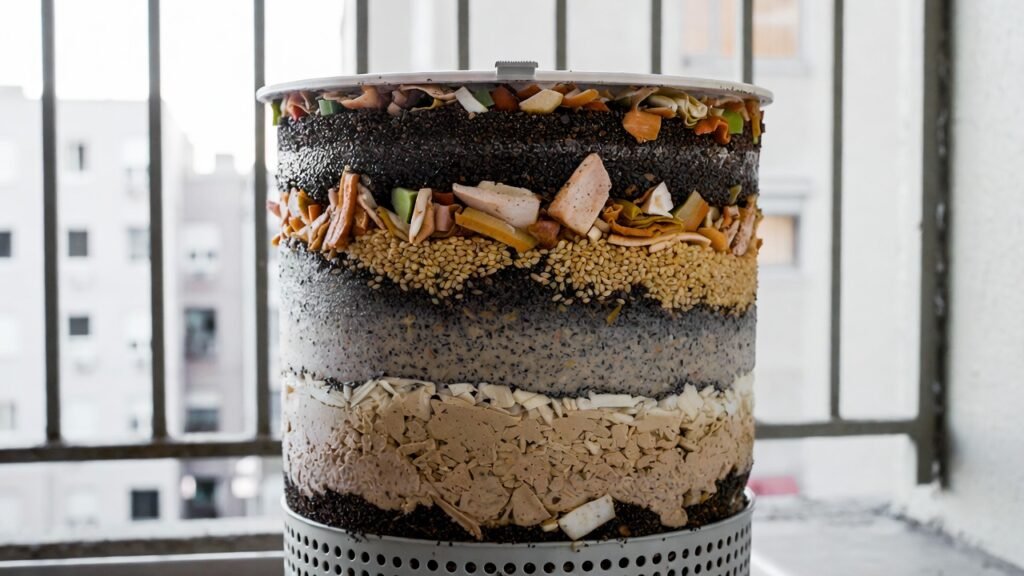
Add kitchen scraps in layers, sprinkling each layer with Bokashi bran. Use a tamper or hand to compress each layer lightly. This ensures even fermentation.
3. Seal and Ferment
Close the lid tightly after each use. The fermentation process takes 2–4 weeks, during which the waste is preserved without odor. Drain excess liquid (“Bokashi tea”) weekly for use as a diluted fertilizer.
4. Post-Fermentation Use
After fermentation, bury the pre-compost in soil, or mix it into pots. Over 1–2 weeks, it will fully break down into nutrient-rich organic soil suitable for potted plants.
5. Maintain the Bin
Clean the bin regularly, rotate layers, and ensure the lid remains airtight. Use gloves when handling fermented scraps to avoid mess.
By understanding the different systems and following a simple setup routine, balcony composting becomes manageable, odor-free, and highly rewarding. The choice between vermicomposting, Bokashi, or a small aerobic bin largely depends on the types of scraps you generate, your available space, and your preferred level of maintenance.
Tips for Odor-Free Balcony Composting
Keeping your balcony compost smelling fresh is simpler than it seems, even in small spaces. The key is balance and maintenance. Always alternate layers of “greens” (fruit and vegetable scraps) with “browns” (shredded paper, cardboard, dry leaves).
Avoid adding oily foods or meat directly to the bin. For worm bins, bury scraps under bedding, and keep moisture similar to a wrung-out sponge. Bokashi bins stay odor-free when sealed properly, but draining liquid weekly prevents excess fermentation smells.
Proper airflow and routine monitoring keep your compost healthy, fast-decomposing, and pleasantly neutral in scent.
How to Use Compost to Enrich Balcony Plants
Once your compost is ready, it’s time to put that “black gold” to work. For potted plants, gently mix finished compost with potting soil in a 1:3 ratio to boost nutrient content and improve soil structure. Worm castings can be sprinkled directly onto the surface of soil for an immediate growth boost.
Bokashi pre-compost should be buried or mixed into potting soil and allowed 1–2 weeks to fully integrate before planting. Using your own compost reduces reliance on chemical fertilizers, keeps plants healthy, and strengthens root systems, producing more robust herbs, flowers, and vegetables on your balcony.
Common Mistakes in Balcony Composting and How to Fix Them
Even experienced urban gardeners occasionally encounter problems. Here are the most common mistakes and solutions:
1. Overwatering the Bin
Too much moisture causes odors and slows decomposition. Fix it by adding more brown material, stirring gently, and ensuring proper drainage in the bin.
2. Adding Inappropriate Food Scraps
Citrus, onions, and oily foods can harm worms or slow Bokashi fermentation. Stick to vegetables, fruits, coffee grounds, and small amounts of bread.
3. Neglecting Temperature and Placement
Bins exposed to direct sun or freezing conditions can stress worms or stall fermentation. Move bins to a shaded, sheltered balcony spot.
4. Ignoring Regular Maintenance
Skipping layer rotations, feeding schedules, or liquid drainage in Bokashi bins leads to uneven decomposition. Establish a simple routine to keep your compost system efficient and odor-free.
Conclusion
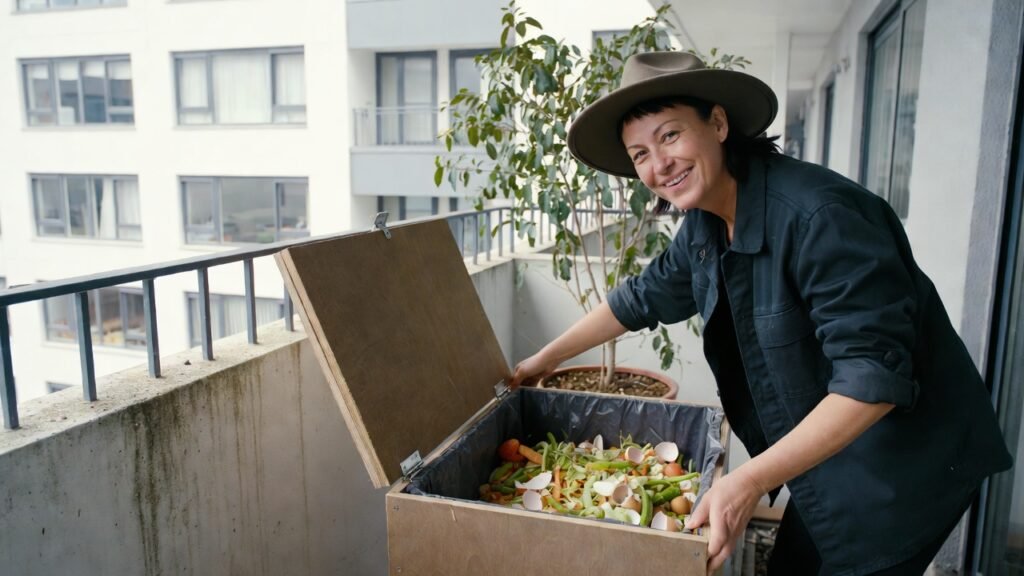
Balcony composting proves that sustainable gardening is achievable even in small urban spaces. Whether you choose a worm bin, Bokashi system, or a small aerobic compost setup, you can transform kitchen scraps into rich, nutrient-packed soil that nourishes your plants and reduces household waste.
With careful setup, routine maintenance, and attention to moisture and layering, your balcony can become a productive mini ecosystem. Embracing composting fosters healthier plants, reduces environmental impact, and gives you the satisfaction of turning everyday scraps into genuine growth fuel.
Frequently Asked Questions
1. Can I compost meat or dairy on a balcony?
Directly composting meat or dairy is not recommended for worm or traditional bins as it attracts pests and odors. Bokashi composting can handle small amounts safely, but fermented scraps should then be buried or mixed into soil to complete decomposition.
2. How often should I feed my worm bin?
For small-scale balcony worm bins, feeding 2–3 times per week is sufficient. Start with small amounts of kitchen scraps and adjust based on how quickly the worms consume them to avoid overloading the bin.
3. How long does compost take to be ready?
Worm compost typically takes 2–3 months to produce usable castings. Bokashi fermentation is faster, about 2–4 weeks, but requires additional soil integration for full decomposition. Traditional aerobic bins may take 3–6 months depending on temperature and maintenance.
4. What should I do if my compost smells bad?
Odors are usually caused by excess moisture or too many greens. Fix this by adding dry browns, mixing gently, and ensuring proper drainage. For Bokashi, check the lid seal and drain liquid weekly.
5. Can I use my compost for all types of potted plants?
Yes, compost enriches almost any container plant, from herbs to vegetables and ornamental flowers. Mix it with potting soil rather than using it alone to ensure proper drainage and avoid nutrient overload.
6. How do I keep pests away from a balcony compost bin?
Keep scraps buried under bedding in worm bins, seal Bokashi bins tightly, and avoid adding meat or oily foods to open bins. Regular maintenance and drainage reduce the risk of fruit flies or other pests.
7. Can composting on a balcony attract mold or fungus?
A little fungal growth is normal and part of decomposition. Avoid excessive moisture, maintain proper layers, and ensure airflow to minimize unwanted mold that could affect plants or create odors.