
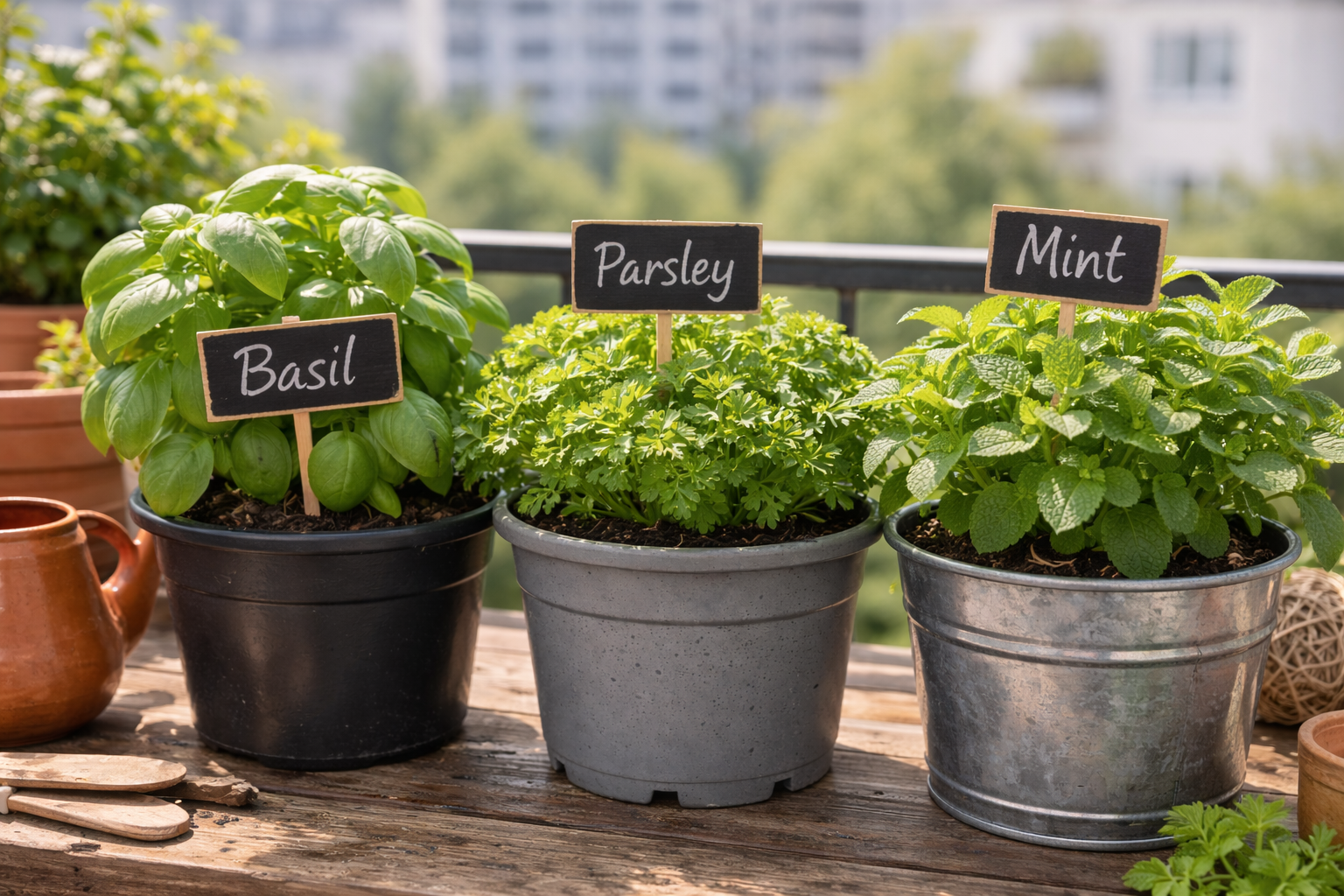
Balcony Herb Garden Basics for Fresh Kitchen Cooking
Growing your own kitchen herbs on a balcony is not just a trendy urban gardening hobby—it’s a practical way to add fresh flavor to meals, reduce grocery costs, and even brighten your outdoor space. With just a few pots, the right herbs, and minimal maintenance, you can turn a small balcony into a thriving green oasis. Herbs grown at home also retain more nutrients and aromas than store-bought options, giving your cooking an edge that pre-packaged herbs can’t match.
Balcony herb gardens are especially perfect for apartment dwellers or anyone with limited outdoor space. By understanding which herbs thrive in containers, how to care for them, and the best ways to plant and pair them, you can create a continuous supply of kitchen-ready greens all year round.
For readers looking to add fresh flavors and wellness herbs to small spaces, this guide on growing tea and medicinal plants on a balcony offers practical tips on potting, care, harvesting, and tea preparation.
Here’s a practical blueprint to get started.
Table of Contents
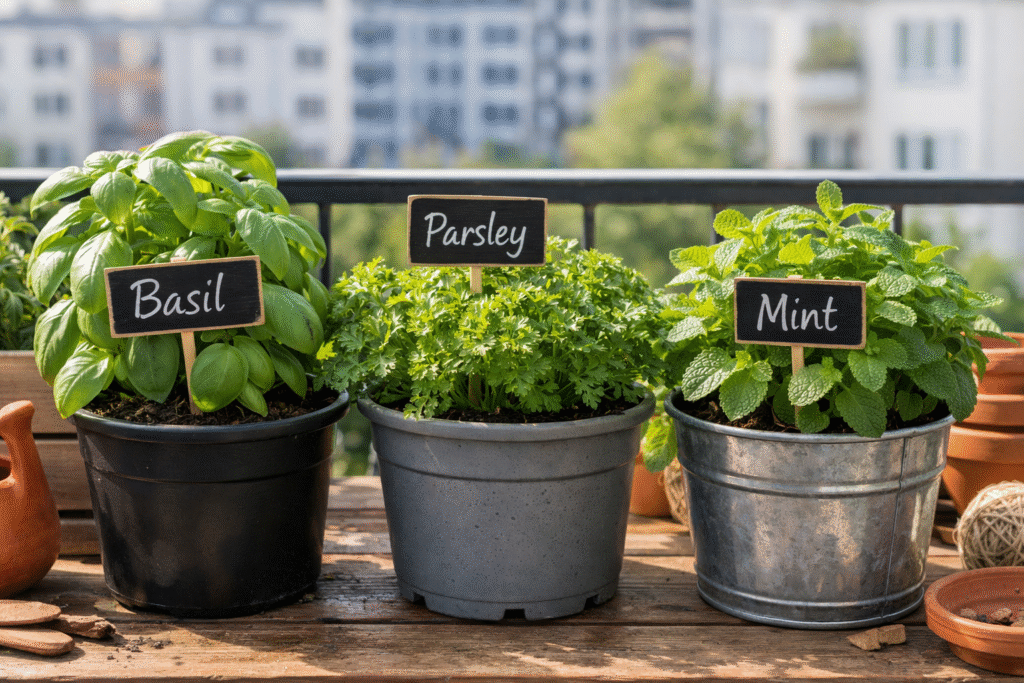
If you want a complete beginner’s guide to balcony gardening, here’s our full step-by-step guide that walks you through everything from choosing pots to caring for your plants.
Which Herbs Grow Well on Balconies?
When selecting herbs for a balcony garden, consider factors like sunlight, container size, and growth habit. Many herbs adapt well to pots and don’t require deep soil, making them ideal for small spaces. Here’s a breakdown of some beginner-friendly options:
- Basil: Thrives in full sun (6–8 hours daily). Needs warm temperatures and well-draining soil. Harvest leaves regularly to encourage growth.
- Parsley: Prefers partial sun (4–6 hours). Can tolerate slight shade and is slow to bolt when kept moist.
- Mint: Extremely hardy and grows vigorously. Prefers partial shade to full sun. Best kept in its own container to prevent overtaking other herbs.
- Rosemary: Loves full sun and drier soil. Slow-growing but long-lived in containers.
- Thyme: Full sun enthusiast, drought-tolerant, and very low-maintenance.
- Cilantro/Coriander: Likes partial sun and consistent moisture. Best planted in cooler seasons as it bolts quickly in heat.
- Chives: Adaptable to both full and partial sun. Grow in compact clumps and self-seed readily.
To make your planning easier, here’s a quick reference table showing sunlight needs and companion herbs:
| Herb | Sunlight Required | Best Companion Herbs |
|---|---|---|
| Basil | Full sun | Parsley, Chives |
| Parsley | Partial sun | Basil, Chives |
| Mint | Partial to full | Avoid mixing with other herbs |
| Rosemary | Full sun | Thyme, Oregano |
| Thyme | Full sun | Rosemary, Sage |
| Cilantro | Partial sun | Parsley, Chives |
| Chives | Full to partial | Parsley, Basil |
How Do I Maintain a Kitchen Herb Garden in Pots?
Maintaining a herb garden in pots requires a mix of regular attention and smart container choices. Herbs have specific water, soil, and nutrient needs, but container gardening allows you to tailor these conditions precisely.
1. Choosing the Right Containers
The container is as important as the herb itself. Herbs generally need:
- Good drainage holes to prevent root rot.
- Sufficient depth: most herbs do well in 6–12 inch deep pots.
- Lightweight materials for easy balcony mobility, such as plastic, fiberglass, or resin.
Here’s a practical guide for container size by herb:
| Herb | Recommended Container Diameter | Notes |
|---|---|---|
| Basil | 8–10 inches | Moves easily for sun control |
| Parsley | 6–8 inches | Prefers deeper soil |
| Mint | 10 inches or larger | Containment is key |
| Rosemary | 10–12 inches | Thrives in wide pots |
| Thyme | 6–8 inches | Can be slightly crowded |
| Cilantro | 6–8 inches | Needs consistent moisture |
| Chives | 6 inches | Clump plantings work well |
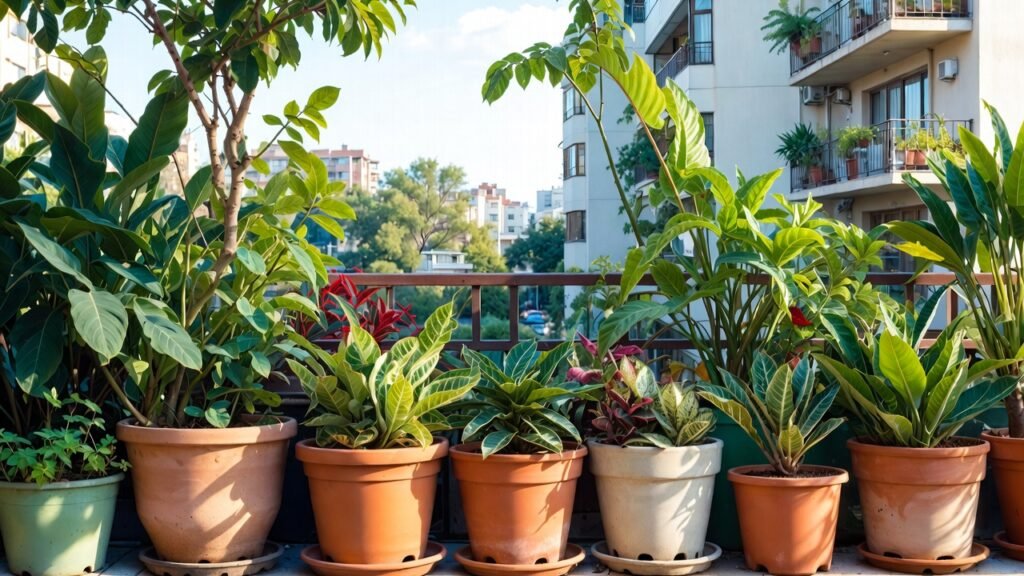
2. Soil and Fertilizer Tips
For container herbs:
- Use a high-quality, well-draining potting mix rather than garden soil. A mix with perlite or vermiculite works well.
- Fertilize lightly every 4–6 weeks with a balanced, water-soluble fertilizer (e.g., 10-10-10 NPK). Over-fertilization can lead to soft growth and reduced aroma.
- Refresh the top 1–2 inches of soil each season to maintain nutrients.
3. Watering Guidelines
Balcony pots dry faster than ground soil, especially in summer:
- Check soil daily with your finger: water when the top 1–2 inches feel dry.
- Morning watering is best to reduce fungal issues.
- Avoid overwatering mint and rosemary—they prefer slightly drier conditions.
4. Pruning and Harvesting
Regular pruning encourages bushy growth and prevents bolting:
- Snip basil leaves from the top every few weeks.
- Harvest parsley by cutting the outer leaves first.
- Mint can be harvested up to twice a week in summer.
- Remove any yellow or dead leaves to maintain plant health.
Step-by-Step Planting Instructions
Growing herbs in balcony pots is straightforward when approached methodically. Here’s a beginner-friendly sequence:
- Select your herbs: Consider sunlight, growth speed, and culinary use.
- Choose containers: Ensure proper depth and drainage for each herb.
- Prepare the soil: Fill containers with well-draining potting mix and mix in a handful of slow-release fertilizer.
- Plant seeds or seedlings:
- For seeds, plant according to packet depth (usually ¼–½ inch). Keep soil moist until sprouting.
- For seedlings, gently loosen roots and plant at the same depth as in their nursery pots.
- Water immediately: Ensure the soil is evenly moist but not soggy.
- Position for sunlight: Rotate pots weekly if the balcony receives uneven sunlight.
- Label pots: Helps track growth stages and care requirements.
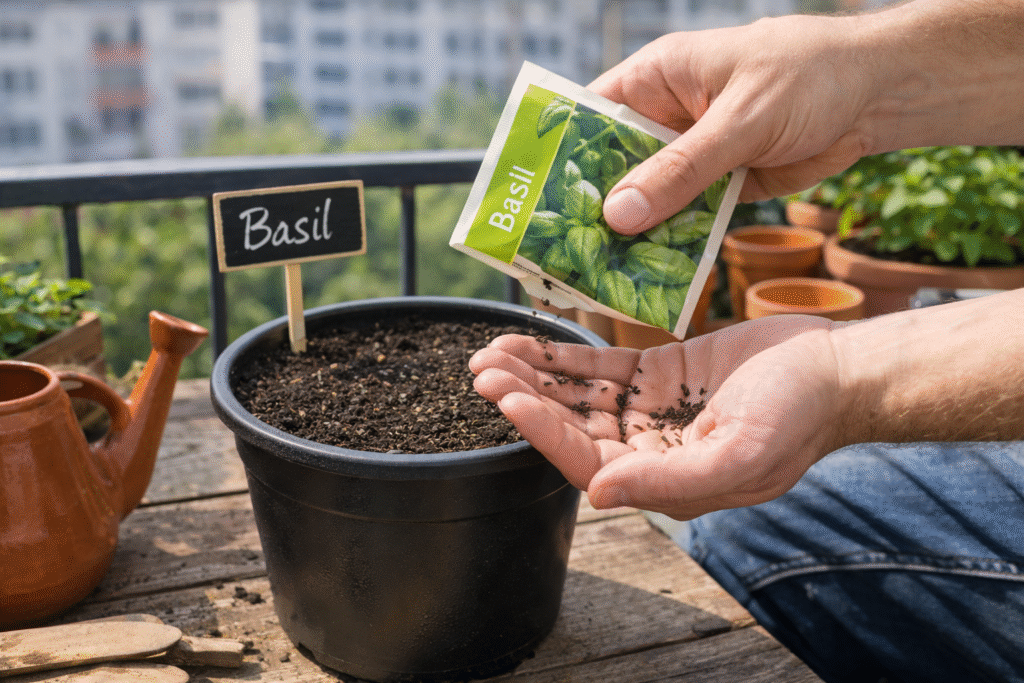
By following these steps, you can establish a small but productive kitchen herb garden that delivers fresh flavors and a vibrant balcony environment.
Harvest Timing and Techniques
Knowing when and how to harvest herbs ensures continued growth and maximum flavor. Most herbs taste best when harvested just before flowering, when essential oils are strongest.
- Basil: Pinch or cut leaves from the top every 2–3 weeks. Avoid removing more than a third of the plant at once to prevent stress.
- Parsley: Harvest outer leaves regularly, leaving inner shoots to grow. Continuous picking encourages new growth.
- Mint: Cut stems 2–3 inches above the soil. Frequent trimming prevents it from becoming leggy.
- Rosemary & Thyme: Snip small sprigs for cooking; avoid heavy pruning during winter.
- Chives: Cut leaves near the base, leaving at least 1–2 inches above soil.
Always use clean scissors or pruning shears to reduce the risk of disease and promote faster recovery.
Watering and Fertilizing Schedules
Consistent watering and fertilizing are key to healthy potted herbs. Container herbs need more attention than in-ground plants because soil dries faster.
For practical ways to reduce water use while keeping your plants healthy, check out our water-saving tips for balcony gardeners guide.
Below are the watering and fertilizer schedules:
Watering Schedule:
- Summer: Check daily; water when the top 1–2 inches are dry.
- Winter: Water 2–3 times per week depending on sunlight exposure.
- Avoid waterlogging; ensure excess water drains freely.
- Fertilizing Schedule:
- Use a diluted, balanced liquid fertilizer (10-10-10) every 4–6 weeks.
- For heavy feeders like basil and parsley, a bi-weekly light feed can boost growth.
- Slow-release granules can be added once per season for steady nutrients.
Tip: Mulching with a thin layer of organic material helps retain moisture and regulate soil temperature.
Companion Planting Suggestions
Some herbs grow better when paired with others, either by repelling pests, enhancing flavor, or maximizing pot space.
| Herb Pair | Benefit |
|---|---|
| Basil + Parsley | Basil improves parsley’s flavor and repels flies. |
| Rosemary + Thyme | Both thrive in similar sun and water conditions. |
| Mint + Chives | Mint repels aphids; chives prevent fungal issues. |
| Cilantro + Parsley | Cilantro helps attract beneficial insects. |
Avoid planting mint with other herbs unless it’s in a separate pot, as it spreads aggressively and can choke neighboring plants.
Pro Tips for Beginners
Even with limited balcony space, small adjustments make a huge difference:
- Rotate Pots: Move plants weekly to balance sun exposure.
- Use Lightweight Pots: Makes watering and moving easier.
- Label Everything: Track growth, sunlight preferences, and watering needs.
- Start Small: Focus on 3–5 herbs before expanding.
- Observe and Adjust: Watch leaf color and growth rate to tweak watering, sunlight, or fertilizer.
- Seasonal Rotation: Replace herbs that bolt in summer with hardy winter herbs like rosemary and thyme.
These small habits keep a balcony herb garden productive and visually appealing all year.
Conclusion
Growing a balcony herb garden is rewarding, practical, and surprisingly simple when approached with structure and care. From choosing the right herbs and containers to understanding watering, fertilizing, and companion planting, even small spaces can yield fresh, flavorful kitchen herbs.
By following the planting instructions, harvest techniques, and beginner tips outlined in this guide, anyone can turn a sunny balcony into a flourishing green kitchen oasis.
FAQ Section
1. Can I grow herbs on a balcony with limited sunlight?
Yes. Many herbs tolerate partial sun, such as parsley, mint, and chives. Position these plants where they receive 4–6 hours of indirect or morning sunlight and rotate regularly to maximize light exposure.
2. How often should I water my potted herbs?
Water when the top 1–2 inches of soil feel dry. In hot months, this may be daily, while cooler months require watering only 2–3 times per week. Proper drainage is crucial to avoid root rot.
3. What container size is best for herbs?
Most herbs thrive in pots 6–12 inches in diameter. Deep pots are ideal for roots like parsley, while shallow containers suit thyme and chives. Mint needs a larger, separate container to control spreading.
4. Can I grow multiple herbs in one pot?
Yes, but choose herbs with similar sunlight and water needs. Avoid planting aggressive growers like mint with other herbs to prevent crowding and competition for nutrients.
5. How do I prevent herbs from bolting?
Bolting occurs when herbs flower and go to seed. Keep soil evenly moist, provide adequate sunlight, and harvest regularly to encourage leafy growth rather than flowering.
6. When should I fertilize container herbs?
Use a balanced liquid fertilizer every 4–6 weeks. Heavy feeders like basil can benefit from bi-weekly light feeds. Avoid over-fertilizing, which can reduce flavor and aroma.
7. How do I deal with pests on balcony herbs?
Inspect plants regularly. Remove affected leaves and use organic solutions like neem oil or insecticidal soap. Companion planting can also help repel common pests naturally.