
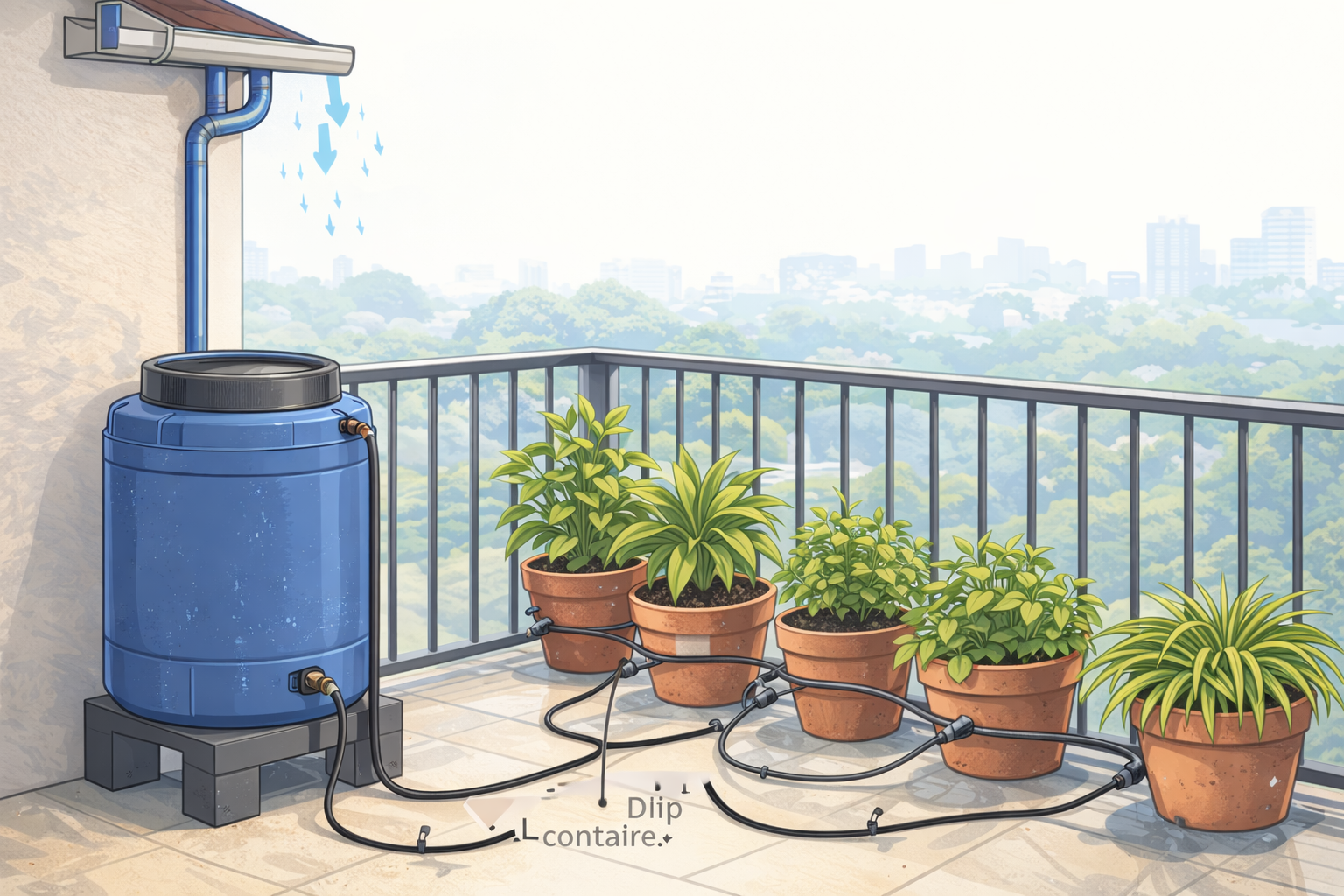
Urban gardening has become a lifeline for city dwellers craving greenery, fresh herbs, and small-scale produce. Yet, one challenge that often gets overlooked is water management. Tap water can be expensive, and using it inefficiently can strain resources and budgets. Rainwater harvesting for balcony gardens is a practical, eco-friendly solution that allows even apartment dwellers to reduce reliance on municipal water, lower utility costs, and provide plants with cleaner, nutrient-rich water.
Balcony rainwater harvesting is especially useful in modern urban environments where space is limited. By using containers, basic filtration, and simple irrigation setups, small-space gardeners can make the most of every rainfall, turning a tiny balcony into a sustainable mini-garden.
Urban apartments can be transformed into lush green spaces with the right planning and care. For those just getting started, check out our guide on essential tips for starting a beginner-friendly balcony garden.
This guide explores why rainwater works best for balcony plants, DIY collection options, and step-by-step methods to implement a system tailored to limited spaces.
Table of Contents
Why Rainwater is Ideal for Balcony Plants
Rainwater offers several advantages over tap water that directly benefit plant health and growth. Its natural softness and lack of chlorine or harsh chemicals make it gentler on roots and leaves. Using rainwater can also reduce salt buildup in pots, which often occurs with regular municipal water and can harm sensitive plant species.
For small-space gardening, the quality of water is crucial. Many balcony plants thrive when watered with water free from heavy metals and additives, and rainwater fits this requirement naturally. Furthermore, rainwater tends to be slightly acidic, which can enhance nutrient absorption for a wide variety of plants, from leafy herbs to flowering ornamentals.
In addition to plant health, harvesting rainwater aligns with sustainable living practices. Collecting and reusing rainfall minimizes dependence on treated water systems, conserving energy used in water treatment and distribution. In urban apartments, where every liter saved counts, rainwater harvesting can contribute meaningfully to household water efficiency.
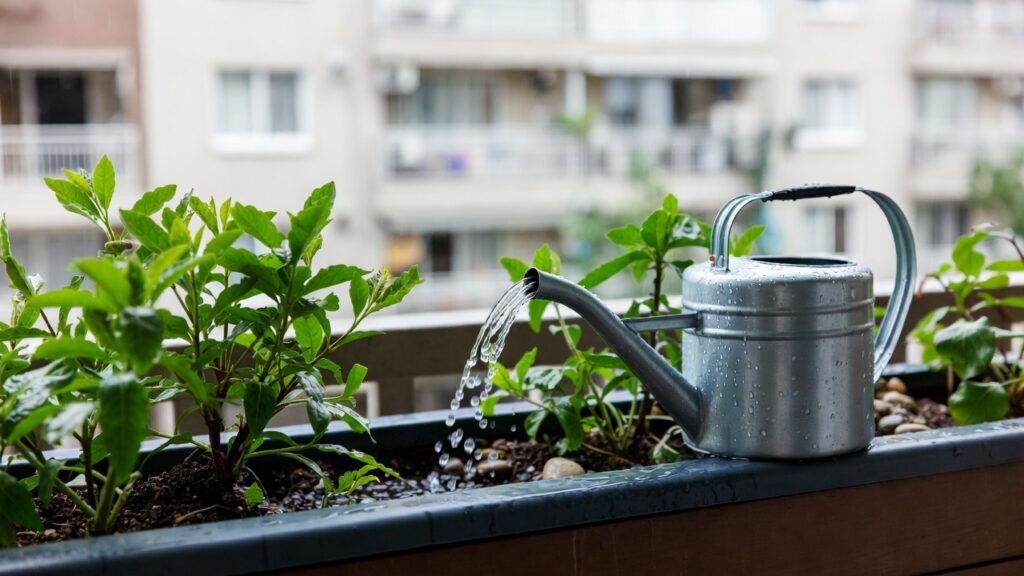
DIY Collection Systems for Small Spaces
Even tiny balconies can host an effective rainwater collection system with a few clever techniques. Pairing rainwater harvesting with self-watering balcony planters ensures your plants stay hydrated with minimal effort, perfect for busy urban gardeners.
The key is to capture runoff, store it safely, and direct it efficiently to your plants.
1. Simple Container Collection
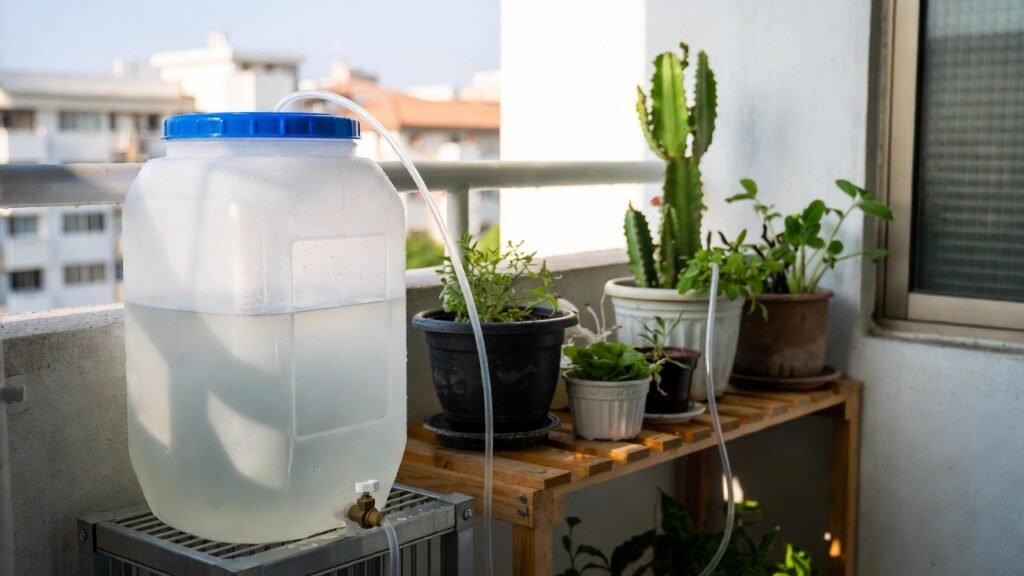
A straightforward way to get started is using any large container, such as a plastic barrel, storage bin, or even a clean bucket. Position the container near a balcony railing or slightly sloped surface where rain naturally drains. Adding a mesh or perforated lid helps keep debris and insects out.
For ongoing maintenance, choose containers with a tap or spigot near the bottom. This allows easy access to water without lifting heavy barrels, and it can be connected to drip irrigation or watering cans. Smaller setups can even use stackable 20–30 liter containers, making them suitable for apartments where floor space is at a premium.
2. Rain Diverters and Gutters
If your balcony has an overhead roof or awning, small gutters or rain diverters can channel water into storage containers. Flexible downspouts or PVC pipes can guide water precisely into barrels without spillage. Even minimal overhangs can produce enough collected water over several rainy days to sustain a balcony garden.
3. Basic Filtration
Filtration is essential to prevent debris or algae growth in storage containers. A simple DIY solution involves placing a fine mesh screen at the top of your container to trap leaves and dirt. For slightly larger setups, adding a layer of sand or gravel at the inlet can further reduce sediment entering your water supply.
Filtered rainwater not only keeps plants healthier but also minimizes the risk of clogging drip irrigation systems, ensuring consistent water flow to every pot.
Step-by-Step Guide: Balcony Rainwater System
Creating a simple balcony rainwater harvesting system doesn’t require plumbing skills or professional tools. A small DIY setup can provide a reliable source of water for plants throughout the rainy season.
Materials Needed
- Large container or barrel with a lid
- Fine mesh or screen
- Spigot or tap for controlled release
- PVC pipes or flexible tubing (optional for gutters/diverters)
- Drip irrigation tubing or watering cans
- Gravel or sand for filtration
Step 1: Positioning the Container
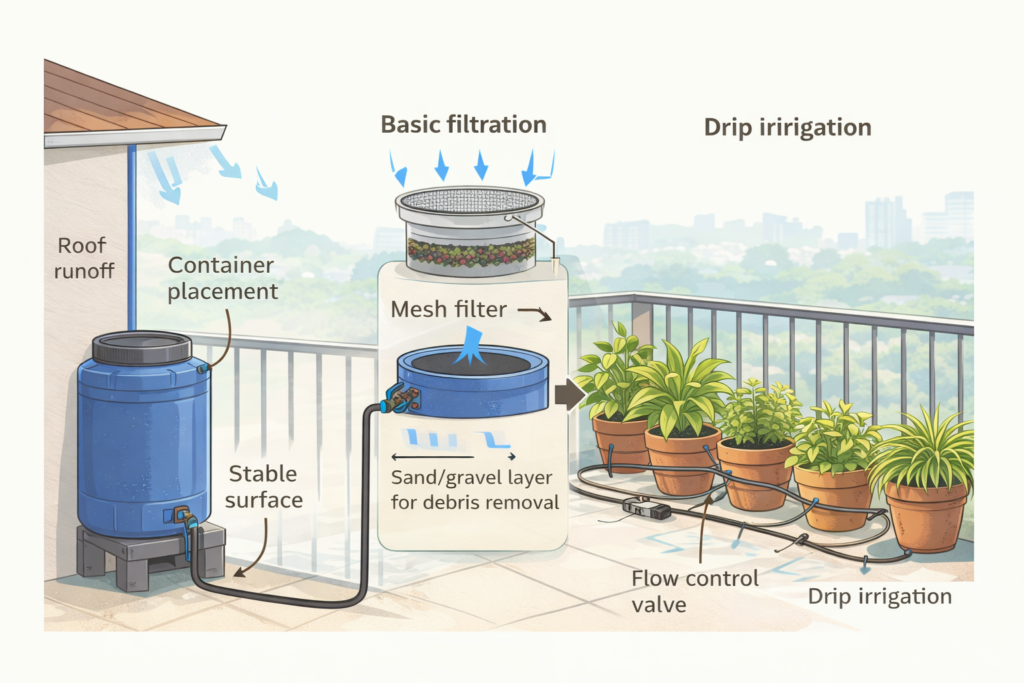
Select a corner of your balcony that receives direct rain or can be connected to a gutter/diverter. Ensure the container sits on a stable surface that can handle its weight when full.
If the balcony is small, consider elevated stands to allow easy access to the tap or to facilitate gravity-fed irrigation.
Step 2: Installing Basic Filtration
Cover the top of the container with a mesh screen to keep debris and insects out. Optionally, pour a thin layer of gravel or sand at the inlet to capture finer particles.
This simple filtration reduces maintenance while keeping water quality high for plants.
Step 3: Connecting to Plants
For efficient watering, attach drip irrigation tubing to the container spigot. Lay tubing along pots and hanging planters, ensuring each plant receives a steady drip of water. Small valves or connectors can control flow for each pot, preventing overwatering and water waste.
Alternatively, a watering can is suitable for manual irrigation. Simply fill from the container and water plants as needed, ideal for apartments without space for irrigation tubing.
Step 4: Maintenance
Check your rainwater container regularly to remove debris, clean the mesh screen, and inspect for algae growth. During dry periods, ensure the system remains ready by keeping lids secure and tubing clear.
Routine monitoring guarantees that your balcony rainwater system continues to supply clean water efficiently.
[IMAGE: Step-by-step diagram showing container placement, mesh filtration, and drip irrigation setup on a small balcony]
Water-Saving Tips and Maintenance for Small Setups
Even a compact balcony rainwater system can be highly efficient when combined with smart watering strategies. Timing is key—watering plants early in the morning or late in the evening reduces evaporation, ensuring each drop counts. Mulching pots with organic materials like coconut husk, bark, or compost keeps soil moist longer and minimizes frequent watering.
To maximize every drop of harvested rainwater, follow practical water-saving tips for balcony gardeners, including drip irrigation and mulching techniques.
Regular maintenance prevents water waste and system inefficiencies. Cleaning mesh filters, checking tubing for leaks, and monitoring container levels ensures consistent water flow. Rotating containers during heavy rainfall or adjusting their position optimizes collection without overfilling, protecting both plants and your balcony structure.
Cost-Effective Ways to Filter and Store Rainwater
Rainwater storage doesn’t require expensive equipment. Repurposed barrels, large plastic bins, or food-grade containers are ideal for budget-conscious gardeners. Adding a mesh screen or perforated lid keeps out debris, while a layer of gravel or sand at the inlet provides additional filtration without professional tools.
For small apartments, stacking containers vertically can save space and even allow gravity-fed irrigation systems. Valves or spigots at the bottom simplify water access. Regularly inspecting and cleaning storage containers prevents algae growth, keeping the water safe and nutrient-rich for your plants.
Integrating Rainwater into Daily Plant Care
Once collected and filtered, rainwater can seamlessly become part of your plant care routine. Drip irrigation systems fed by rainwater containers deliver water directly to roots, reducing wastage. For manual watering, using a watering can from your storage container ensures controlled distribution without over-saturation.
Rainwater is ideal for sensitive species like herbs, ferns, and flowering plants. By alternating rainwater with minimal tap water during prolonged dry periods, balcony gardeners can maintain soil health and prevent chemical buildup. Monitoring soil moisture levels and adjusting drip flow ensures each plant receives the right amount for healthy growth.
Conclusion
Rainwater harvesting transforms even the smallest balcony into a sustainable, eco-friendly garden. By using simple containers, basic filtration, and drip irrigation, urban gardeners can conserve water, save on utility costs, and provide plants with cleaner, nutrient-rich hydration.
Integrating rainwater into daily care routines not only benefits plants but also contributes to environmental conservation. Small actions—like mulching, timely watering, and container rotation—maximize efficiency. Balcony rainwater harvesting proves that even limited spaces can support a green, healthy, and sustainable urban lifestyle.
Frequently Asked Questions
1. Can I use rainwater for all types of balcony plants?
Yes. Most herbs, ornamentals, and vegetables thrive with rainwater due to its low chemical content. However, sensitive species may require occasional supplemental tap water to balance nutrients or pH. Monitoring soil moisture ensures optimal growth and prevents overwatering.
2. How much space do I need for a balcony rainwater system?
Even a small corner or a few containers can be effective. Vertical stacking, corner barrels, or hanging collection setups allow apartments under 10 square meters to harvest meaningful amounts of water without cluttering the balcony.
3. Do I need special filtration for rainwater?
Basic filtration with a mesh screen and optional sand or gravel layer is usually sufficient. This keeps debris and insects out while maintaining water quality. For larger systems, finer filters can improve longevity and protect drip irrigation tubing.
4. How often should I clean my rainwater containers?
Containers should be checked monthly for debris, algae, or blockages. Cleaning the mesh and inspecting tubing ensures consistent water flow and prevents contamination. Regular maintenance keeps plants healthy and prolongs the system’s lifespan.
5. Can rainwater be used with drip irrigation?
Absolutely. Gravity-fed or pump-assisted drip irrigation works well with filtered rainwater. Tubing can deliver precise amounts of water to each pot, conserving water and maintaining consistent moisture for balcony plants.
6. Is rainwater harvesting cost-effective for small apartments?
Yes. Using repurposed containers, DIY filtration, and simple irrigation avoids expensive plumbing or equipment. Over time, it reduces tap water use and utility bills, making it an affordable, eco-friendly solution for urban gardeners.
7. Can I store rainwater long-term?
For best results, store water for short periods—up to two weeks is ideal. Prolonged storage may encourage algae or bacterial growth. Regularly rotating water and keeping containers covered maintains water quality for ongoing plant care.
Helpful Resources
- University of Florida IFAS Extension – Urban Gardening and Rainwater Collection: https://gardeningsolutions.ifas.ufl.edu
- American Rainwater Catchment Systems Association (ARCSA) – Guidelines for Small Spaces: https://www.arcsa.org