
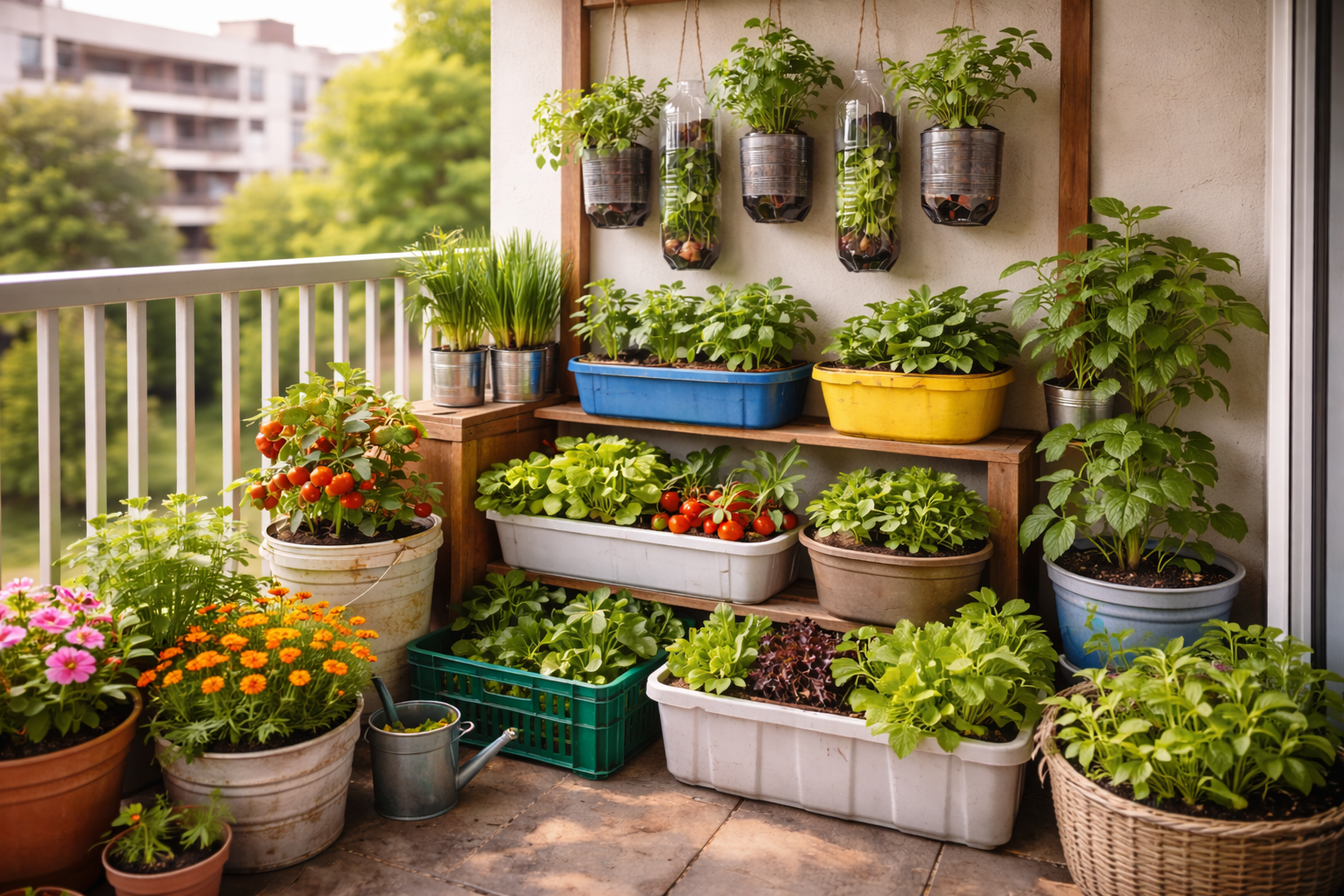
Introduction to Low-Cost Balcony Garden Upgrades
Balcony gardening often starts with excitement and ends with sticker shock, especially for renters trying to stay within a tight budget. I’ve been there—measuring a 1.2-meter balcony, worrying about drilling holes, and counting every naira before buying a single pot. The good news is that balcony gardening on a budget isn’t about cutting corners; it’s about using what you already have, upgrading smartly, and avoiding beginner mistakes that waste money.
Urban renters face real challenges: limited floor space, weight limits, strict landlords, and unpredictable sun exposure. Over the years, I’ve learned that with under $20 (or its local equivalent), you can dramatically improve how productive, organized, and beautiful your balcony garden feels—without buying fancy kits or imported planters.
For those new to balcony gardening, you can explore our complete beginner’s guide here.
Table of Contents
How can I make a cheap balcony garden?
Creating a cheap balcony garden starts with understanding your space and working with it instead of fighting it. When I first started, I wasted money buying random pots that didn’t fit my railing or plants that needed more sun than my balcony could offer. Budget gardening becomes easier once you plan intentionally and prioritize function over looks.
Start by assessing your balcony like a gardener, not a decorator
Before spending anything, take time to observe your balcony for a full day. This step costs nothing but saves money later by preventing wrong purchases.
• Measure your balcony width, railing height, and available floor area
• Track sunlight hours for one week (morning, afternoon, or indirect light)
• Check weight limits stated in your rental agreement
• Identify wind direction, especially on higher floors
From experience, most balconies under 1.5 meters wide do best with vertical setups rather than floor pots. This alone can save $10–$15 by reducing the number of containers you need.
Choose plants that forgive beginner mistakes
Budget gardening fails when plants die and need replacing. Cheap balcony garden ideas work best when you start with resilient plants that tolerate irregular watering and container life.
Good low-cost, beginner-friendly options include:
• Herbs like basil, mint, scent leaf, parsley, and chives
• Leafy greens such as lettuce, spinach, and ugwu (young vines trained upward)
• Ornamental plants like spider plant or pothos for shaded balconies
I usually recommend starting with 4–6 plants maximum. Managing fewer plants reduces soil costs, water waste, and replacement expenses.
To find out which vegetables grow best in balcony containers, here’s a curated list of the top ten.
Use a simple budget plan before buying anything
A cheap balcony garden stays cheap when you cap spending early. Below is a realistic starter budget I’ve used multiple times.
| Item | Estimated Cost |
|---|---|
| Reused containers | $0 |
| Basic potting soil (10–15 liters) | $6 |
| Seeds or seedlings | $4 |
| Twine or wire | $2 |
| DIY drainage materials | $1 |
| Total | $13 |
This leaves room for one optional upgrade, like a small watering can or organic fertilizer, while staying under $20.
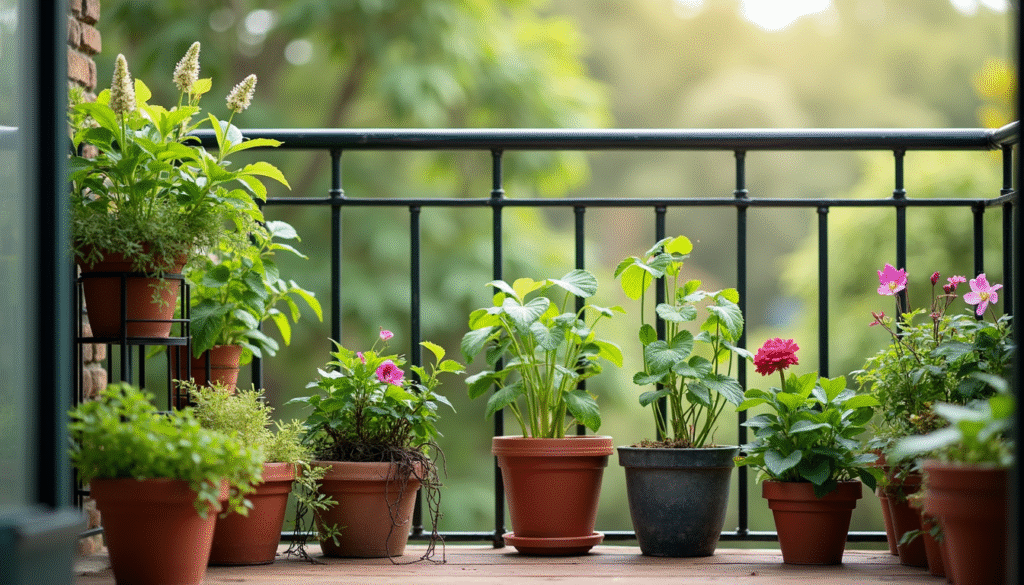
Build upward instead of outward
Vertical gardening is one of the smartest cheap balcony garden ideas because it multiplies space without multiplying costs. When I switched from floor pots to hanging and stacked containers, I cut my container spending by nearly half.
Vertical setups work especially well for:
• Herbs and leafy greens
• Strawberries in bottles
• Vining plants trained on strings
The key is using lightweight materials and spreading weight evenly along railings or walls.
What household items can I reuse for gardening?
Reusing household items for balcony gardening is where most of your savings come from. Many items we throw away are perfect for containers, supports, or watering tools once slightly modified. Over time, I’ve built entire balcony gardens without buying a single new pot.
Plastic bottles as planters and vertical towers
Plastic bottles are one of the most versatile materials for budget balcony gardening. I prefer 1.5–2 liter bottles because they hold enough soil for herbs without becoming too heavy.
Before cutting bottles, always rinse them thoroughly and remove labels to prevent mold buildup.
Steps to turn bottles into planters:
• Cut a side window for planting access
• Poke 3–5 drainage holes at the base
• Add a thin layer of gravel or crushed stones
• Fill with potting soil and compost mix
• Hang using twine or wire from railings
Each bottle planter costs $0 and lasts an entire growing season if shaded from harsh sun.
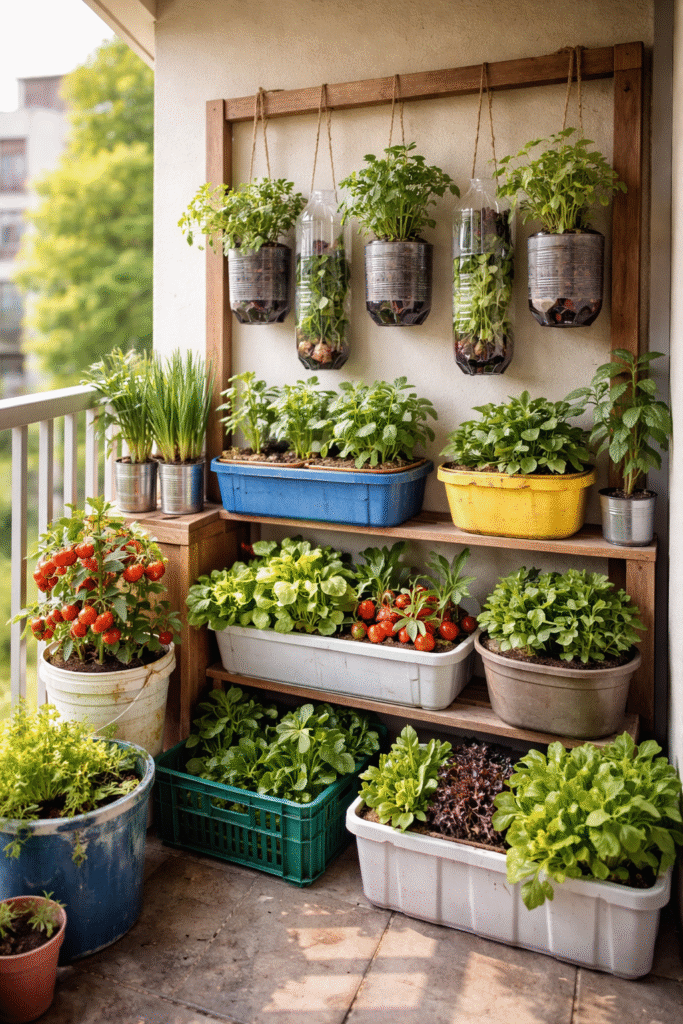
Old buckets, paint tubs, and food containers
Not every reused container is safe, so selection matters. I avoid containers that previously held chemicals unless they are clearly food-grade and well-cleaned.
Safe options I’ve used successfully include:
• Old plastic buckets for tomatoes or peppers
• Paint buckets thoroughly cleaned and lined
• Large food containers from rice, flour, or oil
Before planting, drill or melt drainage holes. Poor drainage is the fastest way to lose plants and money.
| Reused Container | Best For | Cost |
|---|---|---|
| Plastic bucket | Tomatoes, peppers | $0 |
| Rice container | Leafy greens | $0 |
| Small tubs | Herbs | $0 |
Household fabric as plant ties and shade cloth
Buying garden ties is unnecessary when most homes already have usable materials. I’ve reused old clothes and fabric scraps for years without issues.
Useful fabric items include:
• Old T-shirts cut into strips for tying stems
• Lace curtains for light shade on hot balconies
• Socks as soft ties for young plants
Fabric ties are gentler on plant stems than plastic and cost nothing.
Kitchen waste turned into soil boosters
Budget gardening improves dramatically when you reduce fertilizer costs. While full composting may not be realistic for renters, simple kitchen waste reuse is practical.
What I regularly reuse:
• Crushed eggshells for calcium
• Banana peels dried and powdered for potassium
• Vegetable rinse water for mild nutrient boost
These small additions won’t replace fertilizer entirely but help stretch soil performance over several months.
Repurposed household items for watering
A proper watering routine matters more than expensive tools. When I started, I used modified bottles before buying any equipment.
Easy DIY watering solutions include:
• Plastic bottles with holes poked in the cap for gentle watering
• Old kettles reserved only for garden use
• Cups for targeted watering of seedlings
Controlled watering prevents soil loss and reduces water waste, which is especially important on balconies with drainage restrictions.
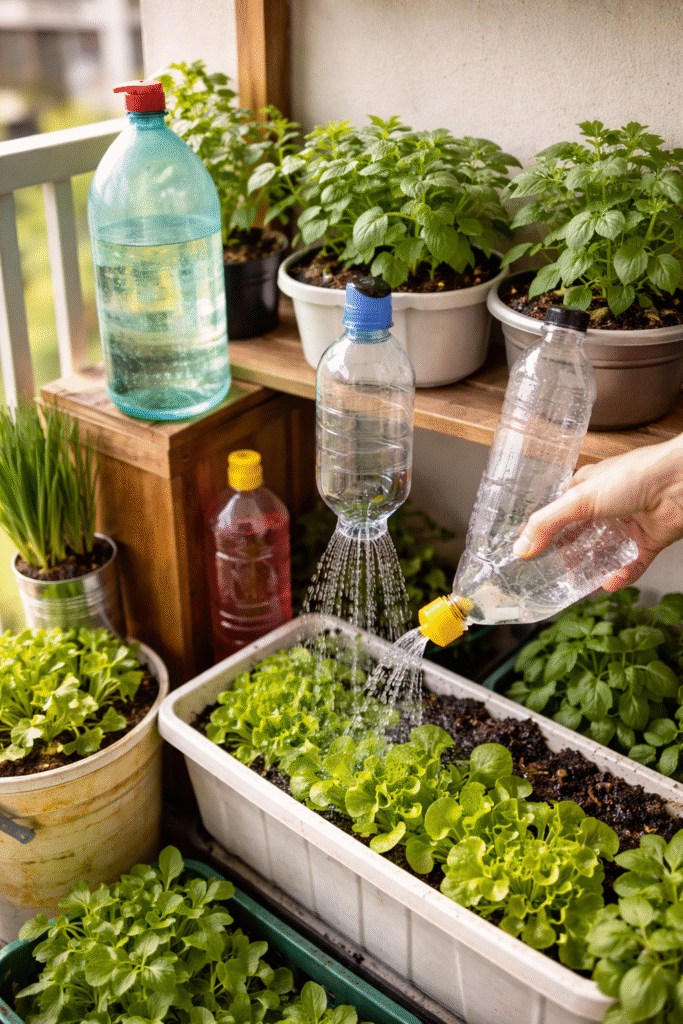
Check out our complete balcony water-saving tips for balcony gardens.
Simple DIY plant stands from home materials
Plant stands don’t have to be bought. I’ve stacked crates, stools, and bricks to create levels that improve light access without extra cost.
Common items that work well:
• Wooden crates lined with plastic
• Sturdy stools or side tables
• Inverted buckets for temporary height
Always test stability before placing plants, especially on windy balconies.
By reusing household items for balcony gardening, you not only save money but also gain flexibility. When plants grow, seasons change, or you move apartments, these DIY upgrades adapt easily without financial loss.
This foundation sets you up for smarter upgrades later—still under $20—without restarting your garden from scratch.
Additional DIY Projects That Stay Under $20
Once the basics are in place, small DIY upgrades can noticeably improve plant health and how enjoyable your balcony feels. These projects are based on what actually worked for me in rental balconies where drilling, permanent fixtures, and high costs weren’t options.
DIY self-watering planters using bottles and buckets
Self-watering planters reduce how often you need to water, which matters during hot weeks or busy schedules. I started using these after losing herbs to inconsistent watering, and they paid off within the first month.
To make a simple self-watering container, you need an inner container with holes and an outer reservoir. Gravity does the rest.
Steps to build one at home:
• Use a medium bucket or deep container as the reservoir
• Cut the bottom off a plastic bottle and poke holes in the cap
• Insert a fabric wick (old cloth strip) through the cap
• Place soil and plant inside the inverted bottle
• Fill the outer container with water
This setup costs $0–$2 and can keep herbs hydrated for 3–5 days, depending on heat and plant size.
DIY wind barriers for high-rise balconies
Wind stress is one of the most overlooked balcony gardening problems, especially above the third floor. Leaves tear, soil dries too fast, and pots tip over. Instead of buying screens, I used simple household materials.
Effective low-cost wind barriers include:
• Clear plastic sheets zip-tied to railings
• Old bamboo mats secured vertically
• Lightweight fabric curtains doubled as shade
The key is allowing airflow while reducing direct wind force. Even a partial barrier can cut wind damage by half.
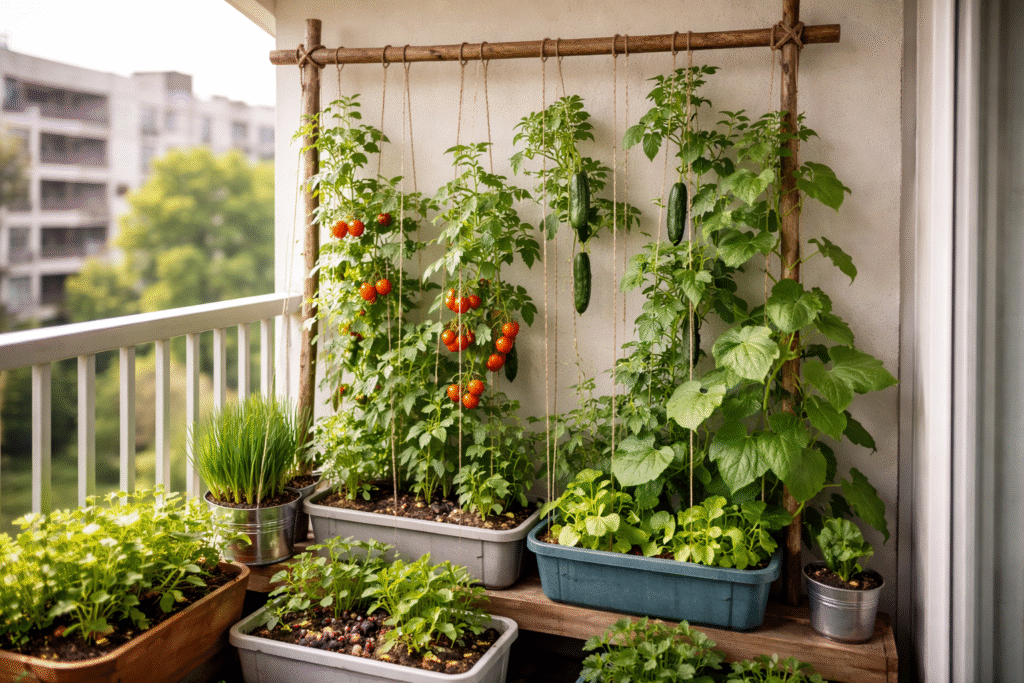
Simple trellis systems from string and sticks
Climbing plants don’t need store-bought trellises. I’ve trained tomatoes, cucumbers, and vines using string systems that cost next to nothing.
A basic string trellis works well for renters because it’s removable and adjustable.
How to build it safely:
• Secure strong twine to railing or overhead bar
• Anchor the bottom using a weighted pot
• Train plants upward weekly using soft fabric ties
This method supports vertical growth while saving floor space and money.
DIY mulch from household materials
Mulching reduces water loss and stabilizes soil temperature, which is especially helpful for container plants exposed to sun and wind. I started mulching once I noticed how fast balcony soil dries compared to ground gardens.
Low-cost mulch options include:
• Shredded cardboard (top layer only)
• Dried leaves crushed by hand
• Coconut husk fibers
A thin mulch layer can reduce watering needs by up to 30% in hot seasons.
Maintenance Tips for a Budget Balcony Garden
Maintaining a cheap balcony garden is about consistency, not expensive products. Most problems I see beginners face come from irregular care rather than lack of tools.
Create a simple weekly care routine
A predictable routine keeps plants healthy and prevents costly replacements. I stick to a light schedule that fits urban life.
A practical weekly routine:
• Check soil moisture every 2–3 days
• Remove dead leaves once a week
• Rotate pots slightly for even light
• Inspect for pests early
This takes about 10–15 minutes per session and prevents most beginner issues.
Water smart to avoid waste and plant stress
Overwatering is one of the fastest ways to ruin a balcony garden. Containers don’t drain like ground soil, so moderation matters.
From experience, these practices help:
• Water early morning or late evening
• Water slowly until drainage appears
• Empty saucers to prevent root rot
Plants prefer deep, less frequent watering over daily shallow watering.
Refresh soil without replacing it completely
Buying new soil every season adds up. Instead, I refresh old soil to extend its life.
Simple soil refresh method:
• Remove top 3–5 cm of old soil
• Add compost or organic matter
• Mix gently and water thoroughly
This restores nutrients without the cost of full replacement.
Sustainable Habits That Save Money Long-Term
Sustainability and budget gardening naturally go together. Over time, these habits reduced my yearly spending while improving plant performance.
Save seeds from successful plants
Seed saving is one of the most underrated frugal gardening habits. Once I started saving basil, pepper, and tomato seeds, I stopped buying seeds entirely for some plants.
Allow healthy plants to flower and seed, dry seeds fully, and store them in labeled envelopes.
Reuse and adapt instead of upgrading constantly
Balcony gardens change with seasons, but that doesn’t mean starting over. I reuse containers year after year, adjusting layouts instead of replacing materials.
This mindset prevents impulse buying and keeps gardening enjoyable rather than expensive.
Compost lightly, even in small spaces
Full compost bins aren’t realistic for most balconies, but small-scale composting works.
Low-effort options include:
• Bokashi buckets
• Small sealed compost containers
• Directly burying tiny food scraps in soil
Even limited composting reduces fertilizer needs over time.
Conclusion
DIY low-cost balcony garden upgrades aren’t about doing less; they’re about doing smarter. With under $20, you can create a functional, productive, and beautiful garden using items already around you. From reused containers to simple trellises and self-watering systems, these upgrades fit real renter lifestyles.
What matters most is observing your space, adapting as plants grow, and maintaining consistent care. A budget balcony garden doesn’t look cheap—it looks intentional, personal, and alive.
FAQ Section
Can I really start balcony gardening with under $20?
Yes, it’s realistic when you reuse household items and start small. Containers, ties, and watering tools can cost nothing if repurposed. Spending is usually limited to soil and seeds. Starting with fewer plants reduces mistakes and replacement costs while helping beginners build confidence gradually.
How do I prevent my balcony garden from looking messy?
Organization matters more than expensive containers. Group plants by height, use vertical space, and keep containers consistent in size or color. Regular pruning and removing dead leaves also make a big difference. A tidy balcony garden usually comes from maintenance, not decoration.
Are recycled containers safe for growing food?
Most food-grade plastic containers are safe when properly cleaned and fitted with drainage holes. Avoid containers that held chemicals or paints unless thoroughly cleaned and lined. When in doubt, use containers that originally held food or drinking water to reduce any risk.
How often should I water plants on a balcony?
Watering frequency depends on sun exposure, wind, and container size. Most balcony plants need watering every 2–3 days in warm weather. Always check soil moisture before watering. Overwatering is more harmful than underwatering in container gardens.
What plants give the best results for beginners?
Herbs like basil, mint, and parsley are forgiving and productive. Leafy greens grow quickly and tolerate containers well. These plants provide fast results, which helps beginners stay motivated without investing much money or effort.
How do I garden sustainably in a rented apartment?
Focus on reusable materials, lightweight setups, and removable structures. Avoid drilling or permanent fixtures. Save seeds, reuse soil, and compost lightly. These habits reduce waste, save money, and make moving easier when needed.
Helpful Resources
• University of California Agriculture and Natural Resources (UC ANR)
• Cornell Cooperative Extension
• Royal Horticultural Society (RHS)
• United States Department of Agriculture (USDA) Home Gardening
• Missouri Botanical Garden