
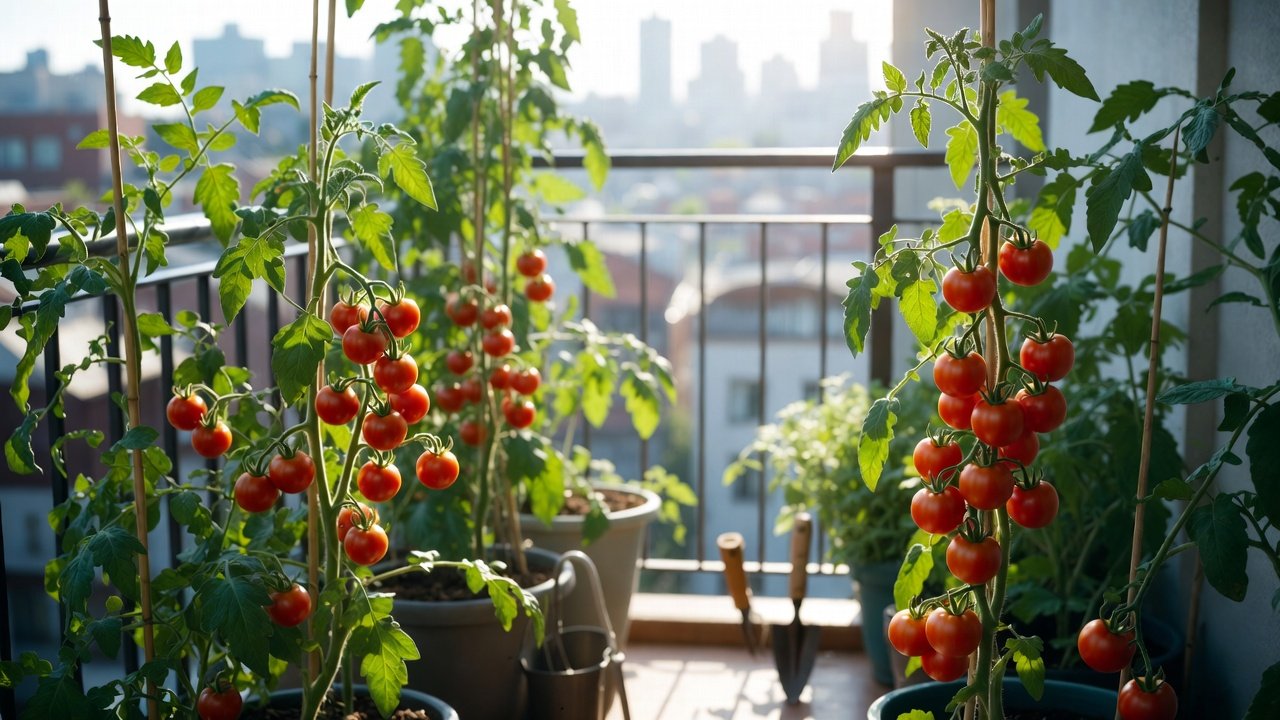
Grow Tomatoes in Balcony Pots: Simple Steps for a Healthy Harvest
Tomatoes were one of the first vegetables I ever tried growing on a balcony, and honestly, the first attempt was not pretty. I planted them in small decorative pots, watered them whenever I remembered, and assumed they would magically produce baskets of juicy fruit. Instead, the plants stretched awkwardly, the leaves turned pale, and I harvested exactly three small tomatoes.
That experience taught me something important: tomatoes absolutely can thrive on a balcony, but they need the right setup. Once I started using larger containers, richer soil, and a consistent watering routine, the results changed completely. Some seasons, a single cherry tomato plant produced more fruit than I could keep up with.
If you’ve been wondering whether tomatoes can grow well in containers on a balcony, the answer is yes. In fact, many gardeners find that tomatoes perform just as well—sometimes even better—than they do in traditional garden beds.
This guide will walk you through everything you need to know, from choosing the right tomato variety to watering and harvesting for the best results.
Table of Contents
Can Tomatoes Really Grow Well on a Balcony?
Many beginner gardeners assume tomatoes need a large backyard garden to grow properly. The truth is that tomatoes are surprisingly adaptable plants. With the right pot size, good soil, and enough sunlight, they grow very well in containers.
If you’re just starting your balcony garden, you might also enjoy exploring other beginner-friendly crops in this guide to easy vegetables that grow well in containers.
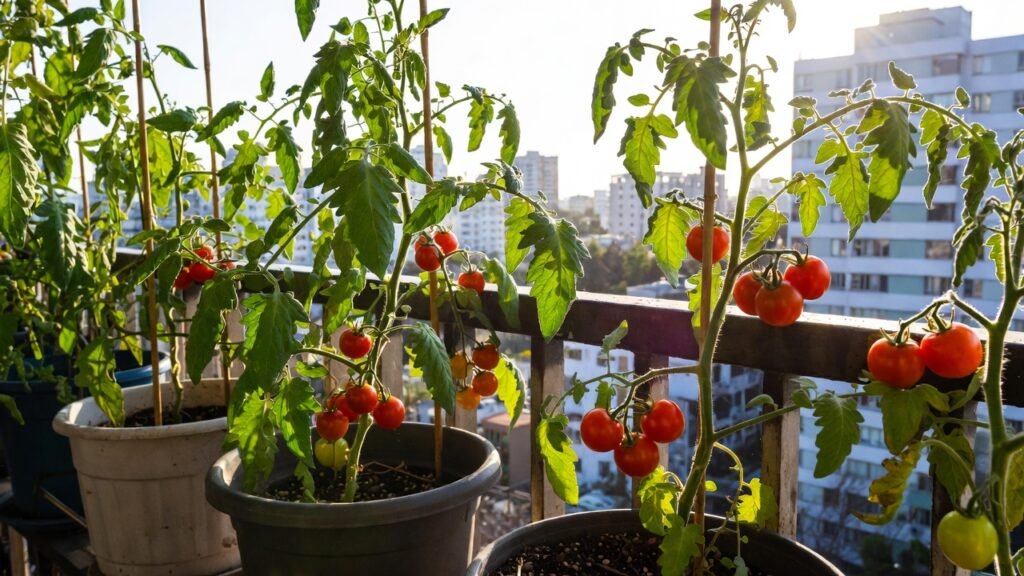
Balconies can actually provide a few advantages for tomato plants. The walls and floors of apartment buildings tend to hold warmth, which creates a slightly warmer microclimate. Tomatoes love warmth, and this extra heat can help them grow faster, especially during cooler evenings.
I once compared balcony-grown tomatoes with plants growing in a backyard garden at a friend’s house. Interestingly, the balcony plants produced fruit almost a week earlier. The warmth trapped by the surrounding walls created ideal conditions for early growth.
The key is making sure three basic needs are met: adequate sunlight, sufficient root space, and nutrient-rich soil. When these are in place, balcony tomatoes can produce an impressive harvest.
Best Tomato Varieties for Balcony Pots
One of the biggest factors in success is choosing the right tomato variety. Some tomatoes grow into huge sprawling vines, while others stay compact and manageable. On a balcony, smaller or more controlled varieties usually perform better.
Cherry Tomatoes (Best for Beginners)
If you are new to container gardening, cherry tomatoes are easily the most forgiving option. These plants tend to grow vigorously and produce fruit continuously throughout the season. Varieties like Tiny Tim, Sweet 100, and Tumbling Tom are particularly well suited for balcony containers.
Cherry tomatoes also have a major advantage: they produce dozens or even hundreds of small fruits instead of a few large ones. Even if conditions are not perfect, you will still likely get a satisfying harvest.
One summer, I grew a single cherry tomato plant in a 14-inch container, and by the end of the season it had produced well over 200 tomatoes. They were perfect for salads, snacks, and even simple pasta sauces.
Determinate Tomatoes (Compact Plants)
Determinate tomatoes are sometimes called “bush tomatoes.” Unlike vining varieties, they grow to a fixed size and then focus their energy on producing fruit. This makes them easier to manage in smaller spaces.
Popular determinate varieties include Roma, Bush Early Girl, and Patio Princess. These plants typically grow shorter and require less support than larger varieties. They are a great choice for gardeners who want a reliable harvest without dealing with very tall plants.
Indeterminate Tomatoes (For Larger Balconies)
Indeterminate tomatoes grow continuously throughout the season and can become quite tall. These varieties produce fruit for months, but they also need strong support and larger containers.
If your balcony has enough space for a trellis or tall stakes, indeterminate varieties can be extremely productive. Just be prepared to prune and support them regularly as they grow.
Choosing the Right Pot Size (The Most Common Balcony Mistake)
The biggest mistake beginners make when growing tomatoes in balcony pots is choosing containers that are too small. Tomatoes develop large root systems, and without enough space the plant struggles to absorb water and nutrients.
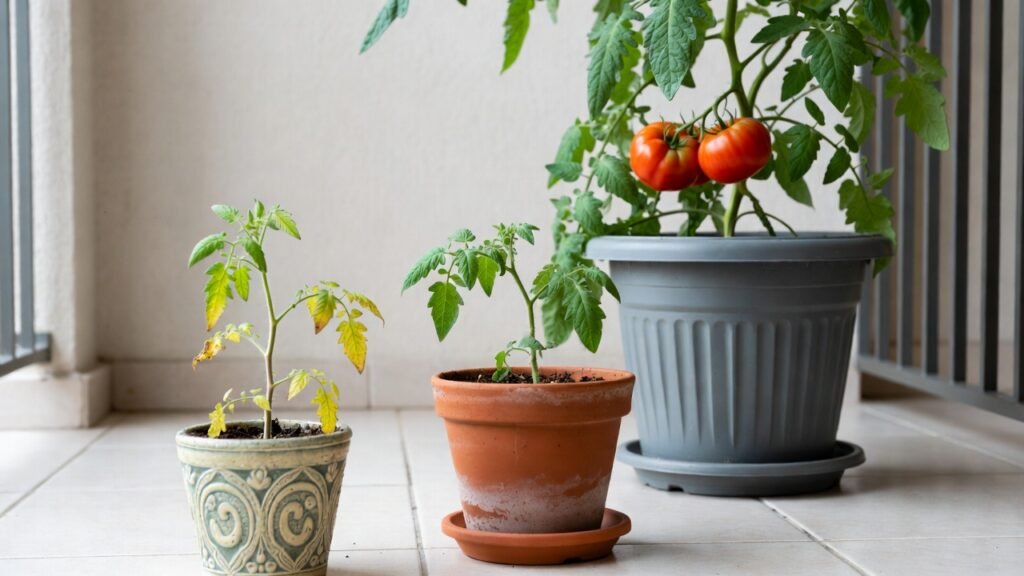
For cherry tomatoes, a container that is at least 12 to 14 inches wide is usually the minimum size. Bush varieties do best in containers closer to 16 to 18 inches, while larger indeterminate tomatoes can require containers as large as 20 gallons.
I once tried growing a tomato plant in a small eight-inch decorative pot simply because it looked nice on the balcony. The plant survived, but it was constantly stressed and produced only a few fruits the entire season. Once I moved to larger containers, the difference in growth and productivity was dramatic.
Larger pots help stabilize moisture levels and allow the roots to expand naturally. This alone can double or even triple your harvest.
The Best Soil Mix for Balcony Tomatoes
Tomatoes are heavy feeders, which means they require rich soil with plenty of nutrients. Regular garden soil is not suitable for containers because it becomes compacted and drains poorly.
Instead, balcony gardeners should use a well-balanced container mix. A simple but effective blend includes high-quality potting soil, compost, coco coir or peat moss, and perlite. This combination provides good drainage while still holding enough moisture for healthy growth.
Adding compost or worm castings to the mix can make a huge difference. These organic materials slowly release nutrients and improve soil structure over time. In my experience, tomato plants grown in soil enriched with worm castings tend to have deeper green leaves and stronger growth.
Good soil is the foundation of productive container gardening, so it is worth spending a little extra time preparing it properly.
How Much Sunlight Balcony Tomatoes Need
Tomatoes are sun-loving plants. For best results, they should receive at least five to seven hours of direct sunlight each day, though more is even better.
Balcony orientation plays an important role in determining how much sunlight your plants receive. South-facing balconies usually provide the most consistent sunlight throughout the day, while east-facing balconies receive gentle morning light. West-facing balconies can also work well, but the intense afternoon sun may require occasional shading during very hot weather.
On my own west-facing balcony, tomatoes grow extremely quickly during summer. However, they also require more frequent watering because the containers heat up rapidly during the afternoon.
If your balcony receives limited sunlight, cherry tomatoes and smaller varieties are usually the best option because they tolerate slightly lower light conditions.
Watering Balcony Tomatoes Properly
Watering is one of the most important aspects of successful tomato gardening. Container plants dry out much faster than plants growing in the ground, especially during warm weather.
The best approach is to water deeply whenever the top layer of soil begins to dry out. A simple way to check is by sticking your finger about an inch into the soil. If it feels dry at that depth, it is time to water.
During very hot weather, balcony tomatoes may need watering once a day. In cooler conditions, watering every two or three days may be sufficient. The goal is to keep the soil consistently moist without allowing it to become soggy.
Inconsistent watering is a common cause of problems such as cracked fruit and blossom end rot, so developing a regular watering routine is essential.
Tomatoes can be surprisingly sensitive to watering and soil conditions, so it helps to understand the common container gardening mistakes that often cause balcony plants to struggle.
Supporting Tomato Plants in Balcony Containers
Tomato plants grow quickly, and as they begin producing fruit the stems can become heavy. Without proper support, the branches may bend or break.
There are several ways to support tomato plants in containers. Bamboo stakes, tomato cages, and small trellises all work well. Some balcony gardeners even attach strings to railings or overhead structures to guide the plant upward.
I learned the importance of support the hard way one windy afternoon. A large tomato plant that I had neglected to stake snapped near the base after a sudden gust of wind. Since then, I always add supports early in the plant’s growth.
Providing support from the beginning encourages strong stems and keeps the plant upright as it matures.
As tomato plants grow taller, they’ll need proper support, and you can easily build simple trellis or climbing structures that work perfectly in small balconies.
Fertilizing Tomatoes for Bigger Harvests
Because container plants rely entirely on the nutrients within their pots, tomatoes benefit from regular feeding. Over time, watering gradually washes nutrients out of the soil.
Applying organic fertilizer every two or three weeks helps maintain healthy growth. Compost tea, worm castings, and balanced organic tomato fertilizers are all excellent options.
Organic fertilizers release nutrients slowly, which reduces the risk of overfeeding the plant. Healthy feeding practices encourage steady growth and more abundant fruit production throughout the season.
Common Balcony Tomato Problems (And Quick Fixes)
Even experienced gardeners occasionally encounter issues with tomato plants. The good news is that most problems have simple solutions once you understand the cause.
Yellow leaves are one of the most common concerns. This often happens because of overwatering, poor drainage, or nutrient deficiencies. Ensuring proper soil drainage and balanced fertilization usually resolves the issue.
Blossom end rot is another frequent problem. It appears as a dark, sunken spot at the bottom of the tomato fruit. This condition is usually caused by inconsistent watering, which interferes with calcium absorption. Maintaining steady moisture levels helps prevent it.
Sometimes gardeners notice plenty of flowers but very few tomatoes forming. This can occur when temperatures are extremely high or when pollination is limited. Gently shaking the plant occasionally can help distribute pollen and improve fruit set.
When to Harvest Balcony Tomatoes
Knowing when to harvest tomatoes is part of the fun of container gardening. Ripe tomatoes typically develop a full, vibrant color and feel slightly soft when gently squeezed.
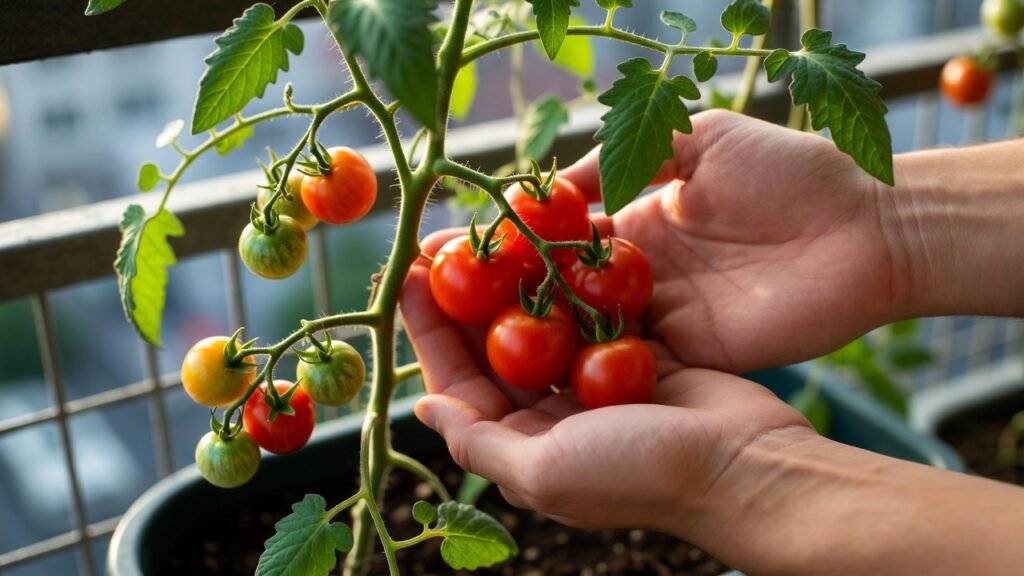
Most tomatoes can be harvested by twisting them gently from the vine. Cherry tomatoes often ripen quickly and should be picked regularly to encourage continued production.
On my balcony, I sometimes harvest cherry tomatoes just before they are fully ripe and allow them to finish ripening indoors. This helps prevent birds from discovering the plants before I do.
How Many Tomatoes Can One Balcony Plant Produce?
The number of tomatoes a plant produces depends on several factors, including the variety, pot size, sunlight exposure, and overall care.
Cherry tomato plants can produce anywhere from 50 to 300 fruits in a season, especially when grown in large containers with good sunlight. Bush varieties typically produce 20 to 50 medium-sized tomatoes, while larger indeterminate plants may yield fewer but much bigger fruits.
With the right conditions, even a small balcony can produce a surprisingly generous harvest.
Final Thoughts: Balcony Tomatoes Are Surprisingly Productive
Growing tomatoes in balcony pots is one of the most rewarding projects for small-space gardeners. Watching the plants grow from tiny seedlings into productive vines covered with fruit is incredibly satisfying.
With the right containers, healthy soil, and consistent care, tomatoes can thrive even in a small urban space. Over time, you will begin to understand the rhythm of watering, feeding, and harvesting that keeps the plants productive.
Once you successfully grow your first balcony tomatoes, it often inspires you to experiment with more vegetables and expand your container garden.
Frequently Asked Questions
Can tomatoes grow in small balcony pots?
Tomatoes can survive in small pots, but they perform much better in containers that are at least 12 to 14 inches wide. Larger pots provide better moisture retention and healthier root growth.
How often should balcony tomatoes be watered?
In warm weather, balcony tomatoes may need watering once a day. Always check the soil first and water when the top inch becomes dry.
Do tomatoes need full sun on a balcony?
Yes, tomatoes grow best with at least five to seven hours of direct sunlight daily. More sunlight generally leads to better fruit production.
What is the easiest tomato to grow in pots?
Cherry tomatoes are usually the easiest option for beginners. They grow quickly, produce abundant fruit, and adapt well to container gardening.
Further Reading
If you’d like to learn more about growing tomatoes in containers and improving your balcony gardening skills, these research-based resources from university extension programs provide deeper guidance.
- Penn State Extension – Container-Grown Tomatoes
A detailed guide on selecting compact tomato varieties, fertilizing container plants, and managing common diseases when growing tomatoes in pots.
https://extension.psu.edu/container-grown-tomatoes - Iowa State University Extension and Outreach – Growing Tomatoes in Containers
Covers container size recommendations, potting mix selection, watering schedules, and staking techniques for healthy tomato plants.
https://yardandgarden.extension.iastate.edu/how-to/growing-tomatoes-containers - University of New Hampshire Extension – Growing Vegetables: Tomatoes
Provides research-backed tips on container sizes, pruning methods, and maintaining consistent moisture to prevent problems like blossom-end rot.
https://extension.unh.edu/resource/growing-vegetables-tomatoes-fact-sheet-1