

Introduction: Self-Watering Balcony Planters – Effortless Urban Gardening
Maintaining a lush balcony garden can be tricky, especially for busy urban dwellers. Between long workdays, weekends away, and unpredictable weather, watering consistently becomes a challenge. Plants can suffer from stress if they’re overwatered or neglected for even a couple of days.
Self-watering planters solve this problem by providing a steady supply of water directly to the roots, allowing your greenery to thrive with minimal daily attention. Whether you’re growing herbs, leafy greens, or compact flowering plants, these planters are a game-changer for anyone seeking a low-maintenance balcony garden.
This guide covers DIY and ready-made options, maintenance tips, and plant recommendations to help your balcony garden flourish.
Explore how hydroponic balcony gardens use nutrient-rich water for even faster growth and year-round harvests.
Table of Contents
How Self-Watering Planters Work
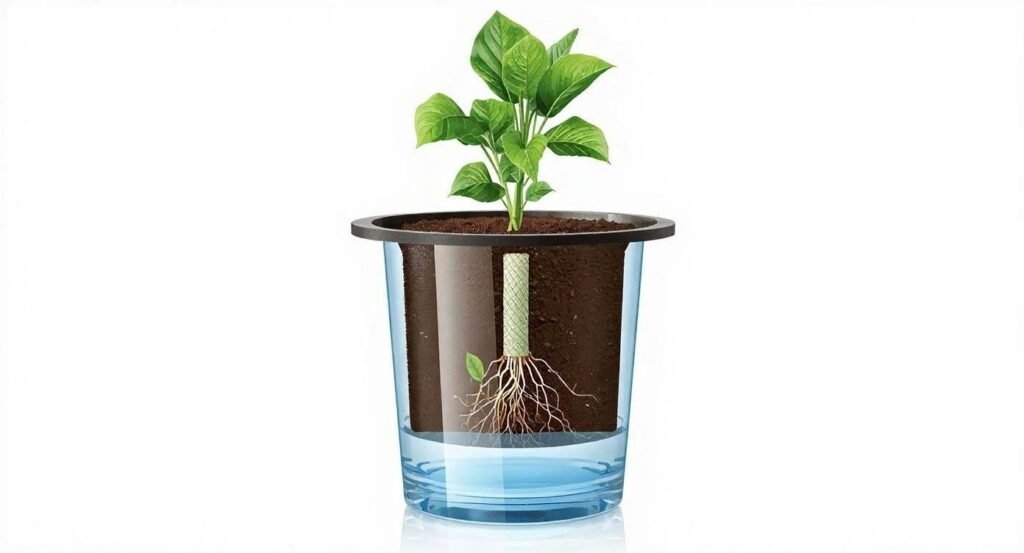
Self-watering planters operate on a simple principle: they store water in a reservoir below the soil or growing medium, and the plants draw moisture as needed through wicking materials or capillary action. This creates a consistent moisture level that encourages steady root growth and reduces stress from drought or overwatering.
- Water Reservoir: The bottom section holds water, which gradually moves upward into the soil. Some models include a water-level indicator so you can monitor supply at a glance.
- Wicking System: Fabric, rope, or specialized wicks transfer water from the reservoir to the soil. This ensures the plant receives water only when it needs it.
- Aeration: Good self-watering planters allow for air pockets around the roots, preventing waterlogging while keeping roots hydrated.
- Benefits:
- Reduced daily maintenance—ideal for busy schedules.
- Consistent soil moisture prevents stress and promotes healthy growth.
- Water-efficient design, as less water is lost to evaporation.
- Versatile—works for herbs, vegetables, small fruiting plants, and decorative flowers.
DIY vs. Ready-Made Options
Urban gardeners have two main choices: creating their own DIY self-watering pots or buying ready-made designs. Both options have advantages, depending on your budget, style, and available time.
DIY Self-Watering Planters
Making your own planter can be satisfying, economical, and fully customizable. With simple materials, you can repurpose containers and control the size, design, and reservoir capacity.
- Pros:
- Cost-effective; many items can be upcycled from household containers.
- Fully customizable to fit balcony space, plant type, or aesthetic.
- Educational—learn the principles of water wicking and root hydration firsthand.
- Cons:
- Requires basic DIY skills and materials.
- Might need occasional adjustments for optimal water flow.
- Less polished aesthetic than commercial designs.
Ready-Made Self-Watering Planters
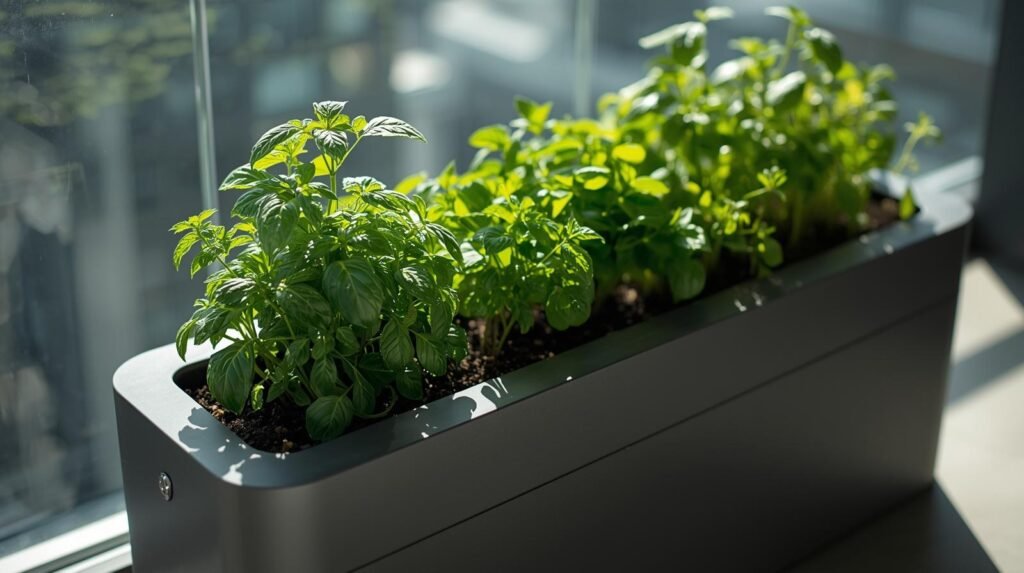
Commercially available self-watering planters come in a wide range of sizes, materials, and styles. They’re designed to simplify maintenance even further, often including features like integrated water-level indicators, drip trays, and modular stacking options.
- Pros:
- Minimal setup—plug, fill, and plant.
- Sleek designs suitable for modern balcony aesthetics.
- Built-in indicators and reservoirs reduce guesswork.
- Cons:
- More expensive than DIY options.
- Limited customization for size or shape.
- Some materials may not be as eco-friendly as upcycled DIY containers.
Step-by-Step Guide: DIY Self-Watering Planter
Creating your own self-watering pot is surprisingly simple. This method uses easily available materials and works well for small balcony plants like herbs or leafy greens.
Materials Needed
- Two plastic containers (one slightly smaller to fit inside the other)
- Cotton or nylon rope for wicking
- Scissors or craft knife
- Potting mix or soil suitable for your plants
- Plants or seedlings
Step 1: Prepare the Containers
Take the larger container to act as the water reservoir. Drill or cut a small hole near the bottom for inserting the wick. The smaller container will hold the soil and plant.
Step 2: Create the Wick System
Thread the cotton or nylon rope through the hole so one end reaches the bottom of the water reservoir while the other rests inside the smaller container with soil. This will draw water upward as needed.
Step 3: Assemble the Planter
Place the smaller container inside the larger one, ensuring the wick stays in contact with both water and soil. Fill the inner container with potting mix and plant your seedling or herb.
Step 4: Fill the Reservoir
Pour water into the bottom container until it reaches just below the soil level of the inner container. Check that the wick is saturated to start capillary action.
Step 5: Position Your Planter
Place the planter on your balcony where it gets adequate sunlight for your chosen plants. Monitor water levels weekly, topping up as needed, and watch your plants thrive with minimal daily effort.
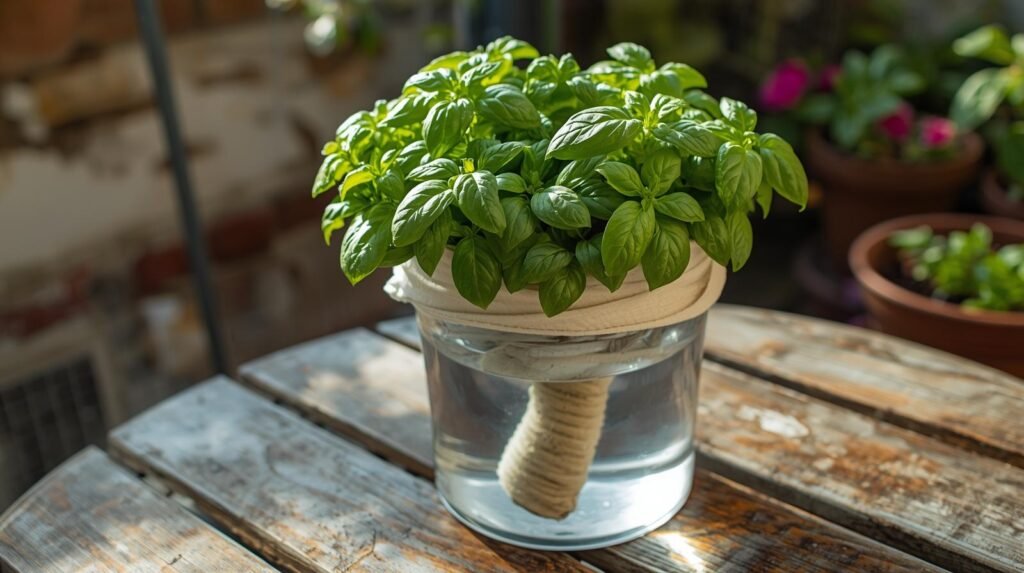
This DIY approach not only keeps plants hydrated consistently but also teaches the basics of water management for small-space gardening. With a few tweaks, the same concept can be expanded into larger or multi-tiered setups for more extensive balcony gardens.
Once your self-watering planter is in place, understanding the different types, selecting the right plants, and maintaining the system properly ensures consistent growth and healthy greenery. Small adjustments in care can prevent common issues such as root rot or nutrient deficiencies, helping even the busiest urban gardener enjoy a thriving balcony garden.
Pros and Cons of Different Types of Self-Watering Planters
Self-watering planters come in several designs, each suited for different spaces, budgets, and plant types.
1. Wick Systems
Wick systems are simple, passive planters where a fabric or rope wick draws water from the reservoir to the soil.
- Pros: No electricity needed, very beginner-friendly, compact for balconies.
- Cons: Limited water capacity; may not support large or fast-growing plants.
2. Reservoir Planters with Float Indicators
These planters include a water reservoir and a built-in float to show water level.
- Pros: Easy to monitor, low maintenance, supports a wide range of plants.
- Cons: Slightly more expensive than DIY solutions, bulkier than wick systems.
3. Self-Watering Pots with Drip or Capillary Action
These advanced planters deliver water via small channels or built-in wicks to the soil evenly.
- Pros: Efficient water distribution, reduces overwatering, ideal for leafy greens and herbs.
- Cons: Can be harder to assemble or clean; may require occasional calibration of drip channels.
Best Plants That Thrive in Self-Watering Systems
Certain plants are especially well-suited to self-watering planters due to their steady water needs and root structure.
- Leafy Greens: Lettuce, spinach, arugula, kale. Rapid growth and consistent harvests.
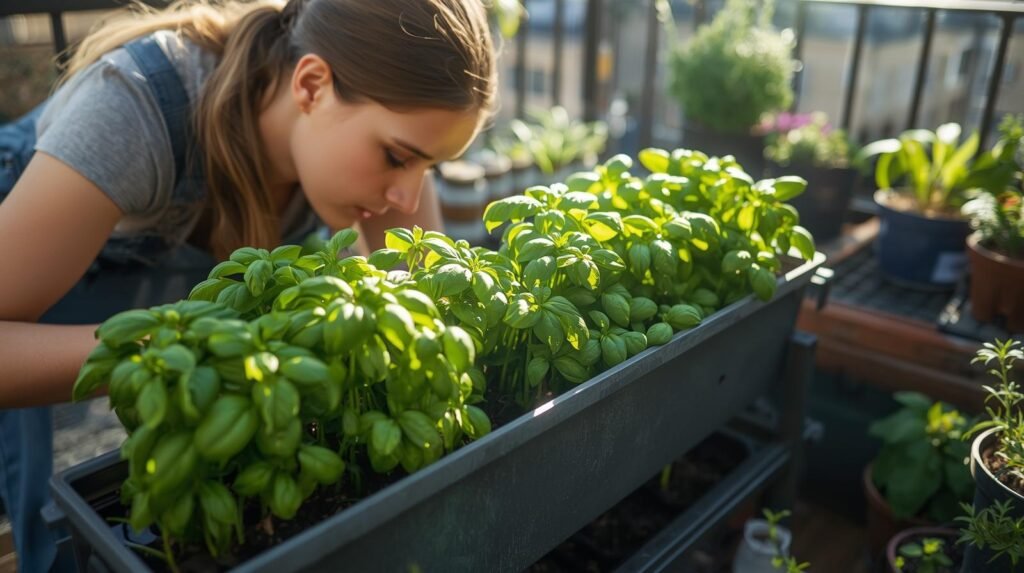
- Herbs: Basil, mint, parsley, chives. Compact roots make them perfect for small pots.
- Small Fruiting Plants: Cherry tomatoes, peppers, strawberries. Require slightly larger reservoirs but thrive with consistent water.
- Flowers: Petunias, begonias, and marigolds do well when roots are kept evenly moist.
- Microgreens: Radish, mustard, sunflower. Fast-growing and very low-maintenance.
Maintenance Tips to Prevent Root Rot
Even the best self-watering system can encounter issues if not maintained. Root rot is a common problem caused by overwatering, stagnant water, or poor aeration.
- Monitor Water Levels: Never let water stagnate for more than a week. Top up only when the reservoir is low.
- Provide Aeration: Use lightweight soil or add perlite to allow roots to breathe.
- Clean Regularly: Flush reservoirs and rinse wicks or drip channels every 3–4 weeks.
- Avoid Overcrowding: Give plants enough space to prevent roots from becoming tangled and to reduce humidity-related issues.
- Check Drainage: Even self-watering systems should have overflow holes or slight drainage to prevent waterlogging.
Conclusion
Self-watering planters transform balcony gardening for busy urban dwellers. They offer consistent hydration, reduce daily maintenance, and support a wide range of plants—from leafy greens and herbs to small fruits and flowers.
DIY systems provide affordability and customization, while ready-made options add convenience and sleek design. By understanding the pros and cons, selecting suitable plants, and following basic maintenance tips, you can enjoy a lush, productive balcony garden with minimal effort.
Frequently Asked Questions (FAQs)
1. Can I grow tomatoes or peppers in self-watering balcony planters?
Yes, small fruiting plants like cherry tomatoes and peppers thrive in self-watering planters if the reservoir is large enough. Consistent moisture promotes fruit development, but ensure adequate sunlight and support for heavier plants.
2. How often should I refill the water reservoir?
Refill frequency depends on plant type, pot size, and weather, but generally once a week is sufficient. Always check the water level and top up before the reservoir runs dry.
3. Can self-watering planters prevent overwatering?
Yes, the design provides water only as needed through wicks or capillary action, which reduces the risk of waterlogged roots. However, regular monitoring and proper aeration remain essential.
4. Are DIY self-watering pots as effective as store-bought versions?
DIY pots can be equally effective for small to medium plants. They are cost-effective and customizable but may require more hands-on monitoring to maintain optimal water flow compared to some commercial models.
5. Which plants are not suitable for self-watering planters?
Plants that prefer dry soil or have deep taproots, such as succulents or cacti, are not ideal. Overly wet conditions can lead to root rot in these species.
6. How do I prevent algae growth in the reservoir?
Keep reservoirs opaque or covered, avoid direct sunlight on standing water, and clean the container every 3–4 weeks. Proper aeration also helps reduce algae buildup.
7. Can I use self-watering planters for microgreens?
Yes, microgreens grow very well in self-watering systems because they require consistent moisture. Use a shallow container and ensure good drainage to prevent mold on the soil surface.
Helpful Resources
- University of Florida IFAS Extension – Container Gardening & Self-Watering Systems: https://gardeningsolutions.ifas.ufl.edu
- USDA Urban Agriculture Research – Self-Watering Planters: https://www.nal.usda.gov/urban-agriculture
- Royal Horticultural Society – Container Planting and Watering Guides: https://www.rhs.org.uk/advice
- American Horticultural Society – Urban Gardening Techniques: https://www.ahsgardening.org