

How Smart Sensors for Balcony Gardens Fit Modern Urban Living
Living and working remotely has trained many of us to notice patterns: when energy dips, when focus peaks, when a break actually helps instead of hurts. Balcony gardening follows the same rhythm. Over the years, tending plants between Zoom calls and evening wind-downs, I’ve learned that most plant problems aren’t dramatic failures. They’re small mismatches in timing, moisture, and light.
Smart sensors and plant apps, when used thoughtfully, don’t replace intuition. They sharpen it. For balcony gardeners dealing with limited soil volume, wind exposure, and inconsistent sunlight, these tools act like quiet assistants, nudging you before stress turns into damage.
The goal isn’t automation for its own sake. It’s reducing guesswork while keeping the joy of hands-on care.
Explore the latest urban gardening trends and TikTok gardening ideas to keep your balcony garden fresh and creative.
Table of Contents
Types of Smart Sensors for Balcony Gardens
Balcony gardens operate under tighter margins than ground gardens, so sensors that track the basics tend to be the most useful. I’ve tested several over the years, and the best ones focus on a single job and do it reliably, rather than trying to measure everything at once.
Before diving into examples, it helps to understand that balcony sensors are designed for shallow containers and close proximity to living spaces. This makes accuracy, battery life, and app clarity more important than rugged outdoor durability.
Soil Moisture Sensors
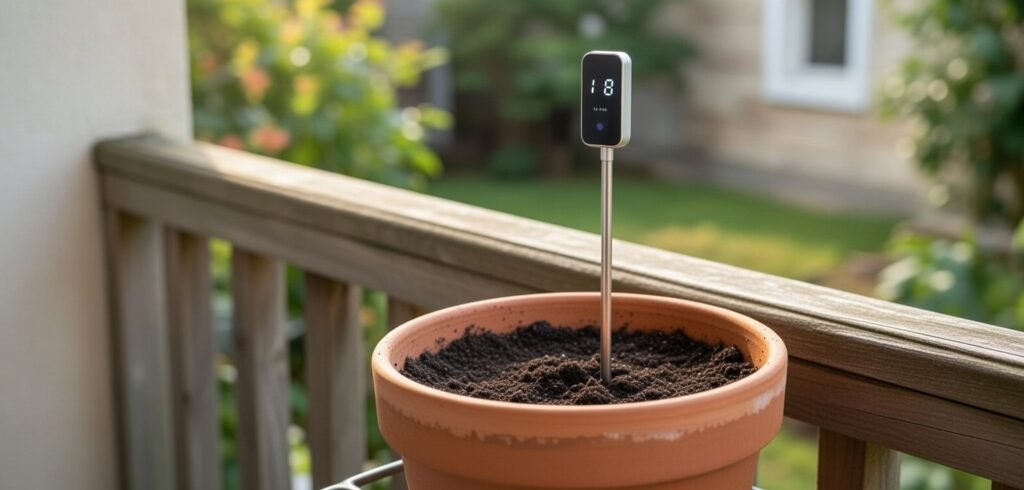
These are the most practical entry point for smart balcony gardening. In containers, soil can swing from waterlogged to bone-dry within a day, especially during hot, windy weeks.
Moisture sensors typically sit a few centimeters below the surface, where roots actually drink. The better models show trends over time rather than just “wet” or “dry.” That trend view taught me, for example, that my basil dries out faster after 3 p.m. sun than after a full morning soak.
Affordable setups often involve one sensor rotated between pots every few days. This works well if you group plants with similar watering needs, such as herbs together and fruiting plants together.
Light Sensors
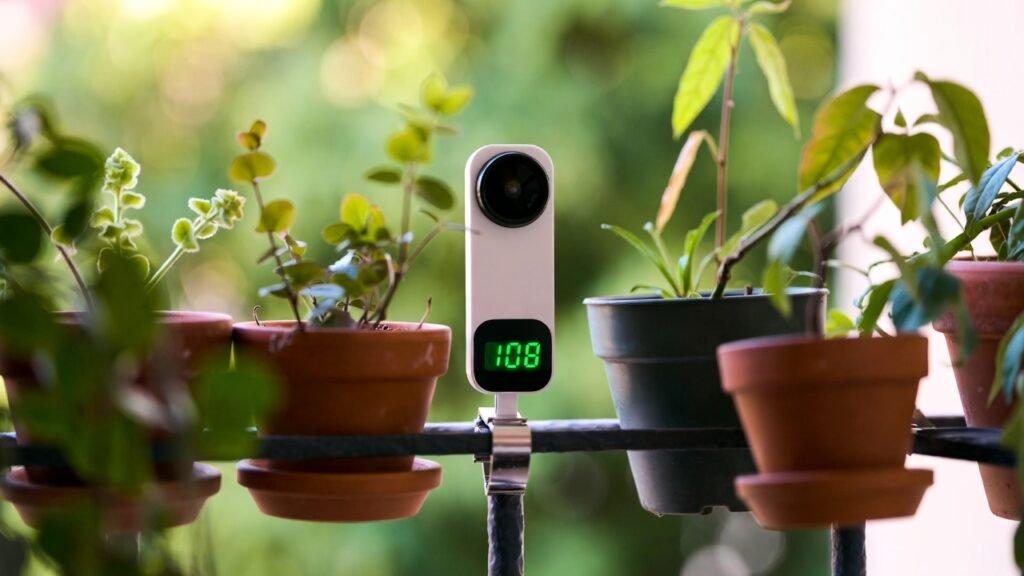
Balconies can be deceptive. A space that feels bright to us may still fall short for tomatoes or peppers. Light sensors measure intensity and daily exposure, helping you decide whether to move pots, add reflective surfaces, or choose shade-tolerant crops.
I’ve found light sensors most helpful during seasonal transitions. In early rainy months or harmattan haze, readings often drop before plants visually respond. That early signal allows adjustments before growth stalls.
Some moisture sensors include basic light tracking, but standalone light sensors tend to be more accurate and easier to position at leaf level.
Temperature and Humidity Sensors
While outdoor temperatures are easy to check on weather apps, balcony microclimates can differ significantly. Walls trap heat, and enclosed railings reduce airflow. Temperature and humidity sensors reveal these micro-shifts.
For me, this became crucial with leafy greens. Afternoon heat spikes weren’t killing them outright, but repeated stress reduced leaf quality. Seeing those patterns helped me introduce light shade cloth during peak hours instead of overwatering.
How Apps Can Improve Plant Care
Apps are where raw sensor data becomes actionable. A good app doesn’t overwhelm you with charts. It translates readings into gentle prompts that fit into daily life, especially if you’re balancing work tasks and home responsibilities.
Before choosing an app, I always check whether it supports manual notes. Being able to log repotting dates, fertilizer changes, or pest sightings creates a fuller picture than sensor data alone.
Watering Guidance and Alerts
The most useful apps don’t tell you to water immediately. They show moisture trends and send alerts only when thresholds are crossed consistently. This reduces the anxiety of reacting to every dip in readings.
In practice, this meant fewer unnecessary watering sessions for me. Over time, I noticed healthier roots and less fungus in my containers, simply because I wasn’t watering “just in case.”
Plant Identification and Care Profiles
Many plant monitoring apps include built-in care profiles. While these aren’t perfect, they offer a solid baseline for light, water, and feeding needs.
I treat these profiles as starting points, then adjust based on sensor feedback and visual cues. For balcony gardeners growing a mix of local and exotic plants, this combination saves time during setup and reduces early mistakes.
Seasonal Reminders and Growth Tracking
One underrated feature is seasonal reminders. Apps that nudge you about pruning windows, nutrient adjustments, or expected growth slowdowns help align care with natural cycles.
Tracking growth photos over weeks also builds confidence. When progress feels slow, seeing a visual timeline reminds you that plants respond gradually, not overnight.
Practical Examples of Affordable Sensor Setups
Smart gardening doesn’t require a full sensor in every pot. In small spaces, strategic placement matters more than quantity.
A common setup I recommend involves one reliable moisture sensor shared among similar plants, paired with a free or low-cost app. Another option is a combined moisture-light sensor for your most sensitive plant, like tomatoes or strawberries, while relying on observation for hardier herbs.
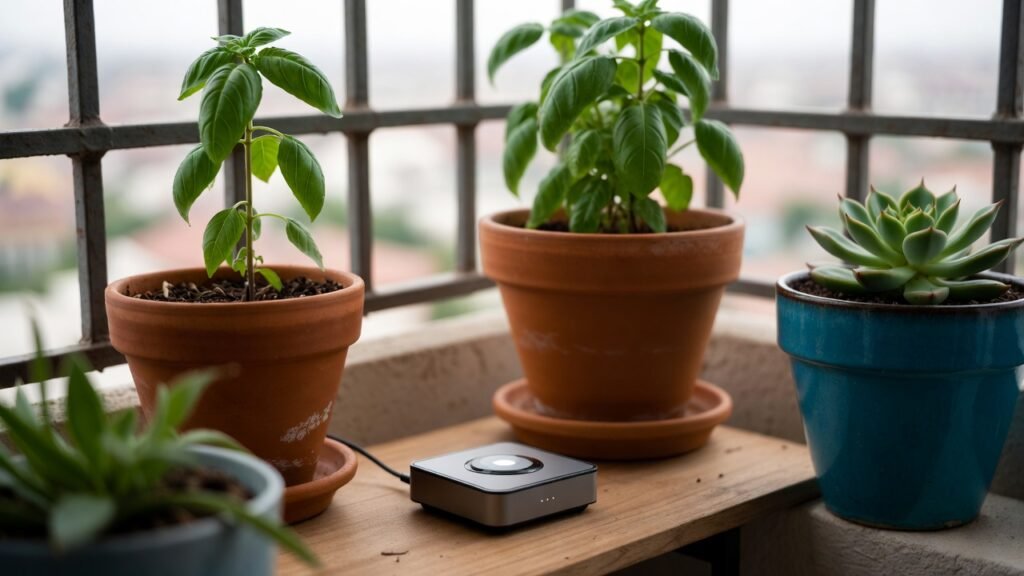
Battery-powered sensors with Bluetooth connectivity work well for balconies, as they avoid complex hubs and Wi-Fi dependence. Checking readings once or twice a day fits naturally into breaks between tasks, much like checking messages.
By approaching smart tools as companions rather than controllers, balcony gardeners can create a rhythm that respects both plant needs and human routines.
For those exploring soilless options, check out hydroponics balcony garden systems that actually work to maximize small-space yields.
Integrating Multiple Devices Without Turning the Balcony Into a Control Room
Effective integration focuses on reducing cognitive load. Devices should work together through a single app whenever possible, allowing gardeners to spot patterns across plants instead of managing isolated readings.
A balanced integration setup typically includes:
- One central app supporting multiple sensor types
- Limited notifications, such as daily summaries
- Manual logging for contextual events like fertilizing or pest treatment
This approach mirrors how digital calendars are used: quick check-ins that support decisions rather than dominate attention.
Best Apps for Beginners and Experienced Urban Gardeners
Experience level plays a major role in app suitability. Beginners benefit from apps that translate data into plain language and visual cues, building confidence without requiring technical knowledge.
More experienced gardeners often prefer apps that allow customization. Adjustable thresholds, detailed logs, and seasonal comparisons become valuable tools once plant behavior is familiar.
Across both groups, the most effective apps respect attention. They inform without nagging and leave space for personal judgment.
Apps for Beginners
These options are easiest to start with because they simplify basic plant care and provide guidance that doesn’t require deep gardening knowledge.
- Planta – Generates personalized care schedules (watering, fertilizing, repotting) and includes a light meter to help choose ideal plant placement.
- Blossom – Offers a large plant database with care reminders and plant identification via photos.
- Seed to Spoon – Helps plan your balcony garden with guidance on plant care, pests, and local growing conditions.
- GrowIt – Beginner-friendly gardening companion that tracks plants and offers advice based on common issues and local tips.
- Planty – Easy-to-use interface with plant ID, watering reminders, and light scanning—especially good for indoor or small outdoor gardens.
Apps for Experienced Urban Gardeners
These tools support deeper tracking, planning, and customization that seasoned gardeners appreciate.
- Gardenize – Detailed plant tracking with photo logs, notes, and organizational features for containers or zones.
- Garden Planner / Planter – Drag-and-drop layout tool with reminders and care scheduling, ideal for organized balcony layouts.
- Advanced Plant ID & Analysis Tools (e.g., LetPlant-style AI plant diagnosis apps) – Use photo analysis and AI to suggest care plans and identify issues.
- iNaturalist (or Seek by iNaturalist) – Not strictly a care app, but excellent for biodiversity data and identifying plants and pests that can inform advanced care decisions.
- Garden Savvy / Community-Driven Platforms – Combine AI advice with social features, useful for gardeners who like sharing progress and problem-solving.
Tips to Avoid Overcomplicating With Tech
Overcomplication is a common risk when using smart tools. The first safeguard is limiting metrics. Moisture and light address most balcony challenges, while temperature and humidity should only be tracked if they guide real actions.
Setting fixed check-in times helps maintain balance. Reviewing data once in the morning and once in the evening prevents constant monitoring and keeps gardening restorative.
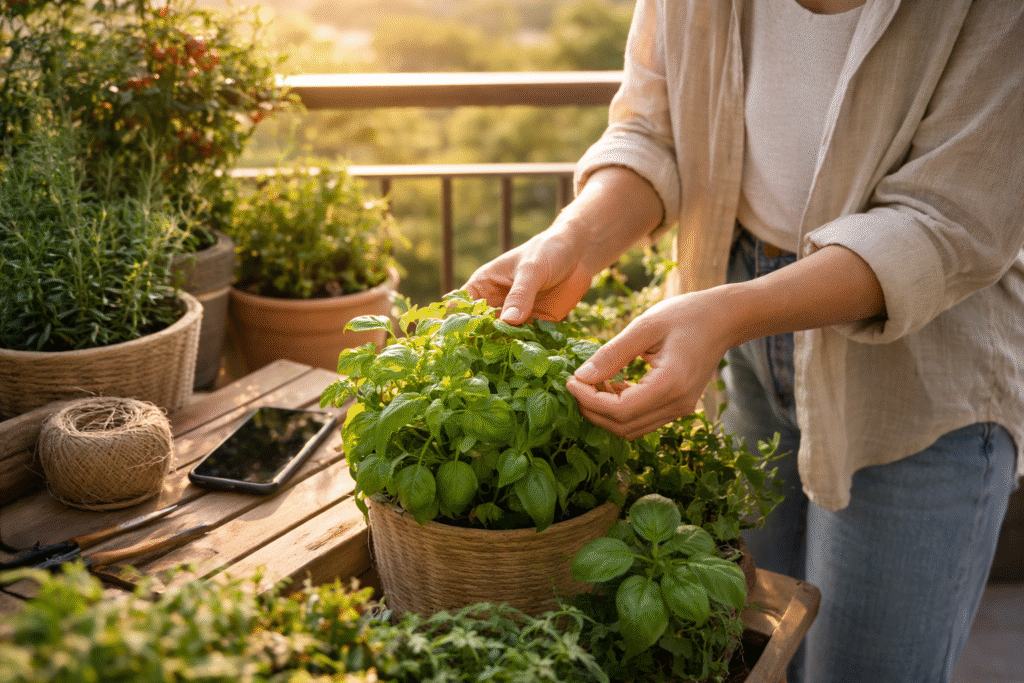
Most importantly, technology should complement observation. Leaf color, texture, growth pace, and new shoots often provide the earliest signals of plant health.
[IMAGE: Gardener gently touching leaves on a balcony, phone resting face-down nearby]
Conclusion
Smart sensors and plant apps are most effective when they remain subtle. In balcony gardens, they provide early signals and pattern awareness rather than strict instructions. Used thoughtfully, these tools support better timing, calmer decision-making, and fewer rushed corrections.
The real value lies not in perfect data, but in creating a steady rhythm of care that fits modern urban life while keeping the gardener closely connected to the plants themselves.
FAQ Section
Are smart sensors useful for very small balconies?
Yes. Small balconies experience faster moisture loss and sharper light changes. Sensors help reveal these shifts early, even when only one device is shared across similar plants. This insight supports more consistent care without constant checking.
Can plant apps replace checking plants directly?
No. Apps provide guidance, but physical observation remains essential. Sensors cannot detect pests, leaf texture changes, or subtle discoloration. Combining app insights with visual checks leads to better long-term plant health.
Do smart sensors work well in humid or tropical climates?
They can be effective when readings are interpreted as trends rather than single values. High humidity may slow evaporation, so consistent patterns over time offer more reliable guidance than isolated measurements.
How many sensors are needed for a balcony garden?
Most balcony gardens function well with one or two sensors. Grouping plants with similar needs and rotating sensors weekly keeps costs low while still providing useful data.
Will smart garden devices significantly increase power or data use?
No. Most sensors are battery-powered and use low-energy Bluetooth connections. Data usage is minimal, and batteries often last several months, making their overall impact negligible.
Are free plant apps sufficient for long-term use?
Many free apps are adequate, especially those that support manual notes and basic alerts. Paid features may offer deeper analytics, but consistent use of a simple app is often more beneficial than unused advanced tools.
Explore Further
- Smart Urban Garden Project Guide — Step‑by‑step project showing how soil moisture, temperature, and light sensors can be integrated into an urban garden with remote monitoring.
👉 https://www.instructables.com/Smart-Urban-Garden/ - IoT Smart Gardening Model in Urban Settings — Case study showing how an IoT‑based system collected real‑time soil and environmental data to improve plant health and water efficiency in high‑rise environments.
👉 https://rsisinternational.org/journals/ijriss/articles/agrismart-an-iot-based-smart-gardening-model-for-high-rise-academic-buildings/ - IoT Garden Sensors That Protect Plants and Save Water — Expert blog article explaining placement, alerts, and best practices when using IoT sensors to monitor plant and garden conditions.
👉 https://gardeninsider.org/gardening/technology/selecting-iot-devices-garden/