
Upcycling Household Items Into Chic Balcony Planters: A Budget-Friendly Guide
There’s something incredibly satisfying about turning everyday clutter into something alive. For anyone working from home, creating a balcony garden on a budget can refresh both your space and your mood.
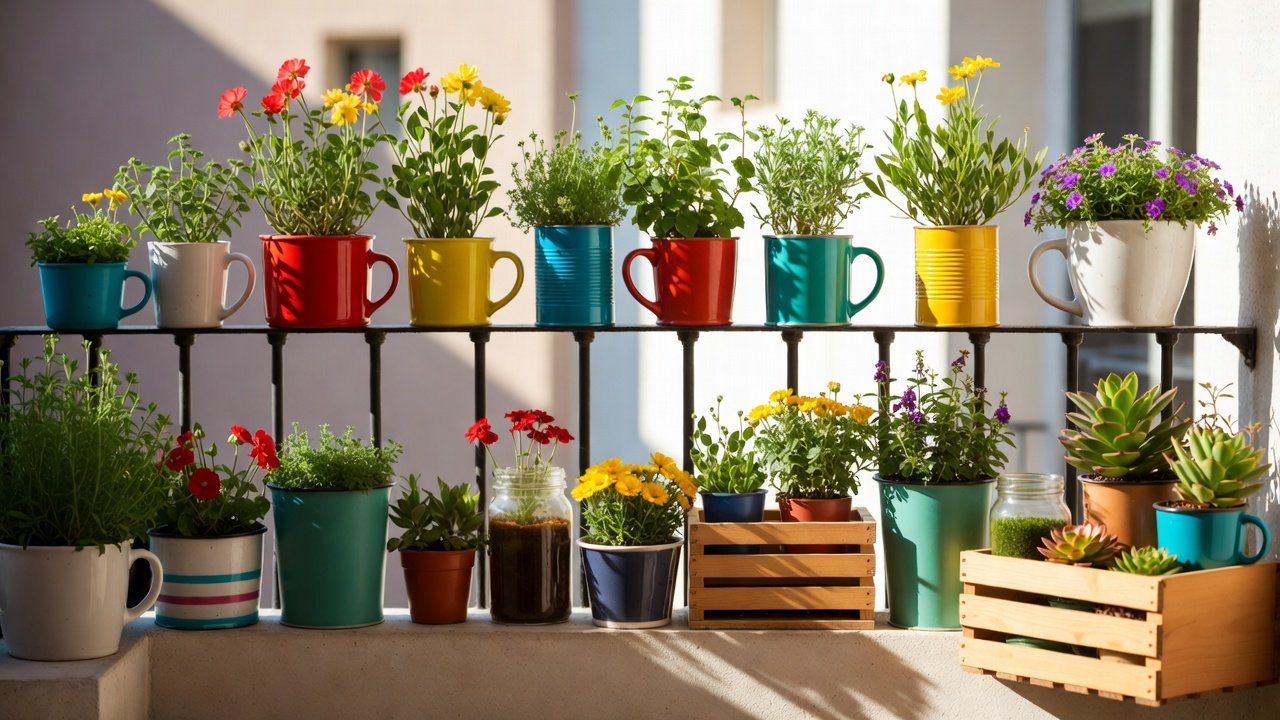
You don’t need expensive pots to make it happen. With a little creativity, even complete beginners can start a balcony garden using DIY recycled planters, transforming mugs, crates, tins, and jars into stylish homes for herbs, flowers, and succulents.
Upcycled container gardening isn’t just about saving money. It’s also about being mindful, sustainable, and intentional with your space. A few well-placed planters can soften a balcony corner, brighten your view during Zoom calls, and even boost mental clarity during short digital breaks.
Table of Contents
Household Items Suitable for Planter Upcycling
Not every container is perfect for planting, but many household items can be repurposed with just a few tweaks. Compact containers often work best for small urban balconies because they’re easy to rearrange and maintain.
You don’t need expensive pots to make it happen. With a little creativity, DIY low-cost balcony garden upgrades can refresh your balcony while keeping your budget under $20, turning mugs, crates, tins, and jars into charming planters.
Some of the most versatile items for DIY recycled planters include:
- Ceramic mugs and teacups
- Wooden crates
- Tin cans (coffee tins, food tins)
- Glass jars
- Old colanders or bowls
The key is thinking practically: how much sunlight does your balcony get? Will the container be exposed to rain? Can it be safely drilled or lined for drainage? Once these questions are answered, even the most ordinary item can become a stylish planter.
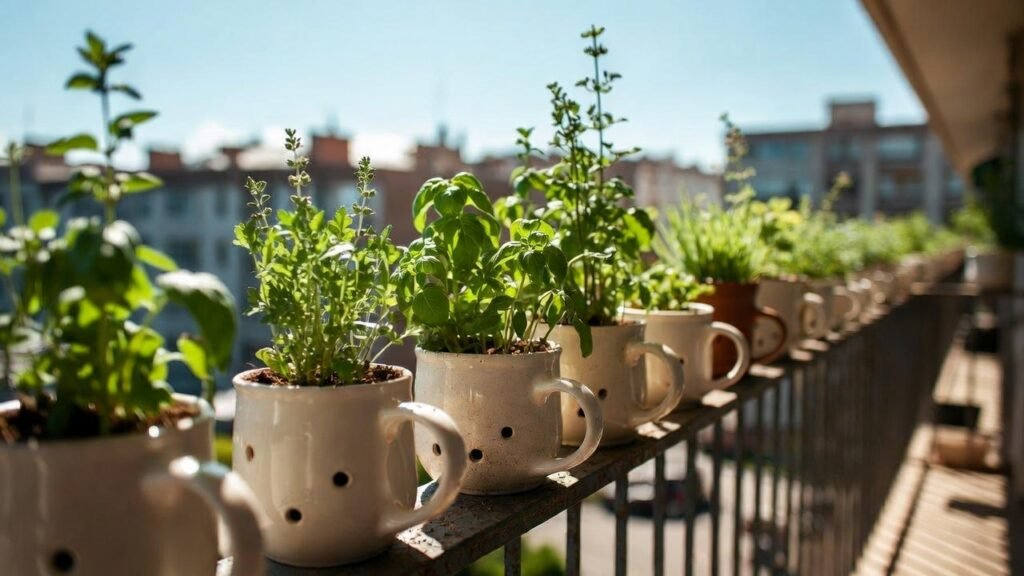
Turning Mugs Into Mini Herb Planters
Ceramic mugs are a fantastic starting point. Many homes have chipped or mismatched mugs that never get used. With a few simple steps, they can become charming mini planters for herbs or small flowers.
Step-by-Step:
- Select a sturdy mug – Avoid cracked or fragile mugs.
- Create drainage – Carefully drill a small hole in the base using a masonry bit. If drilling isn’t possible, layer pebbles at the bottom for drainage and water sparingly.
- Add a drainage layer – Place small stones or broken pottery at the base.
- Fill with potting mix – Use a light, well-draining soil suitable for herbs.
- Plant your herb – Small seedlings like thyme, chives, or basil work best.
- Position the mug – Place it where it will get 4–6 hours of sunlight daily.
- Decorate (optional) – Wrap the handle with twine, paint the exterior with weatherproof acrylics, or group several mugs for visual appeal.
Converting Wooden Crates Into Balcony Garden Boxes
Wooden crates offer depth and airflow, making them ideal for leafy greens, flowers, or even small strawberries. With minimal prep, they can be turned into rustic, chic balcony garden boxes.
Step-by-Step:
- Inspect and sand – Check for cracks and sand any rough edges.
- Line the crate – Use landscape fabric or coconut coir to hold soil while allowing drainage.
- Add drainage holes – Drill 3–5 holes at the base if the crate doesn’t have them.
- Create a drainage layer – Place gravel or small stones in the bottom.
- Add soil – Fill the crate with a nutrient-rich potting mix.
- Plant your greens – Lettuce, spinach, strawberries, or marigolds work well.
- Stack or arrange – Crates can be stacked vertically for small balconies.
- Decorate (optional) – Paint, stain, or apply wood oil for a cohesive balcony theme.
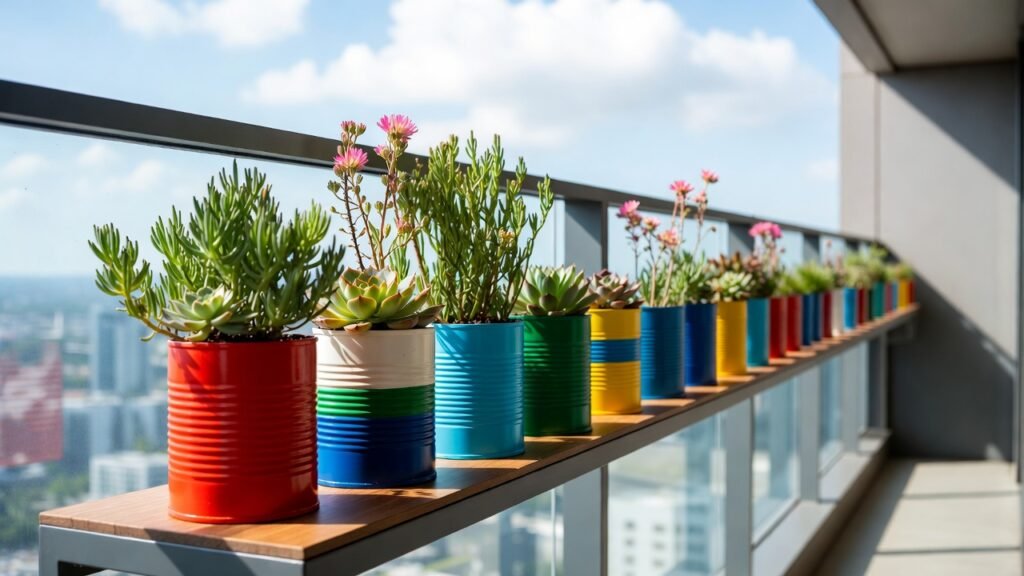
Repurposing Tin Cans for Succulents and Flowers
Tin cans are lightweight, durable, and easy to customize. Coffee tins or food cans can quickly become chic planters with a few practical tweaks.
Step-by-Step:
- Clean the can – Remove labels and wash thoroughly.
- Add drainage – Use a hammer and nail or drill to create 2–3 holes at the base. Smooth edges with sandpaper.
- Add a gravel layer – This improves drainage and prevents root rot.
- Fill with soil – Use succulent or cactus potting mix for best results.
- Plant succulents or small flowers – Choose varieties suited to your balcony’s sunlight.
- Position appropriately – Avoid full afternoon sun on hot days to prevent overheating.
- Decorate (optional) – Spray paint, wrap with rope, or create a small pattern for visual appeal.
Transforming Glass Jars Into Propagation Stations
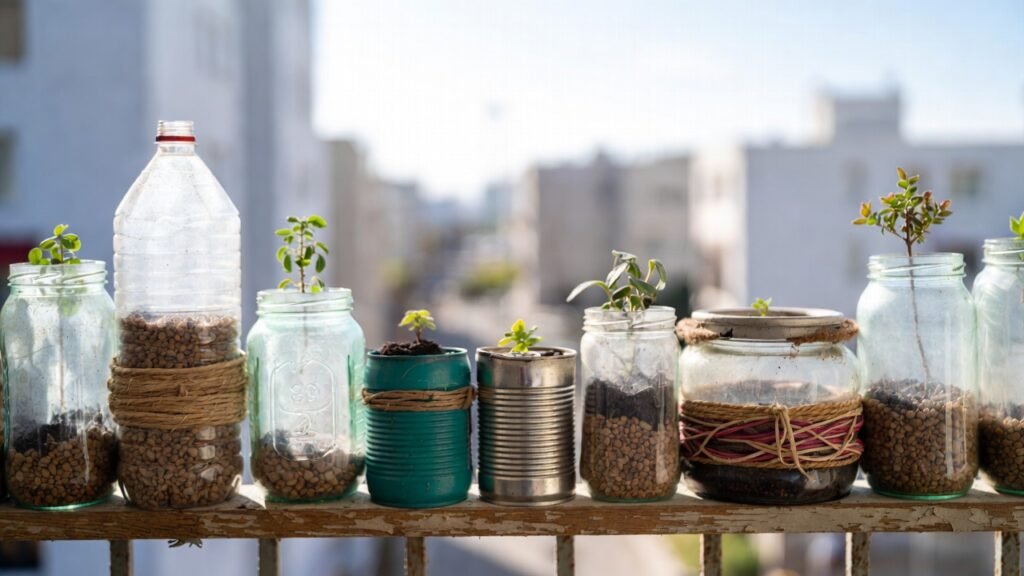
Glass jars are perfect for starting cuttings before planting them in soil. Watching roots grow in clear water is calming and a satisfying way to expand your balcony garden without spending extra money.
Step-by-Step:
- Clean the jar – Ensure it’s free of residue.
- Add water – Fill the jar halfway with filtered or dechlorinated water.
- Prepare cuttings – Trim leaves off the lower part of a plant stem (e.g., pothos or basil).
- Insert cuttings – Place the stem in water, ensuring leaves don’t submerge.
- Monitor and maintain – Change water every 3–5 days.
- Transplant roots – Once roots reach 2–3 inches, move the cutting to soil in another planter.
- Decorate (optional) – Group jars in odd numbers on a shelf or tie twine around the neck for rustic charm.
Drainage and Decorative Hacks for Small-Space Planters
Drainage is key in small-space upcycled gardening. Without it, roots can quickly rot. For containers without holes, add gravel layers and water sparingly. Elevating planters slightly on bricks or wooden feet improves airflow and prevents water pooling.
Decorative touches elevate the overall look. Wrapping containers in natural rope, painting in coordinated colors, or mixing wood, metal, and ceramic creates a curated aesthetic. Even in a small balcony, these hacks turn simple DIY recycled planters into a stylish, intentional display that complements daily routines.
[IMAGE: Close-up of various upcycled balcony planters with pebbles and decorative rope wraps]
With your mugs, crates, tins, and jars transformed into chic planters, the next step is making sure they last and thrive. Long-lasting upcycled planters require a little care and thoughtful placement, but they can bring sustainable greenery to your balcony for months or even years.
Mixing wood, metal, and ceramic adds visual depth without clutter. For more tips on sustainable practices, check out eco-friendly container gardening, which covers creative ways to reuse, recycle, and save money while keeping plants healthy.”
Tips for Long-Lasting Upcycled Planters
Durability is the key to enjoying your balcony garden without constant replacement. Start with choosing sturdy containers and reinforcing them when needed. Wooden crates should be treated with natural oils or a waterproof sealant to prevent rotting. Metal tins benefit from rust-resistant paint, while glass jars and ceramic mugs should be monitored for cracks.
Proper drainage cannot be overstated. Even with drilled holes or gravel layers, be mindful of watering frequency. Small containers dry out faster, so check soil moisture daily, especially during hot, sunny periods. Elevating planters slightly on bricks or small wooden blocks improves airflow and keeps water from pooling beneath containers. Rotating plants periodically ensures even sun exposure and reduces stress on the foliage.
Seasonal attention is also important. Move sensitive plants indoors or to shaded areas during extreme weather. Regularly prune herbs, deadhead flowers, and refresh soil every few months. These simple practices can extend the life of your upcycled container garden and keep it looking intentional and vibrant.
Best Plants for Recycled Containers
Choosing the right plants ensures your balcony thrives while complementing your upcycled aesthetic. Small-space planters benefit from compact or shallow-rooted plants. Some reliable options include:
- Herbs: Basil, mint, thyme, rosemary – perfect for mugs and jars.
- Leafy greens: Lettuce, spinach, arugula – ideal for crates or wider boxes.
- Succulents and cacti: Aloe, echeveria, haworthia – thrive in tin cans or shallow bowls.
- Flowering plants: Marigolds, pansies, petunias – add color in medium containers.
- Vines and trailing plants: Pothos, ivy, string-of-pearls – work well in hanging jars or elevated crates.
Mixing plant types not only creates visual interest but also allows you to tailor watering routines to similar species, making care easier in a small balcony space.
Creative Ways to Mix Aesthetics and Practicality
Balcony gardening is as much about design as it is about function. Combining containers of different materials—wood, metal, ceramic, and glass—creates layered textures. Odd-numbered groupings of mugs or jars feel more natural than perfectly symmetrical rows. Vertical stacking of crates or tiered tin arrangements maximizes limited space while maintaining visual appeal.
Decorative wraps, chalkboard labels, and painted patterns help tie mismatched containers together. For a functional twist, use multi-level shelves for herbs you use most in cooking, keeping them within easy reach. Adding small pebbles, moss, or decorative sand on top of soil enhances the look while helping retain moisture. Lighting also matters: a few solar-powered balcony lights highlight your upcycled planters at night, creating a cozy atmosphere.
The goal is harmony. A successful balcony garden balances utility, plant health, and aesthetic appeal, proving that budget-friendly, sustainable gardening can be stylish and personal.
Conclusion
Upcycling household items into balcony planters combines sustainability, creativity, and practicality. From mugs to crates, tins to jars, each item has the potential to become a thriving green space with simple steps for drainage, soil, and plant selection.
Small-space gardening doesn’t need expensive tools or pots; thoughtful DIY recycled planters bring charm, greenery, and mindfulness to any balcony. By mixing aesthetics with practicality and caring for your plants, your balcony can become a vibrant, low-cost retreat.
Frequently Asked Questions
1. Can any household item be turned into a planter?
Most household items can be repurposed as planters with proper drainage and soil support. Ceramic, glass, metal, and wood work best. Avoid containers that can leach harmful chemicals, like untreated plastics or containers previously holding toxic substances.
2. How often should I water small upcycled containers?
Watering frequency depends on container size, plant type, and sunlight exposure. Small pots dry quickly, so check soil moisture daily. Herbs generally prefer slightly dry soil, while leafy greens may need more consistent watering.
3. Can I stack wooden crates for a vertical garden?
Yes. Stacking crates maximizes balcony space and creates a tiered aesthetic. Ensure the base is stable and crates are reinforced if needed. Line each crate and add drainage layers to prevent water pooling.
4. Are tin cans safe for planting edible herbs?
Yes, if cleaned thoroughly and lined properly. Avoid cans with rust or sharp edges. Painting or wrapping the exterior with food-safe coatings can also enhance safety and aesthetics.
5. How do I prevent mold or root rot in upcycled containers?
Ensure adequate drainage, use a gravel layer if holes aren’t available, and avoid overwatering. Elevating containers improves airflow. Monitor soil moisture and prune dead foliage promptly to reduce excess moisture buildup.
6. What’s the best sunlight placement for balcony planters?
Most herbs and flowers need 4–6 hours of sunlight. Place containers where they receive adequate light but avoid extreme afternoon heat for metal or small containers. Rotate plants occasionally for even exposure.
7. Can I propagate plants in jars before transferring them to soil?
Absolutely. Glass jars work well for water propagation. Trim lower leaves from cuttings, place stems in water, and monitor root growth. Once roots are a few inches long, transfer to soil in your other planters.
Helpful Resources
1. Royal Horticultural Society – Container Gardening Guide — Comprehensive advice on container gardening basics, choosing plants and soil, and designing successful small‑space gardens from one of the world’s leading gardening organisations.
2. USDA – Container Gardening Advice — Official guidance on choosing safe containers, drainage, and lighting for small‑space gardens from the U.S. Department of Agriculture.