
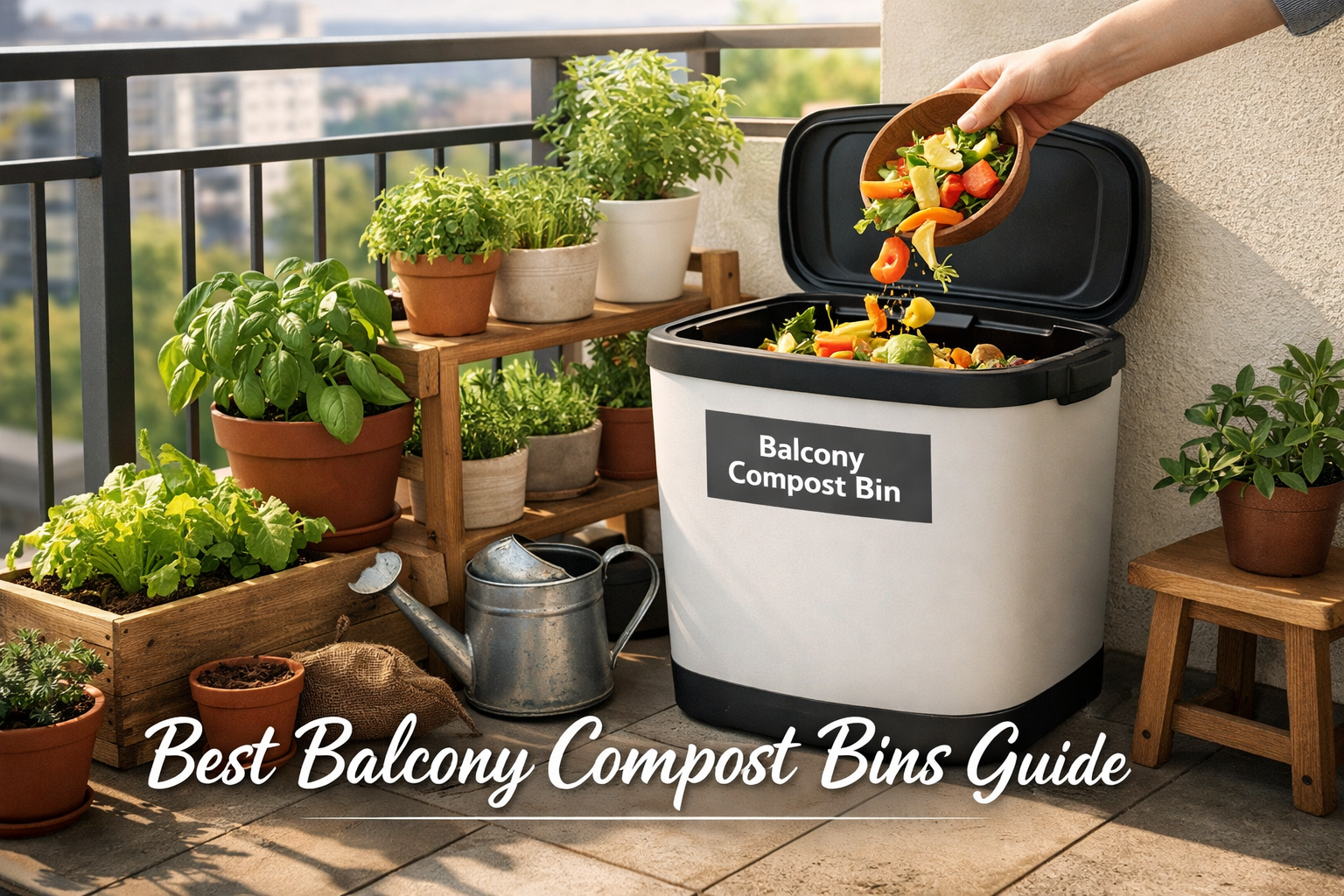
Best Balcony Compost Bins for Small Apartments
Choosing the right compost bin can make or break your balcony composting experience. I’ve learned this the hard way—my first bin was too big, poorly ventilated, and honestly, more trouble than it was worth. But once I found the right setup, composting became effortless, clean, and even enjoyable.
If you live in a small apartment, your compost bin needs to be compact, odor-controlled, and easy to manage. In this guide, I’ll walk you through the best types of balcony compost bins, what to look for before buying, and how to choose the right one for your space and lifestyle.
If you’re completely new to composting, start here first:
👉 Balcony Composting 101
Table of Contents
Why Choosing the Right Compost Bin Matters
In a backyard, you can get away with a lot—space, airflow, and distance help cover mistakes. But on a balcony, everything is closer, tighter, and more noticeable. That means your compost bin needs to work with you, not against you.
The right bin will:
- Keep odors under control
- Fit comfortably in your space
- Be easy to maintain
- Match your composting method
From experience, once you get the right bin, composting becomes part of your routine instead of a chore.
Types of Balcony Compost Bins
Before choosing a specific bin, it’s important to understand the main types available. Each one works differently and suits a different kind of user.
Bokashi Bins (Best for Apartments)
Bokashi bins are one of the most apartment-friendly options available. They are airtight, compact, and designed to ferment food waste instead of decomposing it in the traditional way.
What I like most about Bokashi is how clean it feels. There’s no turning, no exposure, and almost no smell when used properly. You can also compost a wider range of food, including cooked meals, meat, and dairy.
This makes Bokashi ideal if you want something simple and low-maintenance.
Worm Compost Bins (Best for Organic Gardening)
Worm bins, also known as vermicomposting systems, use red wigglers to break down food scraps into nutrient-rich compost. They’re compact, efficient, and produce one of the best natural fertilizers you can use for plants.
In my experience, worm bins are incredibly rewarding—but they do require a bit more attention than Bokashi. You’ll need to manage feeding, moisture, and balance.
If you’re interested in this method, check out:
👉 Worm Composting on a Balcony
Compost Tumblers (Best for Larger Balconies)
Compost tumblers are rotating bins that speed up decomposition by improving airflow. They’re great if you prefer a more traditional composting approach but want faster results.
However, they do require more space, so they’re better suited for larger balconies. If your space is limited, this might not be the most practical option.
What to Look for When Buying a Balcony Compost Bin
Size and Space Fit
One of the biggest mistakes beginners make is choosing a bin that’s too large. On a balcony, space is limited, so your compost bin should fit comfortably without getting in the way.
From experience, smaller bins are easier to manage and maintain. It’s better to start small and scale up later if needed.
Odor Control
This is the most important factor for apartment composting. A good compost bin should either be airtight (like Bokashi) or well-ventilated and balanced (like worm bins).
If your bin doesn’t manage odor properly, composting will quickly become unpleasant.
If you ever run into smell issues, this guide will help:
👉 Why Your Balcony Compost Smells (And How to Fix It Fast)
Ease of Use
Your compost system should fit into your daily routine without stress. Look for bins that are easy to open, clean, and maintain.
The simpler the system, the more consistent you’ll be—and consistency is what makes composting successful.
Composting Method Compatibility
Not all bins are the same. Each type supports a different composting method:
- Bokashi → Fermentation-based, low effort
- Worm bin → Biological decomposition with worms
- Tumbler → Aerobic composting with rotation
Choosing the right method depends on your lifestyle and how involved you want to be.
My Personal Recommendation
If you’re just starting out, I recommend going with a Bokashi bin. It’s the easiest to manage, especially if you’re worried about odor or don’t have much time.
Once you’re comfortable, you can explore worm composting for even richer compost and better plant results. That’s the path I took, and it made the learning process much smoother.
How Your Compost Bin Fits Into the Bigger Picture
Your compost bin is just one part of your overall system. To get the best results, you also need to understand what goes into it and how to maintain balance.
For a complete material guide, read:
👉 What Can You Compost on a Balcony?
When everything works together—bin, materials, and routine—composting becomes simple and effective.
Final Thoughts
The best balcony compost bin isn’t the most expensive or the most advanced—it’s the one that fits your space and your lifestyle. Whether you choose Bokashi, a worm bin, or a tumbler, the key is to keep things simple and manageable.
Start small, stay consistent, and don’t overcomplicate it. Once you find your rhythm, composting becomes one of the most rewarding parts of balcony gardening.
Frequently Asked Questions (FAQs)
1. What is the best compost bin for a small apartment?
Bokashi bins and worm bins are the best choices because they are compact, efficient, and suitable for indoor or balcony use.
2. Do balcony compost bins smell?
Not if properly managed. Choosing the right bin and maintaining balance prevents odors.
3. Can I compost indoors without a balcony?
Yes, systems like Bokashi and worm bins can be used indoors as long as they are well maintained.
4. How much space do I need for a compost bin?
Very little. Many bins are compact enough to fit in a corner or under a table.
5. Are expensive compost bins worth it?
Not always. A simple, well-managed system can work just as effectively as a high-end bin.
6. Can beginners start composting easily?
Yes, especially with beginner-friendly systems like Bokashi bins.
7. What’s the easiest composting method to start with?
Bokashi composting is often the easiest because it requires minimal maintenance and handles a wide range of waste.
Further Reading
- Composting at Home: A Beginner’s Guide – The Environmental Protection Agency (EPA) explains how home composting works, what materials to use, and how to manage a simple compost system to reduce household waste and improve soil health.