
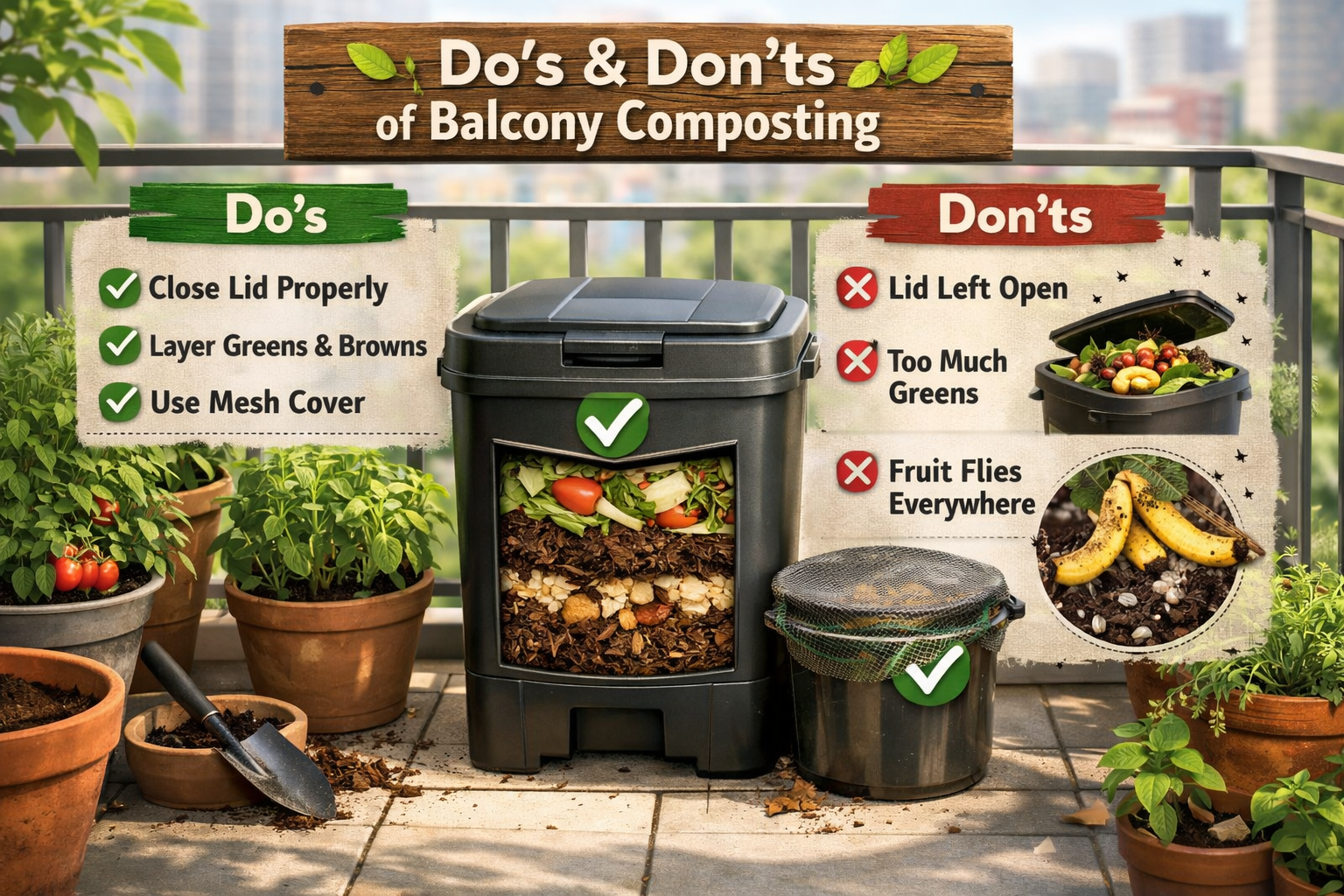
What are the common balcony composting mistakes beginners make, and how can you avoid them to achieve clean, odor-free, and effective compost in small apartment spaces?
Starting a balcony compost might feel simple—just toss in kitchen scraps and let nature do the work, right? That’s what I thought when I began. But within a few weeks, I ran into the usual problems: bad smell, slow breakdown, and confusion about what I was doing wrong.
The truth is, balcony composting is easy—but only when you avoid a few key mistakes. Because you’re working in a small space, small errors show up quickly.
In this guide, I’ll walk you through the most common beginner mistakes and exactly how to fix (and avoid) them—based on real experience and what actually works.
If you’re completely new, start here first:
👉 Balcony Composting 101
Table of Contents
Common Balcony Composting Mistakes Beginners Make
Mistake #1: Adding Too Many Food Scraps (Greens)
One of the most common beginner mistakes is adding too many kitchen scraps without balancing them. It feels natural—you have waste, so you add it. But too many “greens” (wet, nitrogen-rich materials) make your compost soggy and smelly.
I made this mistake early on by dumping scraps daily without adding anything dry.
How to avoid it:
Always balance greens with browns like shredded paper or cardboard. A simple rule is 2 parts browns to 1 part greens. This keeps your compost airy and odor-free.
Mistake #2: Ignoring Dry Materials (Browns)
Closely related to the first mistake is not adding enough browns. Dry materials are what keep your compost healthy—they absorb moisture, improve airflow, and prevent odor.
Without them, your compost becomes compact and starts to smell.
How to avoid it:
Keep a small stash of shredded newspaper or cardboard nearby. Every time you add food scraps, cover them immediately with browns. This one habit solves most compost problems.
Mistake #3: Adding the Wrong Materials
Not everything belongs in a balcony compost bin. Adding meat, dairy, oily foods, or excessive citrus can cause odors, attract pests, and disrupt the composting process.
I learned this the hard way after adding leftover food that didn’t break down properly.
How to avoid it:
Stick to safe materials like fruit and vegetable scraps, coffee grounds, and dry paper.
👉 See full list here: What Can You Compost on a Balcony
Mistake #4: Overwatering Your Compost
Compost should be moist—not wet. Too much moisture blocks airflow and leads to that unpleasant rotten smell.
Balcony bins are especially prone to this because they don’t always drain well.
How to avoid it:
If your compost feels soggy, add more browns and mix it gently. Aim for a texture similar to a wrung-out sponge.
Mistake #5: Poor Airflow and No Mixing
Compost needs oxygen to break down properly. If your bin becomes compacted or you never mix it, it can turn anaerobic—and that’s when the smell gets bad.
In my routine, I lightly stir my compost every week or two. It’s a simple step that makes a big difference.
How to avoid it:
Loosen the contents occasionally and avoid packing materials too tightly. Good airflow keeps everything working efficiently.
Mistake #6: Overfeeding the Compost System
It’s easy to assume that more scraps = faster compost. But in reality, overfeeding overwhelms your system, especially in small bins.
This is very common in worm bins and Bokashi setups.
How to avoid it:
Add scraps gradually and let your system catch up. If food isn’t breaking down quickly, slow down your feeding.
Mistake #7: Ignoring Early Warning Signs
Your compost gives you signals—smell, texture, and appearance all tell you what’s happening. Ignoring these signs can turn small issues into bigger problems.
I used to ignore slight odors, thinking they would fix themselves—but they rarely do.
How to avoid it:
Check your compost regularly. If something feels off, fix it early.
For quick troubleshooting, read:
👉 Why Your Balcony Compost Smells (And How to Fix It Fast)
My Personal Lesson from These Mistakes
The biggest thing I’ve learned is this: composting is not about perfection—it’s about balance.
Every mistake I made taught me something simple:
- Too wet → add browns
- Too dry → add moisture
- Smells → fix airflow or balance
Once you understand these basics, everything becomes easier.
Final Thoughts
Balcony composting is one of the most rewarding habits you can build—but only if you avoid the common beginner mistakes.
Start simple, stay consistent, and pay attention to your system. With a few small adjustments, you can keep your compost clean, efficient, and completely stress-free.
And remember—every mistake is part of the learning process.
Frequently Asked Questions (FAQs)
1. What is the most common composting mistake?
Adding too many food scraps without enough dry materials is the most common mistake.
2. How do I know if my compost is unhealthy?
Bad smells, excessive moisture, or slow decomposition are signs something is wrong.
3. Can I fix compost mistakes quickly?
Yes, most issues can be fixed within a day or two by adjusting balance, moisture, or airflow.
4. Is it okay to experiment with composting?
Yes, but start with safe materials and simple methods to avoid major problems.
5. How often should I check my compost?
Once or twice a week is enough to catch and fix issues early.
6. Do all composting methods have the same mistakes?
Some overlap, but worm bins, Bokashi, and traditional compost each have unique challenges.
7. Can beginners succeed with balcony composting?
Absolutely. With the right knowledge and consistency, anyone can do it successfully.
Further Reading
- Composting at Home: A Beginner’s Guide – The Environmental Protection Agency (EPA) explains how home composting works, what materials to use, and how to manage a simple compost system to reduce household waste and improve soil health.