
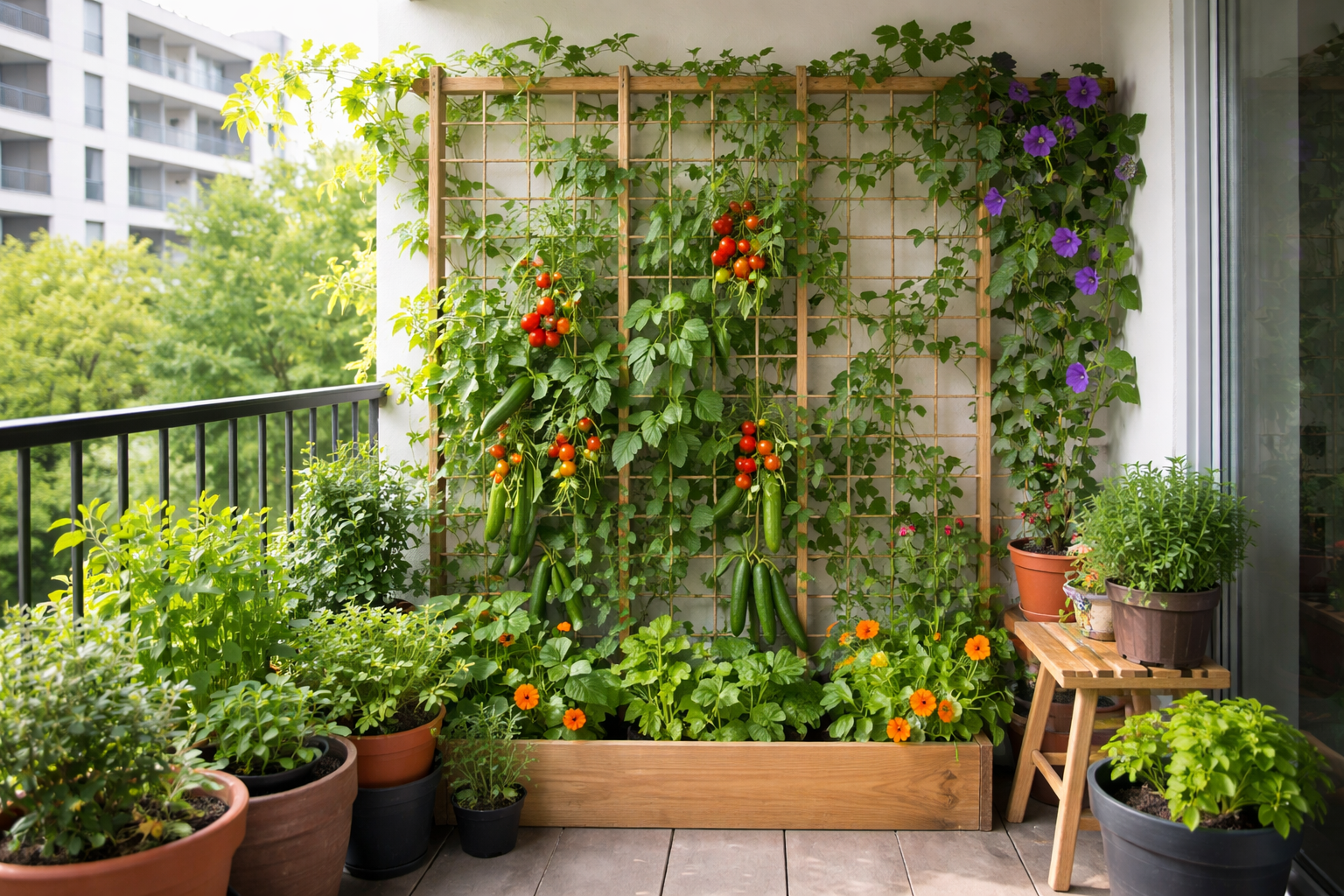
Limited balcony space doesn’t mean limited gardening potential. Vertical gardening transforms small outdoor areas into lush, productive green zones. By encouraging plants to grow upward rather than outward, we can maximize available space, improve airflow around leaves, and even create a visual privacy screen. For container gardeners, balcony climbing plants paired with thoughtful supports offer both practicality and aesthetic charm.
Vertical gardening transforms small outdoor areas into lush, productive green zones, and exploring small balcony garden layouts can help plan the best arrangement for your trellises and container crops.”
Whether growing leafy greens, tomatoes, beans, or flowering vines, proper climbing structures prevent sprawling, tangled plants while keeping fruits and foliage healthy. A small balcony can feel like a full garden if every vertical inch is used strategically.
DIY trellises and wall-mounted supports offer a cost-effective, customizable solution for urban gardeners who want to cultivate a vibrant vertical garden without investing in bulky commercial systems.
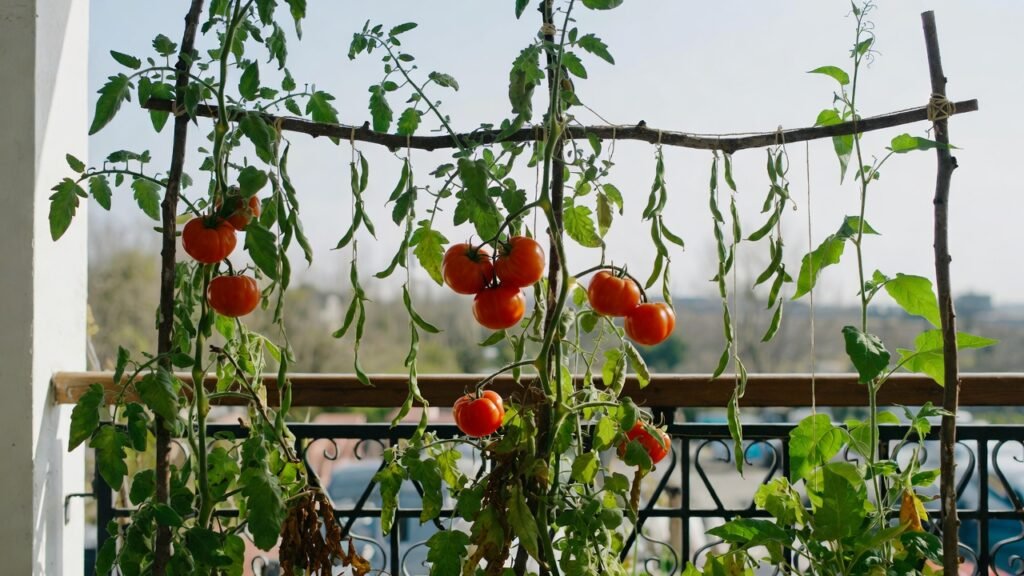
[IMAGE: Balcony with DIY trellis supporting climbing tomatoes and beans]
Benefits of Climbing Supports in Container Gardening
Adding DIY vertical garden supports to balcony pots offers multiple advantages that go beyond simply saving space. Container plants are naturally constrained in root space, and without guidance, vines can sprawl, reducing air circulation and making maintenance tricky. Climbing supports help plants reach sunlight more efficiently while keeping foliage off the floor, which reduces the risk of pests and soil-borne diseases.
Why Vertical Growth Matters
• Maximizes limited floor space, allowing more plants in smaller areas
• Improves airflow and light penetration for healthier leaves
• Reduces the risk of damaged stems or bent branches from sagging
• Facilitates easier watering and harvesting in tight urban setups
• Creates a visually appealing green backdrop or natural privacy screen
Vertical supports are especially effective for tomatoes, peas, cucumbers, beans, and ornamental vines like morning glories or sweet peas. Even in container gardens under 4–6 feet wide, a few well-placed trellises can double the growing capacity while maintaining neat, manageable plant forms.
Encouraging Strong, Healthy Vines
Plants trained to climb develop stronger stems and more productive fruiting points. Vertical orientation allows gardeners to tie vines gently to supports as they grow, promoting upright growth without constriction.
For balcony gardeners with busy schedules, setting up these supports early saves time later in pruning, harvesting, and pest management.
DIY Trellis and Wall-Mounted Structures
Tiny balconies call for lightweight, flexible, and visually unobtrusive climbing supports. DIY trellises and wall-mounted systems can be crafted from materials like bamboo stakes, PVC pipes, wooden slats, or even repurposed household items. The goal is to provide stable support without overwhelming limited balcony space.
Lightweight Trellis Options
For smaller container setups, simple trellises provide adequate support for climbing vegetables and vines.
Materials Needed:
• Bamboo stakes or wooden dowels (4–6 feet tall)
• Twine, garden wire, or zip ties
• Small planter pots or balcony railing attachments
Step-by-Step:
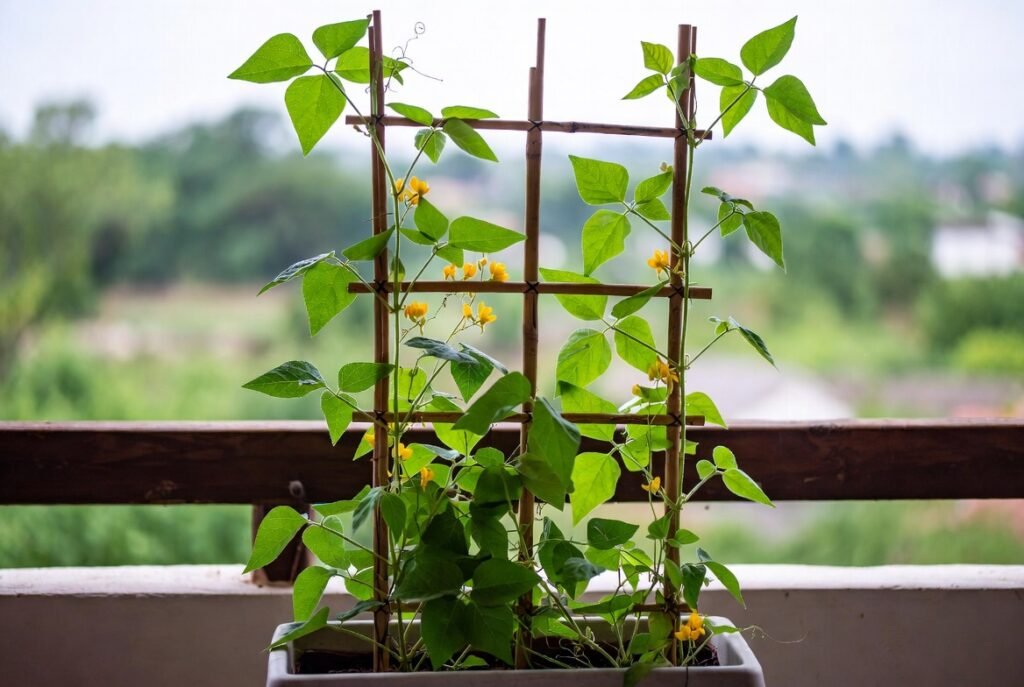
- Insert stakes firmly into the soil of your container, keeping them about 2–3 inches apart.
- Connect stakes with horizontal twine or wire at intervals of 8–12 inches to create a grid.
- Train young vines to climb the grid by loosely tying stems as they grow.
- Adjust ties weekly to accommodate growth and prevent constriction.
This method works well for tomatoes, beans, and peas, and can be easily removed or adjusted when plants are harvested.
[IMAGE: Close-up of a lightweight DIY trellis with beans climbing in a small balcony container]
Wall-Mounted Supports
Wall-mounted trellises or lattices save floor space entirely while allowing vines to grow vertically against a balcony wall or railing.
Materials Needed:
• Wooden lattice panel, tension wire, or repurposed pallet
• Hooks or brackets for attachment
• Twine or soft plant ties
Step-by-Step:
- Secure the lattice or wire frame to the balcony wall or railing using brackets or hooks.
- Ensure the structure is stable and can support the weight of mature plants.
- Plant climbing species in pots directly below or beside the wall support.
- Guide vines upward, tying loosely when needed to encourage vertical growth.
- Monitor weekly and adjust ties or add horizontal support lines if vines begin to spread.
Wall-mounted supports are ideal for urban gardeners looking to create a green privacy screen or decorative vertical display. Plants trained this way can also benefit from consistent sunlight on balcony walls.
Vine Guidance Tips
• Start training vines when seedlings are small to encourage upward growth
• Use soft ties to avoid cutting into stems
• Rotate ties or move them as plants grow to reduce stress points
• For heavier vines, reinforce the structure with additional vertical supports or cross braces
Even delicate climbers respond well to gentle guidance. Over time, these systems can support a dense, lush vertical garden with minimal floor space used.
Creative Variations for Tiny Balconies
DIY supports aren’t limited to traditional trellises. Balcony gardeners can innovate with:
• Hanging wire grids suspended from the ceiling
• Repurposed ladders or folding screens as vertical supports
• Tensioned strings between railing posts for lightweight climbers
• Upcycled wooden crates stacked vertically as both planter and trellis base
These variations allow gardeners to adapt structures to the specific constraints and aesthetics of their balcony space while keeping plants supported and healthy.
[IMAGE: Balcony with creative vertical supports for climbing plants, including repurposed ladders and hanging twine grids]
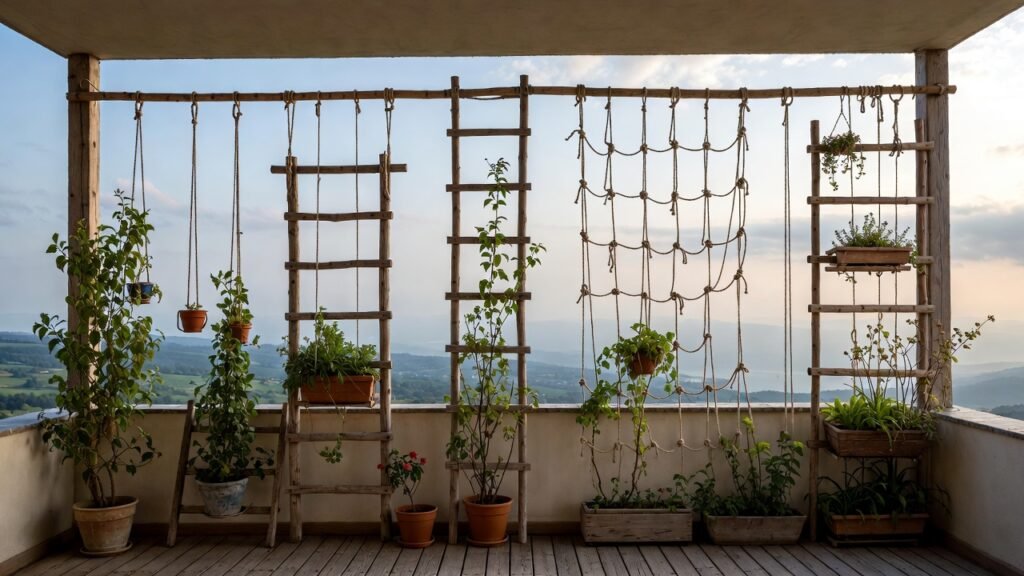
By combining lightweight trellises and wall-mounted systems, even a balcony under 50 square feet can accommodate multiple climbing crops, creating a productive, visually appealing garden without clutter.
Tips for Plant Training and Pruning on Small Structures
Proper plant training and pruning are essential to get the most from small balcony trellises. Training involves gently guiding young stems along your support, using soft ties or twine to encourage upright growth. Regular pruning ensures good airflow around leaves, removes damaged or yellowing foliage, and stimulates new growth.
For vegetables like beans and tomatoes, pruning lower leaves can reduce the risk of fungal diseases, while keeping the trellis neat and manageable. Consistent attention to growth patterns ensures the structure isn’t overwhelmed and plants remain healthy.
How to Mix Climbing Plants with Other Balcony Crops
Combining climbing plants with other crops maximizes space and enhances the overall productivity of a small balcony. Heavier vines should be positioned on the sturdiest supports, while lighter climbers or slow-growing vines can be interspersed with shorter herbs or compact vegetables. Companion planting works well in containers: aromatic herbs like basil, mint, or oregano can occupy the lower space beneath taller climbers and even help deter pests.
Combining climbing plants with other crops requires thoughtful placement, and referring to balcony layouts that maximize space can help you plan efficient vertical and horizontal arrangements for your containers.
Layering plants by height creates a visually appealing vertical effect while keeping each plant healthy and accessible for care and harvesting.
Avoiding Structural Damage or Overcrowding
Balcony trellises and wall-mounted supports must be lightweight yet stable to prevent damage to railings or walls. Bamboo, PVC, or repurposed wood are excellent materials, and supports should be anchored securely. As climbing plants grow heavier, check the structure periodically to avoid tipping or bending. When multiple species share a trellis, monitor growth to prevent vines from tangling, shading smaller plants, or overloading the support. Adequate spacing, careful guidance, and thoughtful placement keep the vertical garden productive without causing structural strain or overcrowding.
Conclusion
DIY trellises and climbing supports allow even the smallest balconies to host productive, organized, and visually appealing vertical gardens. By carefully training and pruning plants, combining climbers with companion crops, and ensuring supports are stable, urban gardeners can maximize their space while keeping plants healthy.
With the right trellises and plant training, any tiny balcony can become a thriving vertical garden. For more inspiration on vertical gardening for small balconies, explore practical tips and design ideas.
These lightweight, versatile systems turn small outdoor areas into vibrant green zones, offering both practical food production and aesthetic appeal. With thoughtful planning and regular maintenance, any tiny balcony can become a thriving vertical garden.
FAQ Section
1. Which climbing plants are best for small balconies?
Compact varieties of beans, peas, tomatoes, cucumbers, and flowering vines like sweet peas or morning glories perform well. Selecting manageable plants prevents overcrowding and allows the trellis to support healthy vertical growth efficiently.
2. How often should I prune balcony climbing plants?
Pruning weekly or every two weeks is recommended depending on growth. Removing dead leaves and trimming excess shoots helps maintain airflow, encourages fruiting, and keeps the vertical garden tidy.
3. Can I combine multiple climbing species on one trellis?
Yes, but consider weight and growth patterns. Heavier vines should occupy the strongest supports, while lighter or slower-growing plants can share space. Adequate spacing prevents entanglement and ensures sunlight reaches all crops.
4. How do I prevent damage to balcony railings or supports?
Use lightweight materials like bamboo, PVC, or repurposed wood. Anchor trellises securely and monitor as plants grow heavier. Avoid placing overly heavy planters on railings without proper support.
5. What companion plants work well with climbing vegetables?
Aromatic herbs such as basil, mint, and oregano make excellent companions beneath climbing crops. They utilize lower vertical space, help deter pests, and enhance both productivity and visual appeal in a small balcony garden.
6. How do I train young vines without damaging them?
Gently guide stems along supports using soft ties or twine. Avoid tight knots that could cut stems. Adjust ties as the plant grows, allowing for natural movement while encouraging upward growth.
7. Can vertical supports improve fruit yield?
Yes. Upright growth improves light exposure and airflow, reducing disease risk. Strong, supported vines are more productive, often yielding more per container than sprawling plants grown without trellises.
Helpful Resources
- Trellises and Cages to Support Garden Vegetables – UMN Extension – Techniques for building trellis types that work with climbing vegetables in small gardens.
- Trellises for Plants That Like to Climb – UC Marin Master Gardeners – Expert advice on why and how to build trellises for climbing plants including vines and beans.