

Edible Flowers for Tiny Balconies: Beauty and Nutrition in Pots
Balcony gardening is more than just a way to bring greenery into small urban spaces—it’s an opportunity to blend beauty and nutrition in a single pot. Edible flowers offer vivid colors, delicate fragrances, and surprising flavors, making them ideal for tiny balcony gardens. Beyond aesthetics, these flowers can enhance meals with vitamins, antioxidants, and unique tastes, transforming salads, teas, and garnishes into a sensory experience.
Growing edible flowers on a balcony combines creativity with practicality. Even a few well-chosen pots can bring bursts of color and a mini-harvest that’s visually stunning and nutritionally beneficial. Whether you’re sipping borage-infused lemonade on a sunny morning or sprinkling nasturtium petals on a fresh salad, these flowers elevate your balcony space and your diet in a single, elegant gesture.
For a quick, nutrient-packed addition to your balcony harvest, you can also explore growing microgreens on your balcony alongside edible flowers, bringing both color and health benefits to your small-space garden.
Table of Contents
Which Edible Flowers Thrive in Containers
When choosing edible flowers for a balcony, the key is to pick species that adapt well to confined spaces while providing vibrant blooms and usable petals. Some varieties are compact, forgiving, and relatively low-maintenance, making them ideal for urban gardeners with limited time.
Nasturtiums
Nasturtiums are a go-to for container gardening because they grow well in small pots and tolerate partial sun. Their bright orange, red, and yellow flowers are peppery in flavor, adding a subtle spice to salads and sandwiches. Nasturtiums prefer well-drained soil and moderate watering, and they bloom quickly, rewarding gardeners within weeks.
Pansies and Violas
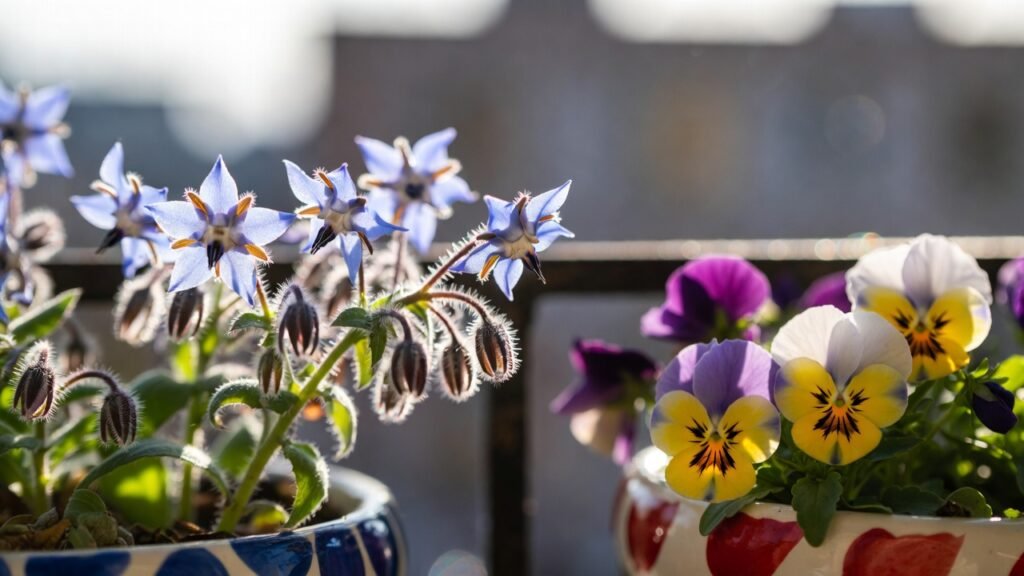
Pansies offer stunning color combinations in shades of purple, yellow, blue, and white. Their petals are mild, slightly sweet, and perfect for decorating desserts or cold drinks. Violas, their smaller relatives, provide similar flavors but are more delicate and bloom longer, making them ideal for extended balcony seasons.
Borage
Borage is a bushy herb with star-shaped blue flowers and cucumber-like flavor. It thrives in containers with at least 10 inches of soil depth and full sun. Borage flowers are edible raw, ideal for teas or salads, and attract pollinators if you enjoy observing bees and butterflies from your balcony.
Calendula
Calendula petals range from bright yellow to deep orange and carry a slightly tangy, peppery taste. They are resilient in pots, resist common pests, and bloom through summer and early fall. Calendula petals work beautifully in rice dishes, soups, or homemade herb butters.
Marigolds
Marigolds, particularly the French and Signet varieties, produce edible petals with a mild citrus flavor. These flowers are low-maintenance, drought-tolerant, and compact, making them suitable for tight balcony spaces. Marigolds can be a striking contrast to leafy greens in a pot or salad mix.
How to Incorporate Flowers Into Meals Safely
Using flowers in your meals requires attention to safety and flavor. Not all ornamental flowers are edible, and even edible varieties should be handled thoughtfully to maximize their taste and nutritional benefits.
Wash Gently and Inspect
Before consuming flowers, rinse them lightly under cool water to remove dust or potential pesticide residues. Trim off stems, stamens, and pistils, as these parts can taste bitter or have a gritty texture.
Start Small
Introduce flowers gradually into meals. Nasturtiums or pansies can be chopped finely into salads, while borage flowers may float whole in a beverage for visual appeal. Tasting in small amounts helps gauge their flavor intensity and ensures there are no digestive reactions.
Combine With Complementary Flavors
Edible flowers often shine when paired with fresh herbs, fruits, or mild greens. Calendula can be sprinkled over roasted vegetables, while violets and pansies elevate desserts or yogurt. Borage pairs well with lemon-infused teas or cocktails, offering both a visual and aromatic boost.
Preserve and Use Later
If you have a harvest surplus, edible flowers can be gently dried or frozen. Lightly drying pansies in a paper towel allows them to maintain their color for teas or baking, while freezing nasturtium leaves in ice cube trays with water preserves their peppery flavor for soups or sauces.
Step-by-Step Planting and Care Guidance
Container gardening for edible flowers demands careful planning to ensure blooms are both healthy and harvestable. Following a structured approach can maximize yield and aesthetic appeal.
1. Choose the Right Pot
Select containers that are at least 8–10 inches deep for most flowers, with adequate drainage holes. Terra cotta or ceramic pots are ideal because they balance moisture retention and airflow to roots.
2. Select Appropriate Soil
A well-draining, nutrient-rich potting mix is essential. A blend of compost, peat moss, and perlite works well. For nasturtiums, lighter soil encourages more blooms, while borage benefits from soil enriched with organic matter.
3. Plan for Sunlight
Most edible flowers thrive in full sun (6–8 hours per day). Position pots where they receive morning sunlight and light afternoon shade, especially in hot climates, to prevent scorching.
4. Water Wisely
Maintain even soil moisture without waterlogging. Check the top inch of soil daily; if it feels dry, water gently until excess drains. Hanging baskets may need daily monitoring, while larger pots often retain moisture longer.
5. Fertilize Lightly
Apply a balanced, water-soluble fertilizer every 3–4 weeks. Avoid high-nitrogen fertilizers, as they encourage foliage over flowers. Organic options, like fish emulsion or seaweed extract, support blooms and sustainability.
6. Prune and Deadhead
Regularly remove spent blooms to encourage new growth. Pinching back stems of fast-growing flowers like borage or nasturtiums can prevent legginess and promote a fuller appearance.
Harvesting Tips and Culinary Uses
Harvesting edible flowers at the right time ensures maximum flavor, nutrition, and visual appeal. Most flowers are best picked in the morning after dew evaporates but before the sun becomes too hot, which can wilt petals. Use clean scissors or garden shears to snip blooms carefully, leaving some stem to prolong freshness.
- Nasturtiums: Snip flowers and tender leaves; add directly to salads, sandwiches, or pesto for a peppery kick.
- Pansies and Violas: Harvest entire blooms; perfect for desserts, cold drinks, or as garnish on cakes and smoothies.
- Borage: Flowers can float in teas, lemonades, or cocktails, while leaves complement salads or soups.
- Calendula: Sprinkle petals into rice, soups, or homemade butters; they also add vibrant color to pasta dishes.
- Marigolds: Use petals sparingly for mild citrus notes in salads, yogurt, or herb butters.
Storing flowers requires gentle handling. Keep petals in a paper towel inside an airtight container in the refrigerator for up to 3 days. For longer preservation, lightly dry or freeze petals in ice cube trays with water.
Edible flowers add vibrant color to meals, and when paired with the best small vegetables to grow on your balcony, you can create year-round, nutritious salads right from your balcony garden.
Companion Planting Strategies for Edible Flowers
Edible flowers not only beautify your balcony but can improve the health and productivity of nearby plants. Thoughtful companion planting enhances pollination, deters pests, and maximizes your limited space.
- Nasturtiums with tomatoes or cucumbers: Nasturtiums act as a trap crop, attracting aphids away from vegetables.
- Borage near strawberries: Encourages pollinators and improves fruit yield while adding blooms to your balcony.
- Marigolds with herbs or peppers: Their scent helps repel nematodes and other harmful insects.
- Calendula with leafy greens: Protects from aphids and attracts beneficial insects like ladybugs.
Arrange taller flowers at the back of balcony shelves and trailing varieties in hanging baskets or front pots. This layering optimizes sunlight exposure and allows for easy harvesting.
Pairing flowers with herbs can enhance growth, repel pests, and boost flavor in meals. Check out our balcony herb garden blueprint for kitchen herbs that thrive in containers and pair beautifully with edible blooms.
Common Mistakes and How to Avoid Them
Even seasoned balcony gardeners encounter common pitfalls when growing edible flowers. Awareness and proactive care prevent frustration and wasted blooms.
- Overwatering: Many flowers, like nasturtiums, tolerate dry soil better than soggy roots. Check soil moisture before watering.
- Ignoring sunlight needs: Underexposed flowers may bloom poorly or produce weak stems. Observe morning and afternoon sun patterns on your balcony.
- Using non-edible varieties by mistake: Always verify species before eating. Even ornamental relatives may be toxic.
- Crowding pots: Overcrowded containers reduce airflow, increase disease risk, and limit blooms. Follow spacing guidelines on seed packets.
- Forgetting pest management: Aphids, snails, and powdery mildew can affect flowers. Introduce natural deterrents like neem oil, sticky traps, or companion planting.
Conclusion
Growing edible flowers on a balcony combines visual delight with nutritional benefit, transforming small spaces into vibrant, functional gardens. With proper container selection, soil care, sunlight, and mindful harvesting, even urban dwellers can enjoy a colorful, tasty, and healthful floral bounty.
Incorporating these flowers into meals and beverages elevates everyday eating into an aesthetic and flavorful experience. Thoughtful companion planting and avoiding common mistakes ensure your balcony garden thrives season after season.
FAQ Section
1. Are all flowers safe to eat?
Not all flowers are edible. Stick to varieties known for consumption, such as nasturtiums, pansies, borage, marigolds, and calendula. Avoid ornamental flowers without confirmed edible status, as some can be toxic. Always source from trusted seeds or nurseries and verify before eating.
2. How often should I water edible flowers in pots?
Most edible flowers prefer consistent but moderate watering. Check the top inch of soil; if dry, water gently until it drains. Avoid waterlogging, which can rot roots. Smaller pots dry faster, so monitor daily during hot periods.
3. Can edible flowers grow in partial shade?
Yes, many flowers tolerate partial shade, but blooms may be fewer or smaller. Pansies and violas adapt well, while borage and nasturtiums prefer full sun. Observe your balcony’s light patterns to place plants accordingly.
4. How long do harvested flowers last?
Fresh edible petals typically last 2–3 days in the refrigerator if stored gently in paper towels inside an airtight container. Some flowers, like nasturtiums or pansies, can also be frozen or lightly dried for longer use.
5. Can I grow edible flowers year-round on a balcony?
Year-round growth depends on your climate and flower type. Cold-hardy varieties like pansies can bloom in cooler months, while borage and nasturtiums thrive in warmer seasons. Consider seasonal rotations and indoor grow lights for winter.
6. How do I prevent pests on balcony flowers?
Use a combination of natural deterrents and companion planting. Introduce neem oil sprays, sticky traps, or attract beneficial insects like ladybugs. Plant pest-repelling companions, like marigolds, to keep harmful insects away without chemicals.
7. Are edible flowers nutritionally valuable?
Yes, many edible flowers contain vitamins, antioxidants, and anti-inflammatory compounds. For example, nasturtiums offer vitamin C, borage flowers contain minerals, and calendula petals provide carotenoids. They complement a balanced diet and add flavor variety.