
How to Refresh Old Potting Soil: A Step-by-Step Guide
If you’ve been gardening on your balcony for a while, you’ve probably faced this question: Should I throw away old potting soil or reuse it?
From my experience, throwing it away is rarely necessary. In fact, learning how to reuse potting soil in containers is one of the smartest habits you can build as a balcony gardener. It saves money, reduces waste, and—when done right—can produce just as healthy plants as fresh soil.
The key is simple: don’t reuse—refresh.
Table of Contents
Can You Reuse Potting Soil in Containers Safely?
Yes, you absolutely can—but not without preparation. Used potting soil loses nutrients over time and can become compacted, making it harder for roots to grow. It may also carry pests or diseases if the previous plant struggled.
I’ve reused soil for years, especially on my balcony where carrying new bags of soil isn’t always practical. The trick is knowing when soil is still usable. If your previous plants were healthy and the soil doesn’t smell bad or show signs of mold or pests, it’s usually safe to refresh and reuse.
However, if a plant died from disease, it’s better to discard that soil completely to avoid infecting new plants.
Why Refreshing Container Soil Is Essential
Old potting soil isn’t “dead,” but it’s definitely tired. Over a growing season, plants absorb nutrients, and watering washes many of them away. At the same time, the structure breaks down and becomes dense.
This leads to:
- Poor drainage
- Reduced aeration
- Weak plant growth
Refreshing the soil restores both its structure and nutrient content. According to research, adding organic matter like compost or worm castings can significantly improve soil fertility and microbial life.
From my own balcony gardening, I’ve seen plants struggle in reused soil that wasn’t refreshed—and thrive once I added compost and loosened it up.
Step-by-Step Guide to Refresh Container Soil
Refreshing soil doesn’t have to be complicated. Over time, I’ve developed a simple routine that works every season.
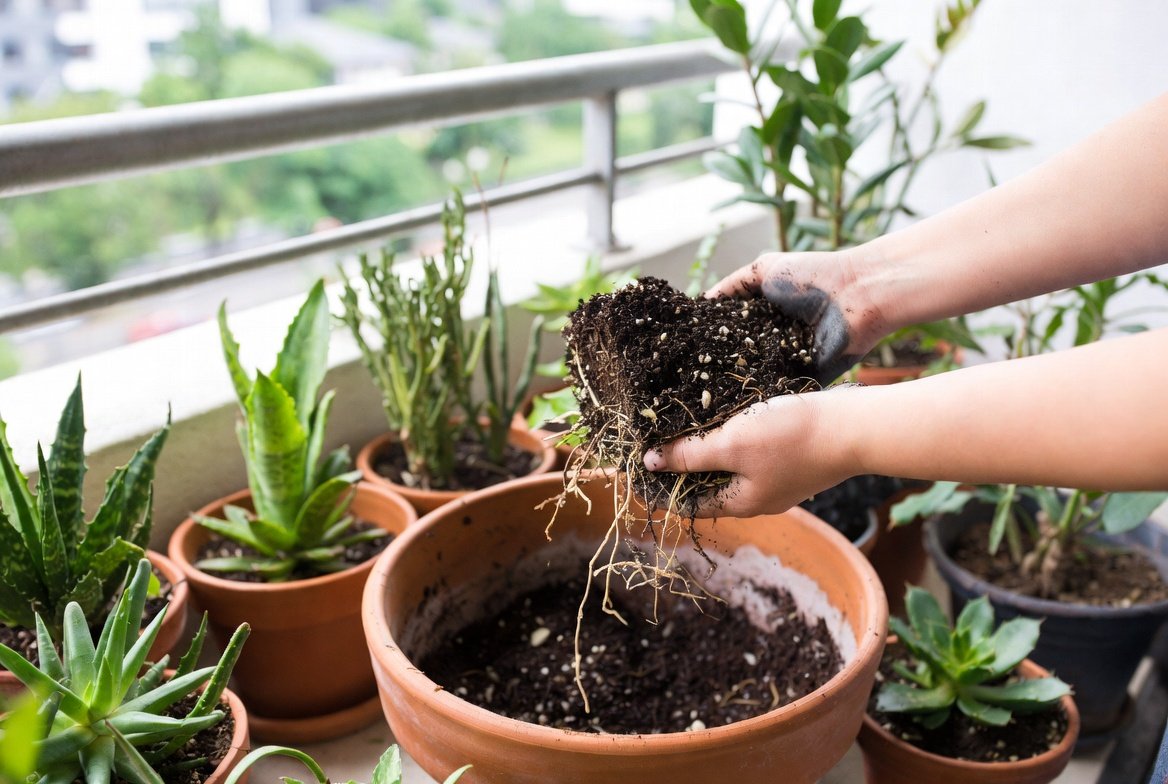
Start by emptying your containers and spreading the soil out on a tarp or flat surface. Break apart any hard clumps and remove old roots, stems, and debris. This step is important because leftover plant material can attract pests or block root growth.
Next, assess the texture. If the soil feels heavy or compacted, it needs aeration. Adding materials like coco coir or fresh potting mix helps restore a light, fluffy structure that allows roots to breathe.
After that, focus on nutrients. Used soil is usually depleted, so this is where the real transformation happens. Mix in compost, worm castings, or organic fertilizers to bring the soil back to life. Experts often recommend adding about 30–50% fresh organic material to restore fertility.
Finally, lightly moisten the soil and let it sit for a few days before planting. This allows microbial activity to restart and creates a healthier growing environment.
Best Organic Additions for Balcony Soil Recycling
When it comes to balcony soil recycling, what you add matters just as much as how you prepare it.
In my experience, compost is the backbone of any soil refresh. It adds nutrients and improves structure at the same time. Worm castings are another favorite—they’re gentle, effective, and perfect for container gardening.
If your soil feels too dense, adding coco coir or a bit of fresh potting mix can make a huge difference. These materials improve drainage and prevent waterlogging, which is a common issue in balcony pots.
I’ve also found that rotating these additions each season keeps the soil balanced. Instead of relying on one amendment, combining a few creates a richer, more resilient growing medium.
When You Should NOT Reuse Potting Soil
As much as I encourage reusing soil, there are times when it’s simply not worth the risk.
If your soil shows signs of disease, pest infestation, or a strong unpleasant smell, it’s better to discard it. Harmful pathogens can survive in soil and affect future plants.
Another red flag is salt buildup, which often appears as a white crust on the soil surface. This can damage plant roots and interfere with water absorption.
In such cases, I usually add the soil to a compost pile instead of reusing it directly. That way, it can break down safely and become useful again later.
Common Mistakes When Refreshing Old Potting Soil
One mistake I made early on was simply adding fertilizer and calling it a day. That doesn’t work. Soil structure is just as important as nutrients.
Another common issue is skipping the cleaning step. Leaving old roots in the soil can lead to poor aeration and pest problems. I always take a few extra minutes to clean the soil properly—it makes a noticeable difference.
Overloading the soil with too many amendments is another trap. It’s tempting to add everything at once, but balance is key. Too much organic matter can make the soil too rich or water-retentive.
Conclusion
Learning how to refresh container soil is one of the most valuable skills for any balcony gardener. Instead of constantly buying new soil, you can recycle what you already have and turn it into a rich, productive growing medium.
From my own experience, refreshed soil often performs just as well—if not better—than brand-new mixes. It’s cost-effective, eco-friendly, and incredibly satisfying.
Start simple: clean it, loosen it, feed it. Do that consistently, and your plants will reward you every season.
FAQs
1. Can you reuse potting soil in containers every year?
Yes, you can reuse potting soil each year if it is free from pests and diseases. However, it must be refreshed by removing debris and adding nutrients like compost or organic fertilizer to restore its quality.
2. How do you refresh old potting soil naturally?
To refresh old potting soil, remove roots and debris, loosen compacted soil, and mix in compost, worm castings, or fresh potting mix. This improves both structure and nutrient content for new plants.
3. Is it safe to reuse potting soil for vegetables?
It is safe if the previous plants were healthy and the soil is properly refreshed. Avoid using soil from diseased plants, as it may transfer pathogens to new crops.
4. What should I add to old potting soil to make it good again?
You should add compost, worm castings, and materials like coco coir or fresh potting mix. These restore nutrients, improve drainage, and support healthy plant growth.
5. When should you throw away old potting soil?
You should discard potting soil if it contains pests, diseases, or excessive salt buildup. Soil from unhealthy plants can harm new ones, so it’s safer not to reuse it.
Further Reading
- Soil Health Basics (USDA) – Explains how healthy soil functions as a living ecosystem that supports plant growth, water retention, and nutrient cycling.
- Composting at Home (USDA) – A practical guide on turning organic waste into compost to enrich soil naturally and reduce reliance on chemical fertilizers.
- Maintaining and Improving Soil Health (USDA Climate Hubs) – Discusses how adding organic matter improves water retention, nutrient availability, and resilience in soils.