
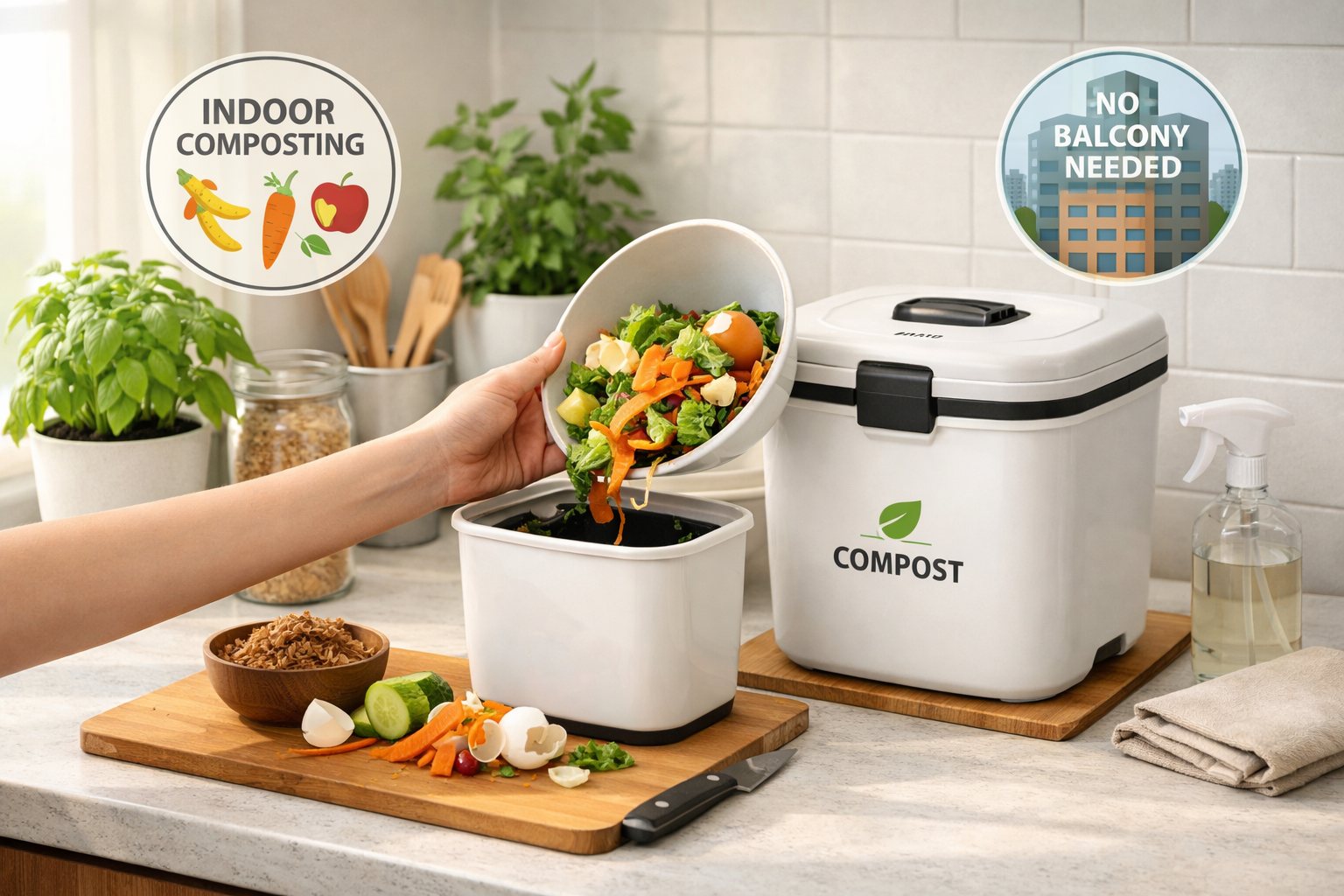
No balcony? No problem. Some of the cleanest, easiest compost setups I’ve used have actually been indoors. When I first moved into a smaller space, I thought composting was off the table—but with the right method, it turned out to be even more convenient than managing a balcony bin.
Indoor composting is all about choosing the right system and keeping things simple. In this guide, I’ll show you exactly how to compost in a tiny apartment without mess, smell, or stress—based on real experience and what actually works in small spaces.
If you’re new to composting in general, start here:
👉 Balcony Composting 101
Table of Contents
Is It Really Possible to Compost Indoors?
Yes—and it’s more common than you might think. The key difference between indoor and outdoor composting is control. Indoors, you need systems that manage odor, moisture, and space efficiently.
With the right setup, your compost won’t smell, attract pests, or take over your living space. In fact, most visitors won’t even notice you’re composting unless you tell them.
I’ve had compost bins under my sink and in kitchen corners without any issues—once the system is balanced, it runs quietly in the background.
How to Compost in a Tiny Apartment Without a Balcony: Best Indoor Methods
Not all composting methods work indoors. You need systems that are compact, contained, and low-maintenance.
Bokashi Composting (Best Overall)
If you want the easiest and cleanest option, Bokashi is hard to beat. It uses fermentation in a sealed container, so there’s almost no odor and no need for airflow.
You can compost nearly all food waste, including cooked food, meat, and dairy. That’s a huge advantage in a small apartment where food waste variety matters.
For a full setup guide, read:
👉 Bokashi Composting for Apartments
Worm Composting (Best for Natural Fertilizer)
Worm composting is another excellent indoor option. It uses red wigglers to break down food scraps into nutrient-rich compost.
When properly managed, a worm bin smells earthy—not unpleasant. It’s also very compact and can fit under a sink or in a storage corner.
If you want to explore this method, check:
👉 Worm Composting on a Balcony
Electric Composters (Optional, High-Tech Option)
If you prefer a plug-and-play solution, electric composters can process food waste quickly with minimal effort. They’re fast and convenient, but more expensive and don’t produce traditional compost in the same way.
From experience, they’re useful—but not necessary if you’re comfortable with natural methods like Bokashi or worms.
What You Can Compost Indoors
Indoor composting follows the same basic rules as balcony composting—you just need to be more mindful of balance.
Safe materials include fruit and vegetable scraps, coffee grounds, and small amounts of paper. If you’re using Bokashi, you can also include meat and dairy. If you’re unsure what’s safe, read:
👉 What Can You Compost on a Balcony?
Keeping your inputs clean and simple is the easiest way to avoid problems.
How to Keep Indoor Compost Odor-Free
This is the biggest concern for most people—and honestly, it was mine too. But once you understand the basics, odor becomes a non-issue.
The main causes of smell are:
- Too much moisture
- Poor airflow (for non-sealed systems)
- Adding the wrong materials
Each system handles this differently. Bokashi relies on sealing, while worm bins rely on balance and airflow.
If you ever run into issues, this guide will help:
👉 Why Your Balcony Compost Smells (And How to Fix It Fast)
In my experience, consistency is the secret—small, regular maintenance prevents almost all problems.
Where to Keep Your Compost Bin Indoors
Space is limited in a tiny apartment, so placement matters. The good news is that compost bins don’t need much room.
Common spots include:
- Under the kitchen sink
- In a pantry corner
- Next to a trash or recycling area
I’ve found that keeping the bin close to where you generate waste (like the kitchen) makes the process much easier and more consistent.
Simple Indoor Composting Routine
Keeping things simple is what makes indoor composting sustainable.
My routine looks like this:
- Collect scraps in a small kitchen container
- Add them to the compost bin every 1–2 days
- Cover or seal immediately
- Check moisture or drainage once a week
That’s it. No complicated steps, no daily maintenance.
Once it becomes part of your routine, it feels just like taking out the trash—only more rewarding.
What to Do with Finished Compost
Depending on your method, your compost will be ready in different forms.
- Worm bins produce rich compost you can use directly in plants
- Bokashi produces fermented waste that needs to be mixed into soil
If you don’t have plants at home, you can:
- Share compost with friends or neighbors
- Use it in community gardens
- Add it to potted plants indoors
Even in a small apartment, there’s always a way to put your compost to good use.
Final Thoughts
Composting in a tiny apartment without a balcony is not only possible—it can be easier than outdoor composting when done right.
The key is choosing the right system, keeping things balanced, and building a simple routine. Once you do that, composting becomes clean, convenient, and surprisingly satisfying.
You don’t need a big space to live sustainably—you just need the right approach.
Frequently Asked Questions (FAQs)
1. Can I compost in a small apartment without smell?
Yes, using systems like Bokashi or worm bins keeps composting odor-free when properly maintained.
2. What is the easiest indoor composting method?
Bokashi composting is the easiest because it requires minimal maintenance and is fully sealed.
3. Will composting attract pests indoors?
Not if managed correctly. Keeping the bin sealed and balanced prevents pests.
4. How much space do I need for indoor composting?
Very little. Most systems are compact enough to fit under a sink or in a corner.
5. Can I compost cooked food indoors?
Yes, but only with systems like Bokashi that can handle a wider range of materials.
6. How often should I maintain my compost bin?
A quick check once a week is usually enough for most systems.
7. Is indoor composting beginner-friendly?
Yes, especially with simple systems and a consistent routine.
Further Reading
- Composting at Home: A Beginner’s Guide – The Environmental Protection Agency (EPA) explains how home composting works, what materials to use, and how to manage a simple compost system to reduce household waste and improve soil health.