
Hydrogel and Water-Retention Tricks for Smarter Balcony Gardening
Urban balcony gardening sounds simple in theory. In practice, it often means racing against afternoon heat, long work calls, traffic delays, and unpredictable power supply schedules that shift daily routines. Many remote workers and city professionals nurture a balcony garden for calm and food security, yet the same fast-paced life that makes a small green space essential also makes consistent watering difficult.
In warm urban environments, especially during dry seasons or heatwaves, containers dry out far faster than ground soil. Concrete walls radiate heat. Railings reflect sunlight. Wind channels between buildings speed up evaporation. Even a well-watered pot in the morning can feel bone-dry by late afternoon. For anyone managing a low-maintenance container garden between Zoom meetings and school runs, balcony garden water retention becomes less of a luxury and more of a survival strategy.
This is where hydrogels and simple water-retention techniques can help. When used thoughtfully, they create a buffer against heat stress, reduce watering frequency, and support healthier roots without turning pots into soggy swamps. We’ll walk through how hydrogels work, how to use them safely, and how to combine them with other hydrogel planter tips and practical water-saving methods that actually fit into modern schedules.
Table of Contents
How Hydrogels Work in Container Plants
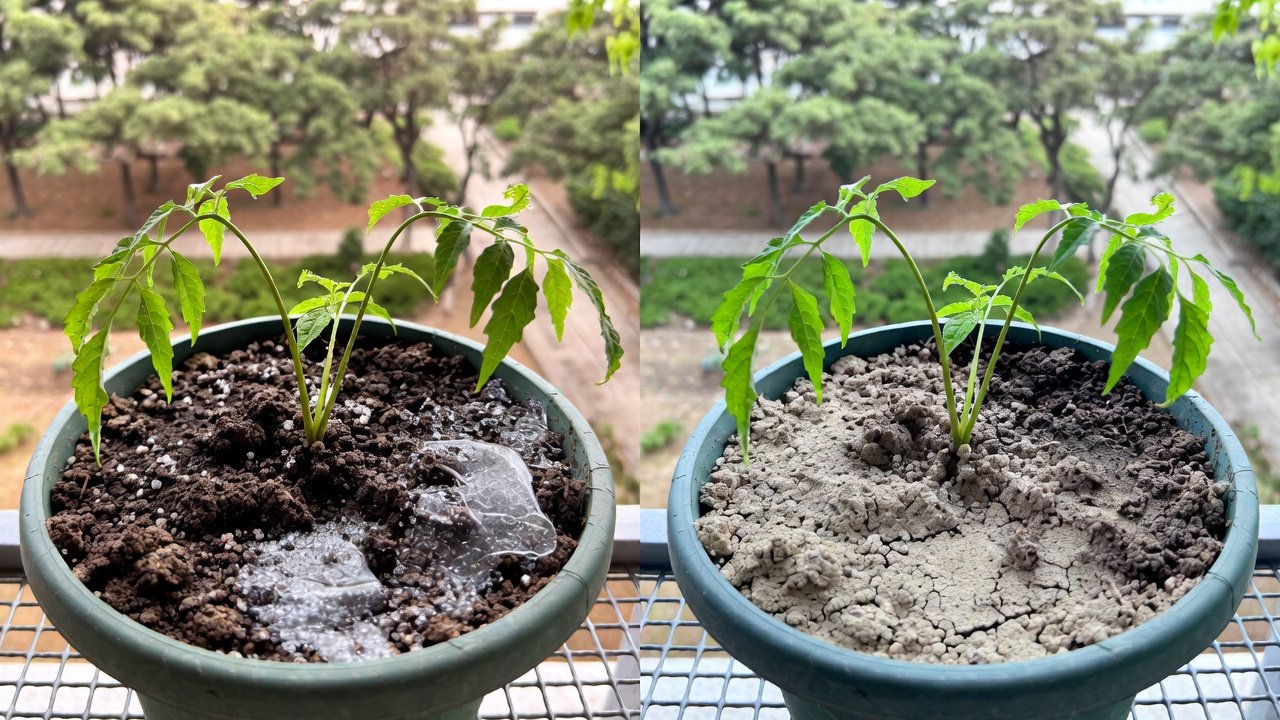
Hydrogels are small, absorbent polymers that act like tiny reservoirs inside your potting mix. They soak up water when you irrigate and release it gradually as the surrounding soil dries. Instead of water draining straight through the container or evaporating quickly, a portion is stored in gel form and made available to plant roots over time.
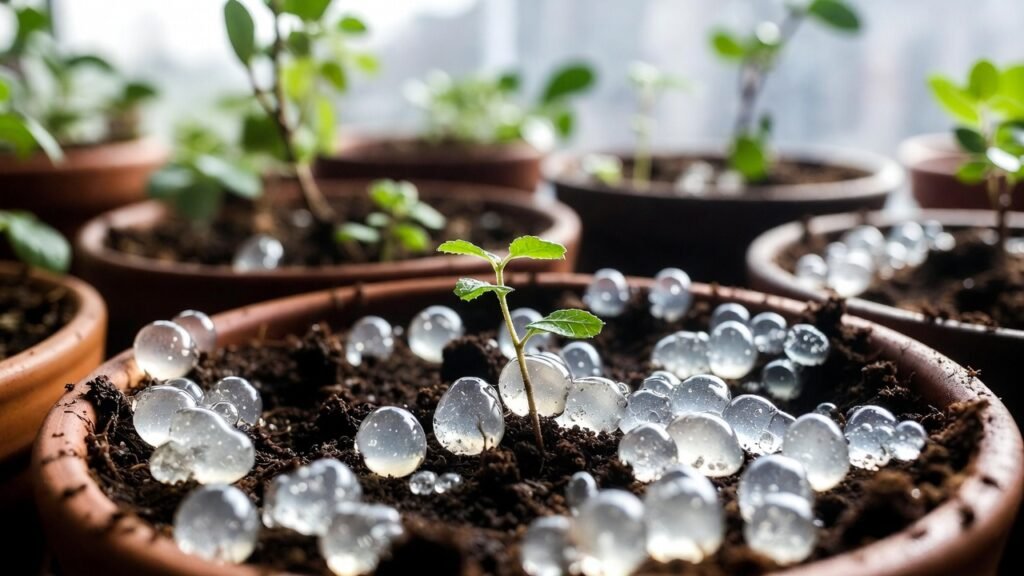
In container gardening, soil volume is limited. Unlike garden beds, there’s no deep subsoil to draw from. Once moisture is gone, roots face immediate stress. Hydrogels help smooth out these extreme wet-dry cycles by moderating moisture availability. This is particularly useful on balconies exposed to direct sunlight or strong afternoon winds.
What Actually Happens in the Soil
When dry hydrogel crystals are mixed into potting soil and watered, they swell dramatically—sometimes expanding several times their original size. This expansion creates pockets of stored moisture distributed throughout the root zone. As the plant absorbs water and the surrounding soil dries, the gel contracts and releases moisture back into the mix.
From a practical standpoint, this means:
- Less frequent watering during hot weeks
- Reduced plant wilting between watering sessions
- More stable moisture for seedlings and herbs
- Improved survival during short trips away
However, hydrogels are not a substitute for proper watering. They support consistency; they do not eliminate the need for attention.
When Hydrogels Make the Most Sense
Hydrogels are especially useful in:
- Lightweight balcony pots that drain quickly
- Hanging baskets exposed to airflow
- Vegetable containers like tomatoes and peppers
- Homes where work schedules vary daily
They are less necessary in large, shaded containers that already retain moisture well. In humid rainy seasons, they may not provide noticeable benefit. The goal is balance, not overengineering.
Step-by-Step: Using Hydrogels Safely in Pots
Using hydrogels properly is essential. Overuse can cause waterlogging or root instability. Underuse provides minimal benefit. The key is moderation and correct mixing.
Step 1: Measure the Correct Amount
Before mixing, check the product label. Most hydrogel products require only a small quantity per liter of soil. A common mistake is adding too much, assuming more equals better water retention. In reality, excessive gel can displace soil and reduce aeration.
As a general approach for balcony garden water retention:
- Use the manufacturer’s recommended ratio
- Never exceed suggested measurements
- Start small if experimenting
Step 2: Mix Thoroughly Into Dry Soil
Hydrogels should be mixed into dry potting mix before adding water. Sprinkle the measured crystals evenly and blend thoroughly to distribute them across the entire root zone.
Avoid layering hydrogels at the bottom of the pot. This creates uneven moisture pockets and can interfere with drainage.
Step 3: Plant as Usual
After mixing, fill your container and transplant your seedling or sow seeds as normal. Ensure the plant is positioned at proper depth and soil is gently firmed around roots.
Step 4: Water Deeply Once
The first watering is critical. Apply water slowly and thoroughly so the hydrogels can fully expand. You may notice the soil level rising slightly as the crystals swell. If needed, add a bit more soil on top to maintain proper coverage.
Step 5: Adjust Your Watering Schedule
After installation, observe your soil moisture over the next week. Most gardeners find they can slightly extend the time between watering sessions.
For example:
- Instead of daily watering, you may water every 1.5 to 2 days in hot weather
- During moderate weather, you may skip an extra day
However, always check soil moisture manually. Insert a finger 2–3 cm into the soil. If it feels dry at that depth, it’s time to water.
Hydrogel planter tips work best when combined with mindful observation, not guesswork.
Combining Hydrogels with Mulches for Maximum Effect
Hydrogels store water inside the soil. Mulch protects water from escaping the surface. When combined, they form a powerful system for low-maintenance container garden care.
Mulch reduces evaporation by shielding soil from direct sun and wind. It also moderates temperature swings that stress roots.
Step-by-Step: Adding Mulch to Hydrogel Pots
- After planting and initial watering, allow soil to settle.
- Add a 2–3 cm layer of organic mulch on top.
- Keep mulch slightly away from the plant stem to prevent rot.
Good mulch options for balconies include:
- Coconut coir chips
- Shredded bark
- Straw (for vegetable pots)
- Decorative wood chips
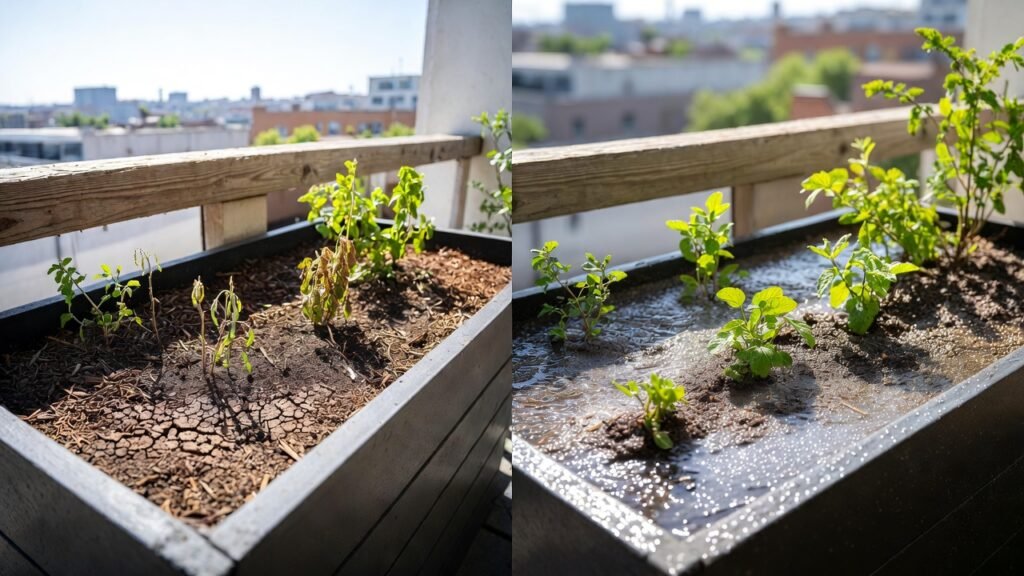
This simple layer can noticeably extend moisture retention. In urban settings where midday sun hits hard, mulch is often the difference between stable plants and daily wilt cycles.
Other Water-Retention Tricks: Clay Balls, Mulches, Self-Watering Tips
Hydrogels are helpful, but they’re just one tool. A truly low-maintenance container garden relies on layered strategies. Over the years, combining simple physical methods has proven more reliable than relying on one solution alone.
If you’re comparing ready-made options versus DIY builds, our guide on Self-Watering Balcony Planters: DIY & Ready-Made Options for Busy Urban Gardeners breaks down what actually works in real apartment settings.
Clay Balls (Expanded Clay Pebbles)
Clay balls, often used in hydroponics, improve drainage while also holding small amounts of moisture on their porous surfaces. When mixed lightly into potting soil, they create air pockets that improve root health.
While they don’t store as much water as hydrogels, they:
- Reduce compaction
- Improve root oxygen access
- Support balanced moisture
In very humid climates, clay balls can be more appropriate than hydrogels, as they promote drainage without increasing water retention too aggressively.
Double-Potting Method
This simple technique works well for busy professionals:
- Place your planted nursery pot inside a slightly larger decorative pot.
- Add a small water reservoir at the bottom of the outer pot.
- Elevate the inner pot slightly using pebbles.
This creates a mini humidity chamber and slows evaporation, especially during heatwaves.
Self-Watering Inserts
Self-watering planters include a bottom reservoir and wick system. Water moves upward gradually as soil dries. For remote workers who sometimes get absorbed in long project sprints, these systems provide a safety net.
However, they require occasional cleaning and monitoring to prevent stagnant water buildup.
Soil Quality Matters Most
Water retention begins with good soil structure. Cheap garden soil often compacts and drains poorly. A balanced potting mix should include:
- Organic compost
- Coconut coir or peat alternative
- Perlite or coarse sand
- Optional hydrogels (used sparingly)
When soil is healthy, roots are stronger, and water retention becomes easier to manage naturally.
Balcony gardening in modern urban life is about intelligent layering, not constant effort. Hydrogels, mulch, clay balls, and thoughtful watering schedules work best when integrated into a realistic routine that fits work calls, travel, and digital life patterns.
Monitoring Soil Moisture for Optimal Plant Health
Once hydrogels and other balcony garden water retention methods are in place, the real skill lies in observation. Even the best soil blend cannot replace consistent monitoring. In modern work-from-home life, routines shift quickly. Meetings run long.
Power or internet disruptions change daily schedules. That’s why a simple moisture-check habit matters more than rigid watering timetables.
Instead of watering by calendar, monitor by condition.
If you want to reduce waste while maintaining consistency, our full breakdown of Water-Saving Tips for Balcony Gardeners (Drip Irrigation, Mulching & More) explores practical systems that fit modern urban schedules.
Practical Ways to Check Soil Moisture
Before reaching for a watering can, use these reliable checks:
- Insert a finger 2–3 cm into the soil. If it feels dry at that depth, it’s time to water.
- Lift the pot. Over time, you’ll learn the weight difference between moist and dry soil.
- Use an inexpensive moisture meter for larger containers.
Hydrogels extend moisture availability, but they don’t eliminate the need for airflow. If soil stays constantly wet, roots may suffocate. Healthy roots need both moisture and oxygen.
For a low-maintenance container garden, aim for this rhythm:
- Water deeply.
- Allow partial drying.
- Avoid constant saturation.
This balanced approach prevents root rot while supporting steady growth.
Watching Plant Signals
Plants also communicate through subtle signs:
- Slight afternoon droop that recovers by evening is normal in heat.
- Persistent wilting even after watering may signal root damage.
- Yellowing lower leaves may indicate overwatering.
In busy urban routines, it helps to build a five-minute “balcony check” habit into the morning or evening. That brief pause not only protects plant health but also supports mental reset after screen-heavy workdays.
When Hydrogels Aren’t Suitable and Alternatives to Use
Hydrogels are helpful, but they are not universal solutions. Certain plants and climates require different strategies.
For those exploring soil-free growing altogether, our guide to Hydroponics Balcony Garden: Small-Scale Systems That Actually Work explains how compact hydroponic setups manage water differently and can thrive in small apartments.
Situations Where Hydrogels May Not Be Ideal
Hydrogels may be unsuitable when:
- Growing succulents or cacti that prefer very dry conditions.
- Living in regions with long rainy seasons and high humidity.
- Using heavy clay-based potting mixes that already retain moisture excessively.
- Managing plants highly sensitive to overwatering.
In these cases, additional water retention can do more harm than good.
Better Alternatives in Specific Scenarios
When hydrogels are not appropriate, consider these alternatives:
Improve Soil Structure
A well-balanced mix often solves moisture issues without additives. Combine compost, coconut coir, and perlite to create a medium that holds water but drains efficiently.
Use Mulch Strategically
Mulch works almost universally. Even in humid climates, a light layer reduces surface evaporation without altering internal moisture too drastically.
Shade Management
Sometimes water loss is more about heat exposure than soil composition. Simple shade cloth during peak afternoon sun can dramatically reduce evaporation.
Grouping Plants
Placing pots closer together creates a microclimate. The collective humidity between containers slows drying. This technique costs nothing and works surprisingly well on exposed balconies.
For many urban gardeners, especially those managing a low-maintenance container garden, combining moderate shading, mulch, and thoughtful watering provides enough stability without hydrogels.
Cost-Effective Options for Urban Gardeners
Balcony gardening should reduce stress, not create financial pressure. Fortunately, strong balcony garden water retention strategies don’t require expensive systems.
If allowed in your building, collecting small amounts of rainwater reduces dependence on treated tap water and improves plant resilience.
For a practical guide on setting up simple systems in tight urban spaces, explore our detailed guide to Balcony Rainwater Harvesting: Smart Tips for Small Apartments and Container Gardens, which walks through safe storage, filtration basics, and apartment-friendly collection methods.
Budget-Friendly Hydrogel Use
Hydrogels are generally affordable when used correctly because only small quantities are needed. To save money:
- Buy small packets first to test results.
- Use only in high-exposure containers rather than every pot.
- Combine with mulch to reduce total gel quantity required.
This targeted use prevents waste and lowers overall cost.
DIY Mulch Options
Instead of buying decorative mulch, consider:
- Shredded dry leaves.
- Coconut husk fiber.
- Straw from local markets.
- Clean cardboard pieces layered thinly under decorative stones.
These materials reduce evaporation and often cost little to nothing.
Reusing Household Containers
Double-potting doesn’t require specialty planters. A simple nursery pot placed inside a reused bucket or decorative container can create similar moisture buffering.
Rainwater Collection
If allowed in your building, collecting small amounts of rainwater reduces dependence on treated tap water and improves plant resilience. Even a covered bucket during rainy days can support several watering cycles.
Urban gardening works best when creativity replaces expensive tools. Many seasoned balcony growers find that simple adjustments outperform costly gadgets.
Fine-Tuning Watering Schedules in a Busy Routine
One of the most realistic hydrogel planter tips is aligning watering with daily digital habits.
For example:
- Water during early morning before logging into work.
- Or water in the evening after closing the laptop.
Avoid midday watering under intense sun, as much of the water may evaporate before penetrating deeply.
Hydrogels allow slightly extended intervals between watering sessions. However, during heatwaves, even hydrogel-supported pots may need more frequent attention.
During travel:
- Water deeply before leaving.
- Group plants together in partial shade.
- Add extra mulch layer temporarily.
- Use self-watering inserts for sensitive plants.
This layered system supports plant survival during short absences without requiring complex automation.
Conclusion
Balcony gardening in modern urban life is less about perfection and more about resilience. Hydrogels offer a practical tool for stabilizing moisture in containers exposed to heat, wind, and irregular schedules. When used correctly, they support healthier roots, reduce daily watering pressure, and create a more forgiving growing environment.
However, long-term success comes from combining strategies. Mulch, soil structure, shade management, grouping plants, and mindful observation all work together to strengthen balcony garden water retention. Hydrogels are most effective as part of a broader system rather than a standalone fix.
For busy professionals and remote workers, the goal is sustainable rhythm. A low-maintenance container garden should fit naturally into daily routines, not compete with them. With thoughtful layering and consistent monitoring, even the smallest balcony can remain green, productive, and calming through intense workweeks and seasonal heat.
FAQ Section
1. Do hydrogels replace regular watering completely?
No. Hydrogels extend the time between watering sessions but do not eliminate the need for irrigation. Plants still require periodic deep watering to maintain nutrient flow and root health. Hydrogels act as a moisture buffer, not a permanent water source.
2. Are hydrogels safe for edible plants?
Most commercially available hydrogels are labeled safe for ornamental and edible plants, but always check product specifications. When used in recommended amounts, they are generally considered safe. Avoid overuse and ensure proper drainage to protect root health.
3. How long do hydrogels last in soil?
Hydrogels typically remain functional for one to three years, depending on product quality and environmental conditions. Over time, their water-absorbing capacity may decrease. When repotting plants annually, fresh application can maintain effectiveness.
4. Can hydrogels cause root rot?
Hydrogels alone do not cause root rot, but overuse combined with poor drainage can create overly wet conditions. Proper measurement, well-draining soil, and mindful watering reduce this risk significantly.
5. Are hydrogels suitable for succulents?
Generally, no. Succulents and cacti prefer well-draining, fast-drying soil. Additional water retention may increase the risk of overwatering. Instead, use gritty mixes with sand or perlite for these plants.
6. What is the cheapest way to improve balcony garden water retention?
Adding mulch and improving soil structure are usually the most cost-effective methods. Grouping plants and providing partial shade also reduce evaporation without requiring additional purchases.
Helpful Resources (with Hyperlinks)
- University of Illinois Extension – Container Garden Watering Tips – Offers research-based guidance on container soil water balance, drainage, and how to reduce watering frequency with soil and mulch practices.
🔗 https://extension.illinois.edu/blogs/flowers-fruits-and-frass/2020-06-22-6-tips-watering-container-gardens - U.S. Department of Agriculture (USDA) – Container Gardening Guidance – Covers container gardening essentials with emphasis on soil, moisture needs, and how rapidly containers dry compared with ground-grown plants.
🔗 https://www.usda.gov/about-usda/general-information/initiatives-and-highlighted-programs/peoples-garden/gardening-advice/container-gardening - Maryland Cooperative Extension – Retaining Moisture in Container Gardening – FAQ on using mulch and soil strategies to conserve water in pots, including expert recommendations for organic mulch choices.
🔗 https://ask.extension.org/kb/faq.php?id=857609