
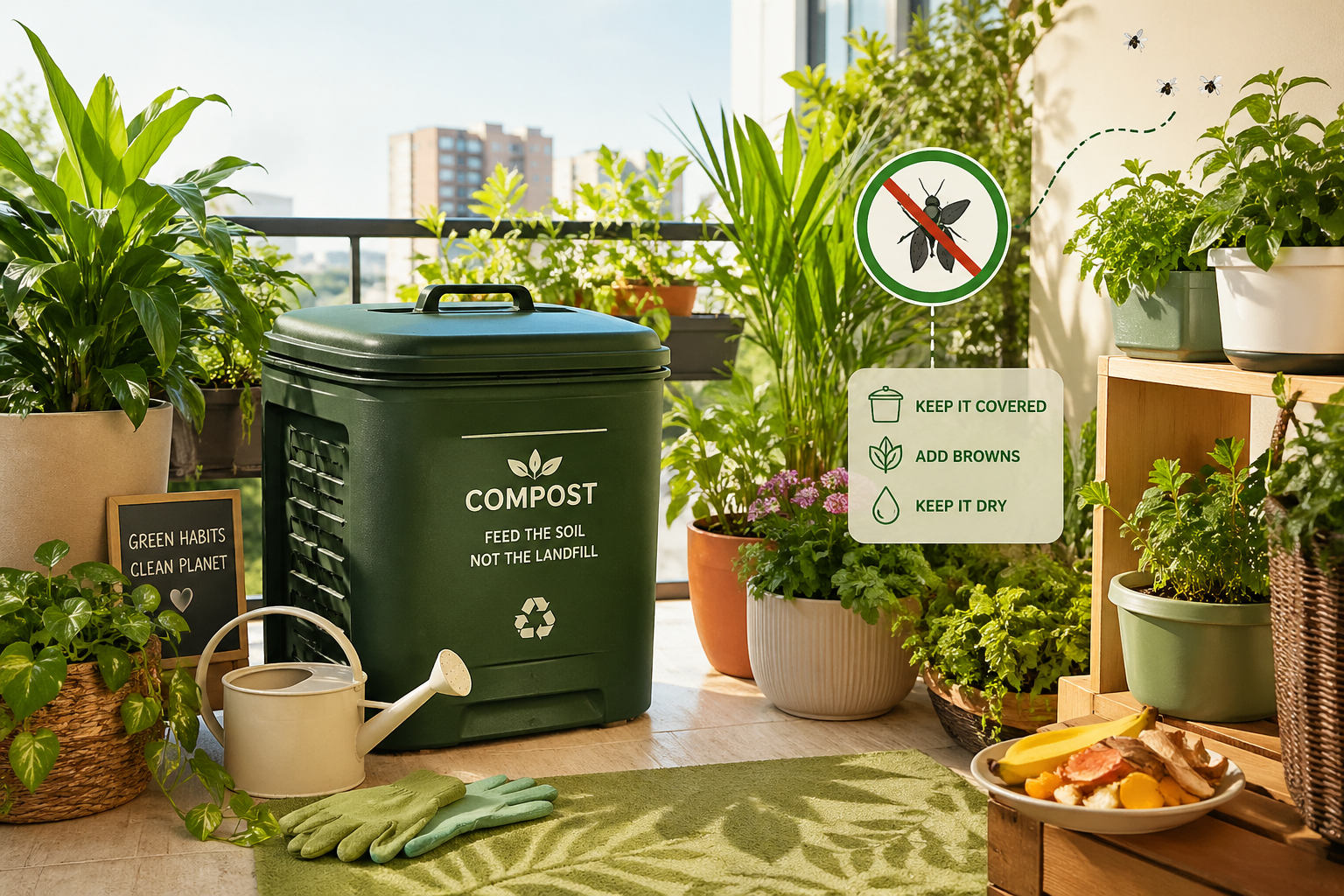
Fruit flies are one of the fastest ways to get frustrated with balcony composting. I’ve been there—open the bin, and suddenly a cloud of tiny flies appears. It’s annoying, but more importantly, it’s a sign that something in your compost system is off balance. How to keep fruit flies away from balcony compost bins is a common concern for urban gardeners looking to maintain a clean, odor-free, and pest-free outdoor space.
The good news? Fruit flies are easy to prevent and even easier to control once you understand what attracts them.
In this guide, I’ll show you practical, proven ways to keep fruit flies away from your balcony compost—based on real experience and small-space composting that actually works.
If you’re new to composting, start here: Balcony Composting 101: Turn Scraps into Black Gold in Small Spaces.
Table of Contents
Why Fruit Flies Are Attracted to Compost
Fruit flies are naturally drawn to decomposing organic matter—especially exposed fruit and vegetable scraps. Your compost bin is basically a buffet if it’s not properly managed.
The main causes include:
- Exposed food scraps
- Excess moisture
- Poor airflow
- Overripe or sugary waste
I noticed fruit flies early in my composting journey when I left scraps uncovered. Once I fixed that one habit, the problem reduced almost immediately.
How to Keep Fruit Flies Away from Balcony Compost Bins
Here are proven ways on how to keep fruit flies away from balcony compost bins. For a deeper look at preventing pests in outdoor spaces, check out this detailed guide on balcony pest control.
1. Always Cover Food Scraps Immediately
This is the simplest and most effective solution. Fruit flies are attracted to exposed waste, so covering your scraps removes their access point.
After adding food scraps, always cover them with a layer of “browns” like shredded paper or cardboard. This creates a barrier that keeps flies out.
This one habit alone can prevent most infestations.
2. Keep Your Compost Balanced (Greens vs Browns)
An unbalanced compost—especially one with too many wet food scraps—creates the perfect environment for fruit flies.
Too many “greens” make your compost moist and attractive to pests.
What to do instead:
Maintain a balance by adding dry materials regularly. If you’re unsure what belongs in your compost, check:
👉 What Can You Compost on a Balcony
Balanced compost is less attractive to flies and breaks down more efficiently.
3. Use a Lid or Sealed System
A proper compost bin should have a secure lid. If fruit flies can easily get in, they will.
If you’re using a worm bin or traditional compost container, make sure it closes tightly. If fruit flies are a persistent issue, consider switching to a sealed system like Bokashi.
From my experience, Bokashi bins almost completely eliminate fruit fly problems because they’re airtight.
4. Freeze Scraps Before Adding Them
This is a simple trick that works surprisingly well. Freezing food scraps kills fruit fly eggs and larvae before they ever reach your compost.
I started doing this during peak fruit fly season, and it made a noticeable difference.
Just keep a small container in your freezer and add scraps to your compost bin every couple of days.
5. Keep Moisture Under Control
Fruit flies thrive in damp environments. If your compost is too wet, it becomes a perfect breeding ground.
The ideal compost texture is like a wrung-out sponge—not dripping wet.
If your compost feels soggy:
- Add more dry materials
- Mix gently to improve airflow
If moisture is causing odor too, this guide will help:
👉 Why Your Balcony Compost Smells (And How to Fix It Fast)
6. Bury Scraps Deep in the Bin
Instead of leaving scraps on top, bury them under existing compost or bedding material. This keeps them out of reach of fruit flies and reduces odor at the same time.
In my worm bin, I always dig a small pocket, add scraps, then cover it completely. It’s a simple habit that works every time.
7. Clean the Bin and Surrounding Area
Sometimes fruit flies aren’t just in the compost—they’re around it. Spilled scraps, residue, or even nearby trash can attract them.
Make it a habit to:
- Wipe down your bin regularly
- Clean up any spills immediately
- Keep the surrounding area tidy
A clean setup makes a big difference.
8. Use Natural Fruit Fly Traps (If Needed)
If fruit flies are already present, traps can help reduce their numbers quickly.
A simple DIY trap:
- Add apple cider vinegar to a small container
- Cover with plastic wrap
- Poke small holes
The flies are attracted to the smell and get trapped inside.
I’ve used this method alongside proper compost management, and it clears infestations fast.
My Personal Experience with Fruit Flies
At one point, fruit flies nearly made me quit composting. But once I understood the cause—exposed scraps and excess moisture—the solution became simple.
Now, I rarely deal with them at all. My routine is straightforward: cover scraps, keep balance, and maintain cleanliness.
The result? A compost system that runs smoothly without pests.
Final Thoughts
Fruit flies are not a sign that composting doesn’t work—they’re a sign that something needs adjusting.
By covering scraps, balancing materials, and keeping your bin clean, you can prevent fruit flies entirely or eliminate them quickly if they appear.
Stick to these habits, and your balcony compost will stay clean, efficient, and pest-free.
Frequently Asked Questions (FAQs)
1. Are fruit flies harmful to compost?
No, but they’re a nuisance and indicate imbalance in your system.
2. Can I completely prevent fruit flies?
Yes, with proper management and good composting habits.
3. Do all compost bins attract fruit flies?
No, sealed systems like Bokashi rarely attract them.
4. What is the fastest way to get rid of fruit flies?
Use traps and fix the underlying compost issue at the same time.
5. Should I stop composting if I see fruit flies?
No, just adjust your system to eliminate the cause.
6. Does freezing scraps really help?
Yes, it kills eggs and reduces the chance of infestation.
7. How often should I check my compost for pests?
Once or twice a week is enough to catch and fix issues early.
Further Readings
- Managing Fruit Flies in Your Kitchen Compost Bin
This guide explains practical ways to prevent and control fruit flies, including using vinegar traps and maintaining clean kitchen disposal systems to reduce breeding areas. - Fruit Fly & Compost Management Tip Sheet
This tip sheet outlines prevention and control strategies such as daily emptying of compost bins, covering scraps with materials like wood shavings, and using simple non-toxic traps to manage infestations.