
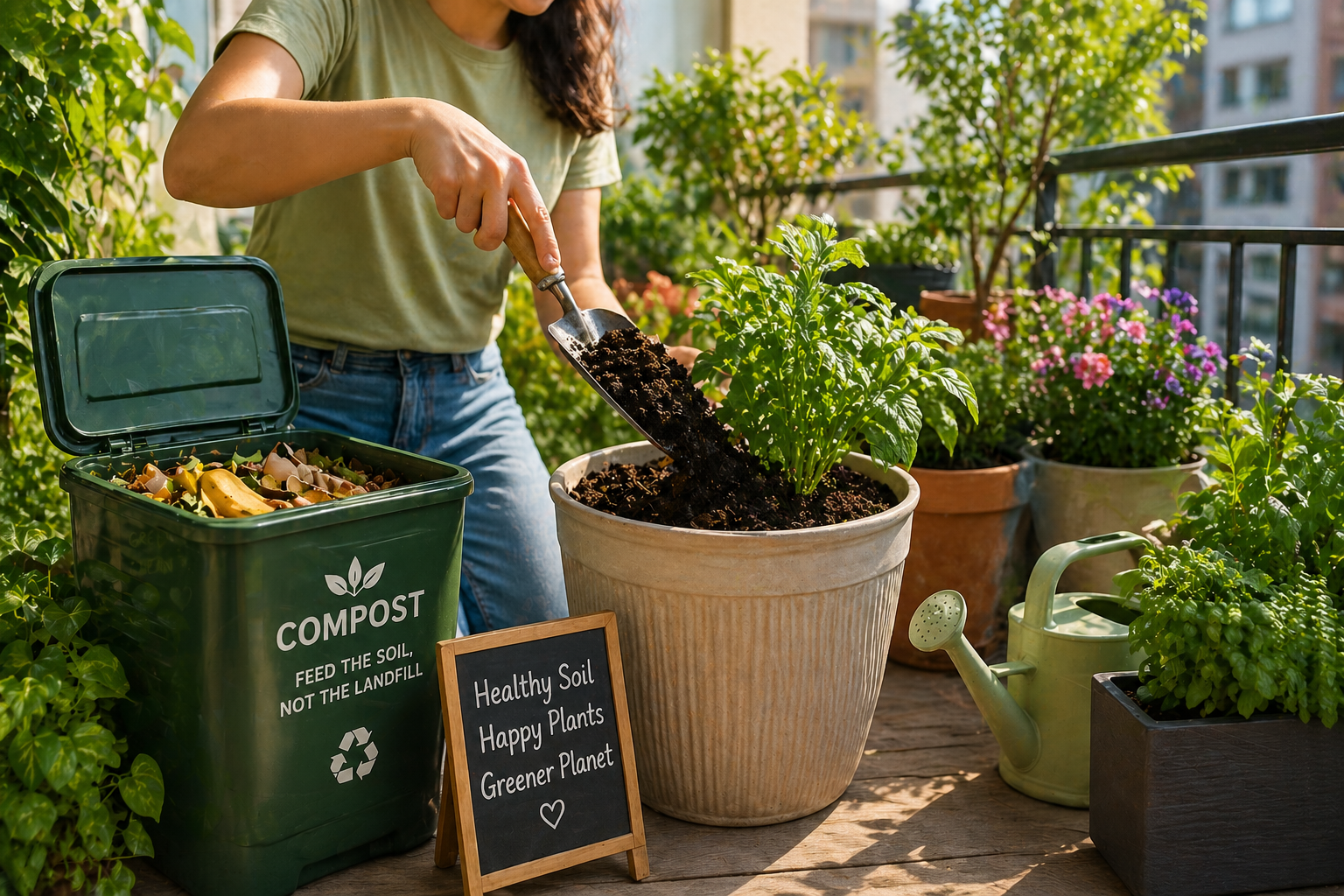
How to Use Compost for Balcony Plants: A Simple Guide to Healthier Growth
Making compost is only half the journey—the real magic happens when you start using it on your plants. I still remember the first time I mixed homemade compost into my balcony pots. Within weeks, the difference was obvious: greener leaves, stronger stems, and faster growth.
If you’ve been composting but aren’t sure how to use it properly, this guide will walk you through simple, effective ways to boost your balcony plants naturally—without guesswork.
If you’re new to composting, start here:
👉 Balcony Composting 101: Turn Scraps into Black Gold in Small Spaces
Table of Contents
Why Compost Is So Powerful for Balcony Plants
Compost is often called “black gold,” and for good reason. It improves soil structure, adds essential nutrients, and supports beneficial microbes that help plants thrive.
In small containers, soil quality matters even more than in the ground. Over time, nutrients get depleted, and plants struggle. Compost helps restore that balance naturally.
From my experience, once you start using compost regularly, you’ll rely less on chemical fertilizers—and your plants will still perform better.
Types of Compost You Can Use
Not all compost looks the same, but most types work well for balcony plants when used correctly.
Worm compost (castings) is rich and gentle, making it perfect for direct use. Traditional compost is more balanced and works well when mixed with soil. Bokashi compost, on the other hand, needs to be integrated into soil before planting.
If you’re unsure what type you’re working with, check your composting method or revisit your setup:
👉What Can You Compost on a Balcony?
How to Mix Compost with Potting Soil
The most effective way to use compost in containers is by mixing it with potting soil. Using compost alone can make soil too dense, so balance is important.
A simple ratio that works well is:
- 1 part compost
- 3 parts potting soil
This mix improves drainage, boosts nutrients, and creates a healthier growing environment.
When I started using this ratio, my plants became noticeably more vigorous and resilient.
Using Compost as a Top Dressing
If your plants are already growing, you can still feed them with compost by applying it as a top dressing.
Simply sprinkle a thin layer of compost on top of the soil and gently mix it into the surface. Water afterward to help nutrients soak in.
This method is quick, easy, and perfect for maintaining plant health throughout the growing season.
Making and Using Compost Tea
Compost tea is a liquid fertilizer made by soaking compost in water. It’s one of the fastest ways to deliver nutrients directly to your plants.
To make it, mix a small amount of compost with water, let it sit for a day or two, then strain and use the liquid to water your plants.
I like using compost tea for leafy greens and herbs—it gives them a noticeable boost without overwhelming the soil.
When to Apply Compost
Timing matters when it comes to using compost. The best times to apply it are:
- When planting new containers
- During active growing periods
- After harvesting to restore nutrients
Avoid over-applying, especially in small pots. Too much compost can make soil too rich and affect plant balance.
From experience, regular light feeding works better than heavy, occasional applications.
Which Plants Benefit Most from Compost
Almost all balcony plants benefit from compost, but some respond especially well.
Herbs like basil and mint grow fuller and more flavorful. Vegetables like tomatoes and peppers produce better yields. Even ornamental plants develop stronger foliage and more vibrant blooms.
In my balcony garden, compost has improved everything—from leafy greens to flowering plants.
Common Mistakes When Using Compost
One mistake beginners make is using compost that isn’t fully ready. Unfinished compost can harm plants instead of helping them.
Another mistake is using too much compost at once. More isn’t always better—balance is key.
Finally, ignoring plant response can lead to overfeeding. Pay attention to how your plants react and adjust accordingly.
My Personal Experience Using Compost
Before I started composting, I relied heavily on store-bought fertilizers. They worked—but not consistently. Once I switched to using my own compost, everything changed.
My plants became healthier, required less maintenance, and felt more resilient overall. It also gave me a deeper connection to the process—knowing that kitchen scraps were directly feeding my plants.
That’s when composting truly became worth it for me.
Final Thoughts
Using compost for balcony plants is one of the simplest ways to improve growth naturally. It enriches your soil, supports plant health, and reduces your dependence on synthetic fertilizers.
Start with small amounts, observe your plants, and build a routine that works for your space. Once you see the results, it’s hard to go back.
Frequently Asked Questions (FAQs)
1. Can I use compost directly in pots?
Yes, but it’s best mixed with potting soil to maintain proper structure and drainage.
2. How often should I add compost to plants?
Every few weeks during the growing season is usually enough.
3. Can compost replace fertilizer?
Yes, compost provides natural nutrients and can reduce or replace chemical fertilizers.
4. What is compost tea?
It’s a liquid fertilizer made by soaking compost in water.
5. Can I overuse compost?
Yes, too much compost can make soil too dense or nutrient-heavy.
6. Is all compost safe for plants?
Only fully decomposed compost should be used directly with plants.
7. Which plants benefit most from compost?
Most plants benefit, especially herbs, vegetables, and flowering plants.
Further Readings
- How to Compost Effectively (DETSI Queensland)
This guide explains how composting works at home, including what materials to use, how to layer green and brown waste, and how to maintain the right balance of air, moisture, and temperature for fast, effective decomposition. - How to Use Compost in Gardens and Landscapes (Oregon State University Extension)
This resource describes how finished compost can be applied in gardens and landscapes to improve soil health, boost plant growth, retain moisture, and support sustainable gardening practices.