
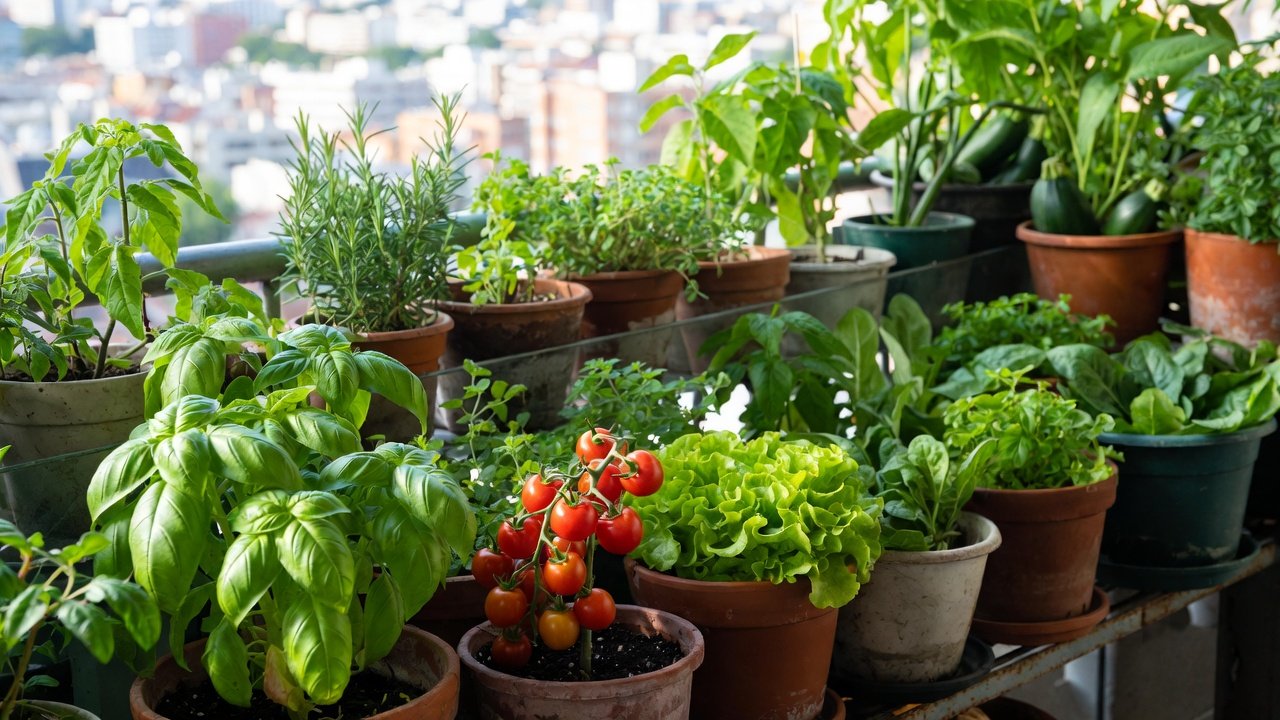
Balcony gardening has a way of sharpening our awareness. In a small space, every leaf competes for light, every inch of soil matters, and watering patterns become part of the daily rhythm—often between video calls or during a quick morning break. When space is limited, random planting rarely delivers consistent results. That’s where balcony companion planting becomes practical rather than decorative.
Container companion planting isn’t just an old gardening concept scaled down. In tiny pots, plant synergy can improve flavor intensity, stabilize moisture, reduce pest pressure, and even stretch harvest timelines. In modern urban gardening—where many of us manage containers alongside hybrid work schedules—pairing plants thoughtfully allows us to get more from fewer pots without adding complexity.
Table of Contents
What Companion Planting Is and Why It Works in Containers
Companion planting refers to growing certain plants together because they benefit one another. In open garden beds, this might mean pest deterrence, improved pollination, or soil enrichment. In containers, the benefits are often more concentrated because roots, moisture, and nutrients are shared in a tighter ecosystem.
In small-space gardening low-light or balcony environments, containers behave like microclimates. Soil dries faster near edges. Wind exposure varies across railing heights. Heat reflects off walls. Pairing plants strategically helps balance those variables. For example, a shallow-rooted herb can coexist with a deeper-rooted vegetable without competing aggressively for nutrients. Aromatic herbs may discourage pests that are more noticeable in confined urban balconies.
From a practical standpoint, companion planting also supports workflow efficiency. Instead of tending multiple scattered pots, we can manage one well-designed container garden plant pair that shares watering needs and sunlight preferences. That means fewer adjustments during busy workweeks and more predictable growth patterns.
Companion planting works in containers because:
- Root zones overlap but don’t always compete equally
- Leaf canopies create shade for moisture retention
- Aromatic foliage can deter common balcony pests
- Flowering companions attract beneficial insects, even in urban settings
In tight balcony setups, these small advantages compound over time.
Best Herb and Vegetable Pairings for Small Spaces
When working with tiny pots, compatibility matters more than tradition. We focus on plants that share similar water needs, growth rates, and light preferences. In modern urban balconies, we often see mixed sun patterns—strong midday light with morning or afternoon shade—so flexibility is key.
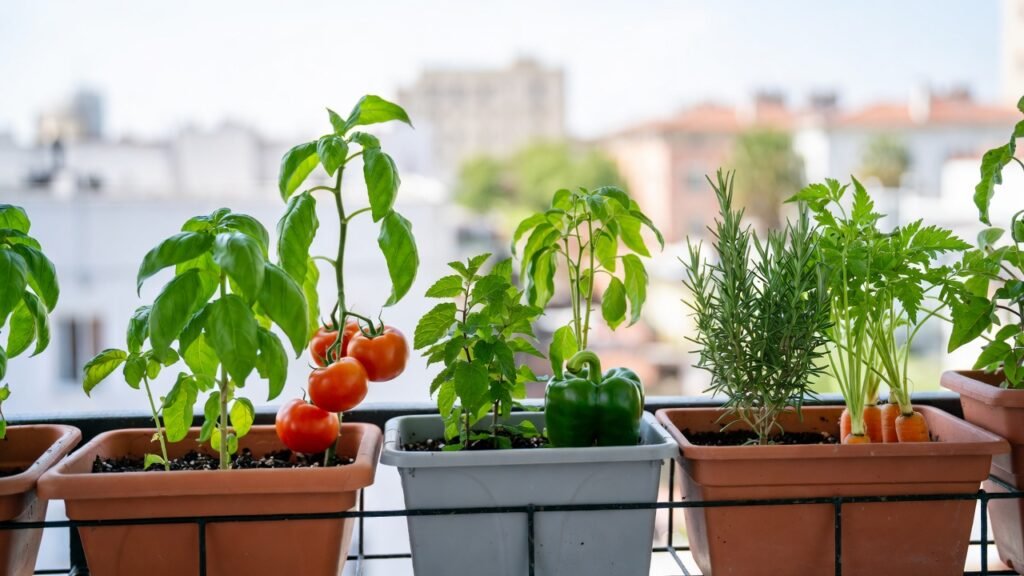
Basil and tomatoes remain one of the most reliable container garden plant pairs. Basil thrives in the same warm, sunny conditions as tomatoes and may help deter pests. More noticeably, harvesting both together enhances flavor synergy in the kitchen. In small balconies where cooking herbs are used frequently, this pairing feels efficient and intuitive.
Lettuce and radishes are another strong match. Radishes mature quickly and loosen soil as they grow, while lettuce benefits from partial shading created by nearby foliage. For remote workers who check plants daily, radishes offer quick wins within three to four weeks, maintaining motivation early in the season.
Carrots and chives work well in deeper containers. Carrots grow vertically, while chives occupy minimal surface space. The mild onion scent of chives may reduce pest visits, and both tolerate moderate watering schedules.
Peppers and oregano create a compact, aromatic duo. Oregano spreads lightly over soil surfaces, helping reduce evaporation in sunny balcony conditions. Peppers appreciate consistent moisture and airflow, which oregano doesn’t obstruct.
Strawberries and thyme are excellent for railing planters. Thyme acts as a living mulch, and strawberries benefit from improved air circulation when properly spaced. In windy balconies, this combination stabilizes soil and reduces splashing during watering.
These small-space plant synergy examples work because they share:
- Comparable sunlight requirements
- Similar watering rhythms
- Compatible root depths
- Complementary growth timelines
When selecting balcony companion planting pairs, we avoid combining heavy feeders with aggressive growers in undersized pots. Instead, we prioritize balance and predictability.
If you’re still deciding which crops are realistic for your climate and light conditions, Best Small Vegetables to Grow on Your Balcony (Year-Round Guide) helps narrow down reliable options before planning companion pairings.
Step-by-Step Guide to Pairing Plants in Pots
Successful container companion planting begins before seeds touch soil. Planning prevents overcrowding and nutrient stress later in the season.
Step 1: Choose the Right Container Size
Start with a container large enough to support both plants’ mature root systems. In general, deeper vegetables such as tomatoes or carrots need at least 25–30 centimeters of depth. Shallow-rooted herbs can share that space if positioned toward the edges. A cramped pot limits synergy and increases watering demands.
Step 2: Match Water and Light Needs
Before planting, group plants with similar environmental preferences. If one plant prefers consistently moist soil and another tolerates drying out, they will struggle together. On balconies where light shifts seasonally, consider how shadow lines move during the day. This prevents one plant from overshadowing another excessively.
Step 3: Plan Root Placement Strategically
When planting, position taller or deeper-rooted crops in the center or rear of the container. Place trailing herbs or shallow-rooted companions along the edges. This maximizes vertical and horizontal space without creating dense competition below the surface.
Step 4: Use Quality Soil and Layer Thoughtfully
Fill containers with high-quality potting mix designed for drainage and nutrient retention. Mixing in compost supports shared nutrient access. Avoid compacting soil too tightly; roots need oxygen in small pots more than in open beds.
Step 5: Schedule Succession Planting
Succession planting keeps small containers productive over longer periods. Fast-growing crops like radishes or lettuce can be replaced with herbs or warm-season vegetables once harvested. Planning these transitions early prevents empty soil patches and keeps balcony companion planting efficient throughout the season.
In real-world balcony routines—where mornings are often structured around work notifications and quick plant checks—succession planting benefits from calendar reminders. A simple monthly check-in to evaluate harvest timing can help maintain momentum without adding stress.
Step 6: Monitor and Adjust
Observe leaf color, growth speed, and spacing weekly. If one plant begins dominating light or nutrients, prune gently to restore balance. In tiny pots, small adjustments make noticeable differences.
Container companion planting is not about squeezing as many plants as possible into a pot. It’s about designing micro-ecosystems that feel stable and manageable within modern urban life. When pairings are intentional, flavor improves, harvest windows extend, and balcony gardens become more resilient without requiring constant intervention.
Managing Competition and Spacing in Small Pots
In balcony containers, plants don’t fail because they lack nutrients alone; they often struggle because they’re competing for airflow, root space, and consistent moisture. In remote work routines where watering sometimes happens between meetings, overcrowded pots dry unevenly and stress quickly. Managing spacing is less about aesthetics and more about creating predictable growth patterns.
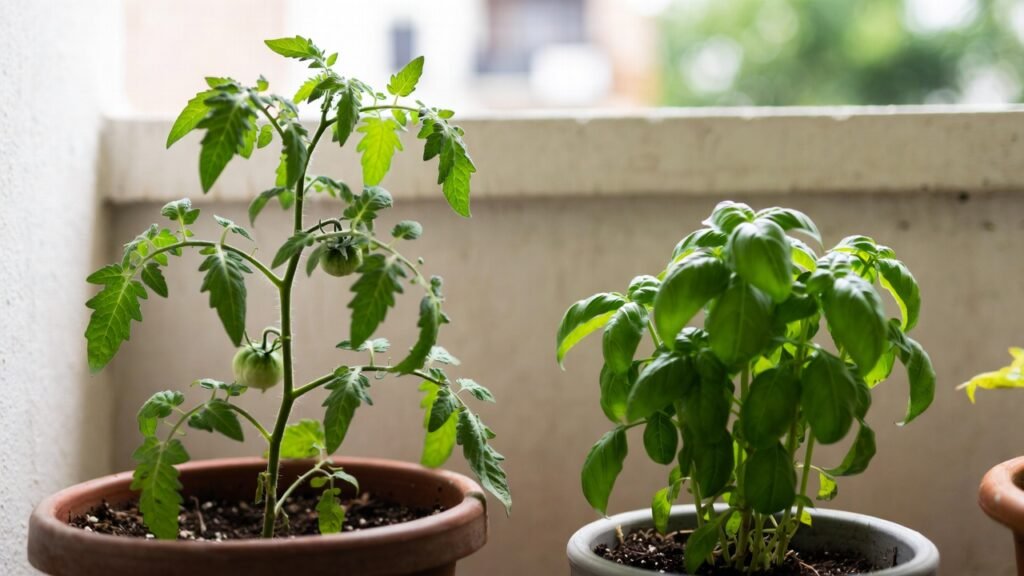
The first principle is vertical layering. Taller crops such as tomatoes or peppers anchor the center, while lower herbs fill edges without blocking airflow. This reduces leaf overlap, which can trap moisture and invite fungal issues. Even in small containers, leaving visible soil between stems improves circulation and simplifies watering accuracy.
Root competition can also be managed by pairing plants with different feeding intensities. Heavy feeders such as tomatoes benefit from compost-rich soil, while lighter feeders like thyme or chives coexist without aggressive nutrient demand. If growth begins to look uneven, gentle pruning often restores balance faster than adding fertilizer.
Another overlooked strategy is rotational pot placement. Rotating containers weekly ensures both plants receive balanced sunlight, especially on balconies where buildings cast shifting shadows throughout the day. These small adjustments support small-space plant synergy without requiring additional equipment.
Pest Management Using Companion Planting
Urban balconies may seem protected, but aphids, spider mites, and whiteflies can appear quickly, especially during warm spells. Companion planting acts as a subtle preventive system rather than a reactive solution.
Aromatic herbs such as basil, oregano, thyme, and chives release scents that may deter certain insects. While no pairing guarantees complete protection, scent diversity reduces the likelihood of one plant becoming a monoculture target. In small spaces, this diversity matters more than in large gardens.
Flowering companions such as marigolds or nasturtiums can also support pest balance. Even a single flowering plant in a container setup attracts pollinators and beneficial insects that help regulate pest populations. On higher balconies, pollinator visits may be less frequent, but they are not absent.
Regular observation remains essential. In modern routines, quick plant checks during morning coffee or evening wind-down help detect early pest signs. Companion planting reduces severity, but consistency in monitoring prevents escalation.
Natural pest management works best when:
- Containers are not overcrowded
- Airflow is maintained
- Watering avoids soaking leaves unnecessarily
- A diversity of plant types is maintained
Balcony companion planting becomes part of a broader integrated approach rather than a standalone defense.
If pests persist despite thoughtful pairings, Balcony Garden Pest Control and Problem Solving: Quick Fixes Beginners Need walks through practical, beginner-friendly solutions that work in tight balcony environments.
Seasonal Adjustments for Continuous Harvest
Balcony conditions shift significantly between spring, summer, and autumn. Containers heat faster than ground soil, and shade patterns change as the sun’s angle shifts. Adapting plant pairings seasonally extends harvest windows without expanding space.
In early spring, cool-season pairings like lettuce and radishes or carrots and chives thrive in moderate temperatures. These crops mature quickly and free up space for warm-season companions such as basil and tomatoes.
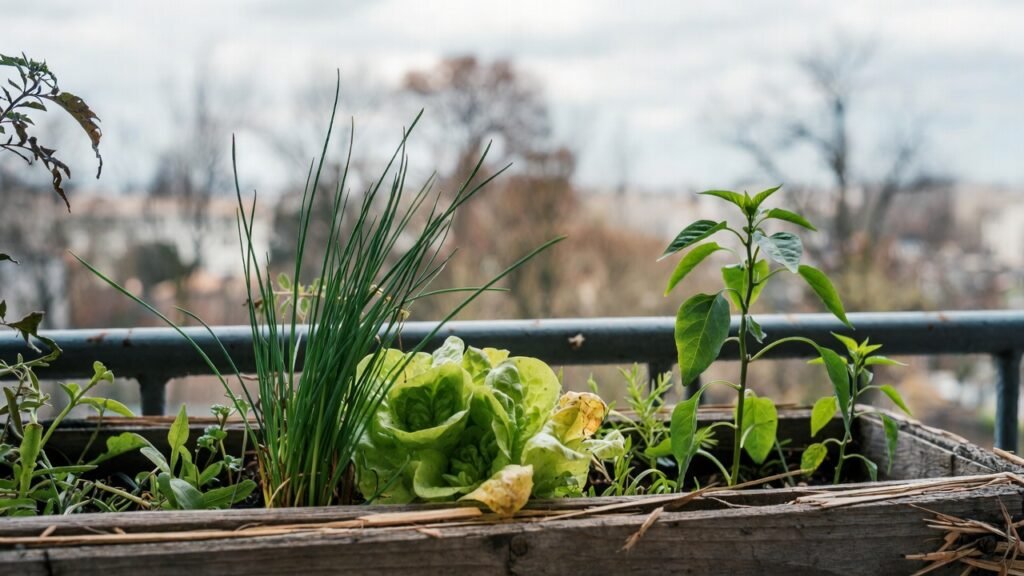
Summer requires attention to moisture retention. Pairing plants that provide natural ground cover—like oregano beneath peppers—reduces evaporation. During heat waves, light afternoon shading or relocating pots slightly inward can protect sensitive herbs.
In autumn, transitioning to hardy greens alongside slower-growing herbs allows continued harvest into cooler months. Succession planting works particularly well in containers because soil can be refreshed in small batches rather than managing large beds.
Digital calendars can support this rhythm. Setting monthly reminders to evaluate plant maturity helps maintain continuity without overwhelming busy schedules. Over time, this seasonal awareness becomes intuitive.
Container companion planting is not static. It evolves with temperature shifts, daylight changes, and harvest cycles. When treated as a living rotation system rather than a fixed layout, even tiny pots can remain productive across multiple seasons.
For a deeper breakdown of rotating crops efficiently in limited soil space, Year-Round Balcony Harvest: Succession Planting Made Simple expands on seasonal planning strategies tailored for compact balconies.
Conclusion
Container companion planting transforms small balconies into efficient, flavor-rich ecosystems. By pairing herbs and vegetables thoughtfully, managing spacing carefully, and adjusting combinations seasonally, we create balance in limited soil volumes.
In modern urban routines—where gardening often fits between remote work blocks and daily responsibilities—intentional plant synergy simplifies care. It reduces pest pressure, improves harvest consistency, and strengthens plant resilience. With planning and observation, even the smallest pots can produce steady yields and vibrant flavors throughout the growing season.
FAQ Section
1. Can companion planting really work in small balcony pots?
Yes, companion planting can be effective in containers when spacing and compatibility are carefully managed. The key is pairing plants with similar water and light needs while avoiding overcrowding. In small pots, synergy is more concentrated, so thoughtful design improves airflow, moisture balance, and nutrient sharing, leading to healthier growth and better flavor.
2. How many plants should go into one container?
The number depends on container size and plant maturity. A deep 30-centimeter pot may support one larger vegetable and one or two small herbs. Overcrowding reduces airflow and increases competition. It’s better to underplant slightly and allow room for roots and foliage to expand naturally over time.
3. Do companion plants eliminate pests completely?
Companion planting reduces pest pressure but does not eliminate pests entirely. Aromatic herbs and flowers help deter certain insects and support beneficial species. Regular monitoring and balanced watering remain essential. Think of companion planting as part of a preventive system rather than a guaranteed solution.
4. What vegetables pair best with herbs in containers?
Tomatoes with basil, peppers with oregano, carrots with chives, and strawberries with thyme are reliable combinations. These pairs share similar sunlight and watering needs while supporting balanced growth. Matching root depth and growth rate is just as important as traditional pairing recommendations.
5. How do we manage soil nutrients in shared containers?
Using high-quality potting mix enriched with compost provides a stable nutrient base. Light monthly feeding during peak growth supports heavy feeders. Observing leaf color and growth speed helps determine if adjustments are needed. Avoid excessive fertilizer, which can disrupt balance between paired plants.
6. Can companion planting extend the harvest season?
Yes, especially when combined with succession planting. Fast-growing crops can be replaced mid-season, allowing containers to remain productive. Seasonal transitions—from cool greens to warm-season herbs—maximize limited space and maintain steady harvests across spring, summer, and autumn.
Helpful Resources
- University of Minnesota Extension – Companion Planting in Gardens – Offers research-based explanations on how companion planting helps use space efficiently and can aid insect management in gardens. 🔗 https://extension.umn.edu/planting-and-growing-guides/companion-planting-home-gardens
- Companion Planting (West Virginia University Extension) – Practical guide on companion planting principles, including benefits such as space maximization and natural pest deterrence.
- National Agricultural Library – Vegetable Gardening – U.S. government resource with links to vegetable gardening, container gardening, and companion planting guidance. 🔗 https://www.nal.usda.gov/plant-production-gardening/vegetable-gardening