
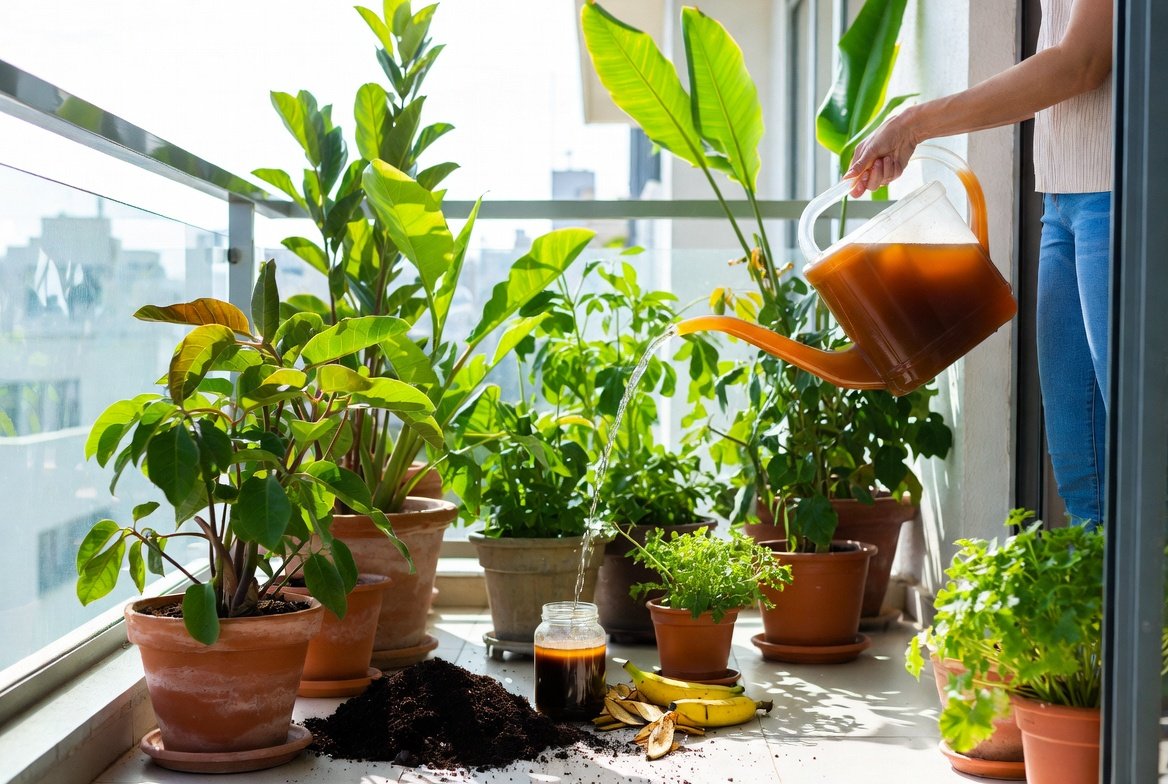
Growing plants on a balcony may seem simple, but keeping them healthy requires one key habit: consistent, natural feeding. Over the years, I’ve learned that container plants depend entirely on what you give them. Unlike garden soil, nutrients in pots get used up and washed away quickly, especially with frequent watering.
If you want lush leaves, strong stems, and productive harvests, switching to organic fertilizer for container plants is one of the smartest moves you can make. Let’s walk through practical, proven methods that work beautifully in small balcony spaces.
Table of Contents
Why Natural Plant Food Works Better for Balcony Gardens
When you rely on natural plant food for balcony gardens, you’re not just feeding your plants—you’re building a living soil system. In containers, this matters even more because the ecosystem is limited. Chemical fertilizers may give a quick boost, but they often lead to salt buildup, poor soil life, and weaker plants over time.
From my experience, once I stopped using synthetic fertilizers and switched to organic options, my plants became noticeably healthier. Leaves looked richer, pests reduced, and vegetables tasted better. Natural fertilizers release nutrients slowly, which matches how plants actually absorb them, making the growth more stable and sustainable.
How to Fertilize Balcony Plants Naturally
Compost Tea: A Powerful Organic Fertilizer for Container Plants
Compost tea is one of the easiest and most effective ways to feed balcony plants naturally. It’s essentially water infused with nutrients and beneficial microbes from compost, creating a liquid fertilizer that plants can absorb quickly.
When I first started using compost tea, I noticed results within days—especially in leafy vegetables like spinach and lettuce. The leaves became greener and more vibrant, and overall growth improved without any risk of burning the roots. What makes compost tea so effective is its balance; it provides essential nutrients like nitrogen, phosphorus, and potassium while also improving soil biology.
Applying it once a week, either by watering the soil or lightly spraying the leaves, keeps plants consistently nourished. It’s gentle, affordable, and perfect for small-space gardening.
Banana Peel Fertilizer for Stronger Flowering and Fruiting
Banana peels are one of the most underrated natural fertilizers, especially for balcony gardeners. Rich in potassium, they play a crucial role in helping plants produce flowers and fruits.
In my own garden, I often turn to banana peel fertilizer when my plants start flowering. Instead of throwing the peels away, I either soak them in water to create a mild liquid feed or bury small pieces into the soil. Over time, they break down and release nutrients gradually.
What I appreciate most about banana peels is how accessible they are. You don’t need to buy anything extra, yet they deliver noticeable improvements in plant health. Tomatoes, peppers, and flowering plants respond particularly well, producing stronger blooms and better yields.
Worm Castings: Building Healthy Soil in Small Pots
Worm castings are one of the richest forms of organic fertilizer for container plants, and they work exceptionally well in balcony setups. They are gentle, odorless, and packed with nutrients and beneficial microorganisms.
When I began adding worm castings to my potting mix, the biggest change I noticed was in the soil itself. It became softer, retained moisture better, and supported healthier root systems. This is especially important for balcony plants, which tend to dry out quickly.
You don’t need large amounts—just mixing a small portion into your soil or sprinkling it on top can make a big difference over time. For a steady and sustainable supply, many gardeners now explore simple home systems like Balcony Worm Farming, which allows you to recycle kitchen waste into high-quality fertilizer right from your home.
Fish Emulsion as a Fast-Acting Natural Plant Food
Fish emulsion is a powerful, fast-acting fertilizer that can quickly revive struggling plants. It’s especially rich in nitrogen, which supports leafy growth and helps correct nutrient deficiencies.
There have been times when my plants looked weak or pale, and fish emulsion brought them back to life within days. It works faster than most organic options because it is already broken down into a form plants can easily absorb.
That said, it’s best used occasionally rather than as a constant feed. The smell can be quite strong, so I usually apply it in the evening on my balcony. When used correctly and in diluted form, it’s an excellent way to give plants a quick nutritional boost without resorting to chemicals.
Best Approach to Fertilizing Potted Vegetables Naturally
Fertilizing potted vegetables requires a slightly different mindset compared to traditional gardening. Because nutrients don’t stay long in containers, consistency matters more than quantity.
In my routine, I focus on light, regular feeding instead of heavy applications. I also rotate between different natural fertilizers like compost tea, worm castings, and occasional banana peel or fish emulsion feeds. This ensures that plants receive a balanced mix of nutrients rather than relying on a single source.
Equally important is observing your plants. They often show clear signs of what they need. Yellowing leaves may indicate nitrogen deficiency, while poor flowering could point to a lack of potassium. Learning to read these signals helps you respond quickly and effectively.
Common Mistakes to Avoid When Using Natural Fertilizers
Even though natural fertilizers are safer than chemical ones, they still require proper use. One common mistake I’ve seen is overfeeding. Many gardeners assume organic means unlimited, but too much can still stress plants and disrupt soil balance.
Another issue is using materials that haven’t properly broken down. Fresh organic waste can attract pests or temporarily tie up nutrients in the soil. Patience is key—letting materials decompose or using prepared forms like compost tea prevents these problems.
Finally, good drainage should never be overlooked. No matter how well you fertilize, poor drainage can lead to root rot, which quickly destroys even the healthiest plants.
Conclusion
Fertilizing balcony plants naturally is not just about avoiding chemicals—it’s about creating a healthier, more sustainable growing system. By using simple methods like compost tea, banana peel fertilizer, worm castings, and fish emulsion, you give your plants everything they need to thrive in a limited space.
From my own gardening journey, I can confidently say that natural feeding leads to stronger plants, better harvests, and a more enjoyable gardening experience overall. Start with one or two methods, stay consistent, and you’ll soon see the difference in your balcony garden.
FAQs
1. What is the best organic fertilizer for container plants?
The best organic fertilizer for container plants is compost tea because it provides a balanced mix of nutrients and beneficial microbes. Worm castings are also highly effective for improving soil health and supporting long-term plant growth.
2. How often should I fertilize potted vegetables naturally?
Potted vegetables should be fertilized every 1–2 weeks using light, natural fertilizers. Because nutrients leach out quickly in containers, regular feeding ensures plants stay healthy and productive.
3. Can banana peels really help balcony plants grow?
Yes, banana peels are rich in potassium and support flowering and fruiting. They can be used by soaking in water or burying in soil, making them a simple and effective natural fertilizer.
4. Is fish emulsion good for balcony gardening?
Fish emulsion is excellent for balcony gardening, especially when plants need a quick nutrient boost. It should be diluted properly and used occasionally due to its strong smell.
5. How can I naturally improve soil in balcony pots?
You can improve soil naturally by adding compost, worm castings, and using liquid feeds like compost tea. These methods enhance soil structure, boost nutrients, and support beneficial microbes.
Further Reading
Here are high-quality university, research, and organization-backed resources to strengthen your article’s credibility:
- Organic Amendments in Container Plant Production (ScienceDirect) – Research showing how compost and vermicompost improve plant growth, flowering, and soil health in container gardening.
- Compost Tea and Organic Fertility in Greenhouse Systems (Dalhousie University) – Discusses how compost tea supplies nutrients and helps manage plant diseases in controlled environments.
- Compost Tea as a Sustainable Agricultural Practice (MDPI Journal) – Highlights how compost tea improves nutrient uptake, supports beneficial microbes, and can significantly increase plant yields.