
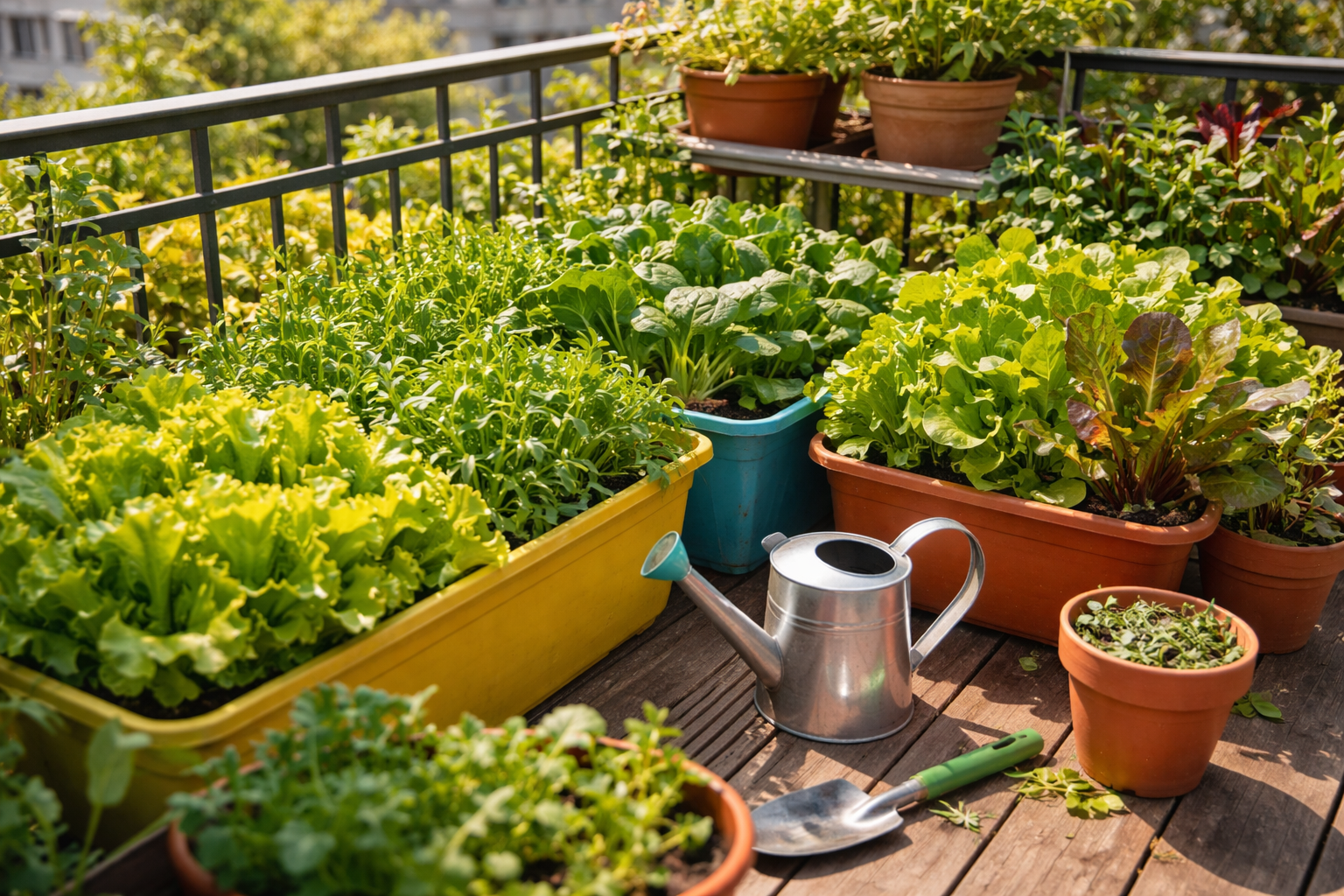
Growing a balcony salad garden has been one of the most rewarding hobbies I’ve picked up in recent years. Imagine stepping outside your apartment door and snipping a handful of crisp lettuce or peppery arugula for dinner — no store runs, no mystery wilting greens, just fresh flavor in every bite.
If you’ve ever wondered whether a small space can deliver a continuous harvest, I’m here to tell you it absolutely can. In this guide, I’ll share everything I’ve learned about creating a lettuce balcony garden, mastering leafy greens container gardening, and enjoying salad garden containers that keep feeding you week after week.
Growing fresh greens on a balcony is more than just convenient — it’s empowering. You get to control how your food is grown, save money, and reconnect with nature even if you’re surrounded by concrete.
Let’s dive into the real, practical steps that beginners can follow to build a lush, productive salad garden right on their balcony.
Table of Contents
Why Choose a Balcony Salad Garden with Salad Garden Containers
From my experience, choosing the right salad garden containers makes all the difference between a garden that struggles and one that thrives. Unlike traditional in-ground beds, containers heat up faster, dry out quicker, and need your careful attention — but they also allow you to garden in the tiniest spaces.
When I first started, I used old plastic tubs and shallow trays. I soon learned that deep containers with good drainage help roots grow strong and keep plants healthy. Plants like lettuce, arugula, spinach, and mustard greens all thrive in containers if they have room to spread their roots. I found that 8–10 inch deep containers give leafy greens enough space without wasting soil. Make sure each container has holes in the bottom, because soggy roots are one of the biggest enemies of a healthy balcony salad garden.
Be prepared to move containers around with the sun’s movement, and don’t be afraid to try different sizes. You’ll quickly discover which containers work best in your specific balcony conditions.
How to Set Up Your Lettuce Balcony Garden for Success
Lettuce is often the first green people think of when starting a lettuce balcony garden, and for good reason. It grows fast and is forgiving for beginners. My first planting was a mix of red and green leaf lettuces, and I was amazed at how quickly they filled out.
Start by choosing a spot that gets at least 4–5 hours of sunlight a day. Leafy greens don’t need blazing sun, but they do need enough light to stay crisp and flavorful. After filling your container with a good quality potting mix, sow lettuce seeds about 1/4 inch deep, spacing them so they have room to grow.
I’ve noticed that lettuce grows best when kept consistently moist — not waterlogged, just evenly damp. Too little water and the leaves get bitter; too much and they rot. As soon as the leaves reach a harvestable size, gently snip them off instead of pulling them out — a method called “cut and come again.” This gave me multiple harvests from the same planting, making my balcony salad garden feel almost like a miniature farm.
Leafy Greens Container Gardening: Arugula, Spinach, and Mustard Greens
Once you’ve mastered lettuce, expanding your leafy greens container gardening to include arugula, spinach, and mustard greens will take your balcony garden to the next level.
Arugula brought some spice to my salads. It grows rapidly — faster than lettuce — so you’ll see leaves ready in just a few weeks. Like lettuce, arugula likes cooler weather and even moisture. Too much heat can make it bolt (send up a flower stem), and that makes the leaves taste bitter.
Spinach was a lesson in patience. It doesn’t grow as fast as arugula or lettuce, but I found that sowing a few extra seeds at the same time gave me harvests while waiting for others to fill out. Spinach enjoys partial shade during hot afternoons, so I positioned these containers where they got morning sun and afternoon shade.
Mustard greens were the most surprising for me. They grew tall and lush, with leaves that added texture and zing to my salad mixes. These greens are a bit sturdier, and unlike lettuce, they don’t flop over as easily. I learned that they handle heat a bit better than spinach and lettuce, which makes them great throughout much of the growing season.
For all these greens, it’s helpful to plant in succession — sow new seeds every 2–3 weeks. This simple trick ensured I always had tender leaves ready to harvest instead of waiting for one big crop to finish.
Common Challenges in Lettuce Balcony Garden and How I Solved Them
When you start a lettuce balcony garden, you’ll face a few challenges, and that’s okay — it’s part of learning.
One of the first problems I dealt with was inconsistent watering. My balcony gets wind, and that dries soil faster than I expected. I solved this by using containers with saucers underneath and checking moisture every morning. If the top inch felt dry, I watered.
Pests like tiny aphids and snails showed up early too. Instead of harsh chemicals, I found that a gentle spray of soapy water or picking them off by hand worked wonders. Sometimes placing a mesh cover over containers kept pests out without blocking light.
Another issue was heat stress — especially for spinach and lettuce — during midday sun. I learned to move containers into partial shade during hot spells. This helped maintain leaf quality and kept them tasting great.
Real Tips for Continuous Harvest in Leafy Greens Container Gardening
One tip that consistently helped my leafy greens thrive was spacing and thinning. When seedlings sprout, they often look crowded. I used to leave them, but when I began thinning to give each plant room, the leaves grew larger and healthier.
Feeding your plants is another area where experience really pays off. I started with a balanced liquid fertilizer every 2 weeks. Early on, leaves were small and faded — but with nutrients, they were fuller and more vibrant.
Finally, don’t be afraid to mix your greens in a single container. I once sowed lettuce, spinach, and arugula together and ended up with a beautiful salad mix that was ready in stages. The slower growers stayed protected under the quicker leaf canopy, and harvesting became a joy.
Mistakes I Made So You Don’t Have To
When I first started my leafy greens container gardening adventure, I made mistakes that delayed success. One big mistake was planting seeds too deeply. Most leafy greens like lettuce and arugula germinate near the surface, and burying them too deep slowed or prevented sprouting.
Another early mistake was using heavy garden soil. It became compacted quickly, making water sit on the surface. Switching to light potting mix improved drainage and made plants much happier.
I also learned the hard way that neglecting to clean up old leaves invites disease and pests. Now, I regularly remove faded or damaged leaves, which keeps plants vigorous and reduces problems later on.
Internal Resource I Use All the Time
While learning container gardening, I often referred to helpful guides like the one on how often to harvest balcony vegetables that explains timing and maturity, which boosted my confidence and results. You’ll find practical timing tips that work perfectly with your salad garden containers and growing schedule.
Conclusion: Start Your Leafy Journey Today
Building a balcony salad garden is one of the most satisfying ways to grow your own food. Whether you’re pulling fresh lettuce for lunch, mixing arugula into your favorite dishes, harvesting tender spinach, or enjoying bold mustard greens, a well‑tended container garden can provide an almost endless supply of greens. Don’t worry about small mistakes — they’re part of learning. Start with a few containers, follow these tips, and watch your balcony transform into a lush green oasis. You’ve got this!
FAQ
What’s the best way to start a balcony salad garden?
Start by choosing salad garden containers with good drainage and placing them where they receive at least 4–5 hours of sunlight daily. Fill them with quality potting mix, sow your seeds lightly, and keep the soil evenly moist. Starting small helps you learn without feeling overwhelmed.
Why is succession planting important in leafy greens container gardening?
Succession planting keeps your harvest steady. Greens like lettuce, arugula, and mustard grow quickly and finish fast. By sowing new seeds every couple of weeks, you avoid gaps in harvests and ensure fresh leaves are always ready.
Can I grow spinach in a lettuce balcony garden?
Yes. Spinach is a great addition to a lettuce balcony garden if you give it partial shade during hot spells and keep the soil moist. I found that spacing spinach slightly apart from faster greens let it grow fully without competition.
How often should I water my leafy greens containers?
Watering frequency depends on weather and container size. In warm weather, I checked my soil every morning and watered when the top inch felt dry. Containers can dry quickly, so consistent moisture without sogginess keeps greens crisp and healthy.
What’s the best mix of greens for a salad garden?
A mix of lettuce, arugula, spinach, and mustard greens gives you a variety of flavors and textures. Lettuce stays mild and crunchy, arugula adds peppery notes, spinach brings earthiness, and mustard greens give a bit of zing — perfect for fresh, homemade salads.
Further Reading
1. 🌿 Container Salad Greens Guide – Colorado State University Extension
Learn how leafy greens like lettuce, arugula, spinach, and mustard work in containers and tips for continuous harvests on patios or balconies. Growing Container Salad Greens – Colorado State University Extension
2. 🪴 Growing Vegetables in Containers – University of New Hampshire Extension
A detailed fact sheet on how to grow vegetables including greens in containers with watering, planting, and harvest tips. Growing Vegetables In Containers [fact sheet] – UNH Extension
3. 🌞 Vegetable Container Gardening – University of Maryland Extension
Official guidance on what vegetables (including lettuce and spinach) grow well in containers and how much sunlight they need. Growing Vegetables in Containers – University of Maryland Extension