
Balcony gardening sounds peaceful until the wind starts acting like it owns the place.
One heavy gust and your beautiful plants are bending sideways, drying out faster than expected, or worse, falling over completely. This is a common problem for apartment gardeners, especially in hot and rainy climates where weather conditions can change quickly.
The good news is that some plants naturally handle wind better than others. These hardy balcony plants are built to survive strong wind, heavy rain, and intense sun without constantly struggling.
If your balcony gets battered by weather, here are some of the best wind-resistant balcony plants worth growing.
Table of Contents
10 Best Wind-Resistant Plants for Balcony Gardens
If your balcony constantly faces harsh gusts, you should also read our detailed guide on Wind Protection for Balcony Gardens (Most Gardeners Ignore This) where we explain practical ways to shield plants from damaging winds without blocking sunlight completely.
Here are the 10 best wind-resitant plants you can plant on your balcony.
1. Snake Plant
Snake plants are among the toughest plants you can grow on a balcony. Their thick upright leaves handle wind surprisingly well, and they do not require constant watering.
They also tolerate heat, humidity, and neglect, making them perfect for beginners.
Another advantage is their compact root system. Even in containers, they stay stable and are less likely to topple during storms.
Why it works well:
- Strong upright leaves
- Heat and drought tolerant
- Low maintenance
- Excellent for small balconies
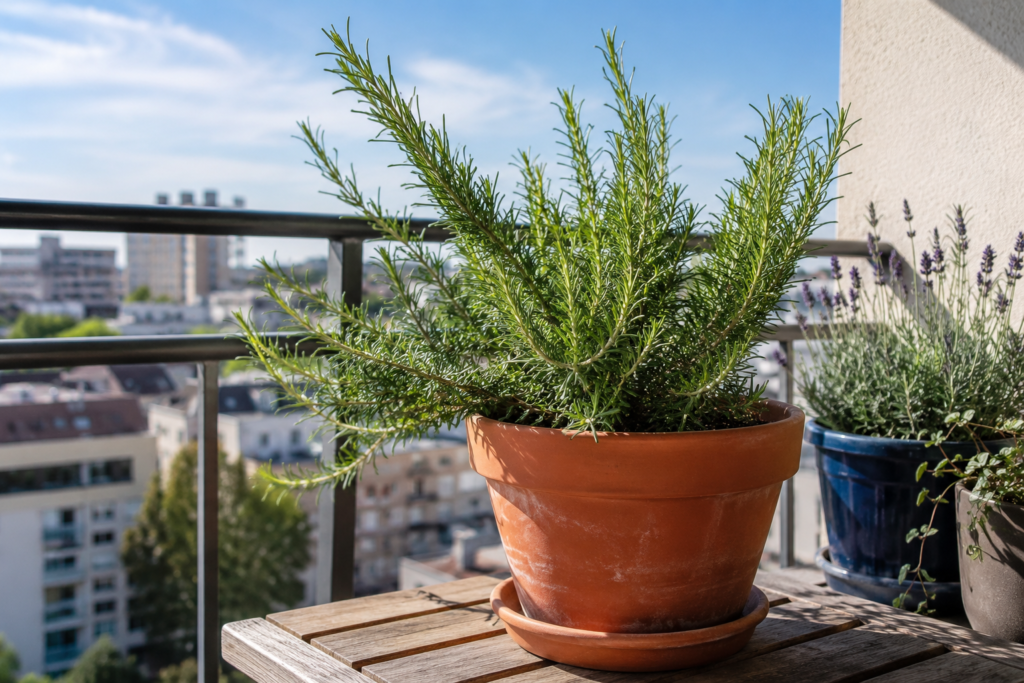
2. Rosemary
Rosemary is more than just a kitchen herb. It is naturally adapted to rough weather conditions and can survive strong winds better than many soft-leaf plants.
Its woody stems help it remain firm during storms, while its needle-like leaves reduce water loss caused by wind.
In hot climates, rosemary thrives with good drainage and sunlight.
Balcony growing tip:
Use heavier pots for rosemary so the container itself does not tip over in strong winds.
3. Dwarf Palm Varieties
Not all palms are fragile. Smaller varieties like Areca Palm or Parlor Palm can handle balcony conditions better than expected.
Their flexible stems move with the wind instead of fighting against it. That flexibility helps reduce breakage during storms.
They also give balconies a tropical appearance without requiring a huge amount of space.
Best for:
- Tropical balconies
- Hot humid climates
- Semi-shaded spaces
4. Aloe Vera
Aloe vera stores water inside thick leaves, which helps it survive hot winds and irregular rainfall.
Unlike delicate flowering plants, aloe does not panic when exposed to changing weather. It prefers sunlight and minimal watering, making it ideal for exposed balconies.
Just make sure the pot drains properly during rainy seasons.
Why gardeners love it:
- Hardy and resilient
- Medicinal benefits
- Survives heat easily
- Minimal maintenance
5. Hibiscus
Hibiscus may look delicate because of its flowers, but mature plants are surprisingly tough.
In warm climates, hibiscus grows into a sturdy shrub that handles wind fairly well when properly supported. The secret is regular pruning. A compact hibiscus plant resists wind better than an overgrown one.
Its colorful flowers also attract butterflies and pollinators.
Important tip:
Avoid lightweight plastic pots for hibiscus. Strong winds can knock them over easily.
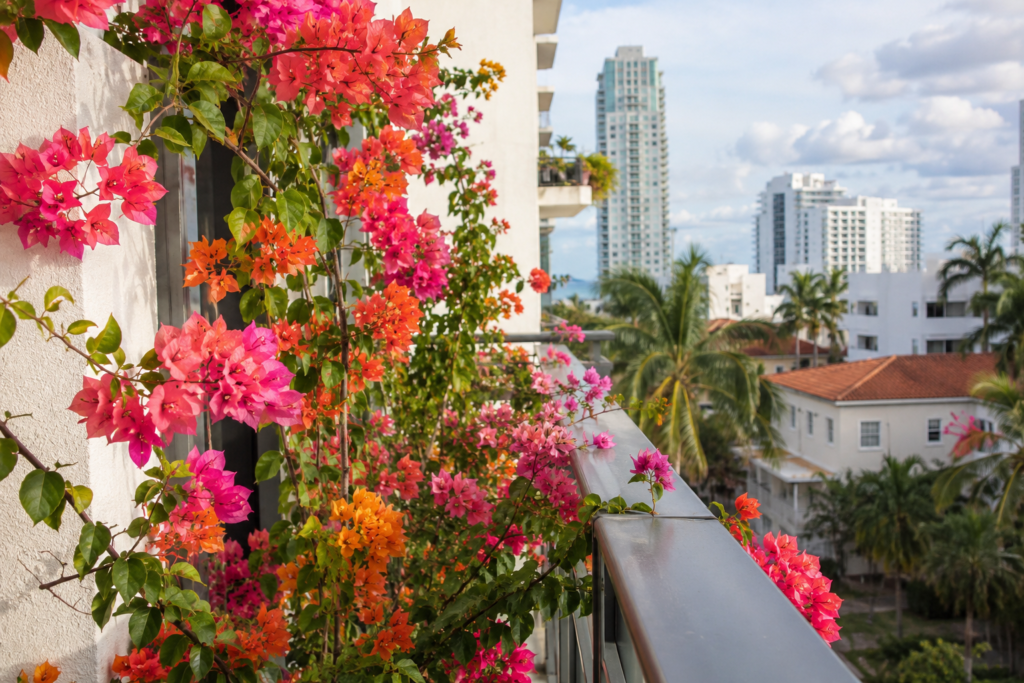
6. Bougainvillea
If you live in a hot and sunny region, bougainvillea is almost unbeatable.
This plant thrives in harsh weather and actually prefers a little stress. Wind, heat, and direct sun rarely stop it from flowering beautifully.
Because it is naturally a climbing plant, it works best when attached to balcony rails, trellises, or walls.
Why it survives strong wind:
- Flexible branches
- Deep root system
- Excellent heat tolerance
- Fast recovery after storms
7. Jade Plant
Jade plants are underrated hardy balcony plants.
Their thick stems and fleshy leaves help them withstand dry windy conditions. Since they grow slowly, they are also easier to manage in small balcony spaces.
Jade plants prefer bright sunlight and do not like overwatering, especially during rainy periods.
Good to know:
Too much rainwater can damage jade plants, so move them slightly under cover during heavy storms.
8. Bamboo Palm
Bamboo palms handle humidity and moving air very well. Their stems bend naturally instead of snapping, which helps them survive windy balconies.
They are also excellent for privacy. If your balcony feels too exposed, bamboo palms can create a natural screen against wind and curious neighbors.
Extra benefit:
They help reduce dust and improve air quality around apartment spaces.
9. Crotons
Crotons are famous for their colorful leaves, but many gardeners do not realize how resilient they are.
These tropical plants adapt well to heat and rainy conditions. Their leathery leaves handle wind better than softer foliage plants.
However, young crotons may need temporary protection during extremely strong storms until they mature.
Best feature:
Adds vibrant color to balconies even when flowers are not blooming.
10. Lemongrass
Lemongrass is one of the most practical plants that survive strong wind.
Because it naturally grows in clumps, wind passes through it instead of flattening it completely. It also grows fast and handles tropical weather extremely well.
As a bonus, lemongrass helps repel mosquitoes around balconies.
Why apartment gardeners love it:
- Fast growing
- Wind tolerant
- Useful for tea and cooking
- Helps reduce mosquitoes
Tips for Protecting Balcony Plants From Wind
Even the toughest plants need some support occasionally. Here are a few simple ways to reduce wind damage on your balcony garden:
Use Heavy Pots
Lightweight containers fall over easily. Ceramic, concrete, or heavier grow bags offer more stability.
Group Plants Together
Plants protect each other when placed closely. This creates a mini microclimate that reduces direct wind exposure.
Install Simple Windbreaks
Balcony screens, bamboo panels, or clear plastic barriers can reduce wind pressure without blocking sunlight completely.
Avoid Overwatering During Rainy Seasons
Wind and excess moisture together can damage roots quickly. Always ensure proper drainage.
Prune Regularly
Overgrown plants catch more wind. Keeping plants compact helps them remain stable.
Final Thoughts
Balcony gardening in hot and rainy climates comes with challenges, but wind does not have to destroy your efforts.
Choosing wind resistant balcony plants makes gardening easier, less stressful, and more enjoyable. Plants like snake plant, rosemary, bougainvillea, and lemongrass are naturally built to handle changing weather while still looking beautiful.
Start with a few hardy plants first, observe how your balcony behaves during windy days, and gradually build a stronger garden from there.
With the right plant choices, even a windy apartment balcony can become a thriving green space.
FAQs
What plants survive strong wind on balconies?
Plants like snake plant, rosemary, bougainvillea, aloe vera, and lemongrass are known for handling windy balcony conditions well.
How do I stop wind from damaging balcony plants?
You can reduce wind damage by using heavy pots, grouping plants together, installing balcony screens, and pruning plants regularly.
Are flowering plants good for windy balconies?
Some flowering plants like hibiscus and bougainvillea perform well in windy conditions when properly maintained.
Which balcony plants are best for tropical climates?
Crotons, hibiscus, lemongrass, bamboo palm, and bougainvillea are excellent choices for tropical apartment balconies.
Can strong wind dry out balcony plants?
Yes. Wind increases moisture loss from leaves and soil, which is why balcony plants often dry out faster than ground plants.
📚 Further Readings
- Illinois Extension – Container Gardening: Container Size & Stability
This resource explains how container shape, weight, and structure affect stability in exposed environments like balconies. It highlights why wider, heavier pots are less likely to tip over in strong winds and how container design supports plant survival in harsh outdoor conditions. - University of Georgia Extension – Container Gardening Guide
A practical academic guide on container gardening, covering soil preparation, plant selection, and maintenance. It is useful for understanding how container-grown plants respond to environmental stress such as wind exposure and limited root space. - University of Florida IFAS Extension – Container Gardening Topics
A comprehensive extension hub focusing on tropical and subtropical gardening. It provides insights into managing heat, moisture loss, and plant stress—factors that significantly increase wind damage on balcony gardens.