
What Can You Compost on a Balcony? The Complete Do’s and Don’ts List
Balcony composting is one of those things that looks complicated at first—but once you understand what goes in and what stays out, everything becomes much easier. When I first started composting on my small balcony, my biggest mistake wasn’t the setup—it was adding the wrong materials. That’s what causes smells, pests, and frustration.
If you get this part right, your compost will stay clean, odor-free, and incredibly productive. In this guide, I’ll break down exactly what you can compost on a balcony (and what you absolutely shouldn’t), based on both best practices and real-life experience.
If you’re new to the process, check out my full guide here: Balcony Composting 101: Turn Scraps into Pieces of Gold. Once you know what scraps are safe to use, this worm composting on a balcony guide shows how to turn them into rich, plant-boosting compost.
Understanding the Basics: Greens vs Browns
Composting works best when you balance two types of materials: greens and browns. Greens are nitrogen-rich and usually come from fresh kitchen waste like fruit and vegetable scraps. Browns, on the other hand, are carbon-rich materials like dry leaves, paper, and cardboard. On a balcony, where space is limited and airflow is restricted, getting this balance right is critical to avoid smells and slow decomposition.
From my experience, the easiest way to maintain balance is to always add a layer of browns immediately after adding greens. I typically follow a simple ratio of two parts browns to one part greens. This keeps the compost light, airy, and odor-free, even in a small apartment setting.
What You CAN Compost on a Balcony
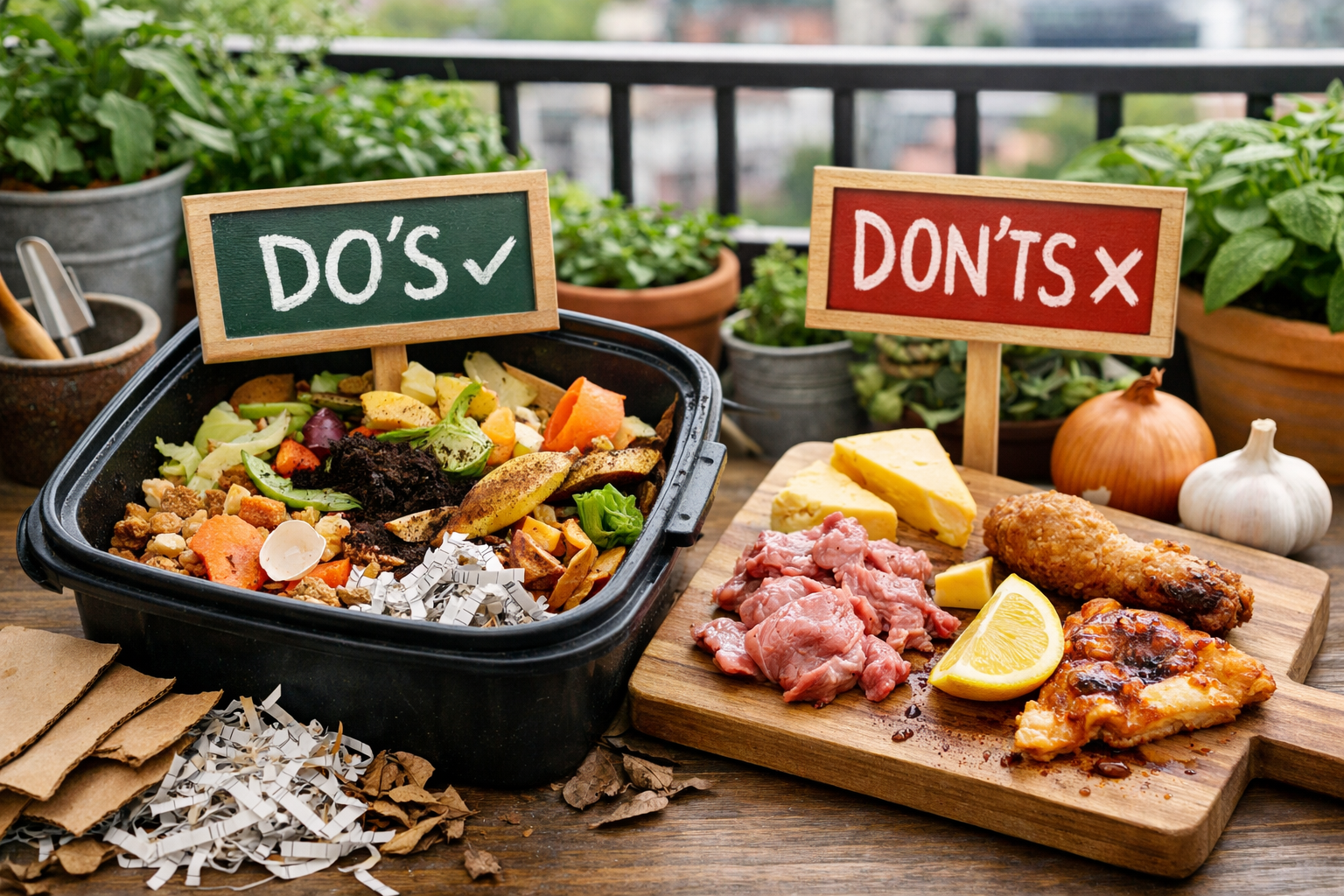
So, what can you compost on a balcony? Let’s get down to the full list here below:
Kitchen Scraps (Your Main Compost Fuel)
Most everyday kitchen waste is perfect for balcony composting and forms the core of your compost system. Fruit peels, vegetable trimmings, coffee grounds, tea bags, and crushed eggshells all break down easily and provide essential nutrients for the composting process.
In my own setup, I’ve found that chopping scraps into smaller pieces helps speed up decomposition significantly. Coffee grounds, in particular, are incredibly effective—they not only break down quickly but also improve the overall texture of the compost and support microbial activity.
Dry “Brown” Materials (Your Odor Control Secret)
Dry materials are what keep your compost system healthy and manageable. Without enough browns, your compost can quickly become wet, compacted, and smelly. That’s why I always keep a small stash of shredded newspaper or cardboard nearby.
Whenever I add kitchen scraps, I immediately cover them with a layer of dry material. This simple habit has saved me from almost every common composting issue, including odors and fruit flies. Browns also help regulate moisture and improve airflow, which is especially important in compact balcony bins.
If you want to find out how to fix any bad odor, check my guide on Why Your Balcony Compost Smells (And How to Fix It Fast).
Balcony Plant Waste
If you already have plants on your balcony, you’re sitting on a free and consistent source of compost material. Dead leaves, pruned stems, and spent flowers can all go straight into your compost bin. This not only reduces waste but also creates a natural recycling loop where your plants eventually feed themselves.
In my experience, adding plant trimmings helps diversify the compost and improves the final quality. It also feels rewarding knowing that nothing from your garden goes to waste.
Bread and Grains (In Moderation)
Bread, rice, and pasta can be composted, but they require a bit more caution. These materials tend to clump together and can attract pests if not handled properly. The key is to add them in small amounts and always bury them under a layer of browns.
Personally, I only add grains occasionally and never in large quantities. When managed properly, they break down just fine, but overdoing it can disrupt your compost balance.
What You Should NOT Compost on a Balcony
Meat and Fish
Meat and fish scraps are best avoided in most balcony compost systems. They tend to produce strong odors as they decompose and can easily attract pests, which is the last thing you want in a small living space.
Unless you’re using a sealed system like Bokashi composting, it’s safer to keep these materials out of your bin entirely. From experience, even small amounts can quickly create unpleasant conditions.
Dairy Products
Dairy products such as milk, cheese, and yogurt do not compost well in small-scale systems. They spoil quickly, create strong smells, and attract unwanted insects.
In a backyard compost setup, these might be manageable, but on a balcony, they’re simply not worth the risk. Keeping your compost clean and low-maintenance means avoiding materials that can easily go bad.
Oily and Fried Foods
Oily foods are one of the biggest causes of compost problems. Oils coat the materials in your bin and block airflow, which leads to slow, anaerobic decomposition and bad odors.
In my early composting days, I made the mistake of adding leftover fried food—and the smell was enough to make me rethink everything. Since then, I’ve completely avoided oily scraps, and my compost has been much healthier.
Citrus (In Excess)
Citrus peels can be composted, but only in small amounts. Too much citrus can make your compost overly acidic and slow down the breakdown process. It can also affect worm activity if you’re using a worm bin.
I usually add citrus occasionally and cut it into smaller pieces to help it break down faster. Moderation is key here.
Onion and Garlic (Limit Use)
Onion and garlic scraps can be added in small amounts, but they shouldn’t dominate your compost. Their strong smell and natural compounds can interfere with microbial activity and repel worms.
In my setup, I treat them as occasional additions rather than regular ingredients. This keeps the compost balanced and avoids any unwanted side effects.
A Simple Balcony Composting Rule to Follow
If you’re ever unsure about adding something to your compost, a simple rule helps: if it’s likely to smell, attract pests, or feel greasy, it probably doesn’t belong in your bin. Balcony composting thrives on clean, simple organic materials that break down naturally without causing issues.
For a deeper look into composting best practices, you can explore this helpful resource.
My Personal Balcony Composting Routine
Over time, I’ve developed a simple routine that keeps everything running smoothly. I keep a small container in my kitchen for collecting daily scraps and empty it into my compost bin every couple of days. Each time I add scraps, I immediately cover them with shredded paper or cardboard.
I also check moisture levels once a week to make sure the compost stays slightly damp but not soggy. This routine has made composting feel effortless and has kept my balcony clean and odor-free.
Final Thoughts
Balcony composting becomes easy once you understand what materials work best and which ones to avoid. By sticking to simple kitchen scraps, balancing them with dry materials, and avoiding problematic items like meat and oily foods, you can maintain a healthy compost system even in a small space.
The key is consistency and observation. Once you get into the habit, composting becomes second nature and incredibly rewarding.
To learn how to set up your system step-by-step, read:
👉 Balcony Composting 101
Frequently Asked Questions (FAQs)
1. Can I compost cooked food on a balcony?
Yes, but only in small amounts and without oil or heavy seasoning. Plain rice or pasta can be composted if buried under browns, but avoid oily or spicy leftovers.
2. How do I know if I added the wrong material?
If your compost starts to smell bad, becomes too wet, or attracts pests, it’s usually a sign that something unsuitable was added. Adding more browns and mixing the compost can help fix the issue.
3. Can I compost paper towels and tissue?
Yes, as long as they are unbleached and not soaked with chemicals or cleaning products. They act as excellent brown material.
4. Is mold in compost a problem?
Not necessarily. Small amounts of mold are a natural part of decomposition. However, excessive mold may indicate too much moisture or poor airflow.
5. How often should I empty my compost bin?
This depends on your system. Worm bins may take 2–3 months to produce compost, while Bokashi systems are faster but require soil integration afterward.
6. Can I compost spicy food?
It’s best to avoid spicy food. Strong spices can disrupt microbial activity and may affect worms in vermicomposting systems.
7. What’s the easiest material for beginners to start with?
Fruit and vegetable scraps are the easiest and safest materials to start with. They break down quickly and are unlikely to cause problems when balanced with browns.
Further Reading
If you want to dive deeper into safe and effective composting practices, the following trusted extension and environmental resources explain the key do’s and don’ts, materials to include, and common mistakes to avoid when composting at home or on a small scale.
1. Iowa State University Extension – “The Do’s and Don’ts of Composting”
This guide explains how to build and maintain an effective compost pile by balancing green and brown materials, keeping the pile aerated, and avoiding items like meat, dairy, and diseased plants that can cause odors or attract pests.
2. Cornell University CALS – “The Do’s and Don’ts of Composting”
This article breaks down composting fundamentals, including the importance of the carbon-to-nitrogen ratio, proper material selection, and why some items (like oils, meats, and treated wood) should be avoided in home systems. It also highlights how proper composting improves soil health and garden productivity.
3. U.S. Environmental Protection Agency (EPA) – “Composting at Home”
This resource provides a broad overview of home composting, explaining how composting works biologically, what materials are suitable (food scraps, yard waste, paper products), and why maintaining oxygen, moisture, and the right balance of materials is essential for producing healthy compost.